What's the difference?
What is it about single letters and performance cars?
BMW has M, Volkswagen has R, Lexus has F, and with only 23 choices left Hyundai opted for N - which stands for Namyang, site of the brand’s sprawling proving ground and development centre in South Korea, and Nurburgring, the famous German racing circuit where its performance cars are fine-tuned.
And like BMW M Sport, VW R-Line and Lexus F Sport, the Korean giant has N Line as a ‘lite’ option. Sporty models that add a little more punch and visual flair without crossing the line into hardcore hot-rod territory.
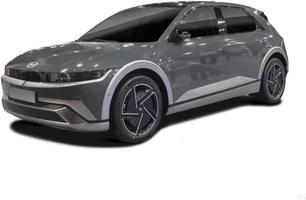
And this is one its latest examples, the pure-electric Ioniq 5 SUV in top-spec Epiq AWD trim and equipped with the N Line Option Pack as well as the tricky Digital Mirror Pack.
In this configuration it slots into the $90K price band, which means it has a lot to live up to in terms of performance, safety, driving dynamics, value and more.
So, stay with us to see if this premium five-seater is the kind of sporty EV SUV that gets your heart racing.
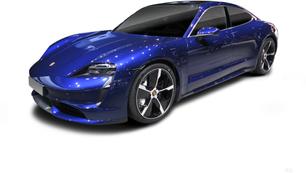
Can you believe Porsche’s Taycan has been on sale in Australia for three and a half years?
Well, it has, which means the mid-life refresh clock has struck 12 for this ground-breaking pure-electric performance sedan and wagon.
Porsche says it’s faster in a straight line… and to charge, with more power and an extended range. It’s also been refreshed cosmetically, the dynamics have been tweaked and the standard features list has been lengthened as prices have gone up.
We’re ready to share our first impressions review, so stay with us to see if the new Taycan keeps the Porsche flame burning in an increasingly electrified automotive world.
The Hyundai Ioniq 5 Epiq N-Line AWD leverages an electric powertrain’s best attributes brilliantly well.
It’s ultra smooth and comfortable with ample performance and great dynamics thanks in part to this car’s N Line spec.
Its price tag pits it against formidable competition from the German Big Three, Tesla and others. But it has what it takes in terms of quality and value to fight that battle. It’s an impressive machine.
Porsche says its Taycan models have always been performance-focused and this updated version is even faster than the car it replaces, in a straight line and point-to-point. It’s better equipped, more efficient, and yes, more expensive but every millimetre a Porsche in the way this EV sedan and wagon package has been executed.
It’s an impressive car likely to appeal to Porsche newcomers rather than traditionalists, although you may already have other Porsches in the garage. But with the Macan EV landing any minute and the pure-electric 718 Boxster and Cayman just around the corner it's a key part of the changing face of this iconic German brand.
Note: CarsGuide attended this event as a guest of the manufacturer, with travel, accommodation and meals provided.
Is this a big hatchback or a mid-size SUV? I’m on team hatchback, while Hyundai defines the Ioniq 5 as an SUV.
But who cares? They’re just words and the fact is even after close to three years in market this five-seater looks fresh and contemporary thanks to its confident, chiselled lines and wide stance.
For car-spotters the N Line exterior treatment consists of flat aluminium badging, specific bumpers front and rear, with a deeper nose spoiler incorporating larger vents to cool the front brakes.
There’s also body-coloured cladding and side skirts, gloss black mirror caps, unique 20-inch alloy rims and a ‘hidden’ lighting signature across the top of the front bumper.
Inside there are Alcantara- and leather-appointed seats, an N Line-exclusive partially-perforated leather steering wheel, red contrast stitching and accents, and brushed metal covers on the pedals.
Add in the twin 12.3-inch screens display and this understated, super-cool interior comes to life with a sporty twist.
The Ioniq 5 scores points for a manual dial for audio control and an Ioniq 5 update earlier this year included a row of simple-to-use buttons for the ventilation system and another on the centre console for seat comfort settings and more. A sensible blend of physical and digital controls.
Porsche has freshened up the Taycan’s front and rear end, the nose losing the vents dropping down from the headlights as previewed by the original Mission E Concept in 2015.
Matrix LED headlights are standard with high-resolution HD available. But there are no major sheet metal changes to the bulk of the car. And why would you fiddle with it? The drag coefficient is an ultra-slippery 0.22.
Around the back the Porsche logo in the rear light strip has been given a cool three-dimensional treatment al la the 911, Panamera and other current Porsches. And if you have eyes for the Turbo or Turbo S the brand’s glamorous ‘Turbonite’ metallic silver colour is now available.
Inside is a screen-rich environment with a three-dial digital version of the brand’s five-dial instrument cluster customisable through roughly 5000 configurations and there’s a new multimedia software interface for the central screens with additional functions. A passenger display is a $2860 option.
At just over 4.6m long, a little under 1.9m wide and a fraction more than 1.6m tall the Ioniq 5 comfortably fits the medium SUV profile.
But arguably its most significant dimension is a 3.0m wheelbase which is huge for a car of this size as evidenced by the wheels pushed out to the corners.
What that means is plenty of space inside, but before you can even get in the capacitive touch power door handles may look cool and help aero performance with their flush fit design but I’m not a fan. They’re hard to grip most of the time and don’t work well from an ergonomic point-of-view.
That said, once inside the front seats are adjustable six ways to Sunday and at 183cm tall I have plenty of head space and breathing room in general.
In terms of storage there are big pockets in the doors with room for bottles and thanks to the ‘shift-by-wire’ gear controller located on the steering column there’s room between the seats for a substantial console including a pair of cupholders, a slot for devices and a lidded tray (which doubles as a centre armrest) with that whole rear section able to swing up to allow access to a large lower shelf underneath.
In fact, the entire console unit easily slides fore and aft to liberate more legroom for the centre rear position. There’s also an oddments cubby in the lower part of the dash and a decent glove box.
Then, for connectivity and power there are three USB-C sockets (one in the dash switchable to streaming), a wireless device charging pad and a 12-volt outlet.
In the back that long wheelbase comes into its own. Sitting behind the driver’s seat set for my position I have loads of foot, leg and headroom.
Storage runs to door pockets with room for bottles, a fold-down centre armrest with a pair of cupholders, there are netted map pockets on the front seat backs and pull-up sun shades on the rear windows.
There are controls for the front passenger seat on the inner edge of the front passenger seat backrest which allows rear seaters to adjust its position. Thoughtful.
For power there’s a pair of USB-C sockets and individual ventilation controls in the back of the B-pillars is welcome.
Then, not only is the electrically-adjustable rear seat split 60/40 in the backrest, it’s in the cushion, as well, which adds extra flexibility in terms of a balance between rear passenger space and room in the boot.
The boot is generous at 527 litres (VDA) with the rear seat upright and 1587L when it’s folded down.
There’s also a handy 24L ‘frunk’ under the bonnet, a decent portion of which is devoted to the (included) charging cable.
Interestingly, the Ioniq 5 AWD is rated to tow a 1600kg braked trailer with a trailer pre-wiring package standard.
There’s a repair/inflator rather than a spare tyre, which is never a good thing, but there is a ‘smart’ power tailgate and a ‘Vehicle-to-Load’ function that allows you to power and/or charge three-pin appliances from the car. Handy.
At nearly 5.0m long and 2.0m wide but less than 1.4m tall the Taycan is a low-slung large sedan.
In the front of the Taycan I’ve got plenty of breathing space, lots of headroom and enough shoulder room and you don’t feel cramped relative to the co-pilot.
In terms of storage, there are pockets in the doors with room for bottles, a couple of cup and bottle holders in the centre console as well as a tray under the flying buttress type upper console section.
A lidded box between the seats housing a couple of USB-C outlets and a 12-volt socket is handy and there’s a decent-size glove box on the passenger side.
Interestingly, an in-car video function enables video streaming on the central display (while the vehicle is stationary) and the passenger display at any time with the vision hidden from the driver by a lenticular-style screen.
In the back, sitting behind the driver’s seat, set for my 183cm position, I have ample legroom and space for my feet. Problem is my head hits the roof solidly, even with the extra room afforded by the panoramic glass insert, which is a no-cost option from the Taycan 4S up.
Standard configuration is two rear seat positions, although a ‘4+1’ set up which adds an occasional centre rear position is optionally available. Trust me, that’s tight.
On the upside you have adjustable ventilation for the rear seat passengers (climate control zones on the Turbo grades) with a small oddments shelf below them, slots in the doors for bottles and two more cup or bottle holders in the fold-down centre armrest.
No map pockets on the front seat backs, so while there’s some room for storage it’s not exactly over supplied in that department, or for breathing space in general.
Boot space is relatively modest at 366 litres in the sedan but the 60/40 split-folding rear seat liberates more space if required. The Cross Turismo wagon offers 405 litres and a much larger load aperture for greater flexibility. An 84L frunk sits in the nose of all Taycans.
Interesting to note Taycans in other markets boast an extra 41L of boot space. It doesn’t feature here because Porsche Australia has made the high-end Bose sound system standard and its sub-woofer eats into available capacity.
A power boot lid or tailgate and auto self-levelling to maintain the car’s ride height under load is standard but there’s no spare tyre of any description. A repair/inflator kit is your only option, which is less than ideal.
It shows how far the Hyundai brand has come over its close to 40 years in the Australian new-car market that one of its five-seat SUVs wearing a price tag in excess of $90K doesn’t knock the Earth off its axis.
But a sticker price of $91,300, before on-road costs, does apply the pressure because it puts this primo Ioniq 5 Epiq N Line AWD in the same orbit as versions of the Audi Q4 e-tron, BMW iX3, Mercedes-Benz EQB, Tesla Model Y and Volvo’s XC40 Recharge.
In fact, our test car’s price includes the N Line Pack which is technically a $2500 option and its digital mirrors add a further $3000 for an as-tested price of $94,300, before on-road costs.
So, you should rightfully expect a handsome standard equipment list and this full-fat Ioniq 5 doesn’t disappoint.
Aside from the safety and performance tech we’ll get to shortly this car includes 20-inch alloy rims, all LED exterior lights (with auto LED projection headlights), dual-zone climate control, power driver and front passenger seats (heated/ventilated), heated rear seats, ambient lighting, a head-up display, wireless Android Auto and Apple CarPlay, Bose eight-speaker audio, digital radio, built-in nav and voice control for key functions.
There’s also Alcantara- and leather-appointed seat trim, BlueLink connected car services (with a five-year complimentary subscription), configurable ambient lighting, wireless device charging, a fixed glass roof, a heated steering wheel, heated and power-folding exterior mirrors, auto rain-sensing wipers, keyless entry and start, and ‘Remote Smart Parking Assist’.
That last one allows you to start and move the car forwards and backwards remotely (via the key) to insert it into or extract it from tight parking spots… or just impress your friends.
Suffice it to say the Ioniq 5 Epic N Line AWD stands up well against its competitors when it comes to included features for the money.
Cost-of-entry to the Taycan club stretches from close to $174,500, before on-road costs, for the entry-grade, single-motor RWD model to just under $373,600 for the flagship dual-motor AWD Turbo S. That’s an increase of between 2.7 and 6.6 per cent, varying by model.
MSRP - correct at time of publication
The heavy-hitting Taycan Turbo GT is scheduled to arrive in the third quarter of this year at $416K, and we’ll no doubt see a sporty GTS variant within the next 12-to-18 months.
That price spread for the new Taycan pitches the Porsche against the likes of Audi’s closely related e-tron GT and RS GT, BMW’s three-tier i5 line-up and the Mercedes-Benz EQE sedan.
Highlight spec additions include ambient lighting, soft-close doors and an ‘Intelligent Range Manager’ which uses the nav and onboard systems to optimise energy use.
The ventilation system now features a heat pump which compresses outside air to heat the cabin and wireless charging is included across the board.
Then tip in adaptive cruise control, a head-up display, lane change assist, surround camera view (with ‘Active Parking Support’), rear side airbags and digital radio.
The base model picks up adaptive air suspension, alloy door sill protectors and a bigger, lighter battery.
That’s on top of a laundry list of non-safety or performance related inclusions like auto matrix LED headlights, dual-zone climate control, 14-way electrically adjustable heated front seats (with memory), partial leather trim, privacy glass, 10.9-inch central multimedia display, configurable digital instrument panel, 14-speaker/710W Bose audio (with digital radio), Apple/Android connectivity, an auto tailgate and more.
While, depending on model, higher grades collect extra standard gear ranging from bigger rims and full leather interior to a panoramic glass roof and ventilated seats.
Not bad, even in this elevated part of the market.
The Ioniq 5 Epiq AWD is powered by a permanent magnet synchronous electric motor on each axle, both powerful, but the rear unit packs a bigger punch.
And combined peak outputs of 239kW and 605Nm are substantial with especially the latter delivering eye-widening acceleration.
Drive goes to all four wheels via a single-speed, reduction gear auto transmission on both axles. And a ‘Disconnector Actuator System’ is able to disengage the front wheels to reduce drag losses from the front motor and improve energy efficiency.
The entry-level single-motor RWD Taycan features a new electric motor that’s 10kg lighter and seven per cent more powerful but more notably produces 22 per cent more torque than the unit it replaces.
Both it and the additional motor fitted to the front axle of AWD models are permanent magnet synchronous units with outputs up across the range, the Turbo S producing a stonking 700kW and more than 1100Nm.
That 700kW peak number for the Turbo S comes courtesy of an ‘overboost’ function with Launch Control. And Taycan models equipped with the Sport Chrono package and the Performance Battery Plus have up to an extra 70kW courtesy of a 10sec push-to-pass button.
There’s a two-speed transmission on the rear axle and a single-speed on the front of AWD variants.
The Ioniq 5 Epiq AWD is powered by an 84kWh liquid-cooled lithium-ion battery, borrowed from the high-performance Ioniq 5 N.
Thanks to 800-volt compatibility it can accept a 350kW DC charge which translates to an up to 80 per cent charge time of around 18 minutes, which expands to just over an hour using a more typical 50kW charger.
Connect to AC at the Ioniq 5’s maximum 10.5kW capacity and quoted charge time is just over six hours.
Official energy consumption on the combined (urban/extra-urban) cycle is 19kWh/100km and claimed range is a useful 495km.
Over a mix of urban, suburban and freeway running on test we saw a real-world average of 16.8kWh/100km, which is impressive for a car with this much performance potential.
The Taycan runs 800-volt electric architecture which means it can charge at up to 320kW on a DC fast-charger which is 50kW more than its predecessor. In fact, charging at more than 300kW for up to five minutes is possible.
You’re looking at a 10-80 per cent charge in 18min on a fast charger which is down from 37min. It’s 46min on a more typical 120kW charger.
An 89kWh lithium-ion battery is standard on the entry-grade Taycan. It boasts a nickel, cobalt, manganese cell chemistry which Porsche says delivers high energy content, lower internal resistance and higher charge and discharge currents. And it’s 9.0kg lighter.
All models above it feature the 105kWh ‘Performance Battery Plus’, a roughly $12K option on the base car.
Maximum AC charging capacity is 11kW and you’re staring down the barrel of nine hours for a 0-100 per cent fill of the smaller battery and 11 hours for the performance battery pack.
Official energy consumption on a combined urban, extra-urban cycle varies from 17.1kWh/100km for the single motor Taycan to 17.8kWh for dual-motor variants.
On the launch drive program, covering mainly rural B-roads on Tasmania’s east coast, we cycled through all models on offer and recorded a best figure of 21.5kWh/100km for the single-motor Taycan up to 22.0kWh for the Turbo S. Not bad.
Claimed range is 566km for the entry-grade Taycan, up to 626km for dual-motor models.
Interestingly, on 4WD models the - front electric motor can electronically decouple more frequently to improve efficiency.
In terms of straight line performance we’re talking 0-100km/h in a tick over 5.0 seconds and I see anything in the five-second bracket as properly quick.
With more than 600Nm of peak pulling power at your disposal there’s always plenty of pulling power for efficient in-traffic moves and safe highway overtaking.
The shift-by-wire gear selector on the steering column takes some getting used to but once you’re in tune with it, it’s surprisingly convenient, especially during slow speed parking or turning manoeuvres.
There are multiple modes - ‘Eco’, ‘Normal’, ‘Sport’ and ‘Snow’. Sport mode spices things up a bit with more urgent responses and the ‘HTrac’ AWD system uses multiple sensors to manage potential wheelspin and optimise drive in wet conditions or on loose dirt surfaces.
Suspension is by struts at the front and multi-links and the rear and the Ioniq 5 in this configuration is ultra-smooth and comfortable.
Even hitting pretty aggressive speed bumps and ruts in the road and the car soaks them up without fuss. You’re used to EVs being a little harsh in terms of ride compliance thanks to their relative weight, but that’s not the case here.
As part of a model upgrade introduced earlier this year Hyundai says it undertook a “comprehensive revision to the suspension tune”, which includes high-performance dampers on this N Line. And despite low-ish profile (255/45) Michelin Pilot Sport EV tyres on the 20-inch rims it remains comfortable and quiet.
The upgrade also included body reinforcements in the B- and C-pillar, door surrounds and under the body for a stiffer platform overall.
That pays off in the dynamics. Despite its 2.1-tonne weight the Ioniq 5’s steering is accurate and nicely weighted. It doesn’t feel lumbering or ponderous despite its relative heft.
The physical brakes are ventilated discs front and rear with regenerative available through four levels, the most aggressive setting being ‘i-Pedal’ which allows single-pedal driving.
It will slow the car to a full stop, harvesting the most energy possible in the process, although you might need a dab on the brake pedal if things are tight.
Miscellaneous observations include a 12m turning circle, so be ready for three-point turns where you didn’t think you’d have to.
Hyundai's (and Kia’s) default over-speed warning is present in full-force taking clicks through multiple screens to switch off and avoid its incessant audible alarm saying you've exceed what the car believes is the posted limit (every time you restart the car).
The recently released Tucson Hybrid features a short-cut function to do away with this issue and it would be welcome here.
The CPU underpinning the multimedia system is more powerful and response is speedy without a hint of lag.
And the camera based ‘mirrors’ take some getting used to. For many, they’re the answer to a question no one was asking. I mean, conventional mirrors work pretty well and any aero benefit from the smaller camera units has to be modest. But once you’re in tune with them the hi-def screens are excellent.
A flip of the switch on the interior rear view mirror allows you to side-step tall heads or loads in the back of the car but minimal depth of field is also (visually) awkward at first.
Full disclosure. My preference when it comes to Porsche propulsion is pistons in cylinders; ideally six of them, horizontally opposed.
But if the Taycan is on your shortlist you’re ready to move past internal combustion and there is no doubt this car is properly quick.
The entry-level RWD model accelerates from 0-100km/h in 4.8sec (0.6 faster than the outgoing model) with the Taycan Turbo S at 2.4sec which is hypercar fast.
Porsche admits to having played around with some dual-clutch transmission-type mimicry along the lines of the Hyundai Ioniq 5 N. But the boffins in Zuffenhausen left that to one side due to concerns over compromise to the car’s point-to-point ability. Porsche seemingly can’t entertain anything that makes a car slower.
It did, however, install a push-to-pass function on dual-motor versions which gives you a 10-second burst of extra performance which is fun.
Suspension is by forged alloy double-wishbone front and rear with some extra links at the back.
Adaptive air suspension is standard across the range, and ‘Active Ride’ is fitted to the upper variants which takes things one step further.
And it does ride very nicely. The launch drive covered second-class, coarse-chip B-road type surfaces and the Taycan smooths the road out beautifully.
Standard wheel diameter is 19-inch for the entry-grade, 20s for the 4S and Turbo, then 21s on the Turbo S. The cars on the launch program all featured 21-inch rims shod with Goodyear Eagle F1 or Michelin Pilot Sport 4 rubber and even on those big wheels the car still rides well.
In terms of the steering… hey, it’s a Porsche. It’s fantastic. Accurate and direct without being too jerky or snappy. It does exactly what you want the car to do. The connection with the front tyres feels like it’s almost direct.
This car may be lighter than its predecessor but all models are over 2.0 tonnes so you’d expect it to be heavy and slow. It’s not. Point and accelerate through corners with supreme confidence. It’s beautifully balanced. What you’d expect from a Porsche performance car.
Physical braking is by big ventilated discs all around with six-piston aluminium monobloc fixed-calipers at the front and four-piston units at the rear. Suffice it to say they wash off speed effectively.
Believe it or not the Turbo S’s front brake calipers contain no less than 10 pistons, clamping ceramic composite rotors. We gave all Taycan variants a solid workout on the Baskerville Raceway just north of Hobart and stopping power felt as strong and effective at the end of the session as it did at the start.
There’s also improved recuperation capacity for the regenerative braking system, up 30 per cent from 290 to 400kW.
In terms of miscellaneous observations, beware the 11.7m turning circle. What might appear to be a three-point turn situation often turns into a five-pointer.
And entry to cars fitted with Active Ride is made easier (when activated). As soon as a door is opened, the body raises by 55mm. May seem OTT but it makes life with the Taycan that bit better.
The Ioniq 5 received a maximum five-star ANCAP score from assessment in 2021, receiving its highest scores for adult and child occupant protection and the on-board safety assist systems.
The Ioniq 5 stacks up well relative to its competitors when it comes to safety. In fact, there’s so much crash avoidance tech on-board, courtesy of the Hyundai ‘SmartSense’ active safety suite, it would be straight up boring to list it all, but the highlights include AEB (with car-to-car, pedestrian and cyclist detection as well as junction turning and crossing functions), blind-spot monitoring and collision avoidance, lane keeping assist and lane departure warning, rear cross-traffic alert and rear AEB as well as active cruise control (with stop and go).
There are even more assists, warnings, monitors and alerts, but it’s important to note they (almost) all operate with relative subtlety. I did switch off the steering assist/lane-keeping functionality when it became confused and overly intrusive on twisting city curves.
If a crash is unavoidable, there are seven airbags on-board including a front centre bag to minimise head clash injuries in a side-on impact, as well as ‘Automatic Collision Notification’ and an emergency SOS call function operated through the Bluelink system.
For baby capsules/child seats there are three top tether points across the second row with ISOFIX anchors in the outer positions.
Although Porsche and ANCAP do not intersect at this stage the Taycan ticks just about every active (crash avoidance) safety box in the book.
The highlights are AEB (including pedestrian detection), 'Intersection Assist', 'Lane Keeping Assist' and adaptive cruise control (with ‘Swerve & Turn Assist’). There’s also a high-def reversing camera, a surround view set-up, lane-change assist and a head-up display.
If a crash is unavoidable there are 10 airbags onboard (dual front and front side, driver and front passenger knee, rear side and full-length curtains) as well as an active bonnet to minimise injuries in a pedestrian impact and multi-collision brake minimises the chances of subsequent collisions following an initial crash.
There are two top tethers and two ISOFIX anchors for baby capsules and/or child seats across the second row.
Hyundai covers the Ioniq 5 with a five-year/unlimited-km warranty, which is the mainstream market norm, with a separate eight-year/160,000km warranty for the drive battery; also an expected term.
Roadside assistance and sat-nav updates are renewed annually if the vehicle is serviced at an authorised Hyundai dealer.
Service interval is two years/30,000km which is appropriate for an EV given its relative mechanical simplicity and a ‘Lifetime Service Plan’ locks in scheduled maintenance costs for the life of the vehicle.
Service cost for the first five years is $1220, with each of the two services required in that time coming in at $610. Competitive for an EV in this part of the market.
Porsche covers the Taycan with a three-year, unlimited km warranty which is off the pace for the premium segment where five years, unlimited km is the norm. The high-voltage drive battery is covered by an eight-year, 160,000km warranty. The paint is covered for three years and a 12-year (unlimited km) anti-corrosion warranty is included.
Porsche Roadside Assist provides 24/7/365 coverage for the life of the warranty, and after the warranty runs out is renewed for 12 months every time the vehicle is serviced at an authorised Porsche dealer.
Thanks to fewer moving parts, servicing intervals for the Taycan are relatively lengthy at two years or 30,000km, whichever comes first.
With Porsche, final costs are determined at the dealer level (in line with variable service labour rates by state/territory).