What's the difference?
Hybrids are yesterday’s news.
If you’re looking for a combination powertrain in 2025 you want a ‘Super Hybrid’. This is the Chinese car industry’s term for what is more commonly known as a plug-in hybrid, but they are all the rage among car brands as they rush to simultaneously cut emissions and keep buyers.
The Geely Starray EM-i is the latest addition to a growing number of Super Hybrids available in Australia, joining the BYD Sealion 6, MG HS, Jaecoo J7, Omoda 9 and the Mitsubishi Outlander PHEV (which doesn’t have the fancy name but has the same tech).
This is Geely’s second entry into the Australian market, following the similar-sized but all-electric EX5 earlier this year. While it’s a new brand to Australia, Geely is an automotive giant, it’s so big in China it has been able to expand its global reach. Its parent company, also called Geely, has an ownership stake in Volvo, Polestar, Lotus, Zeekr, Proton, Smart, Lynk & Co. and Aston Martin.
But none of that really matters when you’re buying a car. So, how does the Starray stack up on its own merits? Is it a compelling new addition or just another forgettable offering in an increasingly crowded mid-size SUV market?
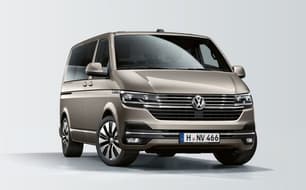
Volkswagen’s new-generation Multivan is the brand’s family-oriented bus, and having just been to its Australian launch the people mover feels more high-end and somehow more practical than ever. But something has changed and it’s only now that it feels as though the final piece of the Multivan puzzle has been found and this van is complete.
Volkswagen’s entire vehicle range is mind-bogglingly big. From hatchbacks, wagons and SUVs to vans and buses, they all have two things in common - a high-quality feel and practicality. The Multivan has always adhered to this theme, as well.
Now, the new-generation Multivan has arrived and it’s clear Volkswagen has stuck to the same recipe of premium and practical, but there’s been a big change in the way it drives thanks to the decision to stop building the van on a truck-like platform and start building it on one used for cars.
You can read more about this below or watch my reaction to piloting the Multivan in my video.
Keep reading for more on the new-gen Multivan.
While it has a few quirks and flaws, there is a lot to like about the Starray. For starters, the value it offers at its price point is excellent and will really put pressure on its competition. The design may lack flair, but it does have a roomy cabin with a good multimedia system, so it’s family friendly and easy to live with.
Yes, it could do with some refinement of its on-road manners and driver assistance features, but for the value it offers and the frugal powertrain, it will no doubt find plenty of buyers who enjoy its substance and not just its memorable name.
Note: CarsGuide attended this event as a guest of the manufacturer, with meals and accomodation provided.
The Australian launch of the new generation Multivan was confined to the Life grade with the 2.0-litre diesel engine. Later in 2025 the Style grade will arrive bringing a hybrid powertrain and even more features. We’ll be able to test both more thoroughly once we have them in the CarsGuide garage.
From this first drive, however, it's clear that while slightly pricier than its Kia Carnival rival the new generation Multivan is more practical than ever, and now that it rides on a car platform, far better to drive.
Note: CarsGuide attended this event as a guest of the manufacturer, with meals provided.
Geely is very proud of the Starray, of course, and the company gave a very detailed presentation on the thought behind the design - involving aerodynamics, Chinese ceramics and a video that appeared to show a Geely spaceship releasing the Starray into a barren landscape.
But to be perfectly honest, I wouldn’t know how to describe it to you. The Starrary is a very generic looking car to my eyes, at least. Of course it’s subjective, and there is a clear visual connection between the Starray and the EX5, which is nice. But it just doesn’t have any real visual impact that makes it stand out.
It’s the automotive equivalent of a blank expression. Maybe it’s because the brand is so new, but if you removed the badges, there’s nothing about the Starray that screams ‘I’m a Geely’, and it could be a car from any number of brands.
By comparison, there is a distinctive visual style to Geely’s rivals, namely BYD, both externally and internally, to give it character. Obviously the same is very much true for bigger brands like Hyundai, Kia and even Toyota.
Perhaps with more time Geely will make more of a design impact on our market, but for now it’s hard to say it really has any standout design elements.
As with all Volkswagens the redesign of the new-gen Multivan is more about refining than redefining. Just like the Golf hatch which has kept its look through eight generations the Multivan is recognisable and familiar but new and modern looking, too.
Smoother lines, a more heavily raked windscreen and a flatter bonnet make for a cuter snub nose. The new Multivan is less boxy than before even though it is still a box on wheels, just a sleeker, more adorable one.
As mentioned, the Multivan comes in two lengths: the short wheelbase, which is 4973mm from the front bumper to the rear bumper, and the long wheelbase which is 5173mm long. Height for both is 1900mm.
Inside, the cabin is modern with large screens for media and driver instruments with a minimalist design to the dash, while the lack of a centre console frees up space. The sense of roominess is enhanced by daylight flooding in through oversized windows which can be taken a step further when combined with the optional panoramic (split panel) glass roof.
There are nine body colours to pick from including 'Candy White', 'Pure Grey', 'Reflex Silver Metallic', 'Copper Bronze Metallic', 'Deep Black Pearlescent', 'Energetic Orange Metallic', 'Medium Blue Metallic', 'Mono Silver Metallic' and 'Starlight Blue Metallic'.
The one area the designers do deserve a lot of credit for is the roomy cabin. Too often modern electric or hybrid SUVs compromise interior space in the name of aerodynamics, but the Starray has generous interior space.
The front seats are comfortable and roomy, but more impressive are the rear seats. They not only offer good kneeroom and head clearance, but the seats themselves are comfortable and supportive.
As for cargo space, the boot has 428 litre of space, which is on par with BYD Sealion 6, but smaller than the 507 litres offered by the MG HS. Space can expand to 2065 litres with the second row dropped to load larger items.
Despite the modest boot capacity, the Starray doesn’t come with a full-size spare wheel, or even a spacesaver, and instead you have to make do with a tyre repair kit.
In terms of the multimedia system, there’s a huge 15.4-inch display that takes up a lot of space, and does look like someone just glued a big iPad to the dashboard. Then there’s the increasingly common 10.2-inch rectangular digital instrument display ahead of the steering wheel.
While this setup is highly functional, it does add to the generic design mentioned earlier. It also lacks any meaningful physical buttons, with the key audio and air-con functions all housed in the giant centre screen.
Standard on both Starray grades is Geely’s Connected Services, which includes a voice assistant, 4G connectivity, live traffic updates for the in-built sat-nav, over-the-air updates, as well as online streaming, remote vehicle functions and access to Geely’s own app store.
The over-the-air updates are important, because it will allow the company to change the car over time. For example, at launch it includes wireless Apple CarPlay, but Android Auto won’t be wireless until an over-the-air update early in 2026.
The Inspire features a premium sound system from Geely’s own Flyme brand, and it’s impressive. The 16-speaker, 1000W system is powerful and offers good clarity, so it’s worth the extra spend on the higher grade on its own.
Practicality is the Multivan's greatest strength. Seven seats come standard and the rear five can be configured into numerous variations. If you like you could have those rear seats facing each other or you can just have a second row with a large boot area or you could have two in the middle row and two in the third row or whatever other variation you can think up. Yes, you can remove all five rear seats and now that they're 25 per cent lighter it’s easier to do so.
People space is excellent and at 189cm tall I found it possible to not only sit comfortably in the second row behind my driving position, but also behind that in the third row with plenty of leg and headroom.
An optional multi-functional table is also available and this can slide on rails from the third row all the way up to between the driver and front passenger.
Second row cabin storage is outstanding. You’ll find drawers under the seats big enough for a pair of shoes, hidey holes and cupholders everywhere, seat-back tray tables and gigantic door pockets.
Up front is a double glove box, a dash-top storage bin, more cupholders as well as a multitude of pockets and small storage holes for bits and pieces.
For devices there’s a wireless phone charger and four USB ports.
You’ll also find three-zone climate control with air vents throughout the cabin and dark-tinted glass for the side windows.
Finally, the power sliding rear side doors are huge and allow easy entry and exit to and from both rear rows.
Being able to leave the driver or front passenger’s seat and walk through to the second row is also handy and fun. Not while driving, of course, although it’s tempting.
As a mid-size SUV the Starray EM-i (which stands for E-Motive Intelligence) finds itself up against a wide variety of mid-size SUVs, including the popular Toyota RAV4, Kia Sportage and Hyundai Tucson hybrids, as well as the BYD Sealion 6, Chery Tiggo 7 and MG HS super hybrids.
To make sure the Starray stands out for more than just its name, Geely is hitting the market with a very sharp value proportion.
The Starray starts from just $37,490 (plus on-road costs), undercutting the BYD and MG, but not the Chery, which offers a drive-away price of $39,990. However, that’s for Geely's entry-level Complete variant, with the higher-grade Inspire starting at $39,990 plus on-road costs, to arguably make an even better value argument.
Standard equipment for the Complete includes 18-inch alloy wheels, LED headlights and tail-lights, keyless entry and ignition, power adjustable front seats with heating and an infotainment system run through a 15.4-inch display.
While the Inspire adds 19-inch alloys, a panoramic sunroof, power tailgate, ambient interior lighting and a 16-speaker, 1000-watt premium sound system to really ram home Geely’s value push.
Volkswagen has launched the new Multivan in one grade to begin with called Life and it comes exclusively with a diesel engine. A Style grade will come later in 2025 to sit above it with a higher price but more features and different powertrain - likely a petrol-electric hybrid.
For now, though, the Life is here and there are two versions - a long one and a short one. Volkswagen calls them short wheelbase and long wheelbase but the truth is their wheelbases (the distance between the front and rear wheels) are identical. It’s the back area of the car which differs in length and it’s only 20cm - the length of the boot, basically.
But let’s go with Volkswagen’s choice of words. The Life in short wheelbase form lists for $75,990 and the long wheelbase is $3000 more at $78,990, both before on-road costs.
Standard features on the Life include LED headlights, 17-inch alloy wheels, power sliding rear doors and power tailgate, a 10-inch media screen and 10.25-inch digital driver’s display, three-zone climate control, push-button start and eight-speaker audio plus wireless Apple CarPlay and Android Auto. Seven seats are standard, too.
There is no mechanical difference between the Starray Complete and Inspire. Geely has developed a new naturally aspirated 1.5-litre four-cylinder petrol engine that pairs with an electric motor for a combined output of 193kW.
Power is sent to the front wheels only, with no all-wheel drive option.
There are three driving modes - Pure, Hybrid and Power - with the former able to lock the car into EV-only driving, while the latter is able to combine the electric and petrol engine for maximum performance.
Even so, Geely’s 0-100km/h claim is only a modest 8.0 seconds and has a limited top speed of 170km/h, which is fine for Australian conditions.
At the moment there’s just the one grade of Multivan, the Life, and it's powered by a 2.0-litre four-cylinder diesel making 110kW and 360Nm. Transmission is a seven-speed dual-clutch automatic which sends drive to the front wheels.
Coming later in 2025 will be a petrol-electric variant but it will only be available in a more premium Style grade.
The electric motor is powered by an 18.4kWh lithium-iron phosphate battery, which provides a claimed EV-only range of 83km, which is good for a PHEV but no longer class-leading, with some now pushing into triple digits.
Thanks to the hybrid assistance, fuel consumption is rated at just 2.4L/100km, on the combined cycle. It’s worth noting that both of those figures are to the WLTP test cycle, not the more generous Chinese testing protocol.
With a 51-litre fuel tank and the 83km EV mileage, Geely claims a total combined driving range of 943km. However, as always, we must point out that it is not really possible to achieve that 2.4L claim once the battery is depleted.
One handy feature of these plug-in hybrids with the bigger batteries is the vehicle-to-load or V2L functionality, which allows you to draw power from the battery to power small electrical devices, such as laptops or camping equipment.
Volkswagen says that after a combination of open and urban roads the Multivan Life should use 6.4L/100km. While on the launch the trip computer was recording an average of about 8.5L/100km, but we’ll assess fuel efficiency again when this VW comes into the CarsGuide road test garage.
In theory, if you do use 6.4L/100km, the Multivan's 80-litre tank should give you 1250km of range.
The score for efficiency looks quite low here and that's because without having driven the Style grade and the hybrid powertrain all we have to go by currently is the diesel.
The good news is Geely gave the Starray a different ride and handling tune to what it offers in the Chinese market. The bad news is it’s the European tune.
Australian and European roads couldn’t be more different, with ours offering more potholes, bumps, dips, cracks and other imperfections that require more compliance than what’s needed for Europe’s typically smoother, less wrinkled roadways.
It means the Starray feels too firm for our back roads, but equally lacks body control at times too, so it’s not the most enjoyable SUV to drive on a winding country road. Around town the ride can get busy at times, but overall it feels better at lower speeds.
Just as importantly, the powertrain does a nice job in both conditions. It offers reasonable performance for this type of SUV, feeling slightly off the mark and effortlessly swapping between the electric motor and petrol engine.
We drove in EV mode initially and noticed the battery drained significantly in a short period, raising doubts about its ability to go 83km. However, as we switched to hybrid mode, we’ll have to reserve judgement and give Geely the benefit of the doubt when it comes to EV range.
Long story short, if Geely is serious about winning over Australian buyers, investing in local ride and handling tuning would help elevate the Starrary from just another imported SUV to something more memorable.
The missing piece of the Multivan puzzle for me has been the way it drives. Past versions have been less 'car-like' than rivals like the Kia Carnival. It felt like a commercial van to drive, because essentially it was. But that's been fixed.
One of the biggest changes to this new-generation Multivan is the platform on which it's built. Volkswagen has decided to swap the truck-like platform from the past for the 'MQB' platform which underpins vehicles such as the Golf and Tiguan.
Having spent a few hours driving this new generation Multivan around some great country roads during the launch I can testify that not only is the ride comfortable and composed but this van handles way better than you might imagine.
While the Multivan is in no way a sports car, good handling adds to the fun factor. It's easy to drive with light, accurate and direct steering, good acceleration and smooth gear changes from the transmission, great pedal feel under your feet and superb visibility from the high seating position and oversized windows all around.
That said, I enjoyed driving the previous generation Multivan. I loved its fun and easy piloting factor and the change in platform for this new-gen model makes the experience even more pleasurable.
Geely has tried to tick all the important boxes on the safety front. In terms of passive protection the Starray has seven airbags, crucially including a centre airbag between the front occupants, which is considered necessary to achieve a five-star ANCAP score in an SUV this size.
The Starray EM-i does not currently have an ANCAP rating, however the EX5, with which it shares a platform, carries a maximum five-star rating.
As for the increasingly important active safety, there’s a comprehensive list, including autonomous emergency braking (AEB), adaptive cruise control, rear cross-traffic alert, lane keeping assist and a host of other systems reduced to a series of complicated acronyms.
However, like so many new models, while it ticks the boxes, the real-world application of these technologies is still a work-in-progress.
In particular the 'Intelligent Cruise Control' is poorly calibrated and brakes heavily for any sort of bend in the road, which is awkward and bordering on dangerous. On the freeway the Starray repeatedly slowed dramatically on gentle curves, at times wiping off more than 20km/h, leaving us feeling exposed to a potential collision from behind.
The driver attention system is another that needs more work. It’s bordering on hyperactive, sometimes activating when all you do is glance across to the central screen for a second or two. That’s not only irritating but leads you to turn off the system, thereby rendering it redundant.
In its defence, Geely is hardly alone in this department safety authorities - for now - continue to ignore real-world usage, but it’s still something the brand must address.
Volkswagen's Multivan scored the maximum five-star ANCAP rating under 2022 criteria (tested by Euro NCAP). Safety tech includes AEB, lane keeping assistance, rear cross-traffic alert, blind-spot warning, front and rear parking sensors and emergency assistance.
Importantly, side curtain airbags extend to cover all three rows; there's also a centre airbag between the driver and front passenger.
A pleasant surprise was finding how non-intrusive a lot of the safety tech onboard the Multivan is. While there's steering assistance there are no annoying alarms and bells as you'll find in other vehicles. In trying to focus your attention on the road they only distract you further.
As Geely and many other new brands are learning, it’s easy to launch a new model into Australia, but it’s a whole different story to deal with the aftersales care - servicing, warranty, etc.
“We want to ensure every day with Geely is a good day,” said Li Lei, CEO of Geely Australia.
To that end, Geely has partnered with some of Australia’s biggest dealer groups to quickly expand to 47 dealers in less than 12 months. At the same time it has built two Parts Distribution Centres in Australia and has 135 service venues, to ensure if anything does go wrong with an owner’s car it can be fixed and returned as soon as possible.
Geely is offering a seven-year/unlimited kilometre warranty for the Starray EM-i, along with an eight-year warranty of the battery pack.
Servicing is annually or every 15,000km, whichever comes first, and with Geely’s Hybrid Assured Service Pricing you will pay $1932 over the first five years.
If you take up that offer and service with Geely, the company will also include seven years of roadside assistance too.
The Multivan is covered by Volkswagen’s five year/unlimited kilometre warranty.
Servicing is recommended every 15,000km or annually and will cost you between about $600-800 a year.