What's the difference?
Yep, here comes another new brand.
The Australian new car market has been flooded with new car brands in recent years, not exclusively but predominantly from China. GAC is the latest, joining the likes of BYD, Deepal, Geely, GWM, Leapmotor, MG and Xpeng in an increasingly crowded market.
Quite simply, the market is now so crowded it means any new company with long-term aspirations will need to find a way to cut through. Being cheap alone won’t do it, nor will being stylish or nice to drive. No single trait will be enough, instead you will need to tick as many boxes as possible to secure any long-term security.
Which puts a lot of pressure on the Aion V, the brand’s mid-size, all-electric SUV that has just arrived in Australia. It will go head-to-head with the likes of the Geely EX5 and Leapmotor C10 at the more-affordable end of the electric SUV market. But does it tick enough boxes to make an impact? Read on to find out…
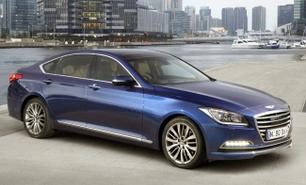
Anybody who doubts that Hyundai is gunning for the number one in the world has rocks in their head. Big heavy ones. Korean companies do not settle for anything less than number one. The second-generation Genesis (our first taste here in the Antipodes as the gen-one had its steering wheel on the wrong side) is proof.
What's different about Hyundai's unstoppable rise is the way they're going about it. They've always done their own thing in Korea, reinventing themselves time and again when they strayed off the beaten path.
The Genesis is a gamble for a Korean company in foreign markets whose default setting for luxury is marked, Britain or Germany. If Hyundai gets the Genesis wrong there will be howls of derision, or at best patronising pats on the back - "Nice try, you'll get there one day". But if they get it right...
Candidly, I questioned the logic behind GAC entering the Australian market, especially now given the seemingly non-stop influx of other brands. How could it really hope to stand a chance against so many similarly priced and similarly equipped rivals?
Well, the answer is by providing a better product. The Aion V is simply a better package than many of its rivals, Chinese and otherwise, at least based on our initial impressions.
It combines value and practicality but also adds a level of driving comfort and manners its Chinese rivals can’t match.
Is that enough to guarantee success? Not at all, but it’s a strong foundation to start with and at least gives GAC a fighting chance to not get lost in the crowd.
Note: CarsGuide attended this event as a guest of the manufacturer, with accommodation and meals provided.
The Genesis is not quite a match for cars twice its price but it makes you think what's possible. It doesn't have the dynamic brilliance of a BMW or the self-assured faultless execution of a Mercedes. Lexus ought to be worried, though - why would you have an LS when you could have this? The only answer is 'badge'.
The Genesis is an epoch-making car for the Korean manufacturer. As the company has got better, there are fewer excuses for overlooking it. While the Genesis is pitched into a shrinking market, it's not really meant for the average i30 buyer to buy, but to see.
It's bristling with tech and is not only a halo car but a shot across the bows of both Lexus and the Germans. Attached to that shot is a note: "We're coming for you." In other words, Hyundai got it right.
One of the most notable elements of the Aion V design is the absence of a ‘GAC’ badge on the front. That’s because, while all GAC models in Australia will be sold under the one name, in its native China there are several different sub-brands. GAC Aion is the ‘new energy vehicles’ brand, focused on electric vehicles (EVs), while the smaller Emzoom SUV is part of the more mainstream Trumpchi brand that offers internal combustion engine models.
It means the three cars sold initially, and even as the brand moves forward with its expansion plans, there will likely be stark visual differences between models because they are effectively different brands. In the same way Holden ended up with a mixture of Opel, Chevrolet and GMC products in its final years.
Having said all that, the Aion V itself is an inoffensive design. It’s not as generic as some of its rivals, with some design character around the headlights and silhouette, so overall it cuts a likeable figure without being particularly memorable.
Like so many modern cars, the Aion V has a very simplistic layout inside, with more screens and less physical buttons and switches to reduce cost and complexity. There’s an 8.8-inch digital instrument display and a 14.6-inch multimedia touchscreen in the centre on the dashboard.
The Genesis is like no other Hyundai. For a start, it's gigantic - it looks easily as big as a BMW 7 Series (it isn't) with the road presence to match. There's a lot of BMW from most directions, but with a sharper approach to the creasing and character of the sheet metal.
Towards the rear it's more BMW 6 Series Gran Coupe and is all the better for it. The style is understated and technocratic.
Inside is also very Germanic, but with a bit more of a Lexus feel
The big wheels from the Ultimate pack help make it look lower and sleeker, too.
Inside is also very Germanic, but with a bit more of a Lexus feel. Our car had the lighter leather which meant that the wood and the metal materials didn't necessarily work well together.
The interior is expertly put together and feels like it will last forever.
The only jarring moment is the gear selector is shared with our long-term Hyundai i30 - it looked a bit cheap in what is otherwise a beautifully executed cabin - it needs more heft.
On Australian-delivered cars there is just one Hyundai badge, sitting proudly on the boot - you get the feeling this was debated long and hard and when the decision was made to go for it, a big one was chosen.
However, the winged Genesis branding takes pride of place everywhere else. When you approach the car at night and the puddle lamps come on, the Genesis logo is projected on to the ground, crisp and clear.
Starting with the basics, the Aion V is a five-seat electric SUV priced from just $42,590, before on-road costs, for the entry-level model.
Now, not too long ago an all-electric SUV for under $45K would be a revelation and would have made an impact on this market. But there are plenty of alternatives to choose from these days at similar money, including the Geely, Leapmotor and the BYD Atto 3.
Even so, at $42,590 for the entry-level Premium and $44,590 BOC for the more-premium-than-Premium Luxury variant, that’s still very competitive pricing.
For that money you get a well-appointed mid-size SUV, with even the base model equipped with LED headlights and tail-lights, 19-inch alloy wheels, a panoramic sunroof, heated and ventilated front seats, dual-zone climate control and a nine-speaker stereo.
Stepping up to the Luxury adds partial genuine leather seats, massaging front seats and a box in the centre console that can act as a fridge and a warmer, depending on your needs.
While neither the cheapest EV nor the best-appointed, the Aion V does a nice job of offering a compelling value proposition in its competitive set.
The only way to describe the Genesis' pricing is aggressive - kicking off at $60,000, it's the most expensive Hyundai money can buy, but with a spec list like this, you won't feel at all short-changed.
Your sixty large buys you a huge cabin with a seventeen speaker stereo, auto headlights and wipers, LED ambient lighting inside and out, dual-zone climate control, keyless entry and start, powered front seats which are heated and cooled, satnav, front and rear parking sensors, and plenty of other bits and pieces.
Our car had the $22,000 Ultimate package, adding 19-inch alloys, blind spot sensor, front and side cameras, around-view display, real leather, more adjustments for the driver's seat, ventilated seats in the front, heated rear seats, panoramic glass sunroof, acoustic glass, heads-up display, powered bootlid and LED foglamps.
The Genesis is like no other Hyundai
You can have a lot of the more useful features in the $11,000 Sensory Pack. It's a good middle ground that, for example, features the excellent heads-up display.
The 9.2-inch screen splits the asymmetric air-conditioning vents. The software is unique to the Genesis and a huge leap forward over the rest of the Hyundai range - classy, smooth graphics, a good responsive screen.
You control the seventeen speaker stereo from here, which kicks out a rich sound and an impressive Bluetooth performance - rear seat passengers can also run the stereo from their armrest. The satnav is detailed and chatty, while the excellent heads-up display shows a configurable information set in strong, clear graphics.
Both the Aion V Premium and Luxury are powered by a 150kW/210Nm electric motor, which drives the front wheels.
Aion doesn’t claim a 0-100km/h time, but it wouldn’t be quick, at least not in EV terms. If you’re looking for a ludicrously powerful electric car - this ain’t it. It’s a perfectly fine powertrain for the job at hand, but it won’t blow your socks off with its performance and will take more than eight seconds to run 0-100km/h.
The Genesis is powered by Hyundai's own 3.8-litre V6 developing 232kW and 397Nm, mated to Hyundai's eight-speed automatic transmission.
Despite weighing just under two tonnes, the Genesis completes the dash to 100km/h in 6.5 seconds.
It has a claimed 11.2L/100km on the combined cycle. In what must be a first, we got below that, averaging 10.8L/100km over two weeks. And that's without stop-start fuel-saving to blunt the effect of lot of city driving.
The Genesis is not going to tempt you into a track day, even with rear wheel drive
We'd still like to try the V8 - only available in left-hand drive markets - though.
This is perhaps the area where the Aion V surprised the most. One of the most consistent qualities of these new Chinese-developed models is their incompatibility with Australia’s unique road conditions. They have a tendency to lack comfortable, controlled suspension and well-weighted and consistent steering.
That’s not the case with the Aion V, with GAC clearly taking the benefits from the partnerships it has with Toyota and Honda to learn what international markets prefer. Is this a clear standout, class-leading SUV dynamically? No. But it is above-average in the way it rides and handles.
The suspension is well resolved and feels comfortable to live with, while the steering is nice and direct, which will make navigating the cities, suburbs and open roads more easy and enjoyable.
There is still some fine-tuning that could make it better, but overall the Aion V leaves a positive first impression.
At five metres long, with a ride firmly pitched in the luxury camp, the Genesis is not going to tempt you into a track day, even with rear wheel drive.
Blindfold your passengers and swap them between a Lexus, a BMW and a Genesis and the overwhelming impression they'll get is one of incredible smoothness.
If you're wanting sudden movements, this isn't the car for you
Sitting in the back of the Genesis, it's easily as good as the German and luxury Japanese competition. The seats are hugely comfortable, there's ample head, leg and shoulder room and it feels lot nicer than anything within a bull's roar of its price.
No matter where you sit, it's an incredibly quiet car. The engine is a distant whoosh, the tyre noise muted and there's almost no wind or ambient noise. It's supremely comfortable and the excellent stereo will wash away what little noise does invade.
It certainly feels its weight from the driver's seat, with a competent, soft turn-in, but if you're wanting sudden movements, this isn't the car for you.
The Genesis is an epoch-making car for the Korean manufacturer
On fast flowing roads you can have some fun, but things will get floaty and that will quickly kill that fun. The ride and isolation from the rest of the world is completely worth it.
GAC is offering the same safety equipment across both models, which is a nice touch to avoid any need to compromise.
This includes full airbag protection for all occupants, front and rear parking sensors and a 360-degree camera system.
There’s also a lengthy list of driver assistance features, including adaptive cruise control, autonomous emergency braking, forward collision warning, traffic sign recognition, emergency lane keeping assist, rear cross-traffic alert and door opening warning.
These systems could benefit from some real-world testing and calibration, because while better than some, they were still intrusive and annoying at times - most notably the driver attention monitoring.
ANCAP has not yet tested the Aion V, but it has received a maximum five-star rating from Euro NCAP, which typically carries over to the local body.
Nine airbags, traction and stability control, lane departure warning, forward collision control, ABS, brake force assist and distribution and traction and stability control bring the ANCAP count to five stars.
The Sensory and Ultimate packs add blind spot sensors and around view cameras.