What's the difference?
We’ve waited more than two years and it’s finally here.
Cupra has introduced the updated version of its most popular car in Australia, the Formentor.
A spicy small SUV rival to the likes of the Mini Countryman, BMW X2 and Audi Q3, among others, this design-led small SUV is now offered in more flavours than ever before.
It’s our first time testing out this updated Formentor on local soil, so read on to see how it stacks up.
Most cars get secretly cheapened as they travel through their model lifecycles.
Yes, while facelifts often usher in headline advances like updated electronics and more equipment to boost attention, in too many cases, engineers are forced to cut costs, especially where they cannot be very easily detected, such as with removed sound-deadening, inferior carpet quality and deleted minor items, like bonnet struts. Hello, latest Ford Ranger!
Every cent saved is extra profit made.
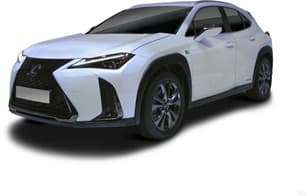
Now, we cannot tell at what level – if any – the penny-pinchers pilfered the Lexus UX for its Series II update last year, but the completely unexpected result is a small SUV/crossover that feels and drives noticeably better than before.
Keep reading to find out how and why.
It’s clear that Cupra has listened to feedback as this updated Formentor addresses many key criticisms of the pre-update car. Overall it makes it easier to live with and to recommend than before.
Although the VZe's updated PHEV powertrain offers double the amount of electric range, the V forms as a sweet spot of the line-up as it offers all the power and equipment you'd ever need. It's hard to look past the top-spec VZx though as power is a drug.
Note: CarsGuide attended this event as a guest of the manufacturer, with travel, accommodation and meals provided.
Most cars get worse as they age as their makers try and save pennies by scrimping on quality and features. But the reverse seems to be true for the Lexus UX.
The 250h Luxury 2WD we tested is the car that the brand should have launched with back in 2018, with an appealing balance of performance and economy, comfort and sporty handling, as well as refinement and features. The UX has finally come of age.
As with many updates, the Formentor has received some mild changes to the exterior design. A lot of it centres around the new, shark-like front end which brings it in line with the Leon, Terramar and Tavascan.
I’ve always been a fan of the Formentor’s slightly raised but still hunkered-down hot hatch-look. The body lines and wheel-arch flares also lean into the dynamic aesthetic.
The VZx trim looks particularly sexy with its 19-inch black and copper forged alloy wheels and the black quad exhaust tips.
I cannot wait for the VZ5 to arrive as it’s set to receive even larger 20-inch alloy wheels and more prominent quad exhaust tips that are stacked and finished in copper.
Inside it’s fairly similar to before but a highlight is the larger 12.9-inch touchscreen multimedia system. It suits the dashboard nicely while not looking too big.
There are still the pronounced, hexagonal air vents up front, plus the ambient lighting strip that wraps all the way from door to door. It’s a cool look.
If you’re keen on the ultra-sporty look, you can option Sabelt front bucket seats with carbon-fibre backs as part of the Extreme package in the VZe and VZx. It’s worth noting that this removes the front centre airbag though.
A hefty portion of the UX’s engineering underneath is shared with the popular Toyota C-HR. Not that you would necessarily know that by glancing at it.
Even five years on from launch, the current model looks slick and contemporary, and it seems to have informed the styling of newer, larger Lexus SUVs like the latest NX.
Not that you’d call the UX an SUV – it’s very much a higher-riding hatchback, with a ho-hum 160mm of ground clearance.
To put that in perspective, other crossovers are taller: the GLA has 213mm, while Subaru’s new Crosstrek boasts 220mm. At least the UX’s is loftier than the C-HR and its pitiful 137mm.
That said, the angular wheel arches and wide-track stance serves the Lexus well.
The standard seats in the Formentor have a sporty design but are still supportive and comfortable. The driver’s seat offers electric adjustment and memory as standard, while both front seats are heated.
The optional Sabelt front bucket seats hug you tighter which is nice if you plan to driving on twisting roads. It’s cool that they retain the electric adjustment and heating as this is rare in ultra-sporty seats.
Looking ahead, this steering wheel is one of my favourites on offer from any brand currently. The rim isn’t too thick or thin, plus there are plenty of physical buttons and dials. It makes it a joy to interact with.
This update has made the steering wheel-mounted engine start-stop and drive mode buttons standard across the line-up. It makes the less sporty trims feel a touch more special.
The 10.25-inch digital instrument cluster is still standard across the line-up and offers plenty of configurable options. You can set it up exactly how you'd like.
Moving across, there’s the aforementioned 12.9-inch touchscreen multimedia system. It operates on updated software which makes navigating key menus much easier.
Some key climate control functions remain at the bottom of the touchscreen which is a little easier to interact with on the move. Ideally a physical button cluster would be better but you can’t have everything.
Another key change with this update is the touch sliders under the touchscreen are finally illuminated, allowing you to see what you’re pressing at night. This should have been standard since launch.
Storage up front is adequate for a car of this size. There’s a wireless charger that’s not ventilated, two USB-C ports, a strange cupholder set-up with essentially 1.5 cupholders, a centre console box with a lid that ratchets, as well as a glovebox on the passenger side.
It’s clear the focus of the Formentor’s cabin is up front but space in the second row is a better than you’d think. At a leggy 182cm I have decent leg and headroom behind my own driving position, but toeroom is particularly good, allowing you to slide your feet comfortably under the seat ahead.
What isn’t so nice is the front seats are rather bulky, particularly the optional Sabelt bucket seats. They block your view ahead, requiring you to either lean over or look out the side window.
Second-row amenities include a third zone of climate control with air vents on the back of the centre console, as well as two USB-C ports and a fold-down armrest with cupholders.
There are ISOFIX points on the two outboard seats, as well as top-tether child seat anchorages across all three rear seats.
All versions of the Formentor now receive a hands-free power tailgate which is handy if you’ve got your hands full. It opens and closes with a kick under the rear bumper.
Boot space depends on the trim level. The S offers 450L, the V and VZx have 420L and the VZe only offers 345L with the rear seats upright. The latter is poor due to the placement of the high-voltage battery.
With the rear seats folded there’s between 1300-1400L of boot space, depending on the trim level.
Boot-related amenities include a light and some hooks. It’s great to see a space-saver spare wheel as standard across all variants besides the VZe. This is once again due to the high-voltage battery.
You even retain a space-saver spare wheel if you opt for the Extreme package in the VZx, though it has a note stating you cannot put it on the front as it physically won’t fit over the larger front brakes.
If you get a puncture on the front, you need to swap a wheel from the rear onto the front, then put the space-saver spare on the rear. You should technically be doing this anyway as space-saver spare wheels aren’t meant to go on the front in cars that are primarily front-wheel drive, like the Formentor.
The UX’s compact crossover-esque hatchback proportions have implications inside. Inevitably, this is no larger than the (related) Toyota Corolla, despite having the higher seating position.
Beyond that, though, the 2023 model highlights how Lexus has made its so-called ‘gateway’ model better than before.
For starters, despite being the base grade, this UX has a properly premium ambience, backed up by exceptional fit and finish.
From a sensory perspective, the UX looks, smells, feels and sounds like a Lexus should. And by the latter, we mean the cabin is pleasingly isolated from the outside world.
The overhauled touchscreen and multimedia system is a huge step forward for the series. The larger new display looks great and works well – what a monumental improvement over the infuriatingly fiddly old set-up. It’s difficult to see how they’ll improve it. Dependable and glitch-free. Are you listening, all European manufacturers?
Meanwhile, the carryover parts that worked well enough before continue to impress.
The UX’s front seats are sumptuous in their cushy softness and comfort, yet provide sufficient support over longer driving distances.
There’s also the excellent driving position, with most switchgear within grasp. There’s just enough space for taller people to settle in nicely up front. And the basics like ventilation and storage are thoughtfully executed. The climate in the UX is always fine.
Negatives? Don’t worry, we’ve identified several.
As mentioned earlier, the now-better-equipped Luxury does have all the essentials. But for a car that’s approaching $60K-drive-away, we’d expect kerb-side mirrors that dip down when reversing to avoid damaging alloys against gutters; we couldn’t get ours to auto-fold when locking up, either.
Driver vision out isn’t great. Thick pillars and that rising shoulder line make changing lanes and reversing a technology-reliant affair, as it’s difficult to see objects that are too-easily obscured. For the same reasons, a front camera would be useful in this grade.
Others might expect a sunroof, or cooled seats that massage, or a head-up display for the instrumentation, but we’d argue that they’re hardly necessities. Lexus has to upsell buyers to something.
Moving on to the back-seat area betrays the UX’s compactness most.
The back doors have small apertures. Entry/egress is challenging for folk with long legs. Legroom is tight, and three adults abreast would be a struggle, so it’s best to treat the littlest Lexus crossover as a four-seater.
Yet headroom is fine, the appearance and finish remain first class as it is up front, and the basics are all present – air vents, grab handles, coat hooks, overhead lighting, one map pocket, centre armrest with cupholders, two USB outlets, and windows that wind all the way down. Narrow front seats aid with light, vision and ambience, too.
Further back, the luggage area is pretty petite for an SUV, though the boot is (slightly) larger than the Corolla and Mazda3’s. That powered tailgate is useful if your arms are full, but the loading lip is high.
Normal boot floor depth is shallow but most of that flooring can be removed to reveal a hidden compartment underneath.
Small side pockets are also useful. You’ll find a 240V outlet. Bag hooks and floor tie-down hooks are fitted.
And – being a hybrid – there’s no spare wheel, just a tyre inflation kit. And the flimsy cargo cover is there only to keep prying eyes out.
Not big on utility, then, but the UX is true to its role as a Lexus in concentrate form.
New with this update is an entry-level, mild-hybrid trim called the S. It’s priced from $49,990 before on-road costs.
However, all the variants that carried over received a price increase of at least $4000. The Formentor V now starts at $57,490 before on-road costs, the VZe now costs $68,990 and the VZx costs $69,990.
At the top of the line-up is the forthcoming, limited-production VZ5 which is due towards the end of 2026. It’s priced from $94,990 before on-road costs, which makes it the most expensive Cupra ever offered in Australia.
All Formentors now receive a larger 12.9-inch touchscreen multimedia system as standard, as well as a hands-free power tailgate and heated sports bucket front seats.
Stepping up to the V, which was previously the entry-level model, you get a more powerful engine with all-wheel drive, as well as 19-inch black and copper alloy wheels.
The VZe, which is the plug-in hybrid (PHEV) trim, gains a 12-speaker Sennheiser sound system, leather-appointed upholstery and adaptive suspension. The latter was previously standard across the line-up.
Lastly the VZx gets 19-inch black and copper forged alloy wheels, black quad exhaust tips and a trick torque-splitting rear differential that allows for a Drift mode.
The entire line-up can be optioned with a panoramic glass sunroof for an additional $2000.
The Formentor S and V can be optioned with the Leather & Sound package for $2200 which brings Nappa leather-appointed upholstery, power adjustment and memory for the passenger seat, as well as a 12-speaker Sennheiser sound system.
Lastly, the Formentor VZe and VZx can be optioned with the Extreme package for $6500 and $7000, respectively. It brings matrix LED headlights, Sabelt Cup bucket front seats, then four-piston Brembo front brakes in the VZe and six-piston Akebono front brakes in the VZx.
Let’s list those changes briefly, as they inform the car you see before you.
The pre-facelift UX released in 2018 was criticised for riding too harshly and not being fun enough to drive.
So, Lexus says the MY23 version’s steering rack is better braced, the suspension and rear adaptive dampers have been retuned, the chassis gains more spot welds for added rigidity and the body is now stiffer and stronger than before. These are learnings directly applied from the UX300e EV version released in late 2021.
Most buyers will probably be more impressed with a now two-inch larger touchscreen, updated and (at long last!) easier-to-operate multimedia system, post-crash emergency services-callout should the driver end up incapacitated, upgraded voice recognition system, more-effective lane-keep assistance, improved traction through corners, better surround-view monitor and jazzed-up trim presentation.
Collectively, they strive to finally bring the expected/demanded on-brand qualities lacking from the previous model and in the UX’s largely-patchy competitor set – namely the Audi Q2, BMW X2, Jaguar E-Pace, Mercedes-Benz GLA and Volvo XC40.
This is especially so when sizing up the entry-level front-wheel drive grades (euphemistically dubbed 2WD at these exalted heights) of each, as we have done with the least-expensive hybrid version of the UX, the 250h Luxury from $53,820 (all prices are before on-road costs).
Costing nearly $8000 more than the base 200 Luxury petrol version, the hybrid accounts for the lion’s share of sales, and really has no direct electrified premium rival at that price point, except in the recently-released Alfa Romeo Tonale Ti from $49,900 – though that’s a mild-hybrid set-up with a 48-volt battery.
Along with an electric motor and a small Nickel-metal Hydride (Ni-MH) battery, the 250h Luxury is compellingly equipped for a base grade, including a 12.3-inch touchscreen, wireless Apple CarPlay, wired Android Auto, Bluetooth telephony, ‘Hey, Lexus!’ voice recognition, 10-speaker audio, digital radio, satellite navigation, remote engine-start/door-unlocking/hazard flashers/buzzer, acoustic windscreen glass, heated/powered mirrors, powered steering column, heated/powered front seats, climate control, keyless entry/start, a powered tailgate, roof rails, alarm and 17-inch alloys.
The 250h Luxury also comes with ‘Enhancement Pack 2’, featuring a powered tailgate with kick sensor, a wireless phone charger, cornering lights, headlight cleaners and rear privacy glass.
On the safety front, there’s all the usual driver-assist tech equipment including Autonomous Emergency Braking (AEB), lane-support systems and rear-cross traffic alert, amongst other items. Check our safety section for a full rundown.
So, yes, the UX 250h Luxury represents strong value. Even for a luxury-branded vehicle.
At launch all versions of the updated Formentor feature turbocharged four-cylinder petrol engines of varying sizes and power outputs, as well as dual-clutch automatic transmissions.
This will change when the flagship VZ5 with its turbocharged five-cylinder from the Audi RS3 arrives later this year.
The entry-level Formentor S is powered by a 1.5-litre turbo four-cylinder with 48V mild-hybrid assistance and total system outputs of 110kW and 250Nm. It has a seven-speed dual-clutch and is front-wheel drive.
The Formentor V gets a 2.0-litre turbo four-cylinder that produces 150kW and 320Nm. This is 10kW more than before. It has a seven-speed dual-clutch and is all-wheel drive.
The Formentor VZe has a 1.5-litre turbo four-cylinder and an electric motor with total system outputs of 200kW and 400Nm. This is 20kW more than before. It has a six-speed dual-clutch and is front-wheel drive.
Lastly the Fomentor VZx has a 2.0-litre turbo four-cylinder that produces 245kW and 420Nm. This is 17kW and 20Nm more than before. It has a seven-speed dual-clutch and is all-wheel drive.
The UX’s Corolla/C-HR connection continues with its 2.0-litre (1987cc) twin-cam four-cylinder petrol engine, delivering 107kW of power at 6000rpm and 188Nm of torque between 4400 and 5200rpm.
The 250h Luxury pairs that with an 80kW/202Nm permanent magnet motor and 1.4kWh Ni-MH battery, for a combined power output of 135kW. A second, rear-mounted motor is available in higher grades, providing all-wheel drive. But not in this Luxury guise.
As with most Toyota and Lexus hybrids, charging is only via the petrol engine and recuperated energy from braking. Electric-only drive is only offered during brief spells of low-speed light-throttle driving, or off-throttle coasting where conditions allow.
Drive is sent to the front wheels via an electronically-controlled continuously variable transmission (CVT). Three modes are offered – 'Eco', 'Normal' and 'Sport'.
Tipping the scales at 1625kg (kerb), the 250h Luxury offers a power-to-weight ratio of nearly 83.1kW per tonne. That’s a hefty output for a hybrid. Top speed is 177km/h, with 0-100km/h needing 8.5 seconds.
Underpinning that performance is a MacPherson-style strut-front and a multi-link rear suspension set-up.
One of the biggest changes with this update is the Formentor VZe’s PHEV system.
It now features a larger 20kWh lithium-ion battery pack that allows up to 114km of electric driving, according to WLTP testing. This is roughly double the amount of the pre-update car.
This battery now also offers DC fast charging at rates up to 50kW, plus the AC charging rate has increased to 11kW (it was previously 3.6kW).
Cupra claims the updated Formentor VZe consumes an average of 1.7L/100km, which is 0.2L/100km better than the pre-update car. However, this will depend greatly on whether you charge the battery.
Elsewhere in the line-up, the entry-level Formentor S with its mild-hybrid system has a claimed combined fuel consumption of 5.5L/100km.
The Formentor V is claimed to consume 7.0L/100km and the VZx is claimed to consume 8.3L/100km (8.5L/100km with the Extreme package).
The Formentor V and VZx have 55L fuel tanks, the S has a 50L fuel tank and the VZe has a 40L fuel tank. All require a minimum of 95 RON premium unleaded petrol, while the VZx requires a minimum of 98 RON premium unleaded petrol.
Officially, the 250h averages an impressive 4.5 litres per 100km on the combined cycle, which is just 103 grams per kilometre of carbon-dioxide emissions.
Now, out in the real world, with plenty of inner-city and urban driving as well as a spell of fast highway runs punctuated by some very heavy-footed acceleration, we managed just under 7.4L/100km pump-to-pump.
That’s not too bad given how hard our UX was caned. The trip meter showed 5.6L/100km over the same distance (nearly 400km).
This is one Lexus hybrid that will happily sip from the standard 91 RON unleaded petrol pump. With a fuel tank capacity of a smallish 43 litres, expect a range of between 930km and 1000km.
For a luxury small crossover, these are economical figures.
The entry-level Formentor S’s mild-hybrid powertrain has modest outputs of 110kW and 250Nm and around town there’s enough juice on tap.
However, once you get out on the open road the ceiling of this powertrain reveals itself quickly, requiring it to dive back through the gears ruthlessly in order to keep up the pace. This is less of a problem if you’ve already got the car in a sporty drive mode.
The small electric motor that’s fed by the 48V mild-hybrid battery provides a minor boost off the mark, but it mainly smooths out the low-speed hesitancy from the dual-clutch automatic.
Moving up, the Formentor V’s turbo-petrol engine firms as the sweet spot of the line-up if you’re not after the ballistic craziness of the VZx. With the extra power and torque it’s a little less stressed than the S, plus you have the security of all-wheel grip.
The Formentor VZe’s PHEV powertrain is noticeably different from behind the wheel. Extra electric range aside, the electric motor is still packaged within the dual-clutch transmission although unlike the pre-update model, you can no longer feel the car shifting between gears.
There’s plenty of power available and depending on the battery charge the car can turn the engine off and on even at highway speeds. You can’t actually feel it happening, you only see the tacho rise and fall.
Lastly, the VZx is a missile. It feels incredibly unstressed in everyday driving and with a subtle flex of the right foot it gets moving with haste.
Like some Volkswagen Group products, the Formentor can hold a higher gear in its standard drive mode, taking a beat to kick down a gear if required. Thankfully peak torque is available down low in the rev range across the line-up.
Compared to the pre-update model, the VZx now gains a trick torque-splitting rear differential and a ‘Drift’ mode. We had the chance to sample the old and new cars back-to-back on a wet skid pan and the difference is night and day.
The pre-update model has terminal understeer no matter how much you coax it, however the updated Formentor VZx is incredibly tail-happy. You can do smile-inducing four-wheel drifts with ease, plus it will stop itself from going over the edge and spinning out.
Obviously this is something that you can only use on private roads and it isn’t something that you’d use everyday. It’s a cool novelty feature to try if you get the chance.
As standard there is progressive steering across the line-up which ramps up the resistance the more you turn the wheel. In practice this makes the Formentor a fun and agile car to drive, even around town.
A subtle change with this update is the entry-level Formentor S and V now receive a standard passive damper set-up, whereas the VZe and VZx have adaptive dampers. The latter was previously standard across the line-up and it allows you to configure the ride from comfort soft to sporty firm.
While it’s nice to have the configurability, the ride on the standard passive dampers is still beautifully compliant. It’s a little more comfort-oriented than I’d expect from a Cupra but I don’t hate this in the less-powerful variants.
In terms of noise, vibration and harshness (NVH), this is the Formentor’s downfall. Like many European cars, there is a lot of road and tyre noise on the open road, especially on coarse-chip roads.
Surprisingly some of the cars on the launch were already starting to develop random rattles around the cabin. This isn’t great as all the cars were brand new with around 1000km on the odometer.
Before driving the 2023 UX250h hybrid, there was some trepidation.
All versions of the original series from 2018 were tested previously, and in every one bar the base 200 on small wheels and tyres, none lived up to the promise of a premium Lexus crossover. A harsh ride, excessive noise intrusion and dull handling made this model a disappointment.
That’s all in the past, thankfully, thanks to a sustained program to save the UX from mediocrity. The company really got the basics wrong the first time around with the horrid CT200h predecessor back in 2011, so we imagine that it would be damned if this was going down the same sorry path again.
In the 250h Luxury, as reviewed here, it is difficult to objectively fault the way everything works and drives.
Let’s start with performance. Even in Normal or Eco mode, the UX steps off the line briskly, and initially at least, it’s the electric motor and battery that silently whooshes the car forward.
If you’re gentle, you can reach speeds of up to about 40km/h before the petrol engine chimes in unobtrusively.
Beyond that, there’s a stream of electric power you can feel, keeping the acceleration coming on strong, even as speeds rise above 100km/h.
This is also true for Sport mode, except that it all happens a bit quicker and earlier, and with extra urge.
And the welcome news here is that the CVT doesn’t really make the engine sound too droney, unless the driver is mashing the pedal to the metal.
Travelling along at normal urban speeds, there’s a seamless transition from electric-enhanced petrol propulsion back to electric-only if the conditions are right – such as when coasting off-throttle.
This is most common in heavier traffic, and the resulting smoothness and quietness adds to a refined and relaxed experience.
About our only objection is when you apply the brakes. In our test car, they felt a little on/off, like a switch. At times, they seemed too grabby for smooth stopping.
That said, the driver can downshift using the gear lever to provide powertrain braking, to help minimise snatchiness.
Road noise seems to be more muted than before, supporting Lexus’ claims that retuning the suspension and beefing up the structure/chassis has helped with refinement.
We wouldn’t say the UX is at the top of the class for quietness, especially on Australia’s coarse-bitumen highways, but now things have hushed sufficiently enough for a crossover purporting to be a premium.
Where the suspension changes really transform the UX, at least on the 215/60R17 tyres the Luxury wears, is how much softer and comfier the ride is.
Where before there was suddenness there’s now suppleness, substantially improving the experience. We wonder whether the bigger-wheeled rubber the richer grades receive are as well-resolved.
As the 250h Luxury is not trying to be a hot hatch, the resulting body lean through fast corners is a happy trade-off, though it’s not so roly-poly that handling composure is adversely affected.
Plus, the steering – while light and easy at parking speeds – still offers enough response and feedback for most drivers to enjoy taking the UX for a cross-country blast once in a while.
To that end, the steering’s weighting does increase in Sport mode… though you won’t be selling your Peugeot 205 GTi for one just yet, but that previous dullness is history. In fact, whether behind the wheel or ensconced in one of the inviting outboard seats, the UX250h as a whole is a much sunnier experience all-round than before.
The Cupra Formentor originally received a five-star ANCAP safety rating in 2021 and this has been renewed for the updated model based on testing conducted by Euro NCAP in 2025.
It’s worth noting that this doesn’t apply to variants equipped with the Extreme Package, as well as the VZ5, as it removes the centre front airbag.
All models receive 10 airbags including rear-side and front-centre airbags as standard, plus autonomous emergency braking (AEB), adaptive cruise control with lane centring, a surround-view camera, as well as a parking assist.
New with this update is traffic sign recognition with intelligent speed limit assist which can, thankfully, be permanently switched off.
There’s also a driver attention monitoring system with a camera built into the rear-view mirror.
You can turn this off by using the central touchscreen but it defaults back on every time you turn the car on.
Tested in 2019, the UX has managed an ANCAP crash-test rating of a maximum five stars. The rating applies to all models built from October, 2020, onwards.
That’s no surprise, given the level of standard safety equipment fitted, even to this entry-level 250h Luxury grade.
You’ll find eight airbags – dual front, side chest, side head and driver and passenger knee – as well as Lexus’ ‘Pre-collision safety system’ with AEB for pedestrian (day/night) and cyclist (day) detection and daytime intersection assistance.
The AEB functions from 10km/h to 180km/h and the lane support systems between 50km/h and 180km/h.
Also included is lane-keep assist, speed-sign recognition, rear cross-traffic alert, parking support braking, blind-spot monitor, emergency steering assist, auto high beam, full stop/go adaptive cruise control and front and rear parking sensors.
Anti-lock brakes with brake assist and electronic brake-force distribution, traction control, stability control, active cornering assist, four-wheel disc brakes and a reverse camera are fitted.
Lexus’ Connected Services offers SOS emergency call, stolen vehicle tracker and other GPS-based assistance features.
The outboard rear seats include ISOFIX child restraint anchors and there are three top tethers for baby capsule/child seat straps across the second row.
The Formentor, like all other Cupras, is covered by a five-year, unlimited-kilometre warranty, which is a little lacklustre for a mainstream brand now as many have moved to conditional eight or 10-year terms.
Logbook servicing is required every 12 months or 15,000km, whichever comes first.
There are three- and five-year pre-paid service packages available that are priced at $1090 and $2190, respectively. In the latter case, this means each service averages out to almost $440 which is fairly average for a European car.
Cupra currently has 40 dealers and 28 service centres in Australia. Many of these are located around major cities.
Lexus offers a five-year/unlimited kilometre warranty and roadside assistance.
Service intervals are at 12 months or 15,000km.
The first three scheduled services are capped at $495 each, with the work carried out detailed online.