What's the difference?
We’ve waited more than two years and it’s finally here.
Cupra has introduced the updated version of its most popular car in Australia, the Formentor.
A spicy small SUV rival to the likes of the Mini Countryman, BMW X2 and Audi Q3, among others, this design-led small SUV is now offered in more flavours than ever before.
It’s our first time testing out this updated Formentor on local soil, so read on to see how it stacks up.
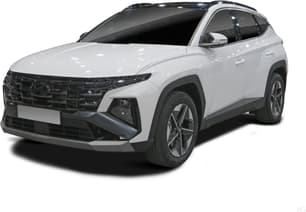
For the first time in Australia, the mid-sized Hyundai Tucson is being offered with a hybrid powertrain – which combines its spritely turbo-powered engine with a fuel efficiency-improving electric motor. And it might be enough to swing you to becoming a hybrid fan.
The new powertrain makes the Tucson a proper competitor against Australia’s darling, the Toyota RAV4 but the Nissan X-Trail e-Power and Kia Sportage remain strong rivals.
This week I’m family-testing the mid-spec Elite Hybrid with the N Line option pack to see how the newly updated Tucson handles family life.
It’s clear that Cupra has listened to feedback as this updated Formentor addresses many key criticisms of the pre-update car. Overall it makes it easier to live with and to recommend than before.
Although the VZe's updated PHEV powertrain offers double the amount of electric range, the V forms as a sweet spot of the line-up as it offers all the power and equipment you'd ever need. It's hard to look past the top-spec VZx though as power is a drug.
Note: CarsGuide attended this event as a guest of the manufacturer, with travel, accommodation and meals provided.
The updated Hyundai Tucson Elite Hybrid N Line offers families space, features and easy-enough handling for everyday stuff and the occasional weekend adventure pursuits.
The price point is higher than the previous non-hybrid model but you get a lot of bang for your buck and my family was comfortable this week.
As with many updates, the Formentor has received some mild changes to the exterior design. A lot of it centres around the new, shark-like front end which brings it in line with the Leon, Terramar and Tavascan.
I’ve always been a fan of the Formentor’s slightly raised but still hunkered-down hot hatch-look. The body lines and wheel-arch flares also lean into the dynamic aesthetic.
The VZx trim looks particularly sexy with its 19-inch black and copper forged alloy wheels and the black quad exhaust tips.
I cannot wait for the VZ5 to arrive as it’s set to receive even larger 20-inch alloy wheels and more prominent quad exhaust tips that are stacked and finished in copper.
Inside it’s fairly similar to before but a highlight is the larger 12.9-inch touchscreen multimedia system. It suits the dashboard nicely while not looking too big.
There are still the pronounced, hexagonal air vents up front, plus the ambient lighting strip that wraps all the way from door to door. It’s a cool look.
If you’re keen on the ultra-sporty look, you can option Sabelt front bucket seats with carbon-fibre backs as part of the Extreme package in the VZe and VZx. It’s worth noting that this removes the front centre airbag though.
The Hyundai Tucson has seen a minor facelift on the exterior but most of the changes are in the cabin.
The N Line pack means that you get 19-inch alloy wheels over the standard 18-inch version as well as extended body panelling instead of black plastic trims. There is N Line badging across the car too, but N Line option pack does limit you to just four exterior colour choices.
The front features new stacked LED DRLs which tie in with the fang-like design of the rear LEDs. The origami-styled panelling looks more severe than the previous model which helps it stand out in a class that’s heavy on rivals.
The cabin features a completely reconfigured dashboard and now sports a large curved display panel that houses those upgraded tech screens and a new 6.6-inch climate control panel.
The centre console has been redesigned to look like it’s floating and now adds an extra-large storage cubby underneath it.
The upgraded interior makes the Tucson a leader for the mid-sized SUV segment and is very pleasant to spend time in.
The standard seats in the Formentor have a sporty design but are still supportive and comfortable. The driver’s seat offers electric adjustment and memory as standard, while both front seats are heated.
The optional Sabelt front bucket seats hug you tighter which is nice if you plan to driving on twisting roads. It’s cool that they retain the electric adjustment and heating as this is rare in ultra-sporty seats.
Looking ahead, this steering wheel is one of my favourites on offer from any brand currently. The rim isn’t too thick or thin, plus there are plenty of physical buttons and dials. It makes it a joy to interact with.
This update has made the steering wheel-mounted engine start-stop and drive mode buttons standard across the line-up. It makes the less sporty trims feel a touch more special.
The 10.25-inch digital instrument cluster is still standard across the line-up and offers plenty of configurable options. You can set it up exactly how you'd like.
Moving across, there’s the aforementioned 12.9-inch touchscreen multimedia system. It operates on updated software which makes navigating key menus much easier.
Some key climate control functions remain at the bottom of the touchscreen which is a little easier to interact with on the move. Ideally a physical button cluster would be better but you can’t have everything.
Another key change with this update is the touch sliders under the touchscreen are finally illuminated, allowing you to see what you’re pressing at night. This should have been standard since launch.
Storage up front is adequate for a car of this size. There’s a wireless charger that’s not ventilated, two USB-C ports, a strange cupholder set-up with essentially 1.5 cupholders, a centre console box with a lid that ratchets, as well as a glovebox on the passenger side.
It’s clear the focus of the Formentor’s cabin is up front but space in the second row is a better than you’d think. At a leggy 182cm I have decent leg and headroom behind my own driving position, but toeroom is particularly good, allowing you to slide your feet comfortably under the seat ahead.
What isn’t so nice is the front seats are rather bulky, particularly the optional Sabelt bucket seats. They block your view ahead, requiring you to either lean over or look out the side window.
Second-row amenities include a third zone of climate control with air vents on the back of the centre console, as well as two USB-C ports and a fold-down armrest with cupholders.
There are ISOFIX points on the two outboard seats, as well as top-tether child seat anchorages across all three rear seats.
All versions of the Formentor now receive a hands-free power tailgate which is handy if you’ve got your hands full. It opens and closes with a kick under the rear bumper.
Boot space depends on the trim level. The S offers 450L, the V and VZx have 420L and the VZe only offers 345L with the rear seats upright. The latter is poor due to the placement of the high-voltage battery.
With the rear seats folded there’s between 1300-1400L of boot space, depending on the trim level.
Boot-related amenities include a light and some hooks. It’s great to see a space-saver spare wheel as standard across all variants besides the VZe. This is once again due to the high-voltage battery.
You even retain a space-saver spare wheel if you opt for the Extreme package in the VZx, though it has a note stating you cannot put it on the front as it physically won’t fit over the larger front brakes.
If you get a puncture on the front, you need to swap a wheel from the rear onto the front, then put the space-saver spare on the rear. You should technically be doing this anyway as space-saver spare wheels aren’t meant to go on the front in cars that are primarily front-wheel drive, like the Formentor.
The cabin up front is spacious with plenty of head- and legroom on offer. You also won’t jostle for elbow room either when you have a passenger.
The seats are comfortable with their heat function but you might still get fatigue on longer trips as you only get adjustable lumbar on the drivers side and it's simple at best.
The back seat has really good space for the class and no matter the passenger, they were comfortable back there. The seats in the rear are well-padded and access to this row is good for sliding in a child seat as the door aperture is wide.
Other amenities are average with directional air-vents, a single reading light, and a fold-down armrest. My seven-year-old son found the window sills to be quite high, so he didn’t get the view he wanted.
The individual storage is excellent for the class with the redesign as you get a dedicated storage shelf in front of the front passenger and a massive cubby that easily fits a handbag underneath the mid-sized centre console.
There are two cupholders and two drink bottle holders per row but the rear storage bins are skinny. The rear row also gets map pockets but again, these are shallow.
The upgraded technology is a must have and the new multimedia system is easy to use once you spend time with it and looks great with its graphics. The system has built-in satellite navigation, over-the-air updates and wireless connectivity for Apple CarPlay and Android Auto.
Connecting the CarPlay is simple and maintains a strong connection.
Charging options are great with two USB-C ports per row and the front also gets a wireless charging pad and a 12-volt socket to choose from. The centrally located position of the charging pad is handy and the liner grippy - so no phone movement.
Rounding out the practicality is the boot, which has a wide aperture and a loading space level with 582L of capacity available with all seats in use, which is good for the class.
The back row has a 60/40 split but don’t fold flat – they sort of spring up a bit, which might annoy when you do a big Bunnings run.
There is a 12-volt socket, a space-saver spare tyre underneath the floor and you get a powered tailgate in this model – which I always like.
New with this update is an entry-level, mild-hybrid trim called the S. It’s priced from $49,990 before on-road costs.
However, all the variants that carried over received a price increase of at least $4000. The Formentor V now starts at $57,490 before on-road costs, the VZe now costs $68,990 and the VZx costs $69,990.
At the top of the line-up is the forthcoming, limited-production VZ5 which is due towards the end of 2026. It’s priced from $94,990 before on-road costs, which makes it the most expensive Cupra ever offered in Australia.
All Formentors now receive a larger 12.9-inch touchscreen multimedia system as standard, as well as a hands-free power tailgate and heated sports bucket front seats.
Stepping up to the V, which was previously the entry-level model, you get a more powerful engine with all-wheel drive, as well as 19-inch black and copper alloy wheels.
The VZe, which is the plug-in hybrid (PHEV) trim, gains a 12-speaker Sennheiser sound system, leather-appointed upholstery and adaptive suspension. The latter was previously standard across the line-up.
Lastly the VZx gets 19-inch black and copper forged alloy wheels, black quad exhaust tips and a trick torque-splitting rear differential that allows for a Drift mode.
The entire line-up can be optioned with a panoramic glass sunroof for an additional $2000.
The Formentor S and V can be optioned with the Leather & Sound package for $2200 which brings Nappa leather-appointed upholstery, power adjustment and memory for the passenger seat, as well as a 12-speaker Sennheiser sound system.
Lastly, the Formentor VZe and VZx can be optioned with the Extreme package for $6500 and $7000, respectively. It brings matrix LED headlights, Sabelt Cup bucket front seats, then four-piston Brembo front brakes in the VZe and six-piston Akebono front brakes in the VZx.
There are now six variants for the Hyundai Tucson with the release of the hybrid powertrain and all six have the choice of being either a front-wheel-drive or all-wheel drive with either the petrol engine or hybrid powertrain. And every grade gets the option of adding the N Line style pack. So, there is no excuse for not getting the combo you actually want now.
The model on test is the mid-spec Elite Hybrid with the N Line option pack and its priced from $55,100 before on-road costs. That positions it towards the top end of the market but you get an SUV that's more feature-heavy than most of its rivals.
The standard equipment for the upgraded Elite Hybrid N Line now includes dual 12.3-inch technology screens, wireless Apple CarPlay and Android Auto, as well as a 6.6-inch climate control touchpad.
Other equipment includes a powered driver’s seat, heated front seats, suede/leather upholstery, dual-zone climate control, wireless charging pad, digital radio, four USB-C ports, keyless entry, push-button start, space-saver spare wheel and a powered tailgate.
The Kia Sportage SX hybrid is more affordable at $45,950 MSRP but unlike the Elite Hybrid it misses out on wireless connectivity for phone charging and phone integration apps.
The Toyota RAV4 XSE AWD is priced from $52,585 MSRP but misses out on the newer and bigger technology screens that the upgraded Elite Hybrid has.
The Nissan X-Trail Ti 4WD e-Power is the closest rival in terms of price ($55,090 MSRP) and available features.
At launch all versions of the updated Formentor feature turbocharged four-cylinder petrol engines of varying sizes and power outputs, as well as dual-clutch automatic transmissions.
This will change when the flagship VZ5 with its turbocharged five-cylinder from the Audi RS3 arrives later this year.
The entry-level Formentor S is powered by a 1.5-litre turbo four-cylinder with 48V mild-hybrid assistance and total system outputs of 110kW and 250Nm. It has a seven-speed dual-clutch and is front-wheel drive.
The Formentor V gets a 2.0-litre turbo four-cylinder that produces 150kW and 320Nm. This is 10kW more than before. It has a seven-speed dual-clutch and is all-wheel drive.
The Formentor VZe has a 1.5-litre turbo four-cylinder and an electric motor with total system outputs of 200kW and 400Nm. This is 20kW more than before. It has a six-speed dual-clutch and is front-wheel drive.
Lastly the Fomentor VZx has a 2.0-litre turbo four-cylinder that produces 245kW and 420Nm. This is 17kW and 20Nm more than before. It has a seven-speed dual-clutch and is all-wheel drive.
The Elite Hybrid N Line model features a hybrid powertrain that combines an electric motor with a 1.6-litre four-cylinder turbo-petrol engine. They combine to produce 172kW of power and 367Nm of torque. Which is more than enough to make the mid-sized Tucson feel spirited.
This particular variant is AWD and uses a six-speed automatic transmission, which can over rev at times but is mostly smooth with its gear changes.
One of the biggest changes with this update is the Formentor VZe’s PHEV system.
It now features a larger 20kWh lithium-ion battery pack that allows up to 114km of electric driving, according to WLTP testing. This is roughly double the amount of the pre-update car.
This battery now also offers DC fast charging at rates up to 50kW, plus the AC charging rate has increased to 11kW (it was previously 3.6kW).
Cupra claims the updated Formentor VZe consumes an average of 1.7L/100km, which is 0.2L/100km better than the pre-update car. However, this will depend greatly on whether you charge the battery.
Elsewhere in the line-up, the entry-level Formentor S with its mild-hybrid system has a claimed combined fuel consumption of 5.5L/100km.
The Formentor V is claimed to consume 7.0L/100km and the VZx is claimed to consume 8.3L/100km (8.5L/100km with the Extreme package).
The Formentor V and VZx have 55L fuel tanks, the S has a 50L fuel tank and the VZe has a 40L fuel tank. All require a minimum of 95 RON premium unleaded petrol, while the VZx requires a minimum of 98 RON premium unleaded petrol.
The official combined cycle fuel consumption figure is a low 5.3L/100km, and my real-world usage came out at 6.0L after doing a lot of open-road driving where hybrids tend to be at their least efficient, so that is an excellent result.
The Tucson hybrid is the second best for fuel usage after the Toyota RAV4 hybrid, which sits at 4.8L/100km for combined usage. Overall, the new hybrid powertrain has proven itself to be pretty frugal.
Based on the official combined fuel cycle and 53L fuel tank, expect a theoretical driving range of up to 981km, which is great for a family road tripper.
The entry-level Formentor S’s mild-hybrid powertrain has modest outputs of 110kW and 250Nm and around town there’s enough juice on tap.
However, once you get out on the open road the ceiling of this powertrain reveals itself quickly, requiring it to dive back through the gears ruthlessly in order to keep up the pace. This is less of a problem if you’ve already got the car in a sporty drive mode.
The small electric motor that’s fed by the 48V mild-hybrid battery provides a minor boost off the mark, but it mainly smooths out the low-speed hesitancy from the dual-clutch automatic.
Moving up, the Formentor V’s turbo-petrol engine firms as the sweet spot of the line-up if you’re not after the ballistic craziness of the VZx. With the extra power and torque it’s a little less stressed than the S, plus you have the security of all-wheel grip.
The Formentor VZe’s PHEV powertrain is noticeably different from behind the wheel. Extra electric range aside, the electric motor is still packaged within the dual-clutch transmission although unlike the pre-update model, you can no longer feel the car shifting between gears.
There’s plenty of power available and depending on the battery charge the car can turn the engine off and on even at highway speeds. You can’t actually feel it happening, you only see the tacho rise and fall.
Lastly, the VZx is a missile. It feels incredibly unstressed in everyday driving and with a subtle flex of the right foot it gets moving with haste.
Like some Volkswagen Group products, the Formentor can hold a higher gear in its standard drive mode, taking a beat to kick down a gear if required. Thankfully peak torque is available down low in the rev range across the line-up.
Compared to the pre-update model, the VZx now gains a trick torque-splitting rear differential and a ‘Drift’ mode. We had the chance to sample the old and new cars back-to-back on a wet skid pan and the difference is night and day.
The pre-update model has terminal understeer no matter how much you coax it, however the updated Formentor VZx is incredibly tail-happy. You can do smile-inducing four-wheel drifts with ease, plus it will stop itself from going over the edge and spinning out.
Obviously this is something that you can only use on private roads and it isn’t something that you’d use everyday. It’s a cool novelty feature to try if you get the chance.
As standard there is progressive steering across the line-up which ramps up the resistance the more you turn the wheel. In practice this makes the Formentor a fun and agile car to drive, even around town.
A subtle change with this update is the entry-level Formentor S and V now receive a standard passive damper set-up, whereas the VZe and VZx have adaptive dampers. The latter was previously standard across the line-up and it allows you to configure the ride from comfort soft to sporty firm.
While it’s nice to have the configurability, the ride on the standard passive dampers is still beautifully compliant. It’s a little more comfort-oriented than I’d expect from a Cupra but I don’t hate this in the less-powerful variants.
In terms of noise, vibration and harshness (NVH), this is the Formentor’s downfall. Like many European cars, there is a lot of road and tyre noise on the open road, especially on coarse-chip roads.
Surprisingly some of the cars on the launch were already starting to develop random rattles around the cabin. This isn’t great as all the cars were brand new with around 1000km on the odometer.
The new hybrid powertrain offers respectable power delivery that makes the Tucson feel zippy in the city and a relaxed cruiser on the open road.
There can be some over-revving when you’re trying to get up to speed and the accelerator and brake feel touchy at first until you get used to them.
On the hybrid side of things the Elite Hybrid has regenerative braking and there are moments of pure EV mode but it kicks in seemingly when it feels like it. When it is on, there’s practically no engine noise but when it's off, the cabin still remains fairly quiet.
My family went off the paved stuff this week and hit muddy and gravel roads on our quest to find a cool picnic spot, and the Elite Hybrid impressed with how it handled the different terrains. It’s not an off-roader but you can still do mini adventures.
The Tucson is mid-sized and has a very clear reversing camera with front and rear parking sensors, so it’s not too hard to manoeuvre or park.
The real negative feedback is that on three separate occasions, our test car randomly shifted into neutral while driving and to clarify, this did not occur while trying to shift into or out of 'drive' but while on the road, already in drive.
The first time it happened, I thought I had somehow bumped the column shifter but on the other two occasions, I happened to be watching my husband drive and he didn’t touch the shifter.
This is probably just a fault on out test car and not indicative of the model in general but it wasn't fun.
The Cupra Formentor originally received a five-star ANCAP safety rating in 2021 and this has been renewed for the updated model based on testing conducted by Euro NCAP in 2025.
It’s worth noting that this doesn’t apply to variants equipped with the Extreme Package, as well as the VZ5, as it removes the centre front airbag.
All models receive 10 airbags including rear-side and front-centre airbags as standard, plus autonomous emergency braking (AEB), adaptive cruise control with lane centring, a surround-view camera, as well as a parking assist.
New with this update is traffic sign recognition with intelligent speed limit assist which can, thankfully, be permanently switched off.
There’s also a driver attention monitoring system with a camera built into the rear-view mirror.
You can turn this off by using the central touchscreen but it defaults back on every time you turn the car on.
FINALLY! Hyundai has listened to the people.
They have found a workaround for the annoyingly intrusive beeping alerts associated with the traffic sign recognition and speed alert tech. Yes, they still alert unless you turn them off and yes, you still have to turn the damn thing off every time you get in the car, but you not longer have to access five to six menu pages to do so. Hurrah.
The Hyundai Tucson Elite Hybrid N Line has a robust safety features list and includes equipment like blind spot monitoring, driver attention monitoring, safe exit warning, rear occupant alert, forward collision warning, LED daytime running lights, rear cross-traffic alert, lane keeping aid, traffic sign recognition, intelligent seatbelt warning, adaptive cruise control, a reversing camera, and front/rear parking sensors.
Our test model misses out on lane departure alert and the lane keeping aid is too intrusive for every day driving. It gets to the point where you wonder who is driving, you or the car.
The Hyundai Tucson has a maximum five-star ANCAP safety rating from testing done in 2021 and the hybrid variants are covered by this as well. It has seven airbags, including, the newer front centre airbag.
The Tucson has two ISOFIX child seat mounts and three top-tethers.
Auto emergency braking (AEB) is standard and features car, pedestrian, cyclist and junction assist detection which is operational from 5.0 – 80km/h (85km/h for car) but it's usual to see a higher top speed for the car detection (usually 180km/h).
The Formentor, like all other Cupras, is covered by a five-year, unlimited-kilometre warranty, which is a little lacklustre for a mainstream brand now as many have moved to conditional eight or 10-year terms.
Logbook servicing is required every 12 months or 15,000km, whichever comes first.
There are three- and five-year pre-paid service packages available that are priced at $1090 and $2190, respectively. In the latter case, this means each service averages out to almost $440 which is fairly average for a European car.
Cupra currently has 40 dealers and 28 service centres in Australia. Many of these are located around major cities.
Hyundai offers the Tucson with a five-year/unlimited km warranty and the battery is covered by an eight-year/160,000km warranty which is pretty standard for the class now.
You can pre-purchase servicing for up to five years and the breakdowns are as follows.
Three years or up to 30,000km for $1240 (average $413 per service).
Four years or up to 40,000km for $1700 (average $425 per service).
Five years or up to 50,000km for $2040 (average $408 per service).
The five-year pricing is comparable to its rivals and not outrageous for the class.
Servicing intervals could get annoying if you put a lot of kilometres on your car as they sit at every 12 months or 10,000km, whichever occurs first.