What's the difference?
We’ve waited more than two years and it’s finally here.
Cupra has introduced the updated version of its most popular car in Australia, the Formentor.
A spicy small SUV rival to the likes of the Mini Countryman, BMW X2 and Audi Q3, among others, this design-led small SUV is now offered in more flavours than ever before.
It’s our first time testing out this updated Formentor on local soil, so read on to see how it stacks up.
BMW’s original X2 crossover from 2018 was not a massive sales success in Australia. The related X1, however, was and continues to be a very popular pick in the ultra competitive premium small SUV class.
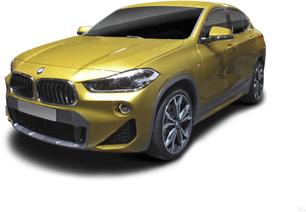
BMW has flipped the script for the second-generation X2, giving it a dramatic makeover that ushers in a bold design that’s now in keeping with its SUV strategy. That is to offer a ‘conventional’ SUV - X1, X3 and X5 - and then a coupe-style sibling - the X2, X4 and X6 - to sit alongside it.
Beyond the new look there are significant changes throughout the car, including the introduction of an all electric version - the iX2.
We drove the two flagship grades at the international launch in Lisbon, Portugal - the petrol-powered M35i xDrive, and the iX2 xDrive30. They might look the same, but they maintain their own distinct characters. Let’s dive in…
It’s clear that Cupra has listened to feedback as this updated Formentor addresses many key criticisms of the pre-update car. Overall it makes it easier to live with and to recommend than before.
Although the VZe's updated PHEV powertrain offers double the amount of electric range, the V forms as a sweet spot of the line-up as it offers all the power and equipment you'd ever need. It's hard to look past the top-spec VZx though as power is a drug.
Note: CarsGuide attended this event as a guest of the manufacturer, with travel, accommodation and meals provided.
There is little doubt the new X2 represents a vast improvement over the original model. The design alone gives it a lot more presence.
More interior and boot space also helps widen the SUV’s appeal and the significant tech updates are welcome.
It is on the pricey side and there are a few too many options that should be standard.
However, the M35i is hard to ignore as a sporty premium crossover, and the iX2 xDrive30 is the sort of electric SUV that should worry Volvo.
They both have their own distinct flavours, so there’s no dud in this line-up. Of course, we will hold final thoughts for the local launch when we can drive all four grades. But until then, it’s a welcome return to form for the X2.
As with many updates, the Formentor has received some mild changes to the exterior design. A lot of it centres around the new, shark-like front end which brings it in line with the Leon, Terramar and Tavascan.
I’ve always been a fan of the Formentor’s slightly raised but still hunkered-down hot hatch-look. The body lines and wheel-arch flares also lean into the dynamic aesthetic.
The VZx trim looks particularly sexy with its 19-inch black and copper forged alloy wheels and the black quad exhaust tips.
I cannot wait for the VZ5 to arrive as it’s set to receive even larger 20-inch alloy wheels and more prominent quad exhaust tips that are stacked and finished in copper.
Inside it’s fairly similar to before but a highlight is the larger 12.9-inch touchscreen multimedia system. It suits the dashboard nicely while not looking too big.
There are still the pronounced, hexagonal air vents up front, plus the ambient lighting strip that wraps all the way from door to door. It’s a cool look.
If you’re keen on the ultra-sporty look, you can option Sabelt front bucket seats with carbon-fibre backs as part of the Extreme package in the VZe and VZx. It’s worth noting that this removes the front centre airbag though.
The second-gen X2 looks very different to the original from 2018. That first X2 had a squat stance, looked more like a hatchback than an SUV, and the glasshouse appeared as though it had been squished into the body of the car.
The 2024 X2 adopts a similar design philosophy to the X4 and X6 - swoopy, coupe-like roofline and liftback, and bold styling elements at the front and rear.
It has a much more upright, flush front end, freshly designed large kidney grille and an edgy headlight design. There’s flared wheel arches and broad shoulders at the rear, as well as a cool new horizontal tail-light signature.
The X2 has grown in size in a big way. It’s 194mm longer, 21mm wider, and 64mm taller than the outgoing model. That naturally means more space inside, too.
Inside there are big changes. The X2 adopts elements introduced by the excellent iX SUV a couple of years ago. They include the curved display, and a floating arm rest with a control panel. Some of this is also familiar from the X1.
The materials mostly look and feel like they are high quality, and there is an appealing minimalism to the overall design and layout. The chunky sports steering wheel is visually appealing, but it’s a bit too thick in my hand.
The standard seats in the Formentor have a sporty design but are still supportive and comfortable. The driver’s seat offers electric adjustment and memory as standard, while both front seats are heated.
The optional Sabelt front bucket seats hug you tighter which is nice if you plan to driving on twisting roads. It’s cool that they retain the electric adjustment and heating as this is rare in ultra-sporty seats.
Looking ahead, this steering wheel is one of my favourites on offer from any brand currently. The rim isn’t too thick or thin, plus there are plenty of physical buttons and dials. It makes it a joy to interact with.
This update has made the steering wheel-mounted engine start-stop and drive mode buttons standard across the line-up. It makes the less sporty trims feel a touch more special.
The 10.25-inch digital instrument cluster is still standard across the line-up and offers plenty of configurable options. You can set it up exactly how you'd like.
Moving across, there’s the aforementioned 12.9-inch touchscreen multimedia system. It operates on updated software which makes navigating key menus much easier.
Some key climate control functions remain at the bottom of the touchscreen which is a little easier to interact with on the move. Ideally a physical button cluster would be better but you can’t have everything.
Another key change with this update is the touch sliders under the touchscreen are finally illuminated, allowing you to see what you’re pressing at night. This should have been standard since launch.
Storage up front is adequate for a car of this size. There’s a wireless charger that’s not ventilated, two USB-C ports, a strange cupholder set-up with essentially 1.5 cupholders, a centre console box with a lid that ratchets, as well as a glovebox on the passenger side.
It’s clear the focus of the Formentor’s cabin is up front but space in the second row is a better than you’d think. At a leggy 182cm I have decent leg and headroom behind my own driving position, but toeroom is particularly good, allowing you to slide your feet comfortably under the seat ahead.
What isn’t so nice is the front seats are rather bulky, particularly the optional Sabelt bucket seats. They block your view ahead, requiring you to either lean over or look out the side window.
Second-row amenities include a third zone of climate control with air vents on the back of the centre console, as well as two USB-C ports and a fold-down armrest with cupholders.
There are ISOFIX points on the two outboard seats, as well as top-tether child seat anchorages across all three rear seats.
All versions of the Formentor now receive a hands-free power tailgate which is handy if you’ve got your hands full. It opens and closes with a kick under the rear bumper.
Boot space depends on the trim level. The S offers 450L, the V and VZx have 420L and the VZe only offers 345L with the rear seats upright. The latter is poor due to the placement of the high-voltage battery.
With the rear seats folded there’s between 1300-1400L of boot space, depending on the trim level.
Boot-related amenities include a light and some hooks. It’s great to see a space-saver spare wheel as standard across all variants besides the VZe. This is once again due to the high-voltage battery.
You even retain a space-saver spare wheel if you opt for the Extreme package in the VZx, though it has a note stating you cannot put it on the front as it physically won’t fit over the larger front brakes.
If you get a puncture on the front, you need to swap a wheel from the rear onto the front, then put the space-saver spare on the rear. You should technically be doing this anyway as space-saver spare wheels aren’t meant to go on the front in cars that are primarily front-wheel drive, like the Formentor.
Where the previous X2 was a very small crossover with niche appeal, the increase in size for the new model means more people will be interested in it. Possibly even people with a small family.
Those increased dimensions pay dividends inside, with ample headroom up front and more than enough space across the front row, although the raised armrest console is somewhat narrow.
The seats in both the iX2 xDrive30 and the M35i xDrive are very supportive thanks to ample bolstering, but both were also on the firm side. The iX2’s synthetic leather was slightly more comfortable than the M35i’s sports-focused front seats.
The power-adjustable seats and height- and reach-adjustable steering wheel means it’s not hard to find a decent driving position, but forward vision is impeded by a very thick A-pillar, and the letterbox-like rear windscreen in the X2 means rearward vision is limited. Good thing it has excellent parking cameras and sensors.
Storage is decent in the X2, with room for big bottles in the door cavity, and a few nooks and large open spaces in the console. Although secure storage is limited with the armrest housing a very shallow space. I do like BMW’s phone charger setup. Rather than lying on a pad, it slots into a vertical holder that has a latch to keep it in place when cornering. The only drawback is that you can see the screen which could potentially distract some drivers.
The X2 introduces operating system nine to iDrive, which is housed in the central part of the curved display and operated by touchscreen or the controller on the floating central console. After some familiarisation, the functionality isn’t that much different to the previous version of the operating system. The main menu looks cool and is mostly easy to navigate. The sub-menu icons - of which there are heaps - look a little Microsoft Windows.
The X2 has drive modes that also interact with the interior of the car and change lighting, EV noise and more. They include Personal Mode, Sport Mode and Efficient Mode as standard, but if you opt for (and pay extra for) BMW Digital Premium, the modes extend to Expressive Mode, Relax Mode and Digital Art Mode. Some of these are quite cool, especially some of the EV sounds, but would I use them everyday? Probably not.
The clearest indication of increased space is in the second row. There’s much more legroom than the old X2, and behind my six-foot frame I had enough space with a couple of centimetres between my knees and the front seat backs. Toe room was very limited, however.
The roof has been scalloped out to ensure more headroom, which is welcome given the extra sloping roofline.
There are a pair of USB-C ports back there, lower air vents, map pockets, decent door storage, and a centre armrest with cup holders.
The boot is sizeable, in both engine grades but you only get a tyre repair kit. There is underfloor storage for the charging cables in the iX2.
At 560 litres with all seats in place and 1470L with the second row stowed, the petrol grades have a bit more space than the iX2 at 525L (all seats in place) and 1400L (second row lowered).
New with this update is an entry-level, mild-hybrid trim called the S. It’s priced from $49,990 before on-road costs.
However, all the variants that carried over received a price increase of at least $4000. The Formentor V now starts at $57,490 before on-road costs, the VZe now costs $68,990 and the VZx costs $69,990.
At the top of the line-up is the forthcoming, limited-production VZ5 which is due towards the end of 2026. It’s priced from $94,990 before on-road costs, which makes it the most expensive Cupra ever offered in Australia.
All Formentors now receive a larger 12.9-inch touchscreen multimedia system as standard, as well as a hands-free power tailgate and heated sports bucket front seats.
Stepping up to the V, which was previously the entry-level model, you get a more powerful engine with all-wheel drive, as well as 19-inch black and copper alloy wheels.
The VZe, which is the plug-in hybrid (PHEV) trim, gains a 12-speaker Sennheiser sound system, leather-appointed upholstery and adaptive suspension. The latter was previously standard across the line-up.
Lastly the VZx gets 19-inch black and copper forged alloy wheels, black quad exhaust tips and a trick torque-splitting rear differential that allows for a Drift mode.
The entire line-up can be optioned with a panoramic glass sunroof for an additional $2000.
The Formentor S and V can be optioned with the Leather & Sound package for $2200 which brings Nappa leather-appointed upholstery, power adjustment and memory for the passenger seat, as well as a 12-speaker Sennheiser sound system.
Lastly, the Formentor VZe and VZx can be optioned with the Extreme package for $6500 and $7000, respectively. It brings matrix LED headlights, Sabelt Cup bucket front seats, then four-piston Brembo front brakes in the VZe and six-piston Akebono front brakes in the VZx.
In Australia, there will be four X2 grades in total - the xDrive20i and M35i xDrive petrol models, and the iX2 eDrive20 and xDrive30 all-electric models.
The iX2 xDrive 30 and the two X2 petrol grades are expected late in quarter one, or early in quarter two. The iX2 eDrive20 will follow shortly after in the third quarter.
The model grades largely mirror that of the X2’s mechanical twin, the X1, although the X1 is also offered in base front-wheel-drive sDrive18i guise as a range-opener.
At the international launch event, the two grades available to drive were the iX2 xDrive30 and the X2 M35i, so I will focus on those two models when it comes to the driving and practicality sections of this review. But I will detail elements of the whole range in other sections.
That X2 xDrive20i kicks off the range from $75,900 before on-road costs. For that you get features like a leather sports steering wheel, dual-zone automatic climate control, satellite navigation, an automatic tailgate, 19-inch alloy wheels, four USB-C ports and more driver-assistance systems and digital services compared with the previous model.
The $92,900 X2 M35i xDrive adds an extra dollop of performance but also includes 20-inch alloy wheels, a 12-speaker Harman/Kardon sound system, leather upholstery, a panoramic glass roof, a BMW M body kit and more.
The most affordable iX2 is the eDrive20 that kicks off at $82,900, while the iX2 xDrive30 dual-motor all-wheel-drive is $85,700. Both of these currently fall under the luxury car tax threshold at the time of writing.
There are several individual options and options packages across the range that can quickly push these prices up.
The X2 is a bit more expensive than the equivalent grades of the X1. The X2 xDrive20i costs $5500 more than the same X1 grade, while the M35i is only $2000 dearer than the equivalent X1.
For the EV, the X2 price premium is $4000 for the eDrive20 and just $800 for the xDrive30.
When it comes to rivals, pricing is a little higher than similar swoopy small SUVs like the Audi Q3 Sportback when it comes to the petrol models.
For the EV, competitors include the Lexus UX300e ($79,990-$87,665), Mercedes-Benz EQA (from $82,300-$102,579), and the Volvo C40 Recharge ($78,990-$87,990).
At launch all versions of the updated Formentor feature turbocharged four-cylinder petrol engines of varying sizes and power outputs, as well as dual-clutch automatic transmissions.
This will change when the flagship VZ5 with its turbocharged five-cylinder from the Audi RS3 arrives later this year.
The entry-level Formentor S is powered by a 1.5-litre turbo four-cylinder with 48V mild-hybrid assistance and total system outputs of 110kW and 250Nm. It has a seven-speed dual-clutch and is front-wheel drive.
The Formentor V gets a 2.0-litre turbo four-cylinder that produces 150kW and 320Nm. This is 10kW more than before. It has a seven-speed dual-clutch and is all-wheel drive.
The Formentor VZe has a 1.5-litre turbo four-cylinder and an electric motor with total system outputs of 200kW and 400Nm. This is 20kW more than before. It has a six-speed dual-clutch and is front-wheel drive.
Lastly the Fomentor VZx has a 2.0-litre turbo four-cylinder that produces 245kW and 420Nm. This is 17kW and 20Nm more than before. It has a seven-speed dual-clutch and is all-wheel drive.
Each of the four grades come with a different powertrain, and the xDrive20i kicks it all off with its 2.0-litre four-cylinder turbocharged petrol unit, making 150kW of power and 300Nm of torque. It drives all four wheels via a seven-speed dual-clutch transmission and can hit 100km/h in 7.4 seconds.
The xDrive M35i ups the fun factor with a gruntier 2.0-litre four-cylinder turbo-petrol unit, driving all four wheels via the same transmission as the 20i, all while delivering power and torque of 233kW/400Nm This ensures a 0-100km/h dash of 5.4 seconds.
The iX2 eDrive20 is powered by a 150kW/247Nm electric motor on its front axle, and the iX2 xDrive 30 uses two motors - one on the front and one on the rear axle for all-wheel-drive traction. The total system output is 230kW and 494Nm and the xDrive30 gets to 100km/h in just 5.6 seconds.
One of the biggest changes with this update is the Formentor VZe’s PHEV system.
It now features a larger 20kWh lithium-ion battery pack that allows up to 114km of electric driving, according to WLTP testing. This is roughly double the amount of the pre-update car.
This battery now also offers DC fast charging at rates up to 50kW, plus the AC charging rate has increased to 11kW (it was previously 3.6kW).
Cupra claims the updated Formentor VZe consumes an average of 1.7L/100km, which is 0.2L/100km better than the pre-update car. However, this will depend greatly on whether you charge the battery.
Elsewhere in the line-up, the entry-level Formentor S with its mild-hybrid system has a claimed combined fuel consumption of 5.5L/100km.
The Formentor V is claimed to consume 7.0L/100km and the VZx is claimed to consume 8.3L/100km (8.5L/100km with the Extreme package).
The Formentor V and VZx have 55L fuel tanks, the S has a 50L fuel tank and the VZe has a 40L fuel tank. All require a minimum of 95 RON premium unleaded petrol, while the VZx requires a minimum of 98 RON premium unleaded petrol.
A fuel-use figure for the xDrive20i is yet to be confirmed, but the front-wheel-drive sDrive20i offered in Europe with a three-cylinder engine sips as little as six litres per 100 kilometres on the combined cycle. Expect the Australian version to be a little higher than that given it’s AWD and has a more potent engine.
The M35i consumes 7.7L/100km.
The high-voltage 64.8kWh lithium-ion battery in the iX2 ensures a driving range on the WLTP cycle of between up to 477 kilometres in the eDrive20 and between 417 and 449km for the xDrive30.
The latter has an energy efficiency range of 16.3 to 17.7kWh/100km, and BMW says you should be able to top up the battery from 10 to 80 per cent in 29 minutes at a fast charging station.
That driving range is not bad compared with the Lexus UX300e and Peugeot e-2008, but not quite as impressive as the Volvo C40 twin-motor.
I missed out on checking the energy efficiency figure of the iX2 xDrive30 following our drive, but after an 88km drive loop, the iX2’s range had dropped by 91km, which is just a 3km difference.
The entry-level Formentor S’s mild-hybrid powertrain has modest outputs of 110kW and 250Nm and around town there’s enough juice on tap.
However, once you get out on the open road the ceiling of this powertrain reveals itself quickly, requiring it to dive back through the gears ruthlessly in order to keep up the pace. This is less of a problem if you’ve already got the car in a sporty drive mode.
The small electric motor that’s fed by the 48V mild-hybrid battery provides a minor boost off the mark, but it mainly smooths out the low-speed hesitancy from the dual-clutch automatic.
Moving up, the Formentor V’s turbo-petrol engine firms as the sweet spot of the line-up if you’re not after the ballistic craziness of the VZx. With the extra power and torque it’s a little less stressed than the S, plus you have the security of all-wheel grip.
The Formentor VZe’s PHEV powertrain is noticeably different from behind the wheel. Extra electric range aside, the electric motor is still packaged within the dual-clutch transmission although unlike the pre-update model, you can no longer feel the car shifting between gears.
There’s plenty of power available and depending on the battery charge the car can turn the engine off and on even at highway speeds. You can’t actually feel it happening, you only see the tacho rise and fall.
Lastly, the VZx is a missile. It feels incredibly unstressed in everyday driving and with a subtle flex of the right foot it gets moving with haste.
Like some Volkswagen Group products, the Formentor can hold a higher gear in its standard drive mode, taking a beat to kick down a gear if required. Thankfully peak torque is available down low in the rev range across the line-up.
Compared to the pre-update model, the VZx now gains a trick torque-splitting rear differential and a ‘Drift’ mode. We had the chance to sample the old and new cars back-to-back on a wet skid pan and the difference is night and day.
The pre-update model has terminal understeer no matter how much you coax it, however the updated Formentor VZx is incredibly tail-happy. You can do smile-inducing four-wheel drifts with ease, plus it will stop itself from going over the edge and spinning out.
Obviously this is something that you can only use on private roads and it isn’t something that you’d use everyday. It’s a cool novelty feature to try if you get the chance.
As standard there is progressive steering across the line-up which ramps up the resistance the more you turn the wheel. In practice this makes the Formentor a fun and agile car to drive, even around town.
A subtle change with this update is the entry-level Formentor S and V now receive a standard passive damper set-up, whereas the VZe and VZx have adaptive dampers. The latter was previously standard across the line-up and it allows you to configure the ride from comfort soft to sporty firm.
While it’s nice to have the configurability, the ride on the standard passive dampers is still beautifully compliant. It’s a little more comfort-oriented than I’d expect from a Cupra but I don’t hate this in the less-powerful variants.
In terms of noise, vibration and harshness (NVH), this is the Formentor’s downfall. Like many European cars, there is a lot of road and tyre noise on the open road, especially on coarse-chip roads.
Surprisingly some of the cars on the launch were already starting to develop random rattles around the cabin. This isn’t great as all the cars were brand new with around 1000km on the odometer.
The M135i xDriveis undeniably quick off the mark. The lovely 2.0L turbo engine is well matched to the seven-speed dual-clutch and it’s responsive and willing from a standing start and when overtaking.
The engine sounds lovely too, although we suspect it’s amplified in the cabin, and steering is as sharp as it should be in a warmed-up performance SUV. We darted through some very twisty roads outside Lisbon and had quite a lot of fun in the process, so the M Performance badge is justified.
I drove the previous-generation X2 M35i a few years back and was disappointed with the ride quality. It was quite jiggly on uneven road surfaces and way too firm.
While the new version still has a firm tune to aid dynamic driving, it is much more compliant than the old car and overall ride comfort has improved.
The iX2 is also quick off the mark and in xDrive30 guise is only 0.2sec slower to 100km/h than the M35i.
That lively, smooth EV acceleration is present here, adding a sense of fun to the iX2.
It too has sharp steering, and the cabin is hushed. Not just because it’s an EV either. We were on coastal roads on a windy day and there was only a hint of wind noise in the cabin.
In some instances taking corners that had typical European walls or houses right up against the road, the iX2 would slow before I had a chance to tap the brakes. But it was hard to tell if that was a vehicle safety function, or the regenerative braking.
The ride in the iX2 was a bit of a mixed bag. It coped with some of the pockmarked roads exceptionally well, soaking up the imperfections. But then on other roads it was a little choppy.
It also bounces a little when you go over speed bumps, but that’s not exclusively an iX2 trait. I’ve felt it on many an EV, given the placement of the very heavy battery packs under the floor.
On the driving tech front, the X2 has a well executed head-up display projected directly onto the windscreen. It includes the speedo of course, nav guidance, a crystal clear display and more info.
The Cupra Formentor originally received a five-star ANCAP safety rating in 2021 and this has been renewed for the updated model based on testing conducted by Euro NCAP in 2025.
It’s worth noting that this doesn’t apply to variants equipped with the Extreme Package, as well as the VZ5, as it removes the centre front airbag.
All models receive 10 airbags including rear-side and front-centre airbags as standard, plus autonomous emergency braking (AEB), adaptive cruise control with lane centring, a surround-view camera, as well as a parking assist.
New with this update is traffic sign recognition with intelligent speed limit assist which can, thankfully, be permanently switched off.
There’s also a driver attention monitoring system with a camera built into the rear-view mirror.
You can turn this off by using the central touchscreen but it defaults back on every time you turn the car on.
The X2 and iX2 are yet to be crash tested by ANCAP or Euro NCAP for that matter.
As mentioned, it gets a more generous list of standard safety features than its predecessor. Features include the latest version of BMW’s front collision warning system, auto emergency braking, speed limit detection, active pedestrian protection and a front centre airbag.
All X2s come standard with BMW’s Driving Assistant Professional which features ‘Steering and Lane Control System’, adaptive cruise control with stop and go braking function, and a blind-spot monitor, as well as Parking Assistant Plus with a surround-view camera, reversing assistant and ‘Drive Recorder’.
The Formentor, like all other Cupras, is covered by a five-year, unlimited-kilometre warranty, which is a little lacklustre for a mainstream brand now as many have moved to conditional eight or 10-year terms.
Logbook servicing is required every 12 months or 15,000km, whichever comes first.
There are three- and five-year pre-paid service packages available that are priced at $1090 and $2190, respectively. In the latter case, this means each service averages out to almost $440 which is fairly average for a European car.
Cupra currently has 40 dealers and 28 service centres in Australia. Many of these are located around major cities.
The X2 range is covered by BMW’s five-year, unlimited kilometre warranty - something the German giant only increased from three years back in 2022. This is now the minimum standard.
The battery warranty for the iX2 is eight years or 160,000 kilometres.
BMW does not have scheduled servicing terms, instead, servicing is condition-based and the car’s computer will alert the driver when to book in for a service.
A five-year servicing package will cost you $3171 for the petrol X2s, while the iX2 is $2186 for six years.