







.jpg)

.jpg)


_0.jpg)
 (1).jpg)

.jpg)
.jpg)

.jpg)
.jpg)
.jpg)
_0.jpg)


With the twin-built Toyota GR86 and Subaru Impreza carrying over their (albeit now larger) shared engines into the new generation, a conversation was sparked in the CarsGuide office about unexpected cars that share an engine.
We’re not talking about engines that get used through brand connections as within the Volkswagen Group, or the fact Minis use BMW engines now, we mean the properly unexpected deals some companies made to source engines from their rivals.

Prince 1.6L turbo: Shared by the Mini Cooper S (second generation) and the Peugeot 308 GTi (second generation)
.jpg)
If you own a Peugeot with a 1.6-litre engine, or even a 1.4-litre engine in some cases, you’re getting around thanks to the same power as the second generation of ‘modern’ Mini Coopers, between 2006 and 2015.
The Prince family of engines, manufactured mostly by PSA (Peugeot and Citroen) and assembled for its own models by BMW, has been around since the mid-2000s and its many variants (mostly 1.6-litre capacity) have powered everything from compact hatches like the Citroen C3 to SUVs like the Peugeot 5008.
Even though Mini and BMW no longer use the engine, the turbocharged 1.6-litre version is still used in many Peugeots and Citroens, with a high-output version of it having powered the recently axed Peugeot 308 GTi hot hatch from last generation.
Mercedes-Benz M282 1.3-litre: Various Mercedes-Benz models (present) and Renault/Nissan models (present)
.jpg)
Mercedes calls it the M282, Nissan calls it the HR13DDT, and Renault calls it H5Ht. What it is, is the engine that powers a lot of Mercedes-Benz’s smaller models like the A- and B-Class, as well as their GLA/GLB SUV counterparts and a host of cars from the Renault-Nissan part of the Renault–Nissan–Mitsubishi Alliance.
Found in mostly ‘180’ and ‘200’ levels of current Mercedes models (e.g, A180, GLB200, etc), the turbocharged 1.3-litre engine also powers many of Renault and Nissan’s hatchbacks and compact SUVs like the Renault Megane or the Nissan Qashqai.
Perhaps unsurprisingly, its outputs are usually below the 100kW mark and the engine hasn’t found much use for performance models.
Ford Duratorq: Ford Ranger (T6, pre-2022) and plenty of others incl. Jaguar Land Rover
.jpg)
Another PSA joint development, the Ford Duratorq 2.0- and 2.2-litre diesel engines are used in plenty of applications from powering the Ford Transit and Mondeo, to Peugeots and Citroens with the 'HDi' badge to indicate the diesel engine.
What you might not know is that executive British cars from Jaguar Land Rover are (and were) powered by the same engine, cars like the suave Jag XF or icons like the Land Rover Defender.
It was also, until the EcoBlue diesel engine took over (as it gradually continues to do in other models), the engine that powered one of Australia’s favourite cars, the Ford Ranger. Tradies and British luxury car owners, unite!
Mazda B6: Mazda NA6 MX-5 and Kia Rio (first generation)
.jpg)
The Mazda NA MX-5 was such a success, in part, due to its simplicity. That simplicity extended to the 16-valve, dual overhead cam B6 four-cylinder engine, which meant it was ripe for use in other cars, too.
While the 1.6-litre unit was mounted longitudinally in the MX-5 to drive the rear wheels, as well as having 86kW, it made its way into the first-generation Kia Rio as a slightly less powerful and transversely mounted engine.
The engine carried on into the 2000s in the Rio, and while it might have been fun for Rio owners to say their car had a sports car engine, you wouldn't catch MX-5 owners boasting about the connection.
Alfa Romeo JTS/Holden Alloytec: Alfa Romeo Brera; Holden Captiva (see also: Commodore 3.6L)
.jpg)
So, you thought your stylish Italian coupe was a sophisticated piece of European engineering to look down your nose at Commodores from.
While Alfa Romeo called the 3.2-litre naturally aspirated V6 powering its frankly gorgeous Brera Coupe (as well as the rarer Spider and the related 159 sedan) the JTS engine, those in the know are aware of its GM origins.
Though it was tweaked by Alfa for use in its own cars, the 3.2-litre V6 is effectively the same as the Alloytec engine that’s found in the Holden Captiva, and the larger 3.6-litre version is that which powered what was once Australia’s most popular car, the Commodore, taking over from the Buick-sourced 3.8-litre V6 during the VZ generation.
Volvo B5254T3: Various Volvos and the Ford Focus XR5 and RS500
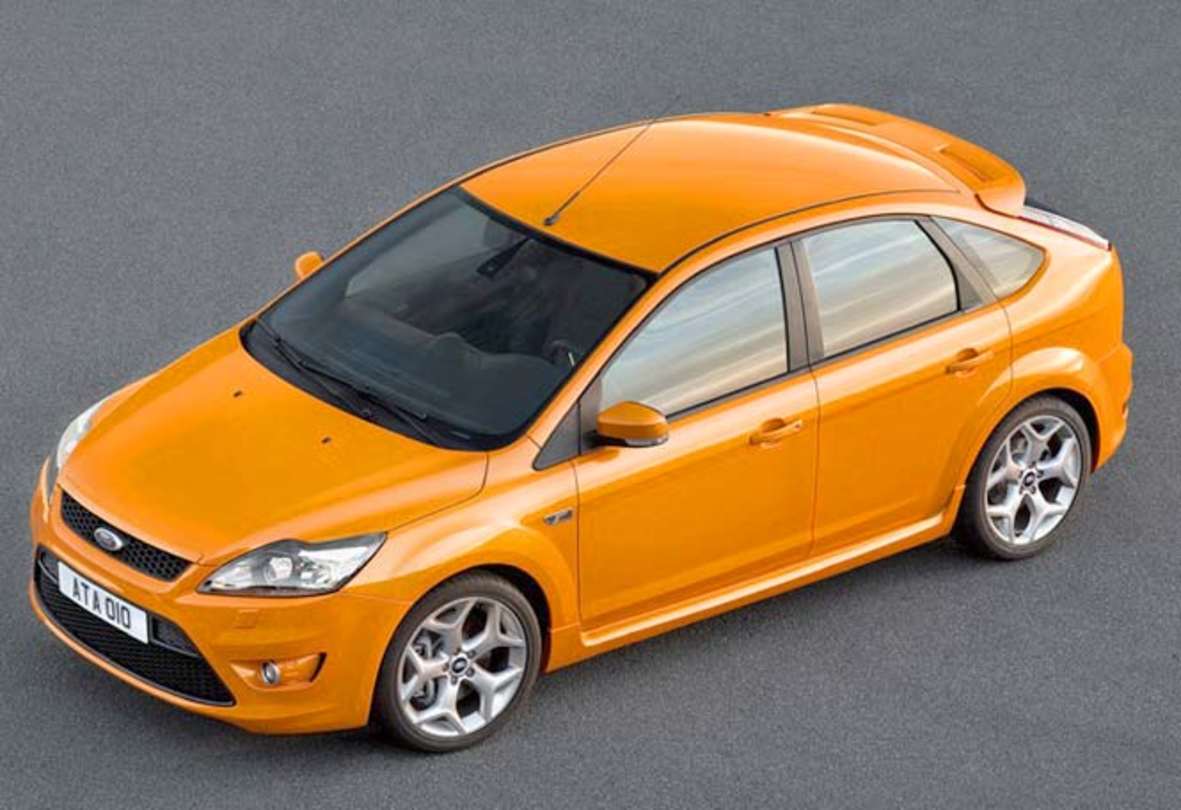
‘Hot hatch’ isn’t the first thing that springs to mind when Volvo gets a mention, but it is the brand responsible for powering a modern cult classic in exactly that category.
The Ford Focus XR5 Turbo, or one of the little more than 300 Ford Focus RS Mk2s delivered to Australia, were both powered by a 5-cylinder turbocharged engine from Volvo, the very same 2.5-litre turbocharged engine that powered various Volvos that wore a ‘T5’ variant badge.
In Volvo’s cars like the C30 T5 and the S40 T5, the engine’s power outputs top out around 170kW, but Ford managed to eke 260kW and 460Nm out of it when it was plonked into the Focus RS500.




.jpg)