What's the difference?
The BMW 7 Series is Munich’s flagship, the car that fans of the blue and white roundel respect as peak plush motoring.
Now, for the seventh 7 Series, BMW has brought electric power to the table in the form of the i7 in order to stay ahead of the curve.
It’s still joined by a petrol-powered variant here in Australia, the 740i, which is a mild hybrid and shares a lot of the luxury specifications of the i7 - including a properly impressive rear seat theatre screen.
But is it forward-thinking enough to fend off the likes of the Mercedes EQS?
The entry-point into one of Australia's most popular brands has been around for almost 10 years in its current generation, but the Mazda2 has had a refresh.
Possibly for the last time in its current lifespan, the small hatchback gets a facelift to remain appealing, Mazda hopes, to first-car-buyers.
Mazda's up against not only direct rivals, like the Suzuki Swift and Toyota Yaris, but also the shifting market.
Mazda has sold just over 3500 Mazda2s so far this year, but almost 11,000 CX-3 small SUVs, the latter based on our friend here's platform.
It's a name with a little over two decades behind it, but can it be a first-car-favourite in an increasingly difficult small car market?
While the new 7 Series won’t visually appeal to everyone, nor is it at the forefront of spirited driving dynamics, it’s hard to argue that it isn’t fit for purpose.
Its rear theatre screen and lounge layout might seem gimmicky at first, but it’s difficult to think of a more comfortable way to be transported on wheels short of putting a chassis under your loungeroom. Even then, you’d have to ask someone for a massage.
This is one of those cases where a car becoming larger isn’t such a bad thing, and BMW should feel like it’s achieved, seemingly, what it set out to do in building an electric limousine that doesn’t fall short in range or dynamics.
If BMW can bring this level of refinement down to its more affordable models, its electric future is looking promising.
Note: CarsGuide attended this event as a guest of the manufacturer, with meals provided.
While Mazda's insistence that the Mazda2 is a 'first-car' could be very limited by the incomes of most teenagers or early-20s city-dwellers, the starting price being close enough to $20,000 for a dynamically enjoyable and convenient small car isn't to be scoffed at.
The new styling of the Mazda2 is well executed, and as an alternative to small SUVs (which continue to become more popular) it's a sensible option, especially considering its efficiency and ease of use.
The lower specifications in the range are probably the best in terms of value, as even the features on the higher grades aren't groundbreaking, and the Pure SP definitely exudes the most style cred.
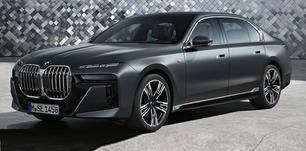
BMW freely calls the new 7 Series “monolithic” in its press material, and it’s hard to argue. The seventh-generation of its luxo limo is bigger in every dimension, and with a higher bonnet and bootlid, the car is convincingly imposing even when parked. Even more so in black.
From the front, the 7 Series clearly has a new face compared to its predecessor, with split headlights now an indicator of BMW’s luxury oriented models - the incoming XM SUV features the same.
Its LED daytime running lights feature Swarovski crystals, while the grille surround illuminates while the vehicle is parked and on. It’s currently unable to be illuminated while driving to comply with Australia’s laws.
It’s perhaps less elegant and more aggressive than previous generations, but that doesn’t mean there won’t be those who approve. It’s certainly emotive, especially when compared to the side and rear of the car.
The side profile of the 7 requires quite a few steps back from the car to really take in - it’s almost 5.4 metres long - though it's hard to hide the size of a car that allows its rear passengers to almost lay down.
From the rear, the 7 Series is probably at its most uninspiring, which is a reverse from the interior where the front feels more minimalistic than some of its rivals like the Mercedes-Benz S-Class.
BMW has used crystalline geometric shapes throughout the cabin, and the front ‘interaction bar’ is perhaps the best example.
In keeping with the minimalism, its screen sits in an almost freestanding style out from the dash, with no physical buttons seen around it.
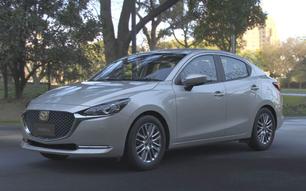
Aside from the Pure SP, the Mazda2's styling changes are subtle. Mazda's design team aimed to move the model's looks slightly away from the previous ‘premium' chrome-adorned look to a sportier and more ‘aggressive' style.
A redesigned front bumper and mesh grille, with the rear's nip and tuck being more subtle, don't need to do much to keep the hatchback looking fresh. Despite being almost a decade old, the Mazda2 looks, to some extent, like it could be a new generation.
The Pure SP in particular is a highlight, with the blocked grille evoking some ‘electrification' vibes, while the coloured-accent treatment at the front and rear of most variants is a welcome addition for something different.
The range of differing wheels is also a plus point for the Mazda2 range, with each model having its own distinct characteristics.
Inside, the Pure SP also gets a stand-out panel across the dash in a lighter colour like mint, while others get different seat trims and colour accents in places like the vent surrounds.
New colours for the range are 'Aero Grey Metallic' and 'Air Stream Blue Metallic'.
If the word ‘practicality’ brings to mind simplicity, the 7 Series might require you to have a bit of a mental reset. If it means plenty of space and a long list of elements to keep you comfortable, you’d be closer to the money.
While it’s visually restrained in some ways, the space accessible to the driver is thought out reasonably well, as you’d expect from a car costing more than a quarter-million.
The front seats certainly aren’t the main event, but the Merino leather and cashmere wool combination seats are far from uncomfortable, with the heating, cooling, and massage functions accessible from the central multimedia screen.
The controls for those, as well as functions like the climate control, are easily accessible, though could probably be even easier with a physical climate control panel.
Controls for the individual vents, and even the glovebox are found along the BMW interaction bar, which can (frustratingly) reflect light thanks to its crystalline design, meaning it’s hard to see while driving on a sunny day.
Similarly, while the centre console where the main control dial for BMW’s 'iDrive' isn’t far removed from previous versions, it’s less tactile and requires a look sometimes to see what’s being pressed. Here, too, sunlight can reflect (this time off the dial) and make it more distracting.
Fortunately, the steering wheel controls remain physical buttons, and they’re laid out in a way that previous BMW owners or drivers will find familiar.
The 7 Series also now leans more heavily on voice activation, so if the lack of physical climate controls or the multimedia screen is a little distracting, much can be achieved by actually asking the car with a “hey, BMW… ”.
There’s a large storage unit in the centre console, as well as two cupholders and a phone charging platform in front of the multimedia controls.
The rear seats, especially the one behind the front passenger, are where the 7 Series begins to feel its worth. If you’re buying one with the intention of being the driver 100 per cent of the time, you’re missing a trick.
The ability for the front passenger seat to shift forward and maximise legroom while the rear seat reclines into a lounge position is nothing new, limousine sedans have been able to do this for years, but the 7 Series takes it to another level.
Not only is there plenty of space for even the tallest of humans to stretch out, but the positioning and angle of the huge 31.3-inch theatre screen is great, even if it impedes the driver’s rear view, and the ability to use it as a touchscreen for some functions means less need for the handy but sometimes fiddly door-mounted control screen.
If you plan on playing games, the controls (and the fact you’re likely in a moving car) can make it a little difficult, but the small control panel is overall easy to use and well-placed.
The cushioned armrest that folds down in place of a middle passenger is comfortable, features a phone charging pad and pop-out cupholders, as well as a storage space under the armrest.
Finally, the boot space in the BMW 7 Series is far from small, with the electric i7 offering 500 litres (VDA) of space, while the 740i boasts 540 litres thanks to its lack of battery.
The Mazda2's interior is mostly unchanged through the facelift, with the car's overall dimensions unchanged and not affecting space for its occupants.
Up front, the two seats are comfortable for adults and arm, shoulder, and head room is ample.
Storage space for drinks, phones, or small bags and wallets is sufficient, though not quite road-trip-worthy.
In the rear seats, adults will find enough space to be comfortable for short trips but might get a little restless after a while.
Headroom when sitting upright is tight for anyone around 182cm (six-feet) tall, and a lack of armrest and little storage save for the doors means loose items will be joining occupants on the seat or sitting on the floor.
The Mazda2 has a claimed 250 litres of luggage space in the boot, which is fine for a small hatchback, but short of rivals like the Toyota Yaris' 270L.
Given we’re in the realm of models where the price difference between two variants could pay for an entire new city car, what value means shifts a little bit.
The BMW 7 Series comes in two variants for the seventh generation, starting at $268,900 for the petrol-powered 740i, and $297,900 for the electric i7.
Previously, it was possible to get into the BMW 740i for $198,900 after BMW lowered the price of the sixth generation car.
However, the new 7 Series is larger and has more packed into it, with both variants highly specified and mostly differing in price due to their drivetrains and some more minor creature comforts.
The 740i starts with an already impressive list of standard features, with 20-inch M alloy wheels, remote start, a tyre pressure monitor, rear-wheel steering, 'crystal' headlights and an illuminated grille surround, a panoramic glass roof, heated seats and a massage seat for the driver with Merino leather, a 20-speaker Bowers & Wilkins sound system, as well the option to select the M Sport or M Sport Pro pack at no extra cost.
The more expensive i7 xDrive60 gains, on top of that, 21-inch wheels, active roll stabilisation, automatic opening and closing doors, multifunction seats with heating, cooling, and massage in the rear, plus a 39-speaker sound system and the impressive 31.3-inch theatre screen.
The i7 also comes with a BMW third-gen wallbox, home and public charging cables, and a five-year ChargeFox subscription. It also gains a six-year service package over the five included with the 740i.
If the i7’s extra features are tempting, but its drivetrain isn’t, 740i buyers can opt for a 'Connoisseur Lounge' pack for $27,900 which adds the auto doors, multifunction seats, rear theatre screen, and a 40-speaker sound system.
Mazda has managed to keep pricing for its entry model relatively low for the segment. In fact, the base Pure in manual form starts from $22,410, before on-roads, and the auto is only $2000 more.
That means at a time when the Toyota Yaris is starting to look more expensive than its historic ‘cheap and cheerful' image allows, Mazda is pushing the Mazda2 to be slightly more premium while keeping its price competitive.
Standard features for the range, which start in the Pure variant, include a 7.0-inch touchscreen with Apple CarPlay and Android Auto capability, plus auto headlights and windscreen wipers.
The Pure SP, which starts at $25,210, gains a different styling kit that adds a body-coloured front panel to the grille, plus a carbon-look roof in vinyl. It also gains the ‘shark-fin' roof aerial.
The Evolve, which starts from $25,910, gains LED DRLs, with the mesh grille replacing the SP's block colour panel.
Its upholstery gets red stitching, plus it's also got a couple more tech additions with Mazda's active head-up driver display, traffic sign recognition and satellite navigation.
Finally, there's the top-spec GT, from $27,610, which gains unique aero-inspired 16-inch alloy wheels, and a set of black leather-upholstered seats with synthetic suede and red trim.
A sedan is available in Pure or GT specification at the same prices and with the same features as the hatch, though you can't get a Pure sedan in manual - that's available in the hatch only.
The BMW 740i is powered by a 3.0-litre turbocharged in-line six-cylinder petrol engine, as is the way with many of BMW’s larger cars. It’s also a mild hybrid, incorporating a 48-volt electric starter/motor combination.
The 740i makes 280kW between 5200-6250rpm, and 520Nm between 1850-5000rpm, which is transferred to the rear wheels via an eight-speed automatic transmission.
The electric i7 xDrive60 is the flagship model, with its dual-motor all-wheel drive powertrain good for 400kW and 745Nm, allowing for a claimed 0-100km/h time of 4.7 seconds - 0.7s faster than the 740i.
Mazda's ‘SkyActiv-G' 1.5 litre four-cylinder petrol engine is the unit used for six-speed manual and automatic models, but outputs vary slightly.
Manual cars produce 82kW and 144Nm, while autos deliver a slightly lower 81kW and 142Nm, both driving the front wheels only.
It's pretty much the same engine you used to find in an entry-grade MX-5, just with less power.
BMW Australia hasn’t yet specified local figures for fuel consumption or energy efficiency for either variant of the 7 Series at the time of our review, but the international specifications for both i7 xDrive60 and 740i give a relatively accurate guide.
BMW claims the electric i7 has a power consumption of between 19.6 and 18.4kWh/100km, which means its 101.7kWh battery allows a range of between 591 and 625km according to the brand.
It’s claimed to charge from 10 per cent to full in less than 5.5 hours with a 22kW AC wallbox, or in 34 minutes to reach 80 per cent using DC fast charging at 195kW.
The petrol powered 740i will use between 7.0 and 8.0 litres per 100km, according to BMW, which equates to between 183 and 159g/km of CO2.
Improved fuel efficiency and lower CO2 emissions come thanks to the automatic's slight drop in power and torque.
Mazda claims a 5.0L/100 km rating for the automatic Mazda2, which is down by 0.3L/100km over the previous version, but the manual's unchanged engine tune burns through the petrol at 5.4L/100km.
Filling the 44-litre tank with at least 91RON or even E10 is fine, and with its auto variant's efficiency rating means the Mazda2 technically has a theoretical range of 880km.
Comparatively the Mazda2 scores well here, the more expensive Toyota Yaris comes with a 4.8L/100km consumption claim with its CVT auto. A Suzuki Swift, with a smaller 1.2-litre engine, also has a 4.8L/100km rating.
BMW hopes for two things for the new 7 Series: one, that it’s the best car to be driven in, and two, that it’s the best car to drive.
While one of those things could be argued to be true, we suspect there are some engineers in BMW’s M department who would be frustrated at the thought of a more-than 2.6-tonne limo being called better to drive than a car half that size with a manual gearbox.
But, perhaps unsurprisingly, the BMW 7 Series is rather refined from the driver’s seat, especially on roads where the speed limit is high and the corners are long.
The two variants Australia has available, the i7 xDrive60 and the 740i, differ in their drivetrains as mentioned above, and the dynamics of each are slightly different.
The all-wheel drive electric i7, despite its extra heft (the 740i is almost 600kg lighter) the EV feels more nimble thanks to its immediate torque delivery and higher outputs give it more flexibility in dynamic driving.
The lower centre of gravity, even with the extra weight, helps the electric i7 hold its own against the turbo six-powered 740i.
Both variants come standard with BMW’s rear-wheel steer system, or ‘Integral Active Steering’, which is vital to providing the agility needed for keeping the 7 Series in shape on tight roads, where it tightens the turning circle below 60km/h, though its 3215mm wheelbase does a lot to keep it feeling stable.
Above 60km/h, the rear-wheel steering improves stability further by turning slightly with the front wheels as opposed to against them, allowing for smoother flowing cornering and highway lane changes.
In either case, the 7 Series is easy to drive, with the steering able to be set to Comfort regardless of the drivetrain’s intensity (Sport and Comfort are the only options), which leaves the wheel feeling lighter.
The ride, whether from the front or the back, is impressive, even when being chauffeured through rough backroads.
The 7 Series, despite not being engineered specifically for Australia’s sometimes shockingly pockmarked roads, manages to soak up impacts before they transfer from the tyre into the seats, and that goes for the sound and road noise, too.
Unfortunately, our launch test drive was hampered by some roadworks out of BMW’s control, so stay tuned for a more in-depth drive soon.
Our drive loop for the Mazda2's launch included a mix of urban, highway, and rural driving, with varying road quality and conditions.
Fortunately for the little hatchback, it handled everything well or at least at a passing mark, with only a couple of small shortcomings that are common in the segment.
The Mazda2 is a joy to drive in most circumstances, with a lively but confidence-inspiring chassis and controls that give a connected feel to the road.
At low speeds, the Mazda2's relatively low power isn't noticeable, with the gearbox getting things moving at a reasonable pace and the engine is responsive enough with the traditional gearbox helping it along.
It's worth noting that for ultimate control over the drivetrain, Mazda still offers a six-speed manual transmission in the entry-grade Pure, and it's a gem.
Smooth, sporty shifts and well thought out gear ratios mean the manual is easy to handle even in traffic, and the clutch has a forgiving bite point. The 'i-Stop' stop/start system works with the three-pedal car, too, as does cruise control.
In terms of handling and comfort, the Mazda2 is a little shaken by large bumps, though some of the rough surfaces on our test loop were particularly brutal.
Similarly, when pushed hard to conquer steep hills the 1.5-litre engine becomes a little harsh.
On twisty sections the Mazda2 (especially in manual form) provides ample fun while remaining predictable in its steering and chassis feedback, rather than feeling loose.
The new BMW 7 Series hasn’t been crash tested by ANCAP, nor does it seem likely it will be, given the small number that are likely to be sold here.
But the car itself isn’t short on safety features, and BMW has a good recent history of scoring the maximum five stars for its cars.
The 7 Series features front and side airbags for driver and front passenger, curtain airbags for both front and rear seats, crash sensors, and a tyre pressure indicator.
Of course, the standards like active cruise, AEB, and sensors for collision warnings are all standard, plus BMW also offers active roll stabilisation as an option, which uses 48-volt motors to steady the car and account for the road surface and body roll through corners.
The updated Mazda2 is equipped with the brand's suite of 'i-Activsense' safety tech, which includes 'Smart City Brake Support' for operating forward and reverse, blind-spot monitoring and rear cross-traffic alert.
The Evolve and GT model grades are fitted with traffic sign recognition.
The GT model grade comes fitted with front parking sensors and a set of surround-view parking cameras.
The Mazda2 also features six SRS airbags to cover the driver and front passenger, side airbags, and curtain airbags front and rear. It also has ISOFIX anchor points and top tethers for child seats in the rear.
Mazda isn't going to put the Mazda2 up for a new crash test rating by ANCAP, with the brand telling us the new safety additions bring the car's safety up to date, though its original rating from 2015 was a maximum five stars.
BMW offers a five year, unlimited kilometre warranty and that extends to both variants of the 7 Series.
BMW also offers servicing packs for its new cars, though the pricing for each group of models excluded the 7 and 8 Series and its M cars.
Given the most expensive servicing pack listed is the BMW X7’s $2800 five-year, 80,000km pack, expect anything similar for the 7 Series to cost more.
In terms of when servicing is required, BMWs are condition-based, meaning the car’s own systems detect whether something like an oil change or part replacement is required, and provides that data to your BMW service centre to help calculate an estimate for work needed, ahead of time.
Mazda offers a five-year/unlimited-kilometre warranty across the range, under which the Mazda2 will be covered. That's on par for the market, although some rivals, like the MG3, come with a seven-year term.
Scheduled servicing costs for the first seven workshop visits range from $334 to $587, and are undertaken every 12 months or 15,000km (whichever comes first).