What's the difference?
The Audi SQ8 has had a mid-life refresh but this upper large SUV still offers luxury with its powerful V8 engine that fans know and love, as well as the features you would expect in a top model.
It competes against the Mercedes-AMG GLE and Porsche Cayenne but we’re family testing the SQ8 to see how it handles domestic life.
Keep reading to see what we’ve discovered.
The second-generation Mazda CX-9 may have been on sale in Australia for nearly five years now, but it remains the second best-selling large SUV using unibody construction (as opposed to old-school, off-road-focused body-on-frame).
That said, it is getting on a bit, so Mazda’s given it an update with a twist for 2021, hoping to inject a little bit more life into its flagship model.
And when we say twist, we mean it. After all, who would’ve thought there’d ever be a six-seat CX-9? Well, we’ve checked it out to see if it’s the version we needed all along. Read on.
The Audi SQ8 isn’t your typical performance SUV. It’s more refined and less flashy. The tech can be more complicated than it needs to be and if you’re wanting that V8 soundscape, you won’t find it here.
However, the handling and on road experience are superb plus you can comfortably haul the family around and look good doing it.
The CX-9 is still a great option for families looking for a large SUV, even if it is starting to show its age as new rivals continue to launch with newer technologies.
That said, the availability of a luxury-focused six-seat configuration (Azami LE AWD) for the first time might be enough to convince some buyers to give it further consideration.
But for others who need the versatility of seven seats, this is still the CX-9 we’ve all come to know and love – but just a little bit better – particularly in its best-selling Azami AWD form.
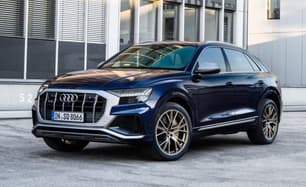
The SQ8 is a gorgeous coupe-style SUV that looks purposeful and poised with its balanced proportions and wide stance. It’s stands apart from its siblings thanks to the S-styled nose treatment and our test model's black accent package makes the honeycomb grille look even sportier.
The update sees new air intake vents at the front, matrix LED headlights and new chrome exhaust tailpipes.
The upgraded 23-inch alloys with red calipers behind them hint at what’s under the bonnet, as does the Sakhir (sack-heer) Gold paintwork which is aptly named after the one-off Grand Prix race circuit.
The interior looks luxuriously appointed with the black Valcona leather upholstery and the dash is headlined by three high-end technology screens. The SQ8 also gets sport seats featuring a quilted design and 'S' badging but there’s not much else separating it from its siblings.
Audi fans will love the the SQ8's more understated interior but newcomers might be surprised it's not as flashy as some of its rivals.
Given its latest update is relatively minor, the CX-9’s exterior largely looks the same as before, which, depending on your point of view, is a very good thing. As far as we’re concerned, it certainly is.
That said, train-spotters will notice some differences, with the GT SP (new), Azami and Azami LE (new) grades getting a refreshed grille that’s slotted and available in two grade-specific finishes unlike the insert their carryover Sport, Touring and GT siblings still have.
And aside from the GT SP, Azami and Azami LE’s new sets of 20-inch alloy wheels (again in grade-specific finishes), the only other exterior change is the Azami and Azami LE’s larger-diameter chrome exhaust tailpipe extensions. Sporty!
Inside, the CX-9 has more changes in store, headlined by the new ‘floating’ 10.25-inch central display all but the Sport and Touring get (they stick with 7.0- and 9.0-inch units respectively).
The new set-up is powered by Mazda’s latest multimedia system, which is certainly an improvement over its predecessor, and a much needed one at that.
Worth noting, touch is not an input method, with the rotary controller on the centre console the only option, which is actually great for safety, so we’re all for it.
The Azami and Azami LE also get new quilted Nappa leather upholstery, which looks and feels great, and adds to the overall high-quality theme.
Otherwise, it’s pretty much business as usual, which is great because the CX-9 has always had a well-designed interior. Yep, if it ain’t broke, don’t fix it.
The upper large SUV tag certainly makes sense when it comes to cabin space because there's a lot of it. Both rows enjoy ample head- and legroom and access is great thanks to wide door apertures and high ground clearance.
Comfort is high with well-padded seats and thanks to the Sensory Package all but the middle back seater get some luxury extras.
The centre rear position has compromised legroom courtesy of the transmission tunnel, so it's best for a kid. However, the front seats take the cake with their massage, heat and cooling functions and adjustable supports.
Amenities are great throughout the car and the extendable sun visors, rear electric sunshades, soft-close doors and four-zone climate control clinch the practicality deal.
Individual storage is a bit sparse up front with two cupholders, a drink bottle holder in each door and a shallow middle console that realistically only fits a phone.
The glove box is a great size. I can fit my handbag in it, but there are not a lot of areas to pop your smaller items in.
Individual storage is a bit better in the rear as you get two big map pockets, a drink bottle holder in each door, plus two cupholders in the fold-down armrest - so it feels like you have more places for your bits and pieces.
Technology looks amazing but overwhelming to use until you wrap your head around it all. The haptic feedback also gets tired fast. The built-in satellite navigation is super simple while the head-up display and digital instrument cluster feature pull through directions, which is handy.
Charging options are good with each row getting two USB-C ports and a 12-volt socket but the front also enjoys a wireless charging pad. The pad is slow to charge, though, and left my iPhone feeling super hot whenever it was used.
The boot is a good size at 605L and easy to access, too. The sloping roof means larger items have to sit flush with the seats but you shouldn’t have to worry for road trips.
The back seat has a 40/20/40 split which opens up storage options and this model has a powered tailgate.
Being an SUV that’s 5075mm long, 1969mm wide and 1747mm tall, practicality is arguably the most important thing for the CX-9, and with the option of six seats for the first time with the new Azami LE, it’s even more versatile.
All seven-seat grades have a 60/40 split-fold second row that manually slides and reclines the same as before, with only the Sport missing out on one-touch tumble operation, which makes accessing the 50/50 split-fold third row even easier, even if it’s still not graceful.
But the six-seat Azami LE is configured differently, given its second row has two captain’s chairs instead of a bench. That said, it operates in a very similar manner, just with power adjustment.
I still had around eight centimetres of legroom and four of legroom behind my 184cm (6'0") driving position, while the large transmission tunnel that’s a foot-space issue in seven-seat versions... isn’t.
One key difference with the very roomy and comfortable Azami LE is it only has four top-tether child-seat anchorage points, while all other grades have five thanks to their extra seat. Either way, four ISOFIX child-set anchorage points are split across the second and third rows.
Alternatively, the third row can be used by adults on shorter journeys, although they won’t have a lot of space to enjoy. Again, I'm 184cm tall and it’s tight back there, with no headroom or legroom on offer, but children will, of course, fare much better.
The CX-9’s boot is still pretty usable with all three rows in action, with 230L of cargo capacity available, but you can stow the two rear seats to get 810L in total.
And if you want maximum cargo capacity, the middle seats can also be folded, but not in the Azami LE, annoyingly.
Either way, the CX-9 doesn’t have a load lip but does have a flat floor, so loading bulkier items is a cinch, while two bag hooks and four tie-down points are on hand for securing loose items if they can’t fit in the double map pockets on the front seat backrests.
There are two cupholders in the third row, another two in the second row’s fold-down armrest (seven-seater versions) or large centre console (Azami LE), and another two in the first row’s larger centre console, while the front and rear door bins can also take bottles – and other knick-knacks.
All grades get USB ports in the first row, while the Touring and above also have them in the second row, and the GT and above also feature them in the third row. It’d be nice if there was no differentiation, though.
There are three fuel-based variants for the Q8 and the model on test is the top-spec SQ8 TFSI quattro. Its mid-life refresh has seen a price hike of $10,015, bringing it's before on-road costs price to $178,815.
Our test vehicle has also been fitted with a few extras, like a 'Sensory Package' ($14,400) which includes a black headliner, upgraded 23-speaker Bang & Olufsen 3D surround sound system, massage function for the front seats, heat function for the rear outboard seats, electric sunshades for the rear row and an air-quality perfume function.
Also fitted are various black and matt carbon accents across/inside the body for a total of $5400, optioned 23-inch alloy wheels ($3000) and specialised 'Sakhir Gold Metallic' paintwork for $1600. Which brings the total MSRP price tag to $203,215.
Even with all of these extras, the SQ8 is still the most affordable performance SUV compared to its nearest rivals as the Porsche Cayenne GTS starts from $212,600 MSRP and the Mercedes-AMG GLE 63 outstrips them both at $272,300 MSRP.
As you'd expect the standard features list is robust for the SQ8 and includes premium features like a panoramic sunroof, electric front seats with heating/cooling and memory functions, full-leather upholstery, soft-close doors and a heated steering wheel.
There is a bunch of high-end technology throughout which includes a colour head-up display, 10.1-inch touchscreen multimedia system, 8.6-inch climate control panel, 12.3-inch digital instrument cluster, satellite navigation, wired/wireless Apple CarPlay and Android Auto, digital radio, four USB-C ports, three 12-volt sockets and a wireless charging pad.
Practical features include keyless entry and start, rain-sensing windscreen wipers, dusk-sensing LED headlights, a powered tailgate, adaptive air-suspension and four-zone climate control.
Overall, not a bad list of features for this part of the market and you won't be left wanting.
The CX-9 has become more expensive, with some grades up a little, while others are up a lot. The range now starts from $45,990, plus on-road costs, and reaches $73,875 (see pricing table below), but there is more standard equipment now.
Either way, two new grades have joined the now-comprehensive CX-9 line-up, bringing the total to six, with the new GT SP slotting in above the mid-range GT but below the previously flagship Azami, which is now bettered by the new Azami LE.
The entry-level Sport and Touring round out the line-up, with each grade coming with front-wheel drive as standard, although all-wheel drive is an expensive $4000 option for all but the Azami that instead asks for a $4435 premium, and the Azami LE which gets it as standard.
Features-wise, the Sport gets dusk-sensing LED headlights, rain-sensing wipers, 18-inch alloy wheels, push-button start, a 7.0-inch central display, satellite navigation, Apple CarPlay and Android Auto support, digital radio, a six-speaker sound system, a head-up display, three-zone climate control and black cloth upholstery.
While the Touring has the same 18-inch alloy wheels, it steps up with keyless entry, a 9.0-inch central display, paddle-shifters (new), power-adjustable front seats with heating, and black leather upholstery.
The GT goes even further with 20-inch alloy wheels, a hands-free power-operated tailgate, a sunroof, the aforementioned 10.25-inch central display (new), a 12-speaker Bose sound system, a wireless smartphone charger (new) and heated outboard middle seats.
As its name suggests, the new GT SP is the sportier version of the GT, adding a unique black finish to its 20-inch alloy wheels and side-mirror caps as well as burgundy leather upholstery and red stitching for just $500 more.
Meanwhile, the Azami has 20-inch alloy wheels with a bright finish (new) as well as adaptive LED headlights, LED daytime running lights, a 7.0-inch multifunction display, a heated steering wheel and 'Pure White' or 'Walnut Brown' quilted Nappa leather upholstery (new).
And finally, the new Azami LE mimics the Azami but replaces its middle bench with two power-adjustable captain’s chairs with heating and cooling plus a dedicated centre console, so six seats in total instead of the usual seven.
Also of note, the CX-9 has a new metallic paintwork option: 'Polymetal Grey', which helps it stand out from the crowd.
For reference, the CX-9’s rivals include the soon-to-be-replaced Toyota Kluger ($44,850 to $68,574) and the recently launched facelifted Hyundai Santa Fe ($43,990 to $61,660) and new-generation Kia Sorento ($45,850 to $63,070).
2021 Mazda CX-9 pricing before on-road costs
Our test vehicle has a 4.0-litre, twin-turbo petrol V8 engine that produces 373kW and 770Nm. That means it sits in the middle of its rivals in terms of outputs with the Mercedes being top-dog with its 450kW/850Nm combo.
Still... the SQ8 is no dainty flower when it comes to power delivery and has an impressive 0-100km/h sprint time of just 4.1 seconds.
The SQ8 is a full-time all-wheel drive with an eight-speed auto transmission and the whole engine combo delivers a powerful but elegant on-road experience.
All CX-9 grades are powered by a carryover 2.5-litre turbo-petrol four-cylinder engine, which produces 170kW of power at 5000rpm and 420Nm of torque at 2000rpm.
A six-speed torque-converter automatic transmission is standard, and again, you get the option of front- or all-wheel drive for all grades but one, the AWD-only Azami LE.
If you’re after a diesel-powered seven-seater, Mazda also has the similarly sized CX-8 in its line-up, but it still doesn’t offer a hybrid option in any of its SUVs, even though many rivals are moving in that direction, including the aforementioned Kluger, Santa Fe and Sorento.
The official combined (urban/extra-urban) fuel cycle figure is 11.9L/100km, which is lower than its rivals.
My real world usage sits at 12.3L/100km after a mix of open-road and urban driving.
This result is decent for a performance SUV but expect it to be thirsty in an urban environment as the on-board gauge hit the mid-20s in the city.
Based on the large 85L fuel tank theoretical driving range is 714km and around 690 using our real-world result. Respectable for a performance SUV but not as good as some family SUVs.
According to the official combined fuel consumption figures (ADR 81/02), FWD variants of the CX-9 sip 8.4 litres per 100km, which isn’t too bad for a petrol-powered large SUV that weighs just shy of 1900kg. Claimed carbon dioxide (CO2) emissions are 197 grams per km.
And given they weigh a whisker more than two tonnes, AWD versions of the CX-9s drink a slightly higher 9.0L/100km and emit 211g/km.
We covered 188km in the Azami AWD and Azami LE AWD at the CX-9’s launch and recorded 11.5L/100km after primarily driving on country roads and highways.
While that figure is nearly 30 per cent higher than Mazda's claim, it’s not outlandish considering the type of vehicle the CX-9 is. Either way, results will vary.
For reference, AWD variants have a slightly large fuel tank (74L) than their FWD counterparts (72L), but they all take more affordable 91RON petrol at minimum.
The SQ8 delivers on power because it’s effortless to get up to speed and the pick up is super responsive when the start/stop function is turned off (otherwise there can be some lag).
The engine doesn’t sound like a big and grumbly V8, though. There are some growls but it’s mainly when you turn the engine on and not to be obnoxious about it but if you're in a V8, you want to hear it as it’s part of the fun of having a big bruiser engine like this!
What doesn’t help the V8 soundscape is the fact the cabin sounds like a noise-cancelling headphone inside. There is a small hum from road noise but it’s pretty darn quiet. Almost EV quiet at times but that means the driving experience leans more towards refined and elegant rather than sporty and fun.
The SQ8's handling is great - super direct steering, stable in corners and well-rounded passenger comfort when it comes to suspension.
You still get road feedback, which I like as a driver, but it’s not too stiff thanks to the adaptive suspension.
The SQ8 is a large car but you wouldn’t know it when it comes to parking. The 360-degree view camera is clear and the dynamic guidelines help you to position this big unit even the smallest of car parks.
As far as large SUVs go, the CX-9 is one of the better ones to drive. It’s certainly not confused; it knows what it needs to do and does it well.
The engine is properly punchy down low, serving up plenty of initial torque, so much so that you rarely need to chase its top-end power. In that way, it’s very diesel-like, despite being petrol. Needless to say, acceleration is surprisingly brisk. Not bad, then!
And the transmission it’s matched to also does its job well. Gear changes are pleasingly smooth, if not quick, while it's receptive to heavy applications of the accelerator, kicking down a ratio or two with little hesitation. Yep, don’t bother with its Sport mode.
The CX-9 also rides pretty well thanks to its independent suspension set-up, which consists of MacPherson-strut front and multi-link rear axles with passive dampers. Indeed, the kids aren’t going to be upset when they’re onboard.
Again, we mainly drove on country roads and highways, but it proved to be comfortable, particularly at high speed. And even during those rare, in-town, low-speed moments, it still impressed, on lower-quality roads or not.
And while the CX-9’s electric power steering is well-weighted, some buyers might be left wishing it was a tad lighter, especially when parking, but that’s more about personal preference than anything else.
What is more universal, though, is the system’s lack of feel. Obviously, we’re not dealing with a sports car here, but a little communication through the wheel wouldn’t go astray, particularly on a twisty road.
Speaking of which, the CX-9 handles its mass pretty confidently around a corner. That said, while it is relatively tied down, it still regularly exhibits a fair degree of body roll to remind you that you’re dealing with a large SUV.
The SQ8 has a maximum five-star ANCAP safety rating from testing done in 2019 and features eight airbags, including side chest airbags for both rows. It's common to only find the latter in the front – so that’s great for a family car.
The SQ8 scored well across its ANCAP individual protection segments, scoring 93 per cent for adult occupant, 88 per cent for child occupant, 71 per cent for vulnerable road user and 75 per cent for its safety assist.
The SQ8 has a long list of safety features including blind-spot monitoring, safe exit warning, driver attention monitor, fatigue reminder, matrix LED lights, SOS call, forward collision warning, rear collision warning, rear cross-traffic alert, lane keeping/departure aids, tyre pressure monitoring, adaptive cruise control (with stop & go and lane keeping), park assist and a 360-degree reversing camera plus front and rear parking sensors.
The rear row features two ISOFIX child seat mounts and three top tether anchors.
The SQ8 has AEB with car, pedestrian, and cyclist detection and is operational from 10 – 250km/h but it is usual to see this system operate from as low as 4.0km/h.
ANCAP awarded the CX-9 its maximum five-star safety rating in 2016, and despite the test occurring nearly five years ago, its results still stand.
Needless to say, the game has moved on, with the Santa Fe and Sorento recently resetting the standard, while the Kluger is soon to follow suit.
The CX-9 does, however, get front and side airbags as well as curtain airbags that cover all three rows, whereas the Santa Fe and Sorento only cover the first and second rows.
All grades of the CX-9 also get front and rear autonomous emergency braking, lane-keep assist, blind-spot monitoring, rear cross-traffic alert, adaptive cruise control with stop and go functionality, traffic sign recognition, high-beam assist and driver attention alert.
A reversing camera and rear parking sensors are also standard in all grades, but the Touring and above add front parking sensors, while the Azami and Azami LE also get surround-view cameras.
The SQ8 comes with a five-year/unlimited km warranty, which is a normal term for the class.
It also comes with capped servicing for five years or up to 75,000km and averages $920 per service, which is very good for the segment.
Servicing intervals are reasonable at every 12-months or 15,000km, whichever occurs first.
As with all Mazda models, the CX-9 comes with a five-year/unlimited-kilometre warranty with five years of roadside assistance, both of which are average when compared to Kia’s market-leading seven-year terms with ‘no strings attached’.
Service intervals are 12 months or 10,000km, with the distance on the shorter side, although capped-price servicing is available for the first five visits, costing $2022 in total at the time of the writing, which is very reasonable.