What's the difference?
The Audi SQ8 has had a mid-life refresh but this upper large SUV still offers luxury with its powerful V8 engine that fans know and love, as well as the features you would expect in a top model.
It competes against the Mercedes-AMG GLE and Porsche Cayenne but we’re family testing the SQ8 to see how it handles domestic life.
Keep reading to see what we’ve discovered.
BMW has recently launched its fourth-generation (G45) X3 range, which comprises three petrol variants including the entry-level 20 xDrive, mid-grade 30e xDrive PHEV and top-shelf M50 xDrive.
The new trio brings revised powertrains, new exterior and interior styling, increased standard equipment, enhanced technology and an emphasis on the use of sustainable materials.
We recently trialled the five-seater flagship to see if it has the right mix of performance and practicality to maintain the X3’s enduring appeal for Aussie families.
The Audi SQ8 isn’t your typical performance SUV. It’s more refined and less flashy. The tech can be more complicated than it needs to be and if you’re wanting that V8 soundscape, you won’t find it here.
However, the handling and on road experience are superb plus you can comfortably haul the family around and look good doing it.
This is a highly competent all-rounder, given that it has the comfort and practicality for urban family duties yet with its revered M breeding can produce a level of performance which, in competent hands, could hold its own at a track day where its capabilities could be safely explored.
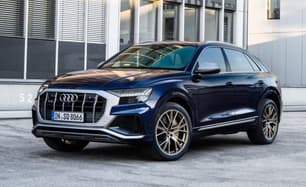
The SQ8 is a gorgeous coupe-style SUV that looks purposeful and poised with its balanced proportions and wide stance. It’s stands apart from its siblings thanks to the S-styled nose treatment and our test model's black accent package makes the honeycomb grille look even sportier.
The update sees new air intake vents at the front, matrix LED headlights and new chrome exhaust tailpipes.
The upgraded 23-inch alloys with red calipers behind them hint at what’s under the bonnet, as does the Sakhir (sack-heer) Gold paintwork which is aptly named after the one-off Grand Prix race circuit.
The interior looks luxuriously appointed with the black Valcona leather upholstery and the dash is headlined by three high-end technology screens. The SQ8 also gets sport seats featuring a quilted design and 'S' badging but there’s not much else separating it from its siblings.
Audi fans will love the the SQ8's more understated interior but newcomers might be surprised it's not as flashy as some of its rivals.
The fourth-gen X3, which has a lighter but stiffer body, shares the same wheelbase as its third-gen predecessor but at 4755mm end-to-end it's 34mm longer and it's 29mm wider.
It’s also 25mm lower, which combined with front and rear track-width increases and adaptive suspension damping to sharpen the handling underlines its sportiness and driver appeal, despite a substantial 2055kg kerb weight.
The new exterior design is characterised by short overhangs, flush door handles, a larger ‘split kidney’ grille, new LED taillights and L-shaped light elements for the LED headlights.
The new interior design is a classy mix of soft-touch materials and high-gloss hard surfaces in tastefully contrasting tones. The seats are upholstered in a new synthetic leather called 'Veganza' ('Espresso Brown' in our example) which according to BMW requires 85 per cent fewer CO2 emissions to produce than genuine leather (which is still available as an extra-cost option).
Combined with subtle use of ‘Magnolia’ fine-wood trim inserts, satin chrome, piano black, blue/red M highlights and slender ambient light-strips, it’s a cabin that exudes opulence.
The upper large SUV tag certainly makes sense when it comes to cabin space because there's a lot of it. Both rows enjoy ample head- and legroom and access is great thanks to wide door apertures and high ground clearance.
Comfort is high with well-padded seats and thanks to the Sensory Package all but the middle back seater get some luxury extras.
The centre rear position has compromised legroom courtesy of the transmission tunnel, so it's best for a kid. However, the front seats take the cake with their massage, heat and cooling functions and adjustable supports.
Amenities are great throughout the car and the extendable sun visors, rear electric sunshades, soft-close doors and four-zone climate control clinch the practicality deal.
Individual storage is a bit sparse up front with two cupholders, a drink bottle holder in each door and a shallow middle console that realistically only fits a phone.
The glove box is a great size. I can fit my handbag in it, but there are not a lot of areas to pop your smaller items in.
Individual storage is a bit better in the rear as you get two big map pockets, a drink bottle holder in each door, plus two cupholders in the fold-down armrest - so it feels like you have more places for your bits and pieces.
Technology looks amazing but overwhelming to use until you wrap your head around it all. The haptic feedback also gets tired fast. The built-in satellite navigation is super simple while the head-up display and digital instrument cluster feature pull through directions, which is handy.
Charging options are good with each row getting two USB-C ports and a 12-volt socket but the front also enjoys a wireless charging pad. The pad is slow to charge, though, and left my iPhone feeling super hot whenever it was used.
The boot is a good size at 605L and easy to access, too. The sloping roof means larger items have to sit flush with the seats but you shouldn’t have to worry for road trips.
The back seat has a 40/20/40 split which opens up storage options and this model has a powered tailgate.
This would make a great family weekend escape machine, for which BMW quotes a 645kg payload rating. It’s also rated to tow up to 2500kg of braked trailer, which could pose a challenge given the relatively low 100kg tow-ball download limit (TBD is typically around 10 per cent of trailer weight).
BMW also does not publish a GCM figure (how much it can legally carry and tow at the same time) so we can’t confirm if it can carry its maximum payload while towing its maximum trailer weight.
Even so, the M50 has a useful-sized luggage area which offers up to 570 litres (or 0.57 cubic metres) of load volume with the rear seat upright.
This expands to 1700 litres (or 1.7 cubic metres) with the rear seat folded flat, which can be handy for a multitude of tasks like transporting a mountain bike or hauling home flat-pack furniture.
There’s comfortable space for the driver and front passenger, along with useful storage including large bottle-holders and bins in each front door.
The centre console has two small-bottle/cupholders plus wireless phone-charging and a pair of USB ports. There's also a glove box plus another box at the rear of the console with a padded lid that doubles as an elbow rest.
The rear bench seat is surprisingly spacious, given that I’m 186cm tall and when seated behind the driver’s seat in my position I still have about 40mm of knee clearance, which is optimised by the concave shape of the front seat backrests.
The spacious and airy feel is enhanced by the ‘panorama’ glass roof which spans the full length of the seating area and allows generous headroom even for tall people.
However, shoulder room is tight for three adults and the centre passenger’s feet must contend with the transmission tunnel, so even though it would be fine for three kids we’d suggest a limit of two adults for longer trips.
Rear passengers get privacy glass and pull-up roller sunshades, large-bottle holders and bins in each door plus net-type pockets and anchorage points for media devices on each front seat backrest. There are also two small-bottle/cupholders in the fold-down centre armrest.
The rear of the centre console has two USB ports, adjustable air-vents plus controls for zone temperature, airflow preferences and seat-heating.
The bench seat features a 40/20/40 split, which allows the centre backrest to fold forward independent of the two outer backrests to allow long loads like snow skis, home hardware etc to be carried if securely fastened.
A power tailgate provides access to the luggage area, which is equipped with a handy 12-volt accessory socket plus load-anchorage points front and rear, extra storage nooks for small items on either side and a retractable roller-type load cover. Overall, this vehicle offers good practicality for family duties.
There are three fuel-based variants for the Q8 and the model on test is the top-spec SQ8 TFSI quattro. Its mid-life refresh has seen a price hike of $10,015, bringing it's before on-road costs price to $178,815.
Our test vehicle has also been fitted with a few extras, like a 'Sensory Package' ($14,400) which includes a black headliner, upgraded 23-speaker Bang & Olufsen 3D surround sound system, massage function for the front seats, heat function for the rear outboard seats, electric sunshades for the rear row and an air-quality perfume function.
Also fitted are various black and matt carbon accents across/inside the body for a total of $5400, optioned 23-inch alloy wheels ($3000) and specialised 'Sakhir Gold Metallic' paintwork for $1600. Which brings the total MSRP price tag to $203,215.
Even with all of these extras, the SQ8 is still the most affordable performance SUV compared to its nearest rivals as the Porsche Cayenne GTS starts from $212,600 MSRP and the Mercedes-AMG GLE 63 outstrips them both at $272,300 MSRP.
As you'd expect the standard features list is robust for the SQ8 and includes premium features like a panoramic sunroof, electric front seats with heating/cooling and memory functions, full-leather upholstery, soft-close doors and a heated steering wheel.
There is a bunch of high-end technology throughout which includes a colour head-up display, 10.1-inch touchscreen multimedia system, 8.6-inch climate control panel, 12.3-inch digital instrument cluster, satellite navigation, wired/wireless Apple CarPlay and Android Auto, digital radio, four USB-C ports, three 12-volt sockets and a wireless charging pad.
Practical features include keyless entry and start, rain-sensing windscreen wipers, dusk-sensing LED headlights, a powered tailgate, adaptive air-suspension and four-zone climate control.
Overall, not a bad list of features for this part of the market and you won't be left wanting.
Our X3 M50 xDrive test vehicle, finished in new 'Dune Grey Metallic', comes standard with a 3.0-litre turbocharged inline six-cylinder petrol engine incorporating 48-volt mild-hybrid technology, plus an eight-speed automatic and permanent all-wheel drive for a list price of $128,900.
You’d expect a high performance prestige vehicle costing six figures would be packed with desirable standard features and the M50 xDrive delivers, starting with big 21-inch 'M' lightweight alloy wheels shod with wide 285/35R21 tyres.
However, there’s no room for a spare (not even a space-saver) so you get a tyre repair kit instead.
The standard equipment list also includes adaptive LED headlights (with matrix high-beam and blue design detailing), a power tailgate, an ‘Iconic Glow’ illuminated kidney grille with M-specific elements, quad exhaust outlets, a panorama full-length (fixed) glass roof, a choice of six premium metallic paint colours and more. The 'M Sport Pro' visual enhancement package is also included.
Step inside and the driver is treated to a head-up display and an elegantly curved digital dash display, which spans about two-thirds of the cabin's width. It seamlessly incorporates a 12.3-inch driver’s instrument display (made from recycled polyester) and 14.9-inch multimedia display controlled by BMW’s latest 'iDrive System 9' software.
Premium audio is provided by a 15-speaker 750-watt Harman Kardon surround sound system, which includes digital radio and wireless Apple/Android connectivity. There’s also wireless phone charging.
The driver gets a thick leather-rimmed and heated 'M Sport' flat-bottom steering wheel and the driver and front passenger are also treated to sumptuous bucket seats with multiple power adjustments and heating/cooling.
Up to three passengers can share the rear bench seat and indulge in the luxury of three-zone automatic climate control, heating for the outer seating positions, privacy glass, roll-up sunshades, two USB-C ports and lots more.
Our test vehicle has a 4.0-litre, twin-turbo petrol V8 engine that produces 373kW and 770Nm. That means it sits in the middle of its rivals in terms of outputs with the Mercedes being top-dog with its 450kW/850Nm combo.
Still... the SQ8 is no dainty flower when it comes to power delivery and has an impressive 0-100km/h sprint time of just 4.1 seconds.
The SQ8 is a full-time all-wheel drive with an eight-speed auto transmission and the whole engine combo delivers a powerful but elegant on-road experience.
According to BMW, the M50 xDrive features the most powerful inline six-cylinder petrol engine fitted to an M Performance model.
This 3.0-litre unit clearly benefits from BMW’s twin-scroll turbocharging technology, which combined with variable valve timing and an extra 13kW/200Nm from the 48V mild-hybrid technology produces a stomping 293kW of power at 5500rpm and 580Nm of torque at 1900rpm.
It also has a ‘boost’ function, which provides an extra burst of power for short periods when maximum acceleration is required when overtaking etc.
It’s activated by the left paddle-shifter on the steering wheel and automatically optimises transmission/chassis settings to suit. There’s also a drive mode selector, with ‘Sport’ offering the most responsive and engaging experience.
The eight-speed torque converter automatic is a refined and efficient transmission well suited to this full-time all-wheel drive application. Rapid-fire manual shifting is also available using the steering wheel paddles.
The official combined (urban/extra-urban) fuel cycle figure is 11.9L/100km, which is lower than its rivals.
My real world usage sits at 12.3L/100km after a mix of open-road and urban driving.
This result is decent for a performance SUV but expect it to be thirsty in an urban environment as the on-board gauge hit the mid-20s in the city.
Based on the large 85L fuel tank theoretical driving range is 714km and around 690 using our real-world result. Respectable for a performance SUV but not as good as some family SUVs.
BMW claims an official average combined consumption of 8.2L/100km but the dash display was showing 9.9 at the completion of our 210km test, which included a mix of suburban, city and highway travel.
Our own figure, calculated from fuel bowser and tripmeter readings, came in slightly higher again at 10.5L/100km, which given our test vehicle’s two-tonne-plus weight and performance capabilities is still reasonable economy.
So, based on our figures, you could expect a realistic driving range of around 600km from its 65-litre tank, which prefers premium 98 RON petrol.
The SQ8 delivers on power because it’s effortless to get up to speed and the pick up is super responsive when the start/stop function is turned off (otherwise there can be some lag).
The engine doesn’t sound like a big and grumbly V8, though. There are some growls but it’s mainly when you turn the engine on and not to be obnoxious about it but if you're in a V8, you want to hear it as it’s part of the fun of having a big bruiser engine like this!
What doesn’t help the V8 soundscape is the fact the cabin sounds like a noise-cancelling headphone inside. There is a small hum from road noise but it’s pretty darn quiet. Almost EV quiet at times but that means the driving experience leans more towards refined and elegant rather than sporty and fun.
The SQ8's handling is great - super direct steering, stable in corners and well-rounded passenger comfort when it comes to suspension.
You still get road feedback, which I like as a driver, but it’s not too stiff thanks to the adaptive suspension.
The SQ8 is a large car but you wouldn’t know it when it comes to parking. The 360-degree view camera is clear and the dynamic guidelines help you to position this big unit even the smallest of car parks.
First, the fun stuff. It certainly feels like ‘the ultimate driving machine’ when you slide behind the chunky leather-rimmed flat-bottom steering wheel and hold it in your hands.
The driver’s seat offers not only powered adjustment of backrest and base-cushion rake, but also four-way lumbar support and side-bolsters that can tighten their embrace of your upper torso to contend with high cornering loads.
There’s also manual extension of the base-cushion length for greater thigh support and a big left footrest to brace against, so you could not ask for a more accommodating and purposeful driving position.
The steering is perfectly weighted and the quartet of enormous disc brakes provide ample bite with superb pedal feel. Combined with its adaptive suspension and wide grippy tyres, the X3 is a family car that’s also invigorating to drive, particularly when you select the ‘Sport’ mode.
The enhanced engine response and sharper steering that result (even the instrument panel display changes) make any twisting mountain road an engaging experience, enhanced by an intoxicating exhaust note that only a BMW M six can deliver.
The turbocharged engine offers an unyielding surge of acceleration from well below peak torque at 1900rpm to maximum power at 5500rpm, making BMW’s claim of 0-100km/h in a scant 4.6 seconds sound credible.
You can also manually change gears using the steering wheel paddles, but we found the gearing and shift calibrations so good that we preferred to leave it in auto mode.
However, the X3 M50 has two distinct personalities, as in more relaxed drive modes it’s just as happy serving as practical family transport during the week for grocery shopping, daily school runs and other common tasks.
It’s also a comfortable tourer for family getaways, with long gearing that requires only 1500rpm to cruise at 100km/h where low engine, tyre and wind noise allow highway conversations at lounge room levels.
The SQ8 has a maximum five-star ANCAP safety rating from testing done in 2019 and features eight airbags, including side chest airbags for both rows. It's common to only find the latter in the front – so that’s great for a family car.
The SQ8 scored well across its ANCAP individual protection segments, scoring 93 per cent for adult occupant, 88 per cent for child occupant, 71 per cent for vulnerable road user and 75 per cent for its safety assist.
The SQ8 has a long list of safety features including blind-spot monitoring, safe exit warning, driver attention monitor, fatigue reminder, matrix LED lights, SOS call, forward collision warning, rear collision warning, rear cross-traffic alert, lane keeping/departure aids, tyre pressure monitoring, adaptive cruise control (with stop & go and lane keeping), park assist and a 360-degree reversing camera plus front and rear parking sensors.
The rear row features two ISOFIX child seat mounts and three top tether anchors.
The SQ8 has AEB with car, pedestrian, and cyclist detection and is operational from 10 – 250km/h but it is usual to see this system operate from as low as 4.0km/h.
No ANCAP rating as yet but this X3 comes with a long menu of standard safety features including multiple airbags, AEB with pedestrian/cyclist/junction detection, front collision warning with brake intervention, lane-keeping, active cruise control, head-up display with speed sign recognition, front and rear cross-traffic alert, tyre pressure monitoring and lots more.
There are also ISOFIX and top tethers for the two outer rear seating positions.
The SQ8 comes with a five-year/unlimited km warranty, which is a normal term for the class.
It also comes with capped servicing for five years or up to 75,000km and averages $920 per service, which is very good for the segment.
Servicing intervals are reasonable at every 12-months or 15,000km, whichever occurs first.
It comes standard with a five-year, unlimited km warranty.
Scheduled servicing is determined by BMW’s vehicle monitoring system which advises when a service is needed, typically around 12 months/15,000km.
A capped-price servicing package covering five years/80,000km (whichever occurs first) totals $2475, or an average of $495 per service.