What's the difference?
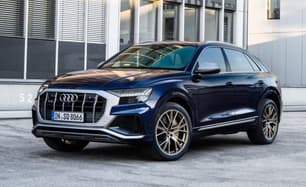
The Audi SQ8 has had a mid-life refresh but this upper large SUV still offers luxury with its powerful V8 engine that fans know and love, as well as the features you would expect in a top model.
It competes against the Mercedes-AMG GLE and Porsche Cayenne but we’re family testing the SQ8 to see how it handles domestic life.
Keep reading to see what we’ve discovered.
Did you know SsangYong translates to ‘Double Dragon’?
How friggin’ cool is that? Far cooler, at least, than the Korean brand’s history, which the word ‘tumultuous’ barely begins to cover.
After years of ownership woes and a near-bankruptcy, the brand came out the other side with enough stability to field a range of new vehicles, courtesy of its ambitious new owners - Indian giant Mahindra & Mahindra.
The Tivoli small SUV is the first car to launch under the new, cashed-up leadership and when it landed in Korea in 2015 it was solely responsible for the ‘Double Dragon’ brand turning its first profit in nine years.
Fast forward a few years, and a re-booted SsangYong is again confident enough to enter the Australian market, with a four-pronged, all-new SUV assault.
So, does the Tivoli have what it takes to break into our highly competitive small-SUV scene and help SsangYong pull a miraculous Korean turn-around, a-la-Hyundai?
I spent a week in the mid-spec Tivoli ELX diesel to find out.
The Audi SQ8 isn’t your typical performance SUV. It’s more refined and less flashy. The tech can be more complicated than it needs to be and if you’re wanting that V8 soundscape, you won’t find it here.
However, the handling and on road experience are superb plus you can comfortably haul the family around and look good doing it.
I was asked the critical question while I had the Tivoli ELX on test – “Do you think people will buy this car?” After some time in thought, my answer was – “Not many… yet.”
Those who can look past the brand perceptions are getting an SUV which is damn near as good as anything on the market – and likely cheaper to run.
To that, you can say a lot of things: If only it cost slightly less. If only its rear was better looking. If only it had a five-star safety rating.
But here it is – the fact that the Tivoli can even hold a candle to its slick, finely tuned competition says a lot. The Double Dragon is back, and if it can afford to stick around for a while, perhaps it will stand a chance of putting the big players on notice.
The SQ8 is a gorgeous coupe-style SUV that looks purposeful and poised with its balanced proportions and wide stance. It’s stands apart from its siblings thanks to the S-styled nose treatment and our test model's black accent package makes the honeycomb grille look even sportier.
The update sees new air intake vents at the front, matrix LED headlights and new chrome exhaust tailpipes.
The upgraded 23-inch alloys with red calipers behind them hint at what’s under the bonnet, as does the Sakhir (sack-heer) Gold paintwork which is aptly named after the one-off Grand Prix race circuit.
The interior looks luxuriously appointed with the black Valcona leather upholstery and the dash is headlined by three high-end technology screens. The SQ8 also gets sport seats featuring a quilted design and 'S' badging but there’s not much else separating it from its siblings.
Audi fans will love the the SQ8's more understated interior but newcomers might be surprised it's not as flashy as some of its rivals.
SsangYong is hardly a brand known for its consistent or good-looking design. In the past, the brand has floundered between the squared-off lines of the Musso and the unresolved bulbous curves of the last-gen Korando.
The brand’s re-launch has finally brought it up to speed, with every car across its range featuring a consistent design language. It’s improved out of sight, but still isn’t without its flaws.
Up front, there’s an angry-looking, squared-off horizontally slotted grille, with angles galore wrapping around the small SUV’s sides.
The angles continue up the A-pillar and across the roof for a squared-off, European-influenced roofline.
Then, around the back things get… strange. A pronounced curvy ridge makes its way over the rear wheels and into a rounded-out boot. It seems at odds with the angular rear glass and lower garnish.
There’s just way too much going on around the back; it’s overly styled. The chintzy chrome finish around the lower reflectors doesn’t help, nor do the big round SsangYong badge and bold ‘T I V O L I’ typeface.
The 16-inch alloys on the EX and ELX grade are a simple 10-spoke matte-silver. They’re nothing special, but at least they're easy to clean.
Inside, things are also mixed. There’s plenty of good and bad. The seats are clad in a robust cloth with plenty of sponge for comfort, and there are sensibly placed soft surfaces in the doors and on the centre console for your elbows.
The dash has an aesthetically pleasing symmetrical theme to it and is finished mostly in decent plastics. The 7.0-inch media screen is pretty good, too, but the rest of the centre stack is a bit nasty and old fashioned.
There’s the mix of gloss plastic and silver surfaces, a giant climate control dial and the so-so buttons that litter its surface. It reminds me of Korean car designs past, like the Holden (Daewoo) Captiva and generations-old Hyundais. Credit where credit is due, though - it all feels much better built.
I’m actually a big fan of the Tivoli’s steering wheel, it has a ridged, chunky shape and is finished in a pleasing artificial-leather material. The function stalks behind it are solid, with rotary dials on them to control lights and wipers. As the primary touch-points for the driver it’s neat that they have a unique, SsangYong personality to them.
The upper large SUV tag certainly makes sense when it comes to cabin space because there's a lot of it. Both rows enjoy ample head- and legroom and access is great thanks to wide door apertures and high ground clearance.
Comfort is high with well-padded seats and thanks to the Sensory Package all but the middle back seater get some luxury extras.
The centre rear position has compromised legroom courtesy of the transmission tunnel, so it's best for a kid. However, the front seats take the cake with their massage, heat and cooling functions and adjustable supports.
Amenities are great throughout the car and the extendable sun visors, rear electric sunshades, soft-close doors and four-zone climate control clinch the practicality deal.
Individual storage is a bit sparse up front with two cupholders, a drink bottle holder in each door and a shallow middle console that realistically only fits a phone.
The glove box is a great size. I can fit my handbag in it, but there are not a lot of areas to pop your smaller items in.
Individual storage is a bit better in the rear as you get two big map pockets, a drink bottle holder in each door, plus two cupholders in the fold-down armrest - so it feels like you have more places for your bits and pieces.
Technology looks amazing but overwhelming to use until you wrap your head around it all. The haptic feedback also gets tired fast. The built-in satellite navigation is super simple while the head-up display and digital instrument cluster feature pull through directions, which is handy.
Charging options are good with each row getting two USB-C ports and a 12-volt socket but the front also enjoys a wireless charging pad. The pad is slow to charge, though, and left my iPhone feeling super hot whenever it was used.
The boot is a good size at 605L and easy to access, too. The sloping roof means larger items have to sit flush with the seats but you shouldn’t have to worry for road trips.
The back seat has a 40/20/40 split which opens up storage options and this model has a powered tailgate.
The Tivoli might be a small SUV but it has a cavernous cabin. It’s seriously impressive and rivals some of the best players in this segment, like the Honda HR-V.
The front seat offers huge amounts of headroom, leagues of legroom, great space for your arms on either side and a fully telescopically adjustable steering wheel.
Storage is comprised of a shallow trench under the climate-control stack, decently sized cupholders in the centre console and doors, as well as a deep console box and a glovebox, which seems to disappear forever into the dash.
There’s also a rather odd trench cut out of the dash above the console box. It’s ridged and has a rubbery surface but seems useless for storing things, which will simply topple out when you accelerate.
As previously mentioned, there are comfortable surfaces for resting your elbows on for front occupants.
Room for back-seat dwellers is also excellent, with awesome legroom for the segment and leagues of airspace even for taller folk. There are the same padded elbow-rests in the doors and deep cupholders, but no air-conditioning vents or USB ports.
There are also weird elastic ropes on the back of the front seats for storing things (with mixed success) and a pull-down armrest.
The boot is rated at 423-litres (VDA), which is deceptively large (size-wise not far off the HR-V’s 437-litre space). The problem here is the shape of the boot itself. It’s deep from the floor to the retractable screen, and SsangYong says it will hold three golf bags, but it’s the narrow width and length which limit its potential.
I found it awkward to move some odd-shaped objects, like a heater and some boxes, and the high entry-point to the bootlid makes things a little difficult when moving heavier items.
Our ELX has significantly more room thanks to a space-saver spare under the boot floor. The Ultimate, which sits above has a full-size spare, further limiting boot space.
There are the same odd elastic ropes in the edges of the boot wall for smaller loose objects or cables.
There are three fuel-based variants for the Q8 and the model on test is the top-spec SQ8 TFSI quattro. Its mid-life refresh has seen a price hike of $10,015, bringing it's before on-road costs price to $178,815.
Our test vehicle has also been fitted with a few extras, like a 'Sensory Package' ($14,400) which includes a black headliner, upgraded 23-speaker Bang & Olufsen 3D surround sound system, massage function for the front seats, heat function for the rear outboard seats, electric sunshades for the rear row and an air-quality perfume function.
Also fitted are various black and matt carbon accents across/inside the body for a total of $5400, optioned 23-inch alloy wheels ($3000) and specialised 'Sakhir Gold Metallic' paintwork for $1600. Which brings the total MSRP price tag to $203,215.
Even with all of these extras, the SQ8 is still the most affordable performance SUV compared to its nearest rivals as the Porsche Cayenne GTS starts from $212,600 MSRP and the Mercedes-AMG GLE 63 outstrips them both at $272,300 MSRP.
As you'd expect the standard features list is robust for the SQ8 and includes premium features like a panoramic sunroof, electric front seats with heating/cooling and memory functions, full-leather upholstery, soft-close doors and a heated steering wheel.
There is a bunch of high-end technology throughout which includes a colour head-up display, 10.1-inch touchscreen multimedia system, 8.6-inch climate control panel, 12.3-inch digital instrument cluster, satellite navigation, wired/wireless Apple CarPlay and Android Auto, digital radio, four USB-C ports, three 12-volt sockets and a wireless charging pad.
Practical features include keyless entry and start, rain-sensing windscreen wipers, dusk-sensing LED headlights, a powered tailgate, adaptive air-suspension and four-zone climate control.
Overall, not a bad list of features for this part of the market and you won't be left wanting.
If SsangYong wants to roar back onto the market and challenge people’s perceptions of the brand, it’ll first need to get them in the door. After all, this low-ball strategy worked for Hyundai and Kia, who infiltrated Australia with models like the Excel and Rio, which offered all the features of more established brands at a cut price.
The challenge is not tarnishing your brand while you’re at it. Has SsangYong pulled it off with the Tivoli?
Our ELX is the mid-spec car, sitting above the entry-level EX and below the all-wheel-drive and diesel-only Ultimate.
The $29,990 ticket price for our front-wheel-drive diesel would be about right if the Tivoli was from any mainstream brand. For roughly the same money you can get a top-spec Mitsubishi ASX Exceed ($30,990), Honda HR-V RS ($31,990), fellow Korean Hyundai Kona Elite ($29,500), or a diesel-powered Mazda CX-3 Maxx Sport ($29,990).
Oh, and despite it looking quite large in the pictures, the Tivoli is most definitely a small SUV, being narrower than a Hyundai Kona and not as long as a CX-3.
Feature-wise, our ELX gets 16-inch alloy wheels, a 7-inch multimedia touchscreen with Apple CarPlay and Android Auto support, front & rear parking sensors with reversing camera, auto-dimming rear-view mirror, leather trim on the steering wheel, standard faire cloth seats (which weirdly remind me of Hyundai’s seats from about a generation ago), roof-rails, luggage screen in the boot, dual-zone climate control, privacy glass and halogen headlamps with LED DRLs.
Not bad. The safety offering is not only good but available across the range, so check the Safety section of this review out for more on that.
Missing at this price are leather trim (available on the Kona Elite and ASX), active cruise, LED front lighting and powered front seats. It’s not crazy value, but it’s also not bad at $29,990.
Our test vehicle has a 4.0-litre, twin-turbo petrol V8 engine that produces 373kW and 770Nm. That means it sits in the middle of its rivals in terms of outputs with the Mercedes being top-dog with its 450kW/850Nm combo.
Still... the SQ8 is no dainty flower when it comes to power delivery and has an impressive 0-100km/h sprint time of just 4.1 seconds.
The SQ8 is a full-time all-wheel drive with an eight-speed auto transmission and the whole engine combo delivers a powerful but elegant on-road experience.
Our Tivoli is powered by a 1.6-litre four-cylinder turbo diesel engine producing 84kW and 300Nm of torque.
That seems a little low on the power front compared to petrol competitors, but the strong torque figure available from an almost instantaneous 1500rpm gives this engine a solid amount of get up and go.
If you aren’t opposed to diesel, I would strongly suggest this engine over its underpowered 1.6-litre petrol equivalent, as it has almost twice the available torque.
It might seem risky for SsangYong to be offering diesel in a segment where the fuel type is unpopular, but it makes sense from a global supply point of view, as diesel is largely the fuel of choice in the Tivoli’s home country of South Korea.
The ELX is front-wheel drive and can only be had with a six-speed torque converter auto transmission manufactured by Aisin.
The official combined (urban/extra-urban) fuel cycle figure is 11.9L/100km, which is lower than its rivals.
My real world usage sits at 12.3L/100km after a mix of open-road and urban driving.
This result is decent for a performance SUV but expect it to be thirsty in an urban environment as the on-board gauge hit the mid-20s in the city.
Based on the large 85L fuel tank theoretical driving range is 714km and around 690 using our real-world result. Respectable for a performance SUV but not as good as some family SUVs.
Over my week of mainly urban driving I scored a fuel-consumption figure of 7.8L/100km against a claimed urban figure of 7.4L/100km which is not too bad, but also not stellar.
The official claimed/combined usage figure is at a bold-sounding 5.5L/100km.
The Tivoli has a 47-litre fuel tank.
The SQ8 delivers on power because it’s effortless to get up to speed and the pick up is super responsive when the start/stop function is turned off (otherwise there can be some lag).
The engine doesn’t sound like a big and grumbly V8, though. There are some growls but it’s mainly when you turn the engine on and not to be obnoxious about it but if you're in a V8, you want to hear it as it’s part of the fun of having a big bruiser engine like this!
What doesn’t help the V8 soundscape is the fact the cabin sounds like a noise-cancelling headphone inside. There is a small hum from road noise but it’s pretty darn quiet. Almost EV quiet at times but that means the driving experience leans more towards refined and elegant rather than sporty and fun.
The SQ8's handling is great - super direct steering, stable in corners and well-rounded passenger comfort when it comes to suspension.
You still get road feedback, which I like as a driver, but it’s not too stiff thanks to the adaptive suspension.
The SQ8 is a large car but you wouldn’t know it when it comes to parking. The 360-degree view camera is clear and the dynamic guidelines help you to position this big unit even the smallest of car parks.
We never recommend that you drive blindfolded, but if you could and you drove the Tivoli, I honestly believe you’d have trouble telling it apart from any other small SUV on sale today.
The diesel engine feels strong from the get-go and pushes the 1390kg SUV along with a reasonable urgency. It’s no performance drivetrain, but it's as good as, if not better than, most of the petrol competitors.
The six-speed torque converter auto is mostly great around town but is old-school in that you can definitely feel each ratio. It also had the unfortunate habit of occasionally grabbing the wrong gear.
I once caught it out altogether under heavy acceleration and it spent a whole second fishing for the ratio it wanted. It’s still better than a continuously variable transmission (CVT) for driver engagement, though.
Steering is on the light side but is direct and offers decent feedback. The ELX offers three steering modes - 'Comfort', 'Normal', and 'Sport', which artificially alter the weight behind the steering. 'Normal' is by far the best.
The suspension was also notably impressive. Fellow Korean brands, Hyundai and Kia, have harked on for a long time about local tuning efforts, but I found the Tivoli’s suspension tune almost as good. It’s a slightly more spongey, comfort-focused tune, but I was impressed at how composed it felt in the corners.
The ELX has a cheap torsion-bar rear suspension setup, which could only really be noticed over rough road conditions.
Behind the wheel, the Tivoli was also surprisingly quiet at lower speeds. This makes for a nice, quiet drive around town, despite the diesel engine, but at speeds above 80km/h and engine rpms above 3000 the noise became significantly worse.
I’d say the Tivoli drives just as well as most Hyundais and Kias from just a few years ago. There’s room for improvement in the little details, but for the brand’s first effort since its international re-boot, it does a darned good job.
The SQ8 has a maximum five-star ANCAP safety rating from testing done in 2019 and features eight airbags, including side chest airbags for both rows. It's common to only find the latter in the front – so that’s great for a family car.
The SQ8 scored well across its ANCAP individual protection segments, scoring 93 per cent for adult occupant, 88 per cent for child occupant, 71 per cent for vulnerable road user and 75 per cent for its safety assist.
The SQ8 has a long list of safety features including blind-spot monitoring, safe exit warning, driver attention monitor, fatigue reminder, matrix LED lights, SOS call, forward collision warning, rear collision warning, rear cross-traffic alert, lane keeping/departure aids, tyre pressure monitoring, adaptive cruise control (with stop & go and lane keeping), park assist and a 360-degree reversing camera plus front and rear parking sensors.
The rear row features two ISOFIX child seat mounts and three top tether anchors.
The SQ8 has AEB with car, pedestrian, and cyclist detection and is operational from 10 – 250km/h but it is usual to see this system operate from as low as 4.0km/h.
The Tivoli comes with a reasonably comprehensive safety offering, but there’s room to improve here, too.
On the active-safety front our ELX has auto emergency braking (AEB – works up to 180km/h), lane-departure warning (LDW), lane-keep assist (LKAS) and high-beam assist.
There’s no active cruise, blind-spot monitoring (BSM), traffic-sign recognition (TSR), or driver-attention alert (DAA) available on even the top-spec Ultimate.
The Tivoli has seven airbags, two ISOFIX child-seat mounting points on the rear outboard seats and top-tether anchorages across the second row, as well as the expected brake and stability controls (but no torque vectoring).
The Tivoli has received a four-star ANCAP safety rating as of 2016, however this is based on a EuroNCAP score and now-available lane-assist technologies were not factored into this test.
The SQ8 comes with a five-year/unlimited km warranty, which is a normal term for the class.
It also comes with capped servicing for five years or up to 75,000km and averages $920 per service, which is very good for the segment.
Servicing intervals are reasonable at every 12-months or 15,000km, whichever occurs first.
The SsangYong Tivoli now leads the small SUV segment with a seven-year/unlimited-kilometre warranty, which is miles ahead of the acceptable industry standard of five years/unlimited kilometres offered by most competitors.
Service pricing comes in at a completely fixed and impressive-for-a-diesel $322 per yearly 15,000km service for the life of the warranty.
Extra service items are tidily laid out in a chart breaking down parts cost, labour, and total price, with the most notably expensive item being transmission fluid ($577), which, at worst, is recommended to be changed at 100,000km.
From this we can tell SsangYong intends to target Kia’s audience and use this part of the business to categorically beat its competition.