What's the difference?
The Audi Q5 now has a sportier-looking sibling, with the German brand's all-time best-selling SUV welcoming a sleeker, more aggressive solution it calls its Sportback range.
And look, spoiler alert, it looks better than the regular Q5. It's as simple as that. So if that's all you're here to find out, feel free to close the laptop, put the phone away, and move on with your day.
But you'd be doing yourself a disservice, because there are more questions to be answered here. Like will you paying in on-board comfort for this new raked roofline? Do the Sportback's sporty intentions make for a more annoying daily drive? And how much does Audi want you to pay for one?
All these questions and more answered. So stay with me.
If you’re in the market for a city- and family-friendly compact SUV, you’re in luck.
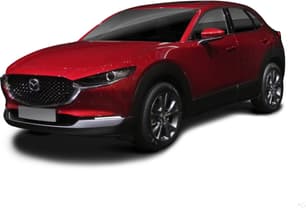
The small SUV segment is one of the most heavily populated and hotly contested in the Aussie new-car market and the Mazda CX-30 G25 GT SP FWD is pitched against a seething pack of at least 10 similarly sized, generously specified and highly-credentialed competitors.
So, stay with us on a mission to determine whether this high-end version of one of Mazda’s best sellers is worthy of a spot on your new-car short list.
Let’s forget the money, for a second, because yes, you’re paying more for the Sportback variant. But if you can afford it, then why wouldn’t you. This is a sleeker, sportier and more stylish answer to the regular Q5, which was already a super-solid offering in the segment. And as far as I can tell, the practicality sacrifices you have to make are minimal at best.
So why not?
About to enter its fifth year in market the Mazda CX-30 is holding up well and this GT SP FWD grade delivers solid value relative to its key competitors, of which there are many. It’s also space-efficient, practical and performs well with top-shelf safety, decent refinement and good dynamic ability.
Alternately, it’s crying out for a hybrid powertrain to improve fuel efficiency, the interior form and function is starting to date and while it meets the market the ownership promise could be sharper. But this little SUV is still worthy of a spot on your new-car short list.
Our adventure began with the SQ5, and, to my eye at least, it looks mean, and more like a jacked-up hot hatch than sportier version of a mid-size SUV.
Speaking of which, it looks bigger than a mid-size, too, as though the flattened roof has pushed the rear out for more length, at least visually.
By far its best angle, though, will be afforded to the people in front of you on the road, with each peek in the rear-view mirror revealing a wide, forward-leaning grille, all black honeycomb mesh, with a cat-clawed bonnet and headlights that sweep back into the bodywork, hinting at speed before it even sets off.
Side on, the massive 21-inch alloys hide red brake calipers, but it does also reveals a tale of two SUVs, with the front half looking taller and straighter, while the rear roofline is more raked as it flies towards a fairly small rear windscreen with a roof spoiler that juts out over it.
At the rear, the quad exhaust tips (which sound great), and a boot spoiler moulded into the bodywork complete the package.
But even in lesser lesser Q5 45 TFSI guise, this Sportback looks the business, I reckon. Though a little more premium than performance-focused, perhaps.
As the name suggests, the Sportback version gives you, well, a sportier back, and it all starts at the B-Pillar, with a more raked roofline that gives this version of the Q5 a sleeker, more slippery look.
But they aren’t the only changes. In Sportback models, the single-frame grille upfront is different, and the grille is also positioned lower, and seems to jut out from the bonnet more, for a lower, more aggressive look. The lights are also positioned a little higher, and those massive air vents on either side are different, too.
The cabin is the usual level of Audi niceness, with a big central screen, big digital screen in front of the steering wheel, and a sense of genuine solidity and quality wherever you look.
There are some questionable materials at work, though, like the door trims and the hard plastic that your knee rubs against when driving, but all in all, it's quite a lovely place to spend time.
Mazda continues to follow a disciplined design path with everything from the MX-5 sports car to the BT-50 dual-cab ute sharing key attributes like the brand’s signature trapezoidal grille, simple flowing lines and sleek head- and tail-lights, all wrapped up with a subtle hint of chrome here and there.
Car-spotters with the GT SP on their checklist should look out for 18-inch black metallic rims as well as black exterior trim, including the mirror caps.
Inside, the CX-30 maintains Mazda’s restrained approach with smooth surfaces integrated across the multi-layer dash and primo leather-trimmed seats.
That said, this car is starting to show its age with the multimedia screen plonked on the top of the dash (in typical Mazda fashion) and a largely conventional instrument cluster.
Yes, the main dial is configurable courtesy of a central 7.0-inch TFT screen, but next to more recent arrivals boasting sleek, often twinned, flat screen displays the CX-30 looks and feels out of touch.
Functionally, there’s a sensible mix of digital controls and physical buttons (points for audio volume and ventilation dials!), but… the multimedia screen can only be accessed by a rotary controller in the centre console once the car is mobile (it works as a touchscreen when you’re stationary).
Some say touchscreens take your eyes off the road so the controller makes sense, but with a sequential app like Spotify it can take a lot of twirls to get to where you want to go, which upsets concentration and takes your eyes off the road, anyway. I’d prefer the relative ease of a quick press on a screen.
Aside from all that, the materials used are high quality with soft-touch surfaces across key contact points and hard plastics confined to high-wear areas.
The Q5 Sportback range stretches 4689mm in length, 1893mm in width, and around 1660mm in height, depending on the variant. It rides on a 2824mm wheelbase.
And remember when I said there were few practicality penalties for the new sportier look? This is what I meant.
Up front, it's basically the same Q5, so if you know that car, you'll know this one, with its spacious and airy feeling front seats.
In the back, though, things are a little different, just not quite as different as I was expecting. The new sloping roofline has actually only reduced headroom by 16mm. I’m 175cm tall, and there was clear air between my head and the roof, and plenty of leg-room, too.
The central tunnel arrangement means you probably don’t want to squeeze three adults across the back, but two would really be no problem at all. That way, you can deploy the back seat divider to uncover two cupholders, use the two USB charge ports or adjust your climate controls, including temperature settings.
In the 45 TFSI and SQ5 models, the rear seats also slide or recline, meaning you can prioritise luggage space or passenger comfort, depending on what you're carrying.
Up front, there’s heaps of little cubby spots, including a key storage spot under the aircon controls, another in front of the gear shift, a phone slot next to the gear shift, two cupholders in the big centre console, and a surprisingly shallow centre console that’s home to a wireless phone charger and a USB port, joining the regular USB port under the drive mode selector.
And at the rear, Audi reckons there’s 500 litres of storage, only about 10 litres less than the regular Q5, which grows to 1470 litres with the second-row folded.
At just under 4.4m long, close to 1.8m wide and little over 1.5m tall (with a 2655mm wheelbase) the CX-30 is in the middle of the pack it competes with in terms of key dimensions.
And space up front is more than adequate, with an impressive feeling of roominess for a relatively small SUV.
For storage, there’s a large lidded box (which doubles as an armrest) between the front seats as well as a pair of cupholders in front of the gear-shifter with a bay for wireless device charging ahead of that.
The glove box is big, there are bins in the doors with room for decent size bottles and a drop-down tray for sunglasses sits overhead.
Move to the rear and the amount of space on offer is surprisingly generous. Sitting behind the driver’s seat, set for my 183cm position, I have plenty of head and legroom, although three full-size adults across the back seat will be an uncomfortable proposition for anything other than short trips. A trio of up to mid-teenage kids will be fine.
Adjustable air vents at the back of the front centre console are a welcome inclusion for back-seaters and storage runs to a map pocket (weirdly, on the back of the front seat only), a pair of cupholders in the fold-down centre armrest and bins in the doors with room for smaller bottles.
In-cabin power and connectivity includes two USB-C outlets and a 12-volt socket in the front centre storage box. No USBs specifically for those in the rear, which is a miss for road trips and no 12V in the boot which can be handy when camping or picnicking.
Speaking of the boot, cargo volume with the rear seat upright is okay for the class at 317 litres, which expands to a healthy 1479L with the 60/40 split-folding backrest lowered. For comparison the Kia Seltos coughs up 433L with the rear seat upright.
The space is illuminated, there are tie-down anchors to help secure loose loads and there’s a space-saver spare sitting under the floor.
And if you’re keen on towing a tinnie or similar you’re good to go for a 1200kg braked trailer (600kg unbraked).
The three-model line-up (two regular Q5s and the SQ5) Sportback range kicks off with the Q5 40 Sportback TDI quattro, which will set you back $77,700 (which is plenty more than the $69,900 of the regular Q5).
The entry-level Q5 Sportback gets 20-inch alloys, a standard S Line sporty exterior styling treatment, LED headlights and tail lights, and an electric tailgate with gesture control. Inside, there’s leather trim, electric sport seats, three-zone climate, paddle-shifters for the steering wheel and ambient interior lighting.
You also get the virtual cockpit, the 10.1-inch central screen with all the Connect Plus services, like live traffic, weather and restaurant tips, as well Android Auto and wireless Apple CarPlay.
The range then steps up to the Q5 45 Sportback TFSI quattro, yours for $86,300. That's another marked jump from its regular Q5 equivalent.
That model delivers a new 20-inch alloy wheel design, a panoramic sunroof, and Matrix LED headlights, The S Line treatment extends to the interior, along with Nappa leather trim, heated front seats and a sliding or reclining rear bench. You get a better sound system, too, with 10 speakers, including a sub-woofer.
Finally, the SQ5 Sportback is yours for $110,900 (up from $106,500), and delivers 21-inch alloys, adaptive dampers and red brake callipers, while inside you get electric steering adjustments, a head-up display, colour ambient lighting and a banging Bang and Olufsen stereo with 19 speakers.
The Mazda CX-30 G25 GT SP FWD weighs in at $43,140, before on-road costs and our test example features the optional ‘Vision Pack’, the details of which we’ll get to shortly, raising the price $1300 to $44,440.
Alternate options around that price point include the Hyundai Kona Premium N Line 2WD ($42,500), Kia Seltos GT-Line FWD ($41,850), Mitsubishi Eclipse Cross Exceed 2WD ($40,990), Honda HR-V e:HEV L 2WD ($42,900, drive-away), Nissan Qashqai ST-L FWD ($42,690), Peugeot 2008 GT FWD ($44,490), Renault Arkana Techno FWD ($41,000), Suzuki S-Cross Plus FWD ($41,490), Toyota C-HR 2WD GXL Hybrid ($42,990) and Volkswagen T-Roc Style FWD ($40,590).
That’s quite the automotive smorgasbord, the resulting price and specification cage fight meaning every included feature counts and the Mazda heads into battle with some significant weapons in hand.
Specifically, dual-zone climate control, a head-up display, a 10.25-inch ‘widescreen’ multimedia display, 7.0-inch driver’s multi-information display, 12-speaker Bose audio (with digital radio), wireless Android Auto and Apple CarPlay, ‘Burgundy’ leather seat trim, heated front seats, leather trim on the gearshift and heated steering wheel, wireless phone charging, power-adjustable driver’s seat (with memories), a glass power tilt and slide sunroof and a power tailgate.
There’s also adaptive auto LED headlights, 18-inch black metallic alloy wheels, radar cruise control (with stop/go), a reversing camera, auto-fold (and tilt) heated exterior mirrors and keyless entry and start.
It’s an impressive and competitive equipment list for a small SUV under $45K, even before we get to the performance and safety tech covered later in the review.
There are three engines total here, kicking off with the 2.0-litre TDI in the Q5 Sportback 40. It produces 150kW and 400Nm - enough for a sprint to 100km/h in 7.6s. The 2.0-litre TFSI in the Q5 Sportback 45 petrol bumps those figures to 183kW and 370Nm, lowering your spring to 6.3s.
Both pair with a seven-speed S tiptronic automatic, and feature a 12-volt mild-hybrid system to smooth out acceleration and lower fuel use, as well Quattro ultra, which can disconnect the rear drive shaft so only the front wheels are driven.
The SQ5 gets a seriously lusty 3.0-litre TDI V6 which deliver 251kW and 700Nm, and a sprint of 5.1s It also gets a 48-volt mild-hybrid system, and an eight-speed tiptronic transmission.
The CX-30 GT SP is powered by a 2.5-litre, naturally aspirated, four-cylinder petrol engine producing maximum power of 139kW at 6000rpm and peak torque of 252Nm at 4000rpm.
It’s a proven all-alloy unit featuring direct-injection as well as variable intake and exhaust valve timing with drive going to the front wheels via a six-speed auto transmission.
The AWD version of the GT SP adds an electromagnetic multi-plate clutch pack (managed by a multitude of sensors) to selectively engage the rear wheels, as well. But its engine and transmission combination is identical to this FWD model’s.
All Q5 Sportback models are fitted with a 70-litre fuel tank, which should produce a driving range in excess of 1000kms - though prepare for pain at the pump. Sometimes premium fuel in Sydney can run to around $1,90 a litre, for example, so the good stuff will cost you around $130 bucks a tank in the petrol cars.
Audi says the Q5 Sportback 40 TDI will sip 5.4 litres per 100km on the combined cycle, while emitting 142g/km of c02. The 45 TFSI needs 8.0 litres per 100km on the combined cycle, and will emit 183g/km of c02. The SQ5 sits somewhere in the middle, with 7.1 litres per 100km and 186g/km of c02.
The CX-30 GT SP FWD’s official fuel consumption figure on the combined (urban/extra-urban) cycle is 6.6L/100km, the 2.5-litre atmo four-cylinder engine emitting 154g/km of C02 in the process.
It features fuel-saving stop-start and cylinder deactivation functions as standard and over a combination of city, suburban and some freeway running we saw an average of 8.4L/100km, which is average for an SUV in this class. A comparable hybrid package would easily better this result.
Based on the car’s 51-litre fuel tank theoretical range between refills is 772km, which drops to just over 600km using our real-world test consumption number. But the good news is this CX-30 runs happily on cheaper 91 RON ‘standard’ fuel.
How to best describe the drive experience in the Q5 Sportback? That's easy. And it's 'easy'.
Honestly, I know this is ostensibly the sportier version of the Q5, but the truth is that, in the 45 TFSI version we tested, it's a comfortable, light-feeling drive experience that only ever reveals its sporty nature when you really command it to.
Left in its Auto drive mode, the Q5 45 TFSI will positively waft around town, road noise kept to an absolute minimum, and feeling somehow smaller and lighter than its dimension would suggest.
You can dial-up the aggression by cycling through the drive modes, of course, but even in Dynamic guise it never feels too harsh, too aggressive. More that you've simply tightened the screws a little bit.
Plant your right foot and the 45 TFSI will collect speed in a way that Audi refers to as "hot hatch-like", punching towards the 100km/h sprint with verve and aggression. But having just stepped out of the SQ5, it still feels somehow sedate, and almost relaxing, rather than out-and-out aggressive.
And that's because the SQ5 variant is clearly, purposefully, the performance-focused variant here. I think this V6 engine is an absolute peach, and its the kind of powerplant that inspires you to stick with the vehicle's most dynamic settings, putting up with the just-too-firm suspension settings so you can access more fo the grunt more quickly.
And it feels constantly ready for action. Tap the accelerator and the car bristles, dropping down a gear, revving higher and preparing for your next command.
Through bends, it feels smaller and lighter than you might expect, with plenty of grip and steering that, while not overflowing with feedback, feels true and direct.
Short answer? It's the one I'd take. But you'll pay for it.
It’s rare in 2024 to find a small SUV that doesn’t have at least one turbocharger attached to its engine, the CX-30’s 2.5-litre ‘atmo’ four being one of those increasingly scarce examples.
But Mazda’s been laser-focused on extracting maximum power and efficiency from its non-turbo petrol engines for yonks and this one stands up well.
It doesn’t have the low-down punch a turbo typically delivers but maximum pulling power arrives at a useable 4000rpm and it’s eager enough for easy city and suburban running as well as confident freeway cruising.
Although Mazda doesn’t quote an official number you can expect a sprint from 0-100km/h in around 8.5 seconds, which is quick for the class.
Worth noting engine noise and a raspy exhaust note make their presence felt under acceleration and the throttle isn’t as refined as it could be. Not a huge deal, but a slight jerkiness is evident on initial, especially moderate, acceleration.
The six-speed auto is smooth and fuss-free, the steering wheel paddle shifters on hand if you need to intervene and select a specific ratio. ‘Sport’ mode peps things up, causing the transmission to shift down earlier and up later. But it’s aggressive in that it often holds onto a gear for too long and you find yourself diving back to the default normal setting.
Tipping the scales at just under 1.5 tonnes, the CX-30 is underpinned by a MacPherson strut front, torsion beam rear suspension and ride comfort on typically pock-marked urban surfaces is average for the category. That is, a bit jittery over bumps and corrugations but there’s no bone-jarring going on here.
Steering feel and response is good and the grippy steering wheel helps with a connection to the front tyres. Speaking of which, the standard rubber is high-performance (215/55) Dunlop SP Sport Maxx 050 which is grippy and commendably quiet.
Push on into a corner and the CX-30 remains balanced and predictable with body roll well under control. Torque vectoring, by engine and physical braking, is also onboard to reel things in if you overstep the mark.
Braking is by discs all around, vented at the front and solid at the rear, and they wash off speed effectively with a satisfyingly progressive pedal action.
Vision is good, which combined with the CX-30’s compact dimensions and 10.6m turning circle, means parking is easy. Especially when you factor in the hi-res reversing camera and front and rear parking sensors.
The Audi Q5 Sportback carries a five-star ANCAP safety rating thanks to the regular Q5, but that’s really the minimum cost of entry these days. So what else do you get?
Advanced driver-assist systems on offer here include autonomous emergency braking (with pedestrian detection), active lane-keep assist with lane change warning, driver attention assist, blind-spot monitoring, rear cross-traffic alert, park assist, a great surround-view camera, parking sensors, exit warning and tyre pressure monitoring, and more radars than you can poke a stick at.
There's also twin ISOFIX anchor points, and top-tether points for child seats.
The CX-30 carries a maximum five-star ANCAP assessment from early 2020 when the car was introduced locally.
It scored a stunning 99 per cent in the adult occupant protection category and an impressive 88 per cent for child occupant protection.
Active (crash-avoidance) tech includes AEB (operating from 4.0-160km/h) as well as lane keep assist, lane departure warning, traffic sign recognition, intelligent speed assistance, blind-spot monitoring, front and rear parking sensors, rear cross-traffic alert, a reversing camera and tyre pressure monitoring.
Mazda’s ‘Vision Pack’ is also standard which includes a 360-degree camera view, ‘Cruising & Traffic Support’, driver fatigue monitoring and front cross-traffic alert.
The airbag count runs to seven - dual front and front side, full-length side curtains and driver’s knee.
There are three top tether points for child seats across the second row with ISOFIX anchors on the two outer positions.
All Audis are covered by a three-year, unlimited-kilometre warranty, which really isn’t great in a world of five-, seven- and even 10-year warranties.
The brand will let you prepay your services, required annually, for the first five years, with the regular Q5 Sportback billed at $3140 and the SQ5 billed at $3170.
Mazda covers the CX-30 with a five-year/unlimited km warranty which is the norm in the mainstream market, and it’s worth noting a growing number of competitors are now at six, seven or even 10 years, although the latter are typically conditional on authorised dealer servicing. Roadside assistance is provided for the duration of the warranty.
Service is recommended every 12 months or 15,000km and Mazda’s ‘Service Select’ program sets maintenance pricing out to seven years, the lowest over that period being $352 and the highest $626, for an annual average of $459, which is reasonable but not exceptional for the category.
For comparison, a similarly specified Toyota C-HR averages $330 per workshop visit over the same period.