What's the difference?
The Audi Q5 now has a sportier-looking sibling, with the German brand's all-time best-selling SUV welcoming a sleeker, more aggressive solution it calls its Sportback range.
And look, spoiler alert, it looks better than the regular Q5. It's as simple as that. So if that's all you're here to find out, feel free to close the laptop, put the phone away, and move on with your day.
But you'd be doing yourself a disservice, because there are more questions to be answered here. Like will you paying in on-board comfort for this new raked roofline? Do the Sportback's sporty intentions make for a more annoying daily drive? And how much does Audi want you to pay for one?
All these questions and more answered. So stay with me.
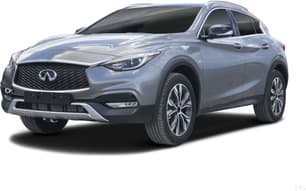
Tim Robson road tests and reviews the 2016 Infiniti QX30 at its Australian launch with specs, fuel consumption and verdict.
There’s no doubt that the compact crossover segment is a vitally important place for any carmaker to be. Nissan’s luxury arm, Infiniti, is no different, and thanks to a decision from its Japanese masters, the diminutive premium brand will go from having no players on the field to having two marquee players in a matter of just a few months.
The architecturally identical front-wheel-drive Q30 launched only a month ago in three variants, and now it’s the turn of the all-wheel-drive QX30 to take to the pitch.
But is there enough of a difference between the two to actually consider them different cars? Is it adding a layer of complexity for the prospective Infiniti customer? As it turns out, the differences run more than skin deep.
Let’s forget the money, for a second, because yes, you’re paying more for the Sportback variant. But if you can afford it, then why wouldn’t you. This is a sleeker, sportier and more stylish answer to the regular Q5, which was already a super-solid offering in the segment. And as far as I can tell, the practicality sacrifices you have to make are minimal at best.
So why not?
Even though it’s almost identical to the Q30, the QX30 manages to feel sufficiently different in suspension tune and cabin ambiance to be considered different.
It’s a disappointing oversight, though, by Infiniti to deny the base GT such basic safety fundamentals as a rear view camera (which Infiniti assures us is being worked on).
Our adventure began with the SQ5, and, to my eye at least, it looks mean, and more like a jacked-up hot hatch than sportier version of a mid-size SUV.
Speaking of which, it looks bigger than a mid-size, too, as though the flattened roof has pushed the rear out for more length, at least visually.
By far its best angle, though, will be afforded to the people in front of you on the road, with each peek in the rear-view mirror revealing a wide, forward-leaning grille, all black honeycomb mesh, with a cat-clawed bonnet and headlights that sweep back into the bodywork, hinting at speed before it even sets off.
Side on, the massive 21-inch alloys hide red brake calipers, but it does also reveals a tale of two SUVs, with the front half looking taller and straighter, while the rear roofline is more raked as it flies towards a fairly small rear windscreen with a roof spoiler that juts out over it.
At the rear, the quad exhaust tips (which sound great), and a boot spoiler moulded into the bodywork complete the package.
But even in lesser lesser Q5 45 TFSI guise, this Sportback looks the business, I reckon. Though a little more premium than performance-focused, perhaps.
As the name suggests, the Sportback version gives you, well, a sportier back, and it all starts at the B-Pillar, with a more raked roofline that gives this version of the Q5 a sleeker, more slippery look.
But they aren’t the only changes. In Sportback models, the single-frame grille upfront is different, and the grille is also positioned lower, and seems to jut out from the bonnet more, for a lower, more aggressive look. The lights are also positioned a little higher, and those massive air vents on either side are different, too.
The cabin is the usual level of Audi niceness, with a big central screen, big digital screen in front of the steering wheel, and a sense of genuine solidity and quality wherever you look.
There are some questionable materials at work, though, like the door trims and the hard plastic that your knee rubs against when driving, but all in all, it's quite a lovely place to spend time.
The QX30 is one of the first projects to result from a technology partnership formed between the parent company of Mercedes-Benz and the Nissan-Renault Alliance.
In a sign of how worldly the car industry is becoming, the QX30 is built in Nissan’s Sunderland plant in the UK, using the German Mercedes-Benz A-Class platform and powertrains, all under Sino-French ownership via the Nissan-Renault Alliance.
On the outside, the design that first aired on the Q30 is pretty unique. It’s not a subtle car, with deep crease lines along its sides that, according to Infiniti, is an industry first in terms of manufacturing complexity.
When it comes to differences between the two vehicles, it’s minimal at best. There is a 35mm increase in height (30mm from taller springs and 5mm from roof rails), an extra 10mm in width, and extra trims affixed to the front and rear bumpers. Aside from the all-wheel-drive underpinnings, that is pretty much it for the exterior.
The same black plastic overfenders that are fitted to the Q30 are present on the QX30, with 18-inch rims on both the base model GT and the other variant, the Premium.
The dimensions of the QX30 are also an exact match for those on the Mercedes-Benz GLA, with the long front overhang acting as the main visual connection between the two cars.
The Q5 Sportback range stretches 4689mm in length, 1893mm in width, and around 1660mm in height, depending on the variant. It rides on a 2824mm wheelbase.
And remember when I said there were few practicality penalties for the new sportier look? This is what I meant.
Up front, it's basically the same Q5, so if you know that car, you'll know this one, with its spacious and airy feeling front seats.
In the back, though, things are a little different, just not quite as different as I was expecting. The new sloping roofline has actually only reduced headroom by 16mm. I’m 175cm tall, and there was clear air between my head and the roof, and plenty of leg-room, too.
The central tunnel arrangement means you probably don’t want to squeeze three adults across the back, but two would really be no problem at all. That way, you can deploy the back seat divider to uncover two cupholders, use the two USB charge ports or adjust your climate controls, including temperature settings.
In the 45 TFSI and SQ5 models, the rear seats also slide or recline, meaning you can prioritise luggage space or passenger comfort, depending on what you're carrying.
Up front, there’s heaps of little cubby spots, including a key storage spot under the aircon controls, another in front of the gear shift, a phone slot next to the gear shift, two cupholders in the big centre console, and a surprisingly shallow centre console that’s home to a wireless phone charger and a USB port, joining the regular USB port under the drive mode selector.
And at the rear, Audi reckons there’s 500 litres of storage, only about 10 litres less than the regular Q5, which grows to 1470 litres with the second-row folded.
The QX30 is obviously very similar to the Q30 in many respects, but the interior is slightly different, with larger, less cosseting seats up front and slightly higher seats in the rear.
The cabin is also lighter in overall appearance, thanks to a paler colour palette.
There are plenty of neat inclusions, including a pair of USB ports, plenty of door storage, a space for six bottles and a sizable glove box.
A pair of cupholders resides up front, along with a pair in the fold-down armrest in the rear.
There is no particularly logical location for the storage of smartphones, though, and the lack of Apple CarPlay or Android Auto is down to Infiniti opting for its own phone connectivity suite.
A decent 430 litres of luggage space behind the rear seats is contrasted by a cramped rear area for all but the smallest of passengers, while sharply shaped rear door apertures making getting in and out a bit of an ask.
There are two ISOFIX baby seat points and a 12-volt socket in the rear, as well.
The three-model line-up (two regular Q5s and the SQ5) Sportback range kicks off with the Q5 40 Sportback TDI quattro, which will set you back $77,700 (which is plenty more than the $69,900 of the regular Q5).
The entry-level Q5 Sportback gets 20-inch alloys, a standard S Line sporty exterior styling treatment, LED headlights and tail lights, and an electric tailgate with gesture control. Inside, there’s leather trim, electric sport seats, three-zone climate, paddle-shifters for the steering wheel and ambient interior lighting.
You also get the virtual cockpit, the 10.1-inch central screen with all the Connect Plus services, like live traffic, weather and restaurant tips, as well Android Auto and wireless Apple CarPlay.
The range then steps up to the Q5 45 Sportback TFSI quattro, yours for $86,300. That's another marked jump from its regular Q5 equivalent.
That model delivers a new 20-inch alloy wheel design, a panoramic sunroof, and Matrix LED headlights, The S Line treatment extends to the interior, along with Nappa leather trim, heated front seats and a sliding or reclining rear bench. You get a better sound system, too, with 10 speakers, including a sub-woofer.
Finally, the SQ5 Sportback is yours for $110,900 (up from $106,500), and delivers 21-inch alloys, adaptive dampers and red brake callipers, while inside you get electric steering adjustments, a head-up display, colour ambient lighting and a banging Bang and Olufsen stereo with 19 speakers.
The QX30 will be offered in two variants; the base model GT at $48,900 plus on-road costs, while the Premium will cost $56,900.
Both come equipped with the same engine; a 2.0-litre four-cylinder turbocharged petrol engine that’s sourced from Mercedes-Benz and also used on the Q30 and Merc GLA.
Eighteen-inch rims are standard on both cars, while an electronic handbrake, 10-speaker Bose audio, 7.0-inch multimedia screen and a full set of LED lamps all round are fitted across both variants as well.
Unfortunately, the QX30 GT misses out on a reversing camera all together, a fate it shares with the Q30 GT.
Infiniti Cars Australia told us that this was an oversight at the time the cars were being specced for Australia, particularly in light of the other technologies that the car would receive, like automatic emergency braking.
The company says it’s working hard to bring a reversing camera to the GT.
The top-spec Premium gets leather trim, a powered driver’s seat, and additional safety equipment like a 360-degree camera and radar cruise with brake assist.
The only optional extra on each car is metallic paint.
There are three engines total here, kicking off with the 2.0-litre TDI in the Q5 Sportback 40. It produces 150kW and 400Nm - enough for a sprint to 100km/h in 7.6s. The 2.0-litre TFSI in the Q5 Sportback 45 petrol bumps those figures to 183kW and 370Nm, lowering your spring to 6.3s.
Both pair with a seven-speed S tiptronic automatic, and feature a 12-volt mild-hybrid system to smooth out acceleration and lower fuel use, as well Quattro ultra, which can disconnect the rear drive shaft so only the front wheels are driven.
The SQ5 gets a seriously lusty 3.0-litre TDI V6 which deliver 251kW and 700Nm, and a sprint of 5.1s It also gets a 48-volt mild-hybrid system, and an eight-speed tiptronic transmission.
Just the one engine is used across both cars; the 155kW/350Nm single-turbo 2.0-litre four-cylinder petrol engine from the Q30 and A-Class.
It’s backed by a seven-speed transmission and wired into an all-wheel-drive system that is biased towards a front-drive configuration.
Sourced from Mercedes-Benz, up to 50 per cent of drive can be sent to the rear wheels, according to Infiniti.
All Q5 Sportback models are fitted with a 70-litre fuel tank, which should produce a driving range in excess of 1000kms - though prepare for pain at the pump. Sometimes premium fuel in Sydney can run to around $1,90 a litre, for example, so the good stuff will cost you around $130 bucks a tank in the petrol cars.
Audi says the Q5 Sportback 40 TDI will sip 5.4 litres per 100km on the combined cycle, while emitting 142g/km of c02. The 45 TFSI needs 8.0 litres per 100km on the combined cycle, and will emit 183g/km of c02. The SQ5 sits somewhere in the middle, with 7.1 litres per 100km and 186g/km of c02.
Infiniti claims a combined fuel economy figure of 8.9L/100km for the 1576kg QX30 across both the variants; this is 0.5L thirstier than the Q30 version.
Our brief test yielded a dash figure of 11.2L/100km over 150km.
How to best describe the drive experience in the Q5 Sportback? That's easy. And it's 'easy'.
Honestly, I know this is ostensibly the sportier version of the Q5, but the truth is that, in the 45 TFSI version we tested, it's a comfortable, light-feeling drive experience that only ever reveals its sporty nature when you really command it to.
Left in its Auto drive mode, the Q5 45 TFSI will positively waft around town, road noise kept to an absolute minimum, and feeling somehow smaller and lighter than its dimension would suggest.
You can dial-up the aggression by cycling through the drive modes, of course, but even in Dynamic guise it never feels too harsh, too aggressive. More that you've simply tightened the screws a little bit.
Plant your right foot and the 45 TFSI will collect speed in a way that Audi refers to as "hot hatch-like", punching towards the 100km/h sprint with verve and aggression. But having just stepped out of the SQ5, it still feels somehow sedate, and almost relaxing, rather than out-and-out aggressive.
And that's because the SQ5 variant is clearly, purposefully, the performance-focused variant here. I think this V6 engine is an absolute peach, and its the kind of powerplant that inspires you to stick with the vehicle's most dynamic settings, putting up with the just-too-firm suspension settings so you can access more fo the grunt more quickly.
And it feels constantly ready for action. Tap the accelerator and the car bristles, dropping down a gear, revving higher and preparing for your next command.
Through bends, it feels smaller and lighter than you might expect, with plenty of grip and steering that, while not overflowing with feedback, feels true and direct.
Short answer? It's the one I'd take. But you'll pay for it.
Again, it would be easy to think that the QX30 would feel almost identical to its lower-riding sibling – but that would be incorrect. We criticised the Q30 for being a bit too buttoned down and unresponsive, but the QX30 feels more lively and involving, thanks to its unique spring and damper set-up.
Even though it’s 30mm higher than the Q, the QX doesn’t feel it at all, with a benign, pleasant ride with good body roll control and competent steering.
Our front-seat passenger complained of feeling a little ‘hemmed in’, which is a valid point. The sides of the car are very high, and the roofline is quite low, exacerbated by the steeply raked windscreen.
The 2.0-litre four-potter is smooth and punchy, and the gearbox well suited to it, but it’s lacking in aural character. Luckily the QX30 does a terrific job of suppressing noise before it gets into the cabin, then…
The Audi Q5 Sportback carries a five-star ANCAP safety rating thanks to the regular Q5, but that’s really the minimum cost of entry these days. So what else do you get?
Advanced driver-assist systems on offer here include autonomous emergency braking (with pedestrian detection), active lane-keep assist with lane change warning, driver attention assist, blind-spot monitoring, rear cross-traffic alert, park assist, a great surround-view camera, parking sensors, exit warning and tyre pressure monitoring, and more radars than you can poke a stick at.
There's also twin ISOFIX anchor points, and top-tether points for child seats.
The QX30 gets seven airbags, auto emergency braking, forward collision warning and a pop-up bonnet as standard across the line.
The base GT does, however, miss out on a reversing camera.
The Premium model also offers a 360-degree camera, blind spot warning, radar cruise control and brake assist, traffic sign detection, reverse motion detection and lane departure warning.
All Audis are covered by a three-year, unlimited-kilometre warranty, which really isn’t great in a world of five-, seven- and even 10-year warranties.
The brand will let you prepay your services, required annually, for the first five years, with the regular Q5 Sportback billed at $3140 and the SQ5 billed at $3170.
The Q30 is offered with a four-year, 100,000km warranty, and servicing is suggested every 12 months or 25,000km.
Infiniti offers a fixed three-year service schedule, with the GT and the Premium both costing an average of $541 over the three services provided.