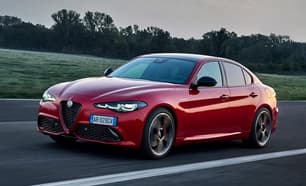
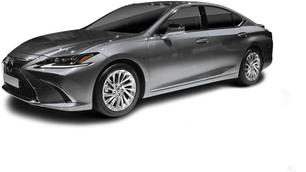
What's the difference?
Alfa Romeo. A brand with more re-boots than success stories. Yet one which driving enthusiasts the world over can’t seem to shake the allure of.
Of course, these are not cars for just everyone. Most mainstream buyers are scared away by what I like to call the three Rs. Rust. Reliability. Resale.
Alfa’s tumultuous (and often overstated) past is one it has trouble putting behind it. Reputations are hard earned and easily lost, and besides, the majority of the voting public aspire to own something German, which they see a lot more of on the road.
It doesn’t help that Alfa also dragged its feet on committing to a five-year warranty in Australia (in early 2022), hardly a statement of confidence in its product.
You’re probably wondering by now why anyone would buy one, and why it’s the car which most enthusiasts wish they were brave enough to own.
Well the Giulia is the Alfa Romeo. The low-slung, sporty, sexy car which a few of us out there still use as a reference-point for how to make a sedan in 2023 good-looking, and how to make one drive like it has heart.
The brand can throw all the SUVs at us it wants, but for those who see Alfa Romeo for the brand it should be, this car is it.
Parting sorrow, perhaps, the version we’re looking at for this review may be one of the last - under its new Stellantis management, Alfa has said it will leave this fantastic, promising Giorgio platform behind it in a move to be more electrified.
Travel with me, dear reader, as we celebrate a car which is the culmination of Alfa’s past, at a moment before it steps into the future.
What’s the closest thing we have to a modern-day Holden Statesman/Caprice?
If, like General Motors, you obliterate Australia’s Own from existence altogether, you’re left with time-honoured rivals also made in this country, like the Ford Fairlane, Chrysler by Chrysler and Toyota’s Crown and Avalon.
But they’re also all in history’s dustbin (well, the American ones, anyway), leaving the humble Camry as the sole living nameplate with any connection to Australian manufacturing.
And since the Lexus ES is a close relative, we’re going to take a fresh look at the latest version, with a view of it as a bit of a survivor of a bygone era – where aspirational vehicles were created from normal family sedans.
Just like the Fairlane, Crown and of course, the Caprice.
Launched in mid 2018 but facelifted in 2021, we test the ultimate version of the seventh-generation ES, the 300h Sports Luxury – or SL, if we’re to make yet another tenuous connection to long-gone Holdens.
Let’s go!
The Giulia is a love letter to the increasingly lost art of the sporty executive sedan. As refined as it is beautiful and oh-so elegant to drive, it’s a reminder of why we always love Alfa Romeo, even when the odds are against it.
Emotional cars like this are hard to come by and they will soon be gone, replaced by something new. The future is not necessarily worse, but it will be different, so if a sporty European sedan with a combustion engine is calling out to you don’t miss your opportunity to drive the Giulia while it still exists in this form.
There’s no denying the Sport Luxury is imposing, spacious, plush, chock-full of kit, efficient, speedy and pleasingly relaxing up to a point.
But its interior is also dated and true ride comfort can be elusive beyond smooth roads for this top-of-the-line version to make the grade as a proper luxury sedan.
The ES 300h feels more like an aspirational Toyota than a Lexus for the (wealthier) masses, especially after recent triumphs like the latest NX and RX SUVs. The Camry DNA is difficult to disguise, as the amused strangers who sat in our test car uninvited thinking it was their Camry highlights.
Sure, the hybrid is no Chevy V8, but in many other ways, the Sport Luxury seems like the modern successor to the Holden Caprice experience.