What's the difference?
Alfa Romeo. A brand with more re-boots than success stories. Yet one which driving enthusiasts the world over can’t seem to shake the allure of.
Of course, these are not cars for just everyone. Most mainstream buyers are scared away by what I like to call the three Rs. Rust. Reliability. Resale.
Alfa’s tumultuous (and often overstated) past is one it has trouble putting behind it. Reputations are hard earned and easily lost, and besides, the majority of the voting public aspire to own something German, which they see a lot more of on the road.
It doesn’t help that Alfa also dragged its feet on committing to a five-year warranty in Australia (in early 2022), hardly a statement of confidence in its product.
You’re probably wondering by now why anyone would buy one, and why it’s the car which most enthusiasts wish they were brave enough to own.
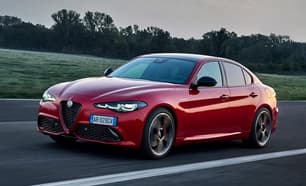
Well the Giulia is the Alfa Romeo. The low-slung, sporty, sexy car which a few of us out there still use as a reference-point for how to make a sedan in 2023 good-looking, and how to make one drive like it has heart.
The brand can throw all the SUVs at us it wants, but for those who see Alfa Romeo for the brand it should be, this car is it.
Parting sorrow, perhaps, the version we’re looking at for this review may be one of the last - under its new Stellantis management, Alfa has said it will leave this fantastic, promising Giorgio platform behind it in a move to be more electrified.
Travel with me, dear reader, as we celebrate a car which is the culmination of Alfa’s past, at a moment before it steps into the future.
One question frequently discussed in the skunkworks of the CarsGuide office is: What exactly does Lexus stand for?
When the brand debuted its original export-market IS sedan in 1999 the messaging was more or less clear: Toyota’s premium sub-brand was here to be a Japanese BMW.
The brand even employed Nobuaki Katayama – chief engineer on the iconic Corolla AE86 program – to again take the reins of its small rear-wheel drive sedan program.
As the years went on though, Lexus changed. Fundamentally geared toward the US market, the second-generation (wild IS F aside) became a bit more sedate and softer around the edges, while the third generation strayed even further from the sedan’s performance-inspired roots, leaning into a plush interior, hybrid drive, and even CVT transmissions.
This brings us to today’s Lexus IS. Essentially a heavy facelift of the third generation (which arrived back in 2013), the brand has “reimagined” its core sedan with a tweaked design and updated technology for 2021.
Is it enough to keep it relevant against its ever-present European rivals and the newly arrived threat from Hyundai’s Genesis G70? I took a signature IS300h hybrid for a week to find out.
The Giulia is a love letter to the increasingly lost art of the sporty executive sedan. As refined as it is beautiful and oh-so elegant to drive, itโs a reminder of why we always love Alfa Romeo, even when the odds are against it.
Emotional cars like this are hard to come by and they will soon be gone, replaced by something new. The future is not necessarily worse, but it will be different, so if a sporty European sedan with a combustion engine is calling out to you donโt miss your opportunity to drive the Giulia while it still exists in this form.
Smooth, cosy, quiet, the IS looks and feels better than ever, but without a doubt this hybrid version is a car best suited to cruising the dense metropolis of Chiba at midnight more than it is carving up a bunch of S-bends in the Australian countryside on the weekend.
While that might still limit its appeal for fans of German sports luxury sedans and place it further from the original ISโs ambitions, it does offer an intriguing efficiency and luxury focused alternative, without the compromises brought by rivals with more sporting intent. In a way then, the IS 300h perhaps inadvertently best embodies what Lexus is as a brand.