What's the difference?
At long last, Volkswagen’s electric mid-size SUV duo has landed in Australia.
The appeal of the ID.4 as an electric family SUV alternative to the likes of the Tiguan is obvious, but where does the more coupe-styled ID.5 fit?
It comes in a single GTX trim for now, taking aim at some of the more performance-oriented EV SUVs on the Australian market, of which there are now quite a few. But now it’s arriving later than many of its rivals.
Has VW done enough with the ID.5 GTX for it to justify a spot on your test-drive list? We went to its Australian launch to find out.
Coincidence is a funny thing. The same week I had the Mini Cooper S 60 Years, the last VW Beetle rolled down the line in Mexico. VW blamed its mammoth €25bn investment in electric, but the reality is that nobody was buying that nostalgia trip anymore.
The story of Mini is quite different. BMW's aggressive expansion of the range beyond the three-door hatch has breathed all sorts of life into a brand that could have disappeared up its own Union Jack. Instead of sticking to the formula, the brand tried all sorts of things but has since settled on the hatch (three- and five-door), the Cabrio, the wacky Clubman semi-wagon and the Countryman SUV. BMW is now making lots of cars on the same platform, a nice two way street.
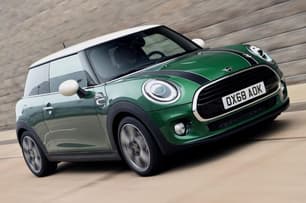
The Mini Cooper S is 60 years old and unlike the Beetle, it's powering on past its birthday and the company - no stranger to a special edition - has slapped together a classic combo of colours, stripes and badges.
At long last, the ID.5 GTX arrives to make a different pitch than many of its electric rivals. Less about straight-line speed and more about refinement and handling, this EV mid-sizer makes a case for itself, even if it’s not as good value as its ID.4 sibling.
Note: CarsGuide attended this event as a guest of the manufacturer, with travel, accommodation and meals provided.
The Mini 60 Years is another classic special edition Mini and its definitely one for the fans. I'm not at all fussed by it and would quite happily save my money for a standard Cooper S. The Mini is still one of the most playful, interesting cars from a mainstream car maker and while it doesn't please everyone with its size and weight, it's tremendous fun to drive.
It's the kind of car I could own and I always feel comfortable in - it's the perfect size for urban environments but is just as much at home belting down a freeway on a long trip or scooting down a B-road just because.
The key differentiator between the ID.4 and ID.5 is of course the ID.5’s descending coupe roofline. I think it grants the GTX more presence on the road, and I appreciate the touch of having a true three-dimensional spoiler piece atop the boot lid to round it out rather than a more common lip or roof-mounted extension.
Outside of this, the ID.5 sets itself apart from the rest of the Volkswagen range thanks to its curves rather than hard edges as well as contemporary light bar fittings, front and rear.
The overall visage is fresh but a tad conservative, especially compared to the more radical designs we’re seeing on new-to-the-market automakers like XPeng, or those looking to make a splash with their electric offerings, like Kia with its EV5.
There’s certainly something to be said for a more moderate approach, though, as it feels more resolved than many rivals.
Inside, to a degree, the ID.5 follows similar trends in the market, with a minimalist and screen-dominated dashboard.
The 12.9-inch central touchscreen unit is less overbearing than some 15+ inch units in other cars, and this combines with the sensible 5.3-inch digital instrument cluster to make it feel more like a car than a tech product on wheels.
Still, the minimalist theme prevails, with the ID.5’s interior being free of a space-consuming raised console or a smattering of buttons to interact with.
The seats in this GTX are particularly cool, with the single-piece backing like a Golf GTI, red stitching and nice material quality.
It leaves you with the impression the ID.5 is modern but with the build quality and know-how of a storied automaker, which is a nice balance.
Always readily identifiable, Mini updates always add detail without touching the main game. I quite like the indicators, which are big LED rings surrounding the headlights, but then again I'm a sucker for lighting. I think the Mini looks terrific in three-door form and the Union Jack rear lights have grown on me. They're a bit silly but in a good way, which kind of sums up the car. The British Racing Green looks pretty good, too. Amusingly, the puddle lamp even has a 60 Years flavour.
You can spot the Cooper S by the centre exhaust and the 60 Years has its own set of 17-inch alloys.
The cabin is pretty much the same apart from the particularly warm hue of the leather. It's a classic colour for British cars but works nicely. In the Cooper S, the panoramic sunroof is split in two, but the front section opens. It does make the car feel a bit bigger, which is handy given it's pretty tight in there. The piping is a nice touch, too, although the Piano Black on the dash was so last decade rather than so last century but at least there isn't a slab of tacky wood. The fact the interior is otherwise unchanged means there are other cheap touches that somehow fail to ruin the ambience.
Mini calls its version of iDrive 'Visual Boost' for some reason, and it's displayed via a 6.5-inch screen set in a big round dial ringed by changeable LED lights.
First, the less-good. The minimalist and button-free interior will be a major downside for many. Pretty much everything in the ID.5’s cabin is touch-based. There’s not even a stop/start button, you just sit in the car and it’s ready to go. Additionally, it relies on the now-maligned touch sliders below the multimedia screen for volume and temperature adjustment. Never fun to use on the move. Even the buttons on the steering wheel are the touch-based haptic-feedback kind.
At least the software shapes up. It’s easy enough to navigate, and has a slew of straightforward menus. It’s also backed by enough processing power, with swift responsiveness, and the panel quality is good too, with a sharp, high-resolution finish.
This can be a double-edged sword, though. The high-resolution leads to small shortcut icons across the top of the main screen. While I’m glad the ID.5 has these so you can swap between things like the car’s settings menu and, say, Apple CarPlay easily, it takes some accuracy to jab at while you’re trying to drive.
From there, though, the cabin is clever. Free from the trappings of buttons and a raised console, it feels spacious in every dimension and the seat comfort is excellent with lovely side bolstering and padding.
The seats feel quality, but I wonder whether the synthetic suede-style microfleece trim will age as well or be as easy to clean as cloth or leather. Worth thinking about if you plan to keep this car for a long time.
I even like the touch of having little flip-down armrests which almost makes it feel like you’re being silently propelled along in an armchair in the front seats.
You need these because there’s no traditional raised console with an armrest box. Instead there’s a flexible floating central console piece. It features a modular sort of design, where you can make use of either dividers or a drop-in bottle holder piece in either the upper or lower sections, depending on your preference. Remove these things entirely to have two massive trays.
Meanwhile, the lower section features a cubby with a wireless phone charger, and it also houses the dual USB-C ports with a sliding cover so you can keep the interior tidy. I like it.
There are large bottle holders in the doors, too, and another nice touch is the digital dash being perched on the steering column, so no matter how you adjust it, you can always see it.
The back seat is also excellent in the ID.4 and ID.5, featuring plenty of space for me behind my own driving position, at 182cm tall. There’s heaps of airspace for my knees, and because there’s a flat floor courtesy of this car’s dedicated 'MEB' platform, there’s plenty of space for your feet. It also makes the centre position usable by an adult, which is rare.
Soft trims continue in the doors, but my favourite feature of the ID.5’s rear bench is how the brand has thought to strongly contour the outer two seat backings so even they have plenty of side bolstering.
The backs of the front seats feature an upper pocket for phones and the like, and a larger lower pocket, while the doors feature a large bottle holder each. A drop-down armrest has three shaped cavities for bottles of all sizes, and behind it is a ski port door.
There are adjustable air vents and a touch panel to control the rear climate zone, but because of the low design of the central console, they’re basically on the floor. Nice to have them, but they might be hard to adjust for kids or the less mobile.
This will surprise you. The boot is bigger in the ID.5 than in the ID.4 despite this car’s descending roofline. Measuring 549 litres, it’s also good for the mid-size segment and features an under-floor storage area which is great for your charging equipment. However, there is no spare wheel, just an inflator kit, and also, the ID.5 doesn’t get a frunk like many of its electric contemporaries.
Yep, it's a small car so expect things to be reasonably cosy. I fit in there fine but I am neither particularly tall nor broad. Taller folks will fit just fine in the front (but not too tall, don't be greedy) while larger people might find themselves uncomfortably close to their passengers.
The rear seat is bearable for children and patient adults on short trips. At least they'll be well hydrated because as well as the pair of cupholders up front there are a further three in the back for a total of five. The Mini joins the NC Mazda MX-5 as a car with a greater cup capacity than passenger capacity. Front seat passengers can keep the water topped up as there are also small bottle holders in the doors.
There are two USB ports in the front seat and a wireless charging pad that doesn't fit bigger phones under the armrest. If your iPhone is the smaller size, the combination of wireless CarPlay and charging pad is excellent.
The boot is surprisingly big for such a small car, beating many of its cheaper rivals with 211 litres with the seats in place and 731L with them folded down.
Value is an interesting thing in this case. When you compare the ID.5’s $72,990, before-on-road costs, starting price against its ID.4 Pro sibling (which starts from just $59,990) it doesn’t feel like great value.
This feeling continues when you start to line it up against recently-arrived mid-size electric Chinese offerings, like Leapmotor’s C10 (from $43,888) and Geely’s EX5 (from $40,990).
But the ID.5 is designed to be a cut above, with a punchy all-wheel drive powertrain, and a relatively large battery, and when you consider its price against, say, the Toyota bZ4X (from $74,900 in AWD form), Subaru Solterra (from $69,990), or high-grade versions of cars a size-bracket down, like the Hyundai Kona Premium (from $68,000) or Kia Niro GT-Line (from $72,360), the ID.5 suddenly starts to look like great value.
If you want my opinion? The ID.4 Pro is still the pick of the two on raw numbers, especially since the difference in standard equipment seems to hardly justify the additional price jump, but I can see how the ID. 5 GTX can make a case for itself.
On the topic of standard equipment, the ID.5 GTX has VW’s signature ‘Matrix’ LED headlights, flush doorhandles, '3D-effect' LED tail-lights, privacy glass, an upgrade to 20-inch alloy wheels and contrasting black highlight trims with GTX highlights on the outside.
On the inside the ID.5 scores a 12.9-inch multimedia touchscreen with Apple CarPlay and Android Auto connectivity, a 5.3-inch digital instrument cluster, ambient interior lighting, tri-zone climate control, a panoramic glass roof (with powered shade), a premium Harman Kardon audio system and sports front seats trimmed in leather and 'microfleece' fabric, with power adjust, heating, and message functions for the front two positions.
On the performance front it gets the same adaptive chassis control (with frequency responsive dampers, adjustable settings and progressive steering) as the ID.4 Pro, but from there it adds a second motor (on the front axle) and all-wheel drive software with additional drive modes and an 'ESC Sport' setting.
It’s good kit, but whether it’s enough to tempt you away from its closest competitors, like the futuristic Kia EV5 GT-Line (from $71,770), incoming new Tesla Model Y (from $58,900) or unusual XPeng G6 (from $54,800) is a tough question.
There are four ways you can have your 60th Anniversary Mini. If you're happy with 1.5-litres of power, there is the three or five-door Cooper for $33,900 and $35,150 respectively. If you want a bit more grunt, you can step up to the Cooper S three-door (the car I had) for $43,900 and the five-door for $45,150. Eagle-eyed readers who know their Mini pricing will see a price rise of $4000, and Mini Australia says you get $8500 of value. All of those prices are before on-road costs.
The standard Cooper S package brings dual-zone climate control, keyless entry and start, driving mode selection, leather interior, reversing camera, sat nav, auto LED headlights and wipers, wireless Apple CarPlay, run-flat tyres and you can add all the 60 Years stuff on top of that.
Without putting too fine a point on it, the Mini isn't cheap to begin with, so whacking four grand on top of the already stiff pricing obviously doesn't improve matters. You do get more stuff, obviously, as suggested by the claimed $8500 figure.
That means British Racing Green IV metallic paint with Pepper White mirrors and roof or Midnight Black Lapis Luxury Blue with black mirrors and roof. Inside you get a choice of Dark Cacao with the green paint or Carbon Black with the blue paint. If you choose the latter you miss out on the special piping and details.
Cooper S buyers pick up wireless phone charging, Comfort Access pack, heated front seats and LED headlights while the Cooper S adds a panoramic sunroof, Harmon Kardon-branded system and head-up display.
Instead of a frunk there’s simply a mess of hardware under the bonnet which is largely related to the ID.5’s high-voltage and cooling systems, but what sets the GTX apart is the addition of a front motor to add to the standard rear one.
It’s not a huge power boost. The ID.4 already puts out 210kW/545Nm, and the front motor on the ID.5 simply adds 40 additional kW for totals of 250kW/545Nm (as the torque figures for the two don’t simply add together).
Its claimed 0-100km/h sprint time of 5.4 seconds isn't bad, especially compared to combustion equivalents, but it’s also not as breakneck fast as some of its EV rivals.
Instead, the additional motor for the ID.5 GTX is more about adding something to the handling equation, as well as the dependability of all-wheel drive and additional drive modes. More on this shortly.
The Cooper S has the usual 2.0-litre turbocharged four (the Cooper has a 1.5-litre turbo three-cylinder), serving up 141kW and 280Nm. Power finds its way to the front wheels via a seven-speed twin-clutch transmission and will push the 1265kg Cooper S to 100km/h in 6.8 seconds.
One of the biggest benefits of the Australian market waiting this long for VW’s ID. range is the upgraded battery and charging offering.
The ID.5 GTX has a larger battery than the ID.4, measuring 84kWh which helps off-set its slightly less efficient all-wheel drive system. The result is a WLTP driving range of 522km between charges, which is only 22km less than the ID.4. It’s still plentiful, and on the higher end at this price point.
Additionally, the charging specs are great. A peak speed of 175kW on DC means a charge time of around 22 minutes (10 - 80 per cent) on a pylon capable of outputting such a speed, while on AC it is 11kW, making it worthwhile plugging in down at the local shops.
The big missed opportunity here is the lack of vehicle-to-load, vehicle-to-grid or a household power outlet in the cabin or boot. These are convenient features becoming more prevalent in the market. At least VW throws in a wall socket and a Type 2-to-Type 2 charging cable as standard.
Mini reckons you'll get 5.6L/100km on the combined cycle. Maybe you could if you don't drive it like I did (I got an indicated figure of 9.4L/100km).
The Mini has stop-start to help cut fuel use around town and launch control to ruin those efforts.
The ID.5 GTX isn’t quite in the same vein as other ‘performance’ EVs. It feels more measured than a Tesla Model Y Performance for example. But then it also feels a lot more organic. It feels a lot more like a car.
This is because rather than focus on straight-line performance, the GTX has benefits when it comes to its handling. Compared to the ID.4, for example, the ID.5 is sharper on its front axle, adding a little additional torque at the front to make it sharper and faster to grab the tarmac.
Its accelerator response may be comparatively steady, but somehow the ID.5’s more traditional stability control tuning allows it to have a bit more leeway when you push it in the corners. It grants it a little extra fun factor, where some rivals are too locked down.
Additionally, VW’s experience in providing a balanced ride and sharp steering tune is on full show. While a lot of electric vehicles in this class feel a little over-electrically assisted or even vague when it comes to the steering, the ID.5 feels connected and accurate.
The adjustable ride settings are also a rare win for an electric mid-sizer. This is because you can adjust the ride to suit the conditions. If you’re on a bumpy suburban road for example, you can keep it nice and soft. But if you’re out carving corners in the countryside, a much firmer setting is available to help limit the amount of floaty rebound this car’s low-set battery weight can have.
It does adjust in a limited band, so there’s still a bit of softness to it, which combines with the predominantly rear-drive characteristics to make for a distinctly different vehicle to a Tiguan, for example.
It’s simply not as athletic as VW’s finely-tuned combustion offerings, but then its more plush open-road feel isn’t necessarily worse. At the very least it maintains all those key refinement characteristics which make Volkswagens generally a cut above to drive.
Driving a Mini is a unique experience. Almost no other car on sale today has the combination of that far-away, near-vertical windscreen and an A-pillar that is almost slim by today's standards. The side of the car is almost fifty percent glass, so vision is terrific.
It had been a little while since I drove a Mini Cooper S so I was looking forward to the Mini bounce that I've always loved and my wife despised. Somewhere along the way, that bounce has faded somewhat, to the point where my wife says she doesn't mind it anymore. That must be a good thing, because while the ride is more refined, it's still a blast to drive, even if you're just getting around in traffic.
The Mini just loves point and squirt driving. The quick, well-weighted steering helps you swing the nose in and out of gaps and the handy slab of torque from the 2.0-litre ensures you stay out of trouble while doing it. The Mini also loves haring down a country road, the more secure-feeling ride belying its short wheelbase. The weight of the car probably helps keep things on the straight and narrow. It's pretty clever to make the car feel grown-up while also maintaining its sense of playfulness.
The driving mode switch doesn't make a huge amount of difference, with Sport mode adding a few apologetic pops from the exhaust.
Complaints are few, but there are too many buttons on the steering wheel and to my mind are all in the wrong place. By necessity, the controller for the media screen is practically on the floor and is crowded in by the cupholders and huge handbrake lever. But that doesn't mean Mini should take away the handbrake.
I have my reasons.
Another key aspect of the driving experience these days is how much active safety equipment wants to interfere with the experience. Many newer automakers struggle with calibrating for Australian conditions, and yet, like many European automakers, Volkswagen has nailed it with the tuning of these systems in the ID.4 and ID.5.
I wasn’t annoyed by any system, even repeat offenders like lane keep assist or driver attention monitoring in our whole two-day drive, which speaks volumes about the difference between the ID.5 and something like a Leapmotor C10.
The ID.5 comes equipped with the full array of active safety gear as standard, with autobahn-speed auto emergency braking, lane keep assist, blind-spot monitoring, rear auto braking, rear cross-traffic alert and adaptive cruise control.
It is also equipped with seven airbags (including the more recently-introduced front centre airbag) and wears a maximum five-star ANCAP safety rating... for NZ-delivered variants. Australia will surely follow soon, but at the time of writing the ID.5 is not ANCAP rated for this side of the Tasman.
Like the rest of the range, the 60 Years has six airbags, ABS, stability and traction controls, forward collision warning, AEB (auto emergency braking), a reversing camera, speed sign recognition, and tyre pressure monitoring (it also has run-flat tyres and no spare, so that's an important consideration).
There are two top tether and ISOFIX points for the kiddies.
The Mini scored four out of a possible five ANCAP stars in April 2015. This was before AEB became standard earlier in 2019.
VW hasn’t used this opportunity to increase its standard warranty terms of five years and unlimited kilometres, however, the battery pack is covered by an industry standard eight-year/160,000km deal.
There are other ownership perks designed to coax people into an electric car, though. Servicing, for example, is only required once every 24 months or 30,000km and when packaged up at the time of purchase, very affordable.
A 10 year or 150,000km plan costs $2890, or just $289 a year, which is excellent for a European car, and is even more affordable than some of its Korean and Chinese rivals with generally longer service intervals.
On top of this, VW stresses the repairability of its battery components, and promises parts supply will continue for 10 years after the discontinuation of the ID.4 and ID.5 range in its current form, with repairability through its network for at least 15 years.
As with parent company BMW, Mini only offers a three-year/unlimited kilometre warranty with roadside assist for the duration. You can buy an extension to five or hold your breath during negotiations with a dealer.
Servicing is condition-based - the car will tell you when it needs one. You can buy a servicing package that covers the basics for five years for about $1400 or step up to the near-$4000 option which throws in consumables like brake pads and wiper blades.