What's the difference?
Would you consider a European-made small SUV with a terrific turbo engine from one of our all-time favourite hot hatches, a reliable torque-converter auto, ample room for five plus luggage, and all from under $40K?
You’d be at the very least a bit curious, right?
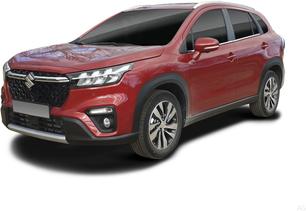
Behold the latest Suzuki S-Cross! Okay. It’s been around the sun nearly a dozen times. And you can clock its age in a couple of key areas.
But this crossover from the class of 2013 is not even close to being the oldest-in-show (stand up, Mitsubishi ASX). And, as our testing revealed, the S-Cross can still teach far newer rivals like the Kia Seltos, Mazda CX-30, Haval Jolion and Subaru Crosstrek a thing or two.
Because thoughtful design is timeless. Time, then, to crack open the S-Cross.
It is hard to oversell just how important this new Seltos is to Kia in Australia.
Our new-car slug fest has never been more competitive – and that's saying something, considering how many brands were duking it out here before China rode into town on its mob of shockingly affordable horses.
A handful of years ago, you might list things like the Toyota Corolla Cross, Nissan Qashqai, Honda HR-V or Hyundai Kona as key Seltos rivals. These days you can throw in the GWM Haval Jolion, Chery Tiggo 4, Jaecoo J5, MG ZS, Mazda CX-30, GAC Emzoom, and probably a couple more that I’ve forgotten about, all competing for your hard-earned dollar.
In short, competition is fierce. And Kia needs this to work. In fact, it wants the new and all-hybrid Seltos to be its second best-selling model in Australia.
But has the brand done enough to stake a claim on the small SUV segment?
Back in the day, you’d hear people say they’d never buy an all-new car, but instead get the last of the old model that would have had all the bugs ironed out.
If this sort of homespun logic makes sense, then maybe the latest S-Cross might just be the perfect SUV car for you.
Not only has it been in production for years, there is nothing fundamentally wrong with it. Indeed, for performance, packaging and ease, it does plenty that's right. Thoughtful design is timeless.
But there are newer alternatives that look way fresher (particularly inside) yet cost the same or less, and offer more, including updated driver-assist safety.
Still, you can do a lot worse than take an S-Cross for a test drive.
Sure, it can feel expensive compared to some of its Chinese rivals, but there is a lot to like about this all-new Kia Seltos. It is a small SUV that really doesn't feel that small. Plus, it is a hoot to drive on the right twisting road, and that is not something you can say about all vehicles in this category.
Is that enough to win back shoppers who are buying only with their wallets? Only time will tell.
Note: CarsGuide attended this event as a guest of the manufacturer with accommodation and meals provided.
Note: The author, Andrew Chesterton, is a co-owner of Smart As Media, a content agency and media distribution service with a number of automotive brands among its clients. When producing content for CarsGuide, he does so in accordance with the CarsGuide Editorial Guidelines and Code of Ethics, and the views and opinions expressed in this article are solely those of the author.
It took Suzuki not one, not two, but three goes before the stylists succeeded in making the S-Cross look good.
The original was like an early Nissan Dualis clone, but all droopy faced, so they grafted on an aggressively toothy face back in 2016 that only a gargoyle’s mother could love.
At least this latest version – said to have been designed in Italy, no less – no longer looks like Frankenstein’s monster.
Released during 2022, the blockier nose, squared-off profile and restyled posterior are meant to make the S-Cross seem larger than its more-successful (and prettier) Vitara sibling, which uses the same platform, by the way.
Not a bad makeover job as far as big facelifts go, then, especially considering the Suzuki’s windscreen, doors and roof remain as before.
Kia has been on something of a tear with its designs lately, and I reckon the Seltos continues that form. While our roads are filled to bursting with amorphous, anonymous blobs, the Seltos taps into the brand’s broader EV design language to deliver a small SUV with detail, shape and sharpness in its look.
Is it too busy in places? Probably. But it’s also not boring, which is a step in the right direction.
The top-spec GT-Line looks the best of the bunch, with its unique front-end treatment and 3D-effect grille. But honestly they all look pretty sharp, helped by the decision to integrate the lights into the front grille, giving a sense of width and presence to what is still a small SUV. At the back, that impression of width continues, with a thin LED line that frames the boot.
I’m not as sold on the cabin experience, though. The decision to fit the same twin-screen multimedia display to all models was the right one – otherwise it would look miles off the pace compared to the everything-and-the-kitchen-sink Chinese brands – but it still doesn’t feel overly special in places, and especially in the cheaper grades.
I do love the two-tone interior treatment, and I praise the button Gods that Kia continues to include physical buttons in its cabins, rather than have everything controlled through the screen.
It might be an old interior, but at least Suzuki got the fundamentals right in the first place, while also bothering to update the electronics for it to at least seem more contemporary.
Basics first. In typical SUV fashion, entry and egress are excellent, via tall and wide doors with corresponding apertures. There’s a pleasing sense of space for taller occupants, especially in terms of leg and head room.
Once sat in the driver’s seat, the mid-last-decade looking dashboard is instantly familiar and completely non-intimidating.
Concise and surprisingly elegant analogue dials (now with an auxiliary digital speedo, at last) sit ahead of the driver, along with a reach-and-height-adjustable steering column that allows for people of all shapes and sizes to find the right position. Deep windows provide extensive vision and let lots of light inside, too.
Finished in what looks like stitched leather and chainmail-inspired inserts, the front seats in this Plus grade are wide enough for comfort yet bolstered enough for some support through corners.
We rate them, though driver-lumbar and front-passenger height adjustments are disappointingly absent.
Years ago, reviews lambasted manufacturers for providing “too many buttons”, but after an endless succession of touchscreens housing most (if not all) audio, climate and vehicle control access, we miss the days of the button-fest.
If you do too, the S-Cross obliges with array of climate-control switches and driver-assist buttons located around the driver for fast and definite access.
On the other hand, while Suzuki’s new 9.0-inch touchscreen does a fine job housing other vital vehicular and multimedia functions, it drops the ball with no volume knob.
The alternative looks like a slide control but relies on clumsy pushing. Fail. Luckily the steering-spoke-sited toggles do the same job far better, at least for the driver.
Kudos, too, for the effective and intuitive multimedia system, that packs a lot in a small-ish space. The excellent surround/aerial-view camera rates a mention, as well as wireless Apple CarPlay that hardly ever drops out.
Nobody is going to mistake the extensive plastic trim and other finishes as premium, but it isn’t horrendous, doesn’t inflict occupants with the cheap off-gas stink often found in bargain-basement brands, and absolutely nothing rattled or squeaked in our time with the Suzuki.
Storage is also impressive, from the large glove box and deep centre bin/armrest to bottle-gobbling pockets on all four doors. Cups are also well-catered for.
However, betraying the S-Cross’ age are the AWOL wireless charging, head-up display (at this price… ), USB-C outlets and configurable instrumentation.
Moving on to the rear seat reveals a family-friendly environment as far as space is concerned, with adequate comfort provided by the (slightly) reclinable backrest and (fixed) cushion. The windows lower all the way down and the folding centre armrest has a cupholder, too.
But while you’ll find a single map pocket and overhead grab handles, there are no USB ports (at all), nor overhead reading lights or rear-facing air vents.
Never mind. At least the rear backrest reclines (a tiny bit) for added comfort, while further back, boot capacity is a useful 430 litres.
The load area is flat and wide and a space saver spare wheel is located underneath the boot floor.
The backrest has a 60/40 split and the floor can be positioned in different locations. Volume jumps to 1230L with the backrests dropped.
If you rate space, practicality and ease above modernity, then, the S-Cross still holds up remarkably well. Just keep in mind that its interior will appear dated compared newer and flashier competition.
This new Kia Seltos has grown in every meaningful dimension, with length now 4430mm (was 4385mm) and width now 1830mm (was 1800mm), although height is now 1600mm (was 1630mm). And that means more room for people and stuff, with Kia’s small SUV pushing closer towards mid-size SUV territory.
The brand reports increases in head, leg and shoulder room as a result, and it’s true that the backseat definitely feels spacious for an SUV in this category. I'm 175 centimetres and I had plenty of room to stretch out.
There are also twin cup holders in the pull-down seat divider, and USB-C connection points in the rear of the front seats. The back seat also reclines slightly so you can get a bit more comfy.
Boot space has also improved, now 483 litres VDA with the rear seats in place, and growing to 1441L with them folded. The boot also has an adjustable floor so you can store taller items if you need to.
Most models in the Seltos line-up get a space-saver spare wheel, but not the GT-Line, which is stuck with a repair kit.
As we’ve established, the base S-Cross Turbo front-wheel drive (dubbed 2WD in SUV-speak) starts from $39,990 (all prices are drive-away), while the Plus version tested here costs $42,490 drive-away.
But, just a couple of years back, the pre-facelift S-Cross version kicked off from about $10K less. And, before that, much the same car could be had for mid-$20K.
Suzuki doesn’t make it easy for itself, does it.
At least the S-Cross comes with a decent rollcall of kit, including dual-zone climate control, a 7.0-inch touchscreen, DAB+ digital radio, satellite navigation, wired Apple CarPlay/Android Auto, front fog lights, keyless entry/start, heated front seats, electrically folding and heated exterior mirrors, rear privacy glass and 17-inch alloy wheels.
'Autonomous Emergency Braking' (AEB), lane keep assist, a blind-spot monitor, rear cross-traffic alert, front and rear parking sensors, automatic LED headlights with high beam assist, adaptive cruise control and a reverse camera headline the standard safety items. More on those in the Safety section below.
For a $2500 premium, the S-Cross Turbo Plus ushers in a larger (9.0-inch) touchscreen, wireless Apple CarPlay/Android Auto, a 360-degree surround-view camera, leather trim and polished alloys.
This lines up with the all-wheel drive (AWD) Prestige AllGrip equivalent, though it misses out on the latter’s panoramic sunroof.
Price and equipment-wise, the Plus matches rival mid-grade 2WDs like the Toyota Corolla Cross GXL, Nissan Qashqai ST+, Mazda CX-30 G20 Touring, Kia Seltos Sport+ and Mitsubishi Eclipse Cross Aspire.
Just keep in mind, all are substantially newer generationally than the S-Cross, even though it did go under the scalpel a couple of years back.
Despite all this new competition in Australia, the new Seltos’ price tag has gone up, not down. The new four-grade range kicks off with the Seltos S, which is now $37,990 before on-road costs, and a fair climb from the old model’s $31,250 starting point.
In Kia’s defence, the old range began with a petrol-only engine, while this new model introduces hybrid power range-wide. And there are drive-away deals across the range at the moment.
In the world of legacy makers, the pricing looks sharp enough – it is cheaper than a Toyota Corolla Cross ($39,990 drive-away versus $41,652 drive-away), for example – but in a brave new world of Chinese brands, you can definitely get more for less.
The new Seltos range then climbs to $40,150 before on roads for the S Plus Safety Pack, which adds some active safety stuff missing from the entry-level car, before stepping to $41,910 for the Sport, $44,970 for the Sport+ and $49,870 for the GT-Line with front-wheel drive, and $52,870 for the GT-Line with a second electric motor and all-wheel drive.
Standard equipment in the S includes:
There’s no wireless charge pad, however, which kind of defeats the purpose of the latter.
Step up to the Sport and you’ll find 18-inch alloys and a gloss black treatment on the grille and mirrors, and a boost in standard safety.
The Sport+ feels like a bit of a sweet spot as it adds:
Finally, the GT-Line flagship is available in two- or all-wheel drive, and it gets a pretty stacked equipment list:
It’s also the only trim that gets wireless charging and a powered boot.
The fact that a wireless charging pad only appears in the $50k-plus model is wild, as is the fact that every model below the GT-Line has at least part cloth seats.
But the GT-Line is also the only one to make do with tyre repair kit, rather than the temporary spare all other grades feature. And trust me, temp spares are way better than a repair kit should you get a flat.
Here’s where the S-Cross definitely does not show its age, because Suzuki sure knows how to engineer a great engine. And automatic transmission, too. Take note, rivals.
Of course, we’re talking about the long-lived 'BoosterJet' powertrain, as found in the terrific Swift Sport hot hatch.
In this case, the 1.4-litre twin-cam, direct-injection, turbo-petrol four-cylinder engine delivers 103kW at 5500rpm and 220Nm of torque between 1500-4000rpm. Tipping the scales at 1260kg, this results in a power-to-weight ratio of 82kW per tonne.
Not huge numbers, granted, but this little firecracker certainly punches above its weight in the seamless way performance is served up, helped out by the intelligent spread of ratios from the standard six-speed torque-converter automatic transmission, with paddle shifters included. Sadly, no manual gearbox is available.
The Seltos' hybrid powertrain pairs a 1.6-litre petrol engine and six-speed dual-clutch transmission with one (S, Sport, Sport+ GT-Line FWD) or two (GT-Line AWD) electric motors.
Most model grades are front-wheel drive with a front-mounted electric motor, making a total of 112KW and 265Nm. Only the GT-Line all-wheel drive adds a rear electric motor, upping the grunt to 126kW, but keeping the torque the same at 265Nm.
Kia doesn’t quote a zero-to-100km/h time, but it’s not fast.
In an interesting touch behind the wheel, though, the flappy paddles that would normally control the gearbox actually control the level of regenerative braking on offer, just like you might find in an EV. However, if you activate Sport mode, they go back to changing the gears.
Suzuki reckons the S-Cross will average 5.9L/100km on the combined cycle, though keep in mind that it requires expensive 95 RON premium unleaded petrol.
As far as carbon dioxide emissions are concerned, that translates to between 138 and 145 grams/km.
We managed about 7.7L/100km – and this included some very spirited performance testing with the air-con always on, against the trip computer’s more-accurate-than-expected 7.4L.
With a 47-litre fuel tank, expect a range of about 790km between refills.
The new Seltos drinks the cheapest 91 Ron or even E10 fuel, which is good news when prices at the pump are through the roof.
In terms of efficiency, the brand reckons between 5.1 and 5.4 litres per 100 kilometres in most of the models on the WLTP cycle. The all-wheel-drive GT-Line ups that to 5.8L.
We were averaging between 6.5 and 6.9 litres in the AWD trim, but we were also definitely not trying to drive efficiently.
There’s a 38-litre fuel tank, which – using the brand’s best claim – should deliver a total driving range of around 750km.
So, if you’ve read this far down, you might have been pleasantly surprised by the S-Cross' spacious and practical interior, ease of operation and decent equipment levels.
Yet the main event lives under the bonnet.
Let’s start with the performance. Throttle response is instant and lag-free, allowing for strong acceleration right from the get go. No jerkiness, no delays, no hiccups.
On the move, the S-Cross' power delivery continues to impress, feeling smooth and slick across the rev range. The finely-tuned torque-converter auto – rather than a CVT continuously variable transmission or dual-clutch – must surely play a role in this Suzuki's effortlessly consistent performance.
Where the turbo engine really shines, though, is at higher speeds, with ample power and torque still left in reserve for when you need to overtake or pull away in a hurry.
Delightfully muscular yet super creamy to boot, the BoosterJet remains one of the best internal combustion engine choices available in any small or medium-sized SUV, regardless of price and positioning.
If only Suzuki put a little more love into the S-Cross’ dynamics.
As with the AWD model, the S-Cross 2WD features electric rack and pinion steering, while its suspension consists of a MacPherson strut-style design up front and a torsion beam rear-end arrangement.
While easy and precise, with a tight-ish turning circle for easy urban manoeuvrability, the steering feels too light after all that delicious oomph on offer, especially at higher speed.
This is doubly disappointing, because the chassis is quite firmly set-up, meaning the S-Cross offers sharp yet controlled handling that allows it to be hustled quickly and confidently through fast corners.
We suspect the high-quality Michelin 215/55R17 tyres help. And, speaking of rubber, road noise is fairly subdued out on the open road.
Criticisms? Unlike in the AWD version, the 2WD seems a little skittish at speed on gravel. It’s a good thing the well-modulated driver-assist systems are at the ready. Unlike in so many other SUVs, including in MGs and Havals, their intervention isn’t too zealous or ill-judged.
Also, the Suzuki’s ride around town can be a bit stiff, but never harsh, over smaller-frequency bumps and surface irregularities.
Still, our overall impression is that the eager S-Cross feels far newer to drive than its birth date suggests. That turbo powertrain must take the credit for much of that.
I feel a bit like a broken record here, but there is a stark difference between something that feels tuned and tested for our tastes and conditions, and something that doesn't, and few are doing it better than Kia and Hyundai at the moment, despite the two sister brands taking very different approaches.
For Kia, it means testing on the ground in Australia in the pursuit of a balance between comfort and composure, with a sprinkling of driving fun thrown in for good measure.
And so it is in the new Seltos, which, on paper, has absolutely no right to be as fun as it is on the right twisting road. It has the power outputs of an electric leaf blower, its run to 100km/h feels more like a walk, and its 'Sport' mode drive setting changes very little.
And yet, get the Seltos flowing through the right twisting section, and it is a genuine good time. The ride and steering feel natural and connected, and the body control encourages you to carry more and more speed through corners, too.
The trade-off is a slightly firmer ride over some of our bumpier streets, and really sharp road imperfections can send the occasional crash through the cabin. But for the most part, the Seltos glides along comfortably and smoothly.
Ok, so it's less fun on overtaking manoeuvres, where flat-footed acceleration starts perky before fading as you climb further up the speedo. But such is life.
It is also clever feeling in the way it delivers its power, too. Most Seltos owners will be in and around the city, and the little Kia does its best acceleration work between zero and 40km/h, where the electric motor boost removes any lag, giving you near-instant, EV-like shove off the line.
There are a couple of downsides to the driving experience, though.
The first is road noise. On certain surfaces, particularly coarse-chip bitumen, there's a fair bit of tyre roar that makes its way into the cabin. It's not a deal-breaker, but it's certainly noticeable.
The second is the powertrain itself. While the electric assistance makes it feel responsive around town, it's still a relatively small petrol engine with modest outputs, and you do notice that when asking for urgent acceleration. Thankfully, the Seltos benefits from a conventional dual-clutch automatic rather than a continuously variable transmission (CVT), which would drone endlessly if fitted here.
While the pre-facelift S-Cross from 2013 to 2022 managed a maximum five-star crash-test score, no ANCAP rating information is available for the current JYB series.
There is a decent amount of safety gear as standard, though, including autonomous emergency braking (AEB), lane departure warning, blind-spot monitoring, rear cross-traffic alert, 'Weaving Alert' (a driver-drowsiness warning prompt), front/rear parking sensors, adaptive cruise control (with full-stop functionality) and auto high beams.
Note that while the adaptive cruise control brings you to a halt, there’s no traffic-follow function as found in newer systems, betraying the S-Cross’ advancing years.
Plus, Suzuki does not supply information about the AEB and other driver-assist tech’s operating parameters.
Also fitted in every S-Cross are seven airbags (dual front, dual front side, curtain and driver’s knee), electronic stability control, anti-lock brakes with electronic brake-force distribution and brake-assist.
The rear seats contain a trio of child-seat tether anchorages, as well as an outboard pair of ISOFIX attachments.
Interestingly, Kia is aiming for a two-stage ANCAP rating here, with the entry-level S likely to get four stars, and the rest shooting for the full five.
The brand didn’t go into much detail, but it didn't take a detective to figure out it was trying to get the starting price of the Seltos as low as possible, and so stripping out some active safety tech allowed them to do it.
Now normally I’m not a fan of tiered safety equipment – cashed-up buyers shouldn't be safer than those shopping at the entry level – but I’m beginning to get on board, and I wish more brands would do it across more trims.
Remember, we’re not talking about airbags or crash cells. We’re talking the chimes and bongs that most people turn off as soon as they start the car. So you’re effectively paying for something you either don’t use, or get annoyed by when you do. And your car is no more or less safe in a crash.
Where Kia has gone wrong, in my opinion, is that while the entry-level S still gets all the airbags, including a centre bag, along with a reverse camera, front and rear parking sensors and autonomous emergency braking with pedestrian and cyclist detection, it also gets the bing-and-bong repeat offenders, like lane keeping assist, a driver-facing camera and the overspeed warning.
Adding the Safety Pack gives you a surround-view camera, blind-spot monitoring, autonomous braking reverse when parking, and side parking sensors, which largely mirrors the safety offering across the rest of the range.
Suzuki offers an industry-average five-year/unlimited kilometre warranty and roadside assistance.
Service intervals are every 12 months or 10,000km, while basic capped-price servicing is available, with pricing ranging from a low of $329 per service up to a high of $539 for the first five years/50,000km. The average of $397 isn't particularly cheap.
Kia’s seven-year/unlimited kilometre warranty is on board here, as is capped-price servicing. The brand says intervals have been increased to 12 months and 15,000km for the new Seltos, but there are a couple of whopping services in the program, like a $900 hit at 60,000km, or an $850 whack at 90,000km. All up, five years of ownership should cost you around $2600, while the full seven is more like $3800.