What's the difference?
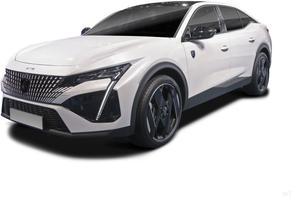
Peugeot has launched a new plug-in hybrid model, the ambitiously design 408 GT. The 408 is carving out a little niche for itself with its body style. Blending a sedan, liftback and an SUV together means you get the benefits of all styles but it also means there are few direct rivals.
The closest are the Citroen C5 X and the Cupra Formentor VZe.
The 408 GT has killer looks and style for days but I'm spending a week with it to see whether this plug-in hybrid is worth a look!
The Volvo EX30 Twin Motor Performance Ultra is the first Volvo model designed as an EV from the ground up and the Chinese-owned Swedish carmaker is making some pretty cool claims about it.
Including that it is the smallest but fastest Volvo ever (a bit of a strange combo) and it has been truly designed with a greener footprint in mind, all the way to the materials used in the cabin.
It's a niche market - a small but super punchy EV that features a luxury price tag - so rivals are few and far between but the closest at the moment are the Cupra Born, Hyundai Kona Electric, Peugeot E-2008 and Tesla Model Y.
Is Volvo carving out a new little segment with this cute EV? Is this segment needed? I've been driving it for the last week with my family to find out.
The Peugeot 408 GT plug-in hybrid features tech that could be improved upon and like all plug-ins, you get the best economy if you regularly charge it and that’s not always realistic. It is a little expensive compared to its rivals but sports a killer design that looks fresh and the cabin is roomy with nice features.
Volvo has taken a bit of a risk because I'm not convinced that the EX30 knows who its audience is. However, our Twin Motor Performance Ultra test model is well-specified and the overall owner experience (from driving, usability and ongoing ownership costs) is great. This is a fun car and it looks super cute.
There’s quite a lot happening with the design because of the mash-up of body styles. The long sleek body has sedan vibes but it sits high enough to tag itself as an SUV and the rear has that classic coupe pinching.
It won’t be everyone’s cup of tea but I like it. It's bold and different, which feels like a bit of fresh air in this SUV-heavy market.
The lights also set this apart from its Peugeot stablemates and look more refined, too. You can still see the remnants of the original ‘claw’ design in the tail-lights if you look closely but it's the long vertical DRLs at the front that give the design real edge. They resemble the fangs of a snarling cat (just too cool).
The sophisticated sleekness is extended to the interior where you find a cabin that is flush with high-end materials and soft touch points.
The curved dashboard, high-end tech screens and the mix of Nappa leather upholstery and synthetic leather trims definitely cement its grade position. While not a fan of the green contrast stitching myself, it does create an interesting focal point.
The EX30 is gorgeous. It has an interesting shape that makes it look larger than it is and it's unique enough to attract users who might not love the Volvo aesthetic.
You can still see that it's part of the Volvo family with its crisp pleating in the panelling and 'Hammer of Thor' LED headlights, but its look is new and fun.
Large Volvo badging is framed by rectangular LED lighting at the rear and our test model's Cloud Blue paintwork is offset by a sporty black roof and frameless side mirrors.
The interior aesthetic is very pared back - think simple and classic lines, no buttons or dials and large air-vents.
The dashboard is headlined by a 12.3-inch touchscreen multimedia system, which also houses all of the info you'd expect to see on a digital instrument cluster because there's no head-up display or cluster in this model and it does take a while to get used to.
At first the simplicity is a bit too much to wrap the head around but once you do, the interior is incredibly intuitive to use and as a driver, it felt a little Zen-like.
There are four interior design choices Breeze, Mist, Pine and our test model's Indigo which couples 50 per cent recycled denim jeans for its accents, a grey and blue Nordico (synthetic fabric) upholstery and lots of recycled soft/hard plastics in various tones of blue and greys.
To be honest, the materials didn't always work for me but the cabin is still pleasant to look at.
Both rows have ample leg- and headroom for my 168cm height. Even my father, who is 183cm tall, felt comfortable in both rows.
The seats are comfortable and offer enough padding to be enjoyable on a long trip. The heat and massage functions on the front seats make the cabin experience feel refined but the massage function sometimes stops when the heat function is also on.
Individual storage is good for the class with the front getting some centre console storage spots, including a phone shelf, as well as a dual-opening middle console, glovebox and two cupholders. There are also a small storage bin and drink bottle holder in each door.
In the rear, there are directional air vents, two USB-C ports, map pockets and a drink bottle holder in each door but you miss out on cup holders, an armrest and other items you might expect for this grade level, like heated outboard seats or climate control.
The other charging options are solid with the front row getting two USB-C ports, a wireless charging pad and a 12-volt socket. There is another 12-volt socket in the boot.
The 10-inch touchscreen multimedia system looks great and you can customise your ‘buttons panel’ to the features you use most often, which is very clever. However, the system isn’t always responsive which gets very annoying - the seat functions in particular can be laggy.
The system does feature built-in satellite navigation and wireless Apple CarPlay and Android Auto but the multimedia system is too glitchy to truly charm.
The boot features a tyre puncture repair kit, relatively level loading space and 471L of boot capacity, which has been fine for all of my errands this week. You also get a hands-free powered tailgate, which is always handy.
The cabin up front features plenty of leg- and headroom as well as cleverly designed storage options.
The rear row is surprisingly comfortable for space behind my driving position but I'm only 168cm tall and it might get squishy if you're behind taller front occupants. It's best to think of this car as a four-seater for adults though, the middle seat is an emergency seat.
The seats themselves are very comfortable for long trips, and both are powered and feature heat functions. My favourite feature inside are the door handles - easy to use and they look great too.
Like I mentioned earlier, the design is rather intuitive to use for every day. The only controls in the cabin are the window buttons and they're discreetly placed on either end of the middle console. The front only feature two buttons but you can switch them over for the rear window use via a little touchpad.
Individual storage is great for the class, with a large open centre console that features a dual opening lid with a shallow cubby, which is perfect to hide away any charging cables for the two USB-C ports.
There is a dedicated phone storage space in the form of a 'lean-to' scenario which also features the wireless charging pad and it's large enough to accommodate bigger devices like an iPad.
There is a sneaky glove box which is located underneath the multimedia screen but it irks me that you can only open it via the screen. It's large enough to hold a manual.
The other sneaky but super handy element is the retractable cupholder shelf that slides away into the middle console. You can also position it so only one cupholder is available or slide the cupholder insert backwards for a large cubby.
The rear gets large storage bins in each door, a drawer from the centre console but it's disappointing that the rear row misses out on cupholders or an armrest for added comfort. It does get two USB-C ports.
There is a 7L frunk storage plus the boot is adequate for overnight luggage or a grocery run with its 318L of capacity but that can jump up to 904L if you fold the rear row.
The multimedia system is fairly easy to use but you have to get used to it as it's a bit different from other Volvo systems I've sampled in the past. You also have to get used to accessing everything for the car, even for turning the car off, via the screen. I do like having buttons/dials but not having them in the EX30 mostly works.
The 408 is being offered in one grade for the Australian market, the GT model, and it’s priced from $67,990 before on road costs, making it more expensive than its rivals.
The closest rival, the Cupra Formentor VZe PHEV sits at $64,990 MSRP and the Citroen C5 X PHEV slides in as the most affordable at $57,670 MSRP.
However, only being offered in one grade does have its benefits because the GT is highly specified and most people will be satisfied with the long features list.
In terms of luxuries, there is a heated steering wheel, powered front seats with heat and massage functions, with Nappa leather upholstery and synthetic leather trims throughout.
The technology looks gorgeous with a 10-inch touchscreen multimedia system and a 10-inch digital instrument cluster headlining the dashboard. It's rounded out by the wireless Apple CarPlay and Android Auto, built-in satellite navigation, four USB-C ports, two 12-volt sockets and a wireless charging pad.
The key practical features include a powered tailgate, dual-zone air-conditioning, push-button start, keyless entry and the front driver's seat features a two-position memory function.
You can option a panoramic sunroof for an extra $2000, if you want it.
The 408 only comes in five colours, with the Obsession Blue on our test model being the only included colour. The rest are priced at $690 but the Elixir Red jumps up to $1050.
There are three grades for the EX30 and our model on test is the Twin Motor Performance Ultra, which is the top-spec version. It is priced from $71,290 before on-road costs and that positions it as the most expensive compared to its nearest rivals.
The popular Tesla Model Y Long Range all-wheel drive is $69,900 MSRP, the Cupra Born (5 Seat) is one of the most affordable at $59,990 MSRP, and the Hyundai Kona Electric Premium N Line at $71,000 MSRP is the closest rival for price.
The EX30's price point and cute size means it's carved out a little niche for itself - little being the operative word as the rivals above are not apples for apples comparisons. The EX30 could be at risk of not knowing what its audience is - the design is fun, which signals a younger crowd, but the price point might rule them out.
Having said that, the EX30 wants for nothing really and manages to be very well-specified.
Standard items include, a 12.3-inch touchscreen multimedia system, wired Apple CarPlay and Android Auto, Google Services (Assistant/ Maps/ Play), Spotify/YouTube apps, 5G Module, over-the-air updates, satellite navigation, dual-zone climate control, four USB-C ports, wireless charging pad, Bluetooth, and DAB+ Digital Radio and a Digital Key.
Luxury and practical items include heated and powered front seats, powered tailgate, heated steering wheel, a premium nine-speaker Harman Kardon sound system which features a long soundbar and a huge panoramic sunroof.
Annoyingly though the keyless entry is truly keyless ... there are no buttons on the key and it sometimes glitches when you try to open the door despite the key being in your hand!
The 408 GT is a front-wheel drive that has an eight-speed auto transmission and is powered by a 1.6-litre turbo-petrol engine and an 81kW electric motor, which produce combined outputs of 165kW/360Nm. It can do a 0-100km/h sprint in 7.8 seconds.
The switch between the electric and petrol components isn’t always seamless and you can feel some shudders as it flips between them at lower speeds but the power feels adequate for everyday driving.
The Twin Motor Performance Ultra grade is an AWD with twin electric motors which combine to produce 315kW of power and 543Nm of torque (115kW front/200kW rear) + (200Nm front/323Nm rear).
The EX30 has a single-speed auto transmission and can go from 0 -100km/h in just 3.6-seconds - making it the fastest Volvo.
The official combined cycle fuel consumption figure is 1.5L/100km but that’s if you were recharging the car every time the electric range dropped out.
My real-world consumption sat at 5.5L after a mix of open-road and urban driving. I only charge it every other day as that’s realistic for my family life but like all plug-ins - you will get the best efficiency if you charge it regularly.
The 408 GT has a Type 2 charging port and a small 12.4kWh lithium-ion battery that can accept up to 3.7kW of power. You get up to 60km of pure electric driving range (but I only saw a top of 38km available) and on a domestic socket, you can go from zero to 100 per cent in around six hours.
On a 7kW or 11kW AC power charger, that drops to three and a half hours. So, it’s a tad slow to charge but worth it if you can leave your car on charge overnight.
The EX30 Twin Motor Performance Ultra has up to 445km (WLTP) driving range, which felt pretty accurate this week despite throwing some heavy open-road trips into the mix.
This variant has a 69kWh nickel manganese cobalt battery and an official energy consumption figure of 18.0kWh/100km (WLTP). After doing some urban and longer trips I saw my trip computer flitting between 19.0kWh and 22.0kWh/100km.
The EX30 has a Type 2 CCS charging port, which means you can hook it up to a DC charger and it will accept up to 175kW on a DC charging system.
On an AC 2.4kW standard domestic plug port, expect a long charging time of around 38 hours to get up to 80 per cent.
On an AC 11kW system, you can go from 0-100 per cent in eight hours (again, a little slow but reasonable enough for overnight charging).
On a DC 175kW system, you can go from 10-80 per cent in around 28 minutes.
The 408 GT has more than enough power to be a comfortable open-roader. You can keep your speed consistent on hills and it has enough gumption to cross traffic quickly in an urban environment.
Steering is responsive and the car is easy to manoeuvre in close quarters but the lane-keeping aid does severe corrections, so have your wits about you when you’re on the go because it can be a fright when the wheel starts fighting you.
With the ride comfort, there can be vibrations through the seats and steering wheel depending on the road surface and you’ll know about it when you hit a bump. It’s okay enough to not be classed as rough but it’s not as refined as you'd hope.
Despite the narrow rear window, the visibility is actually very good and it’s easy enough to park but the 180-degree camera system needs work.
You'll end up using the straight reversing camera because you need to ‘drive’ over the space for an image to pop up for the '180-degree' view and by the time it does, you’ve parked anyway!
Driving the EX30 Ultra is a mostly fun and lighthearted experience but it's not cutesy, no matter how adorable the external design is.
The twin motors deliver serious power and you can fully expect 'tummy-sucking' moments of pure enjoyment whenever you put your foot down.
Coupled with a graceful on-road presence which assures you that the car will stick to the road like glue, and you have the fun-factor.
The lightheartedness comes from how nimble and easy the EX30 is to manoeuvre. The steering firmness can be customised and its compact dimensions makes it your best friend in tight city lanes.
You can't customise the regenerative braking, or at least, I couldn't figure out an easy way to do so outside of selecting the one-pedal drive option.
The cabin is mostly quiet and there's a refinement to longer journeys because of it. You get occasional wind noise at higher speeds and a little bit of road feedback too but longer journeys are lovely.
My only real nag is that there is no head-up display or instrument panel for your speedometre and I found my eyes directed away from the road because of it. You can find your speed info on the central multimedia system but I prefer something in front of me.
Parking my little blue cloud this week has been easy as pie because the 360-degree camera system is clear and the large windows provide excellent visibility.
The 408 is so new that it doesn’t have an ANCAP safety rating but it has a long list of safety features that it might not worry you.
That list includes all of the biggies like rear cross-traffic alert, blind-spot monitoring, forward collision warning and AEB.
It also includes a driver attention alert, dusk-sensing auto lights, tyre pressure monitoring, lane departure and keeping aids, traffic sign recognition, intelligent seatbelt warning and adaptive cruise control.
Parking is sorted with the 180-degree view camera system and front and rear parking sensors.
The 408 only features six airbags, which is low, and is missing out on the newer front centre airbag and even a drivers knee airbag.
For any families out there, the rear features ISOFIX child-seat mounts on the outboard seats and three top-tether anchor points. Two seats will fit best, though.
At the time of this review, the EX30 has not been tested by ANCAP and is unrated but it has all of the safety equipment you'd expect of a Volvo.
Standard equipment includes, blind spot monitoring, driver attention alert, safe exit warning, rear occupant alert, tyre pressure monitoring, tyre mobility kit, rear collision warning, forward collision warning, rear cross-traffic alert, lane departure alert, lane keeping aid, hill start assist, traffic sign recognition, intelligent seatbelt warning, adaptive cruise control, parking assist, a 360-degree view camera system as well as front and rear parking sensors.
The EX30 is also fitted with seven airbags and the Volvo-designed whiplash injury protection system (WHIPS) which helps to reduce the risk of whiplash injury if your car is hit from behind. On impact, the entire front backrest and head restraint moves with the occupant to support the neck.
Like other Volvos, the EX30 also has side impact protection (SIPS), which helps protect you and your passengers in a side collision. The body's steel framework displaces the impact of a side-collision away from the occupants to other parts of the car body.
The EX30 has ISOFIX child seat mounts on the rear outboard seats plus three top tethers but only two child seats will fit. If you have an extra-large booster seat, like me, then expect some of the back window visibility to be compromised when it is installed.
The 408 comes with a usual warranty term of five-years/unlimited km and the battery is covered by an eight-year or up to 160,000km warranty.
You can pre-purchase three, four, or five-years worth of services, which all work out to be cheaper than the pay-as-you-go option. It costs $1200 (three-years), $1700 (four-years), and $2000 for the five-year plan.
On the five-year plan, services average $400, which is reasonable for the class. Servicing intervals are also good at every 12 months/15,000km, whichever occurs first.
The EX30 is covered by Volvos five-year/unlimited km warranty and the electric battery is covered by an eight-year term - both are normal terms for the class.
What endears the EX30 to me is that servicing is included, which is very rare for a luxury brand to offer. Servicing intervals are reasonable at every two years or 30,000km, which ever occurs first.