What's the difference?
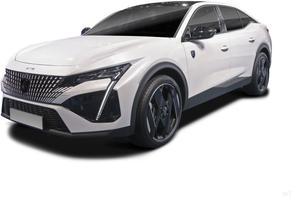
Unveiled globally in 2022 before arriving here in late 2024 as a plug-in hybrid GT, the Peugeot 408 has been a niche player for the long-established French brand with less than 100 examples finding homes here last year.
But 2025 marked the transition to a new ‘plug-less’ mild-hybrid powertrain for the mid-size crossover-style SUV with the hope it may take a bigger swing at segment heavyweights.
We spent a week with the current 408 GT Premium Hybrid to see if its efficiency-focused petrol-electric set-up has what it takes to win a spot on your upscale five-seat SUV shopping list.
The Ford Ranger line-up’s limited-edition Tremor arrived here in the second half of 2024, now the Ford Everest gets its own Tremor.
Based on the Everest Sport, this Tremor is not a limited-edition variant and gets the 3.0-litre, turbo-diesel V6 engine (rather than the Ranger Tremor’s 2.0-litre four-cylinder twin-turbo diesel), and to boost the 4WD wagon’s off-road capability, Ford has given it new longer coil springs, Bilstein dampers and General Grabber AT3 all-terrain tyres.
The Tremor also gets 'Rock Crawl' drive mode, heavy-duty bash plates and side steps, as well as some Tremor-specific styling and branding inside and out.
So, is this bush-boosted 4WD wagon worth your consideration?
Read on.
The Peugeot 408 GT Hybrid delivers heaps of standard equipment and safety tech for what is now a much more competitive price. It’s also super fuel-efficient, which is right for these turbulent times, offers thoughtful practicality and the wagon-fastback-crossover-SUV look is striking. The price paid for miserly economy is a peaky small-engine powertrain and the ownership promise isn’t exactly class-leading. That said, it deserves consideration in its new, even more competitive under $60K mid-size SUV segment.
The standard Ford Everest – powered by a 2.0-litre twin-turbo or a V6 – is a nicely refined, comfortable and capable 4WD with plenty of potential as a touring vehicle.
The Tremor treatment doesn’t turn the Everest into a Raptor-esque Everest but it does offer low-key substantial off-road improvements to what was already an impressive 4WD wagon.
This sensible package of upgrades – more ground clearance, off-road-suited suspension, and decent all-terrain tyres – gives this Everest a mild 4WD boost.
Peugeot Design Director Matthias Hossann has been guiding the brand’s look and feel since 2020 and the result is a recognisable approach across the range with enough flexibility to give each model its own personality.
Recurring themes include the dramatic, fan-like grille with body-colour elements, narrow angled LED daytime running lights (DRLs) slicing through the outer edges of the nose and sinister tapered headlights set into the front corners.
The rear end maintains the visual drama with a stacked, angular treatment sectioning off the ‘Claw Effect’ LED tail-lights (the Peugeot brand mark is a Lion), chamfered mid-section and chunky bumper.
And among what increasingly feels like a mass of same-same newcomers the 408’s sloping turret and high, wide haunches give the car a distinctively sporty fastback look.
The interior is classy and clean although the almost uniformly grey colour palette is unrelenting.
The two-tier dash adds visual interest and a combination of sweeping curves and clean, straight lines around the cabin lift the tone. Nappa leather trim with the ribbed seat centre panels using perforated hide also looks classy.
But then we come to the ‘iCockpit’ instrument display and steering wheel combination. It’s based on the idea that reducing the size of the steering wheel and lowering its position while flattening its top and raising the location of the instrument binnacle is a better solution than the traditional look-through-the-steering wheel approach.
It doesn’t work for everyone and it doesn’t work for me. As noted in previous Peugeot reviews, after more than a decade in existence various members of the CarsGuide editorial staff continue to struggle with the arrangement, while others love it.
For me, the wheel feels too low, yet the top of it obscures the lower part of the instrument panel. While it may work well for others I see it as the answer to a question no one was asking.
Lift any vehicle a few millimetres and throw decent all-terrain tyres on it and that one-two combination instantly gives the vehicle more track-cred.
And so it goes for the Everest Tremor.
But there’s more going on here than simply increased height and a swap-out of rubber over standard Everests.
As mentioned, it gets Bilstein dampers, new springs, and tough all-terrain tyres which combine to give the Tremor a solid presence.
The new honeycomb-pattern grille with auxiliary LED lights, quite visible steel bash plate, pronounced heavy-duty side steps and orange Tremor branding add to the package.
And inside it gets those Tremor-specific touches, such as the leather-accented seats embossed with Tremor branding, ebony-coloured interior accents and all-weather floor mats.
At close to 4.7m long, around 1.9m wide and a bit less than 1.5m tall with a 2790mm wheelbase, the 408 sits in the middle of the typical mid-size five-seater footprint.
Ample room in the front, although the lower section of the two-tier dash protrudes a fair way towards the driver and front passenger and the centre console is broad so it feels snug rather than airy.
Storage includes generous door bins with room for larger bottles, a lidded (and illuminated) bin between the seats that doubles as a centre armrest, two cupholders in the console with an oddments tray ahead of them and a decent glove box with an extra pocket built into the lid.
Switching to the rear, sitting behind the driver’s seat set for my 183cm position, there’s loads of leg- and headroom and enough width for three adults when required and more than enough for a trio of up to mid-teenage kids. Centre rear is less of a short-straw position, too, thanks to a relatively low and flat central tunnel.
The lack of a fold-down rear centre armrest is a miss mainly because it means there are no cupholders in the rear. But there are decent door bins with a space for smaller bottles, netted map pockets on the front seatbacks and a storage cubby at the back of the front centre console.
Speaking of which, individual air vents in the back of that console are a welcome addition.
The boot is large for the class at 508 litres (VDA) with the rear seat upright and 1583 litres with the 60/40 split-folding backrest folded down. The power tailgate (with foot sensor and pedestrian detection) also makes life easier.
Other thoughtful touches include four load tie-down anchors, a netted pocket on the right-hand side, elasticised straps on the left-hand side, specific lighting and a pair of bag hooks.
Power and connectivity options include two USB-C sockets, a 12-volt outlet and a wireless phone charging pad in the front, another two USB-Cs in the back and a second 12V plug in the boot. So no problems with charging capacity for phones and other devices.
Maximum braked trailer towing capacity is a useful 1300kg (750kg unbraked) but we have to put a big black mark against provision of a repair/inflator kit rather than a physical spare. Not good enough for the Aussie market.
The Tremor cabin is a comfortably familiar interior – it’s functional and roomy and so scores well in terms of overall practicality.
Driver and front passenger have easy access to storage options, such as the centre console, cupholders, door pockets and a shelf for your everyday-carry stuff as well as charging points (wireless charger, USB and USB-C sockets).
There’s plenty of space for the driver and all passengers (front, second and third row), and the seats are supportive and comfortable, even in the third row.
While that pew is a straight-up-and-down set-up it still manages not to be a complete punishment for those passengers.
Those in the second row get a fold-down centre armrest, door pockets and map pockets as well as air con vents and controls.
The rear cargo area has standard Everest features – with cargo tie-down points and a 12-volt outlet.
A niggle, and one I’ve found in other new-generation Fords, is the multimedia system. It's a decent size with clear and crisp colours and is easy to operate, but I needed to repeatedly stab a finger onto the screen in order to work my way through menus and sub-menus to figure it all out.
My advice is get your head around all of the multimedia system’s functionality while the vehicle is stationary because, to me, some of the screen workings are counter-intuitive and it’s easier and safer to learn all of that while the vehicle is not moving.
Also, the fact some controls are on-screen and some are off it creates more than a little confusion.
The previous plug-in version of the current 408 Hybrid was a 1.6-litre, turbo-petrol, four-cylinder paired with a relatively large electric motor and cost-of-entry sat at $67,990, before on-road costs.
A shift to this car’s mild-hybrid powertrain, built around a 1.2-litre, turbo-petrol, three-cylinder engine matched up with an appreciably smaller battery and electric motor coincided with a 15 per cent ($10,000) price reduction to $57,990, BOC.
Convenience or consequence? Either way, it’s opened up a new competitive set with the focus shifting from the likes of the Lexus NX, Mazda CX-60 PHEV and Volvo XC60 to a fresh batch of sub-$60K rivals.
Think Honda CR-V e:HEV RS ($59,900, drive-away), Hyundai Tucson AWD 1.6 Hybrid Premium ($58,350, BOC), Kia Sportage GT-Line HEV FWD ($57,370, BOC), Nissan X-Trail Ti e-Power 5 seat AWD ($58,215, BOC), Subaru Forester AWD Hybrid Touring ($55,990, BOC) and the Toyota RAV4 XSE Hybrid AWD ($59,015, BOC).
Suddenly the Peugeot’s included features list sits in a new context and aside from the performance and safety tech we’ll get to shortly, standard equipment highlights include dual-zone climate control air, full-grain Nappa leather seat trim, a leather-trimmed (heated) steering wheel, Alcantara door trim, 3D satellite navigation and 10-speaker 690-watt Focal audio (with digital radio) as well as wireless Android Auto and Apple CarPlay.
Then there’s power-adjustable driver (eight-way) and front passenger (six-way) seats that are also heated with a ‘multi-point’ massage function, keyless entry and start, a 10-inch digital 3D instrument panel, a 10-inch multimedia touchscreen, auto LED matrix headlights, eight-colour ambient lighting, chrome trimmed pedals, a power tailgate, heated power-folding exterior mirrors, a panoramic glass sunroof, 19-inch alloy wheels, auto rain-sensing wipers and more.
Then you can add over-the-air updates, access to remote services via the ‘MyPeugeot’ app and ‘Ok Peugeot’ voice recognition.
That’s an impressive basket of fruit for an under-$60,000 car.
The seven-seat Ford Everest Tremor 4WD 3.0 V6 diesel auto has a listed price of $76,590, excluding on-road costs, putting it between the Sport and top-spec Platinum in the Everest range.
That pricing pits it against the likes of the GWM Tank 500 Hybrid Ultra ($73,990 drive-away), Isuzu MU-X ($74,400, excluding on-road costs) and Toyota Prado GXL ($79,990, excluding on-road costs).
However, price 'as tested' on our test vehicle is $84,390 because this Tremor has 'Prestige Paint' ($700, 'Command Grey'), the 'Premium Seat Pack' ($1100), 'Touring Pack' ($2500) and 'Rough Terrain Pack' ($3500).
The Tremor Premium Seat Pack includes heated/vented front driver and passenger seats, eight-way power passenger seat and 10-way power driver seat (with memory).
The Touring Pack includes a 360-degree view camera set-up, tow bar and hitch, an integrated trailer brake controller and trailer back-up assist.
The Rough Terrain Pack includes what Ford Australia describes as “Under Vehicle Armour” (aka bash plates), a Rough Terrain Bar (a nudge bar on steroids) and an auxiliary switch bank.
Worth noting Ford Australia advises fitment of the Rough Terrain Bar “means the vehicle is considered 'unrated' by ANCAP”.
Also available is the 'Towing Pack', which includes a tow bar and integrated trailer brake controller.
Otherwise, standard Tremor features include a 12.0-inch digital multimedia system (wireless Apple CarPlay and Android Auto), wireless charging, an 8.0-inch digital driver’s display, as well as heavy-duty side steps and black wheel arch moldings, among many other things.
It also gets Tremor-embossed leather-accented seats, ebony-coloured interior accents and all-weather floor mats.
As mentioned earlier, the Everest Tremor gets Bilstein dampers, new springs, the all-terrain tyres (LT 265/70 R17) and low-speed Rock Crawl added to its off-road driving modes.
Other Tremor-specific features include a new grille, auxiliary LED lights, a steel bash plate, heavy-duty side steps and orange Tremor branding.
As a result of the Tremor treatment, this Everest has a claimed 255mm ground clearance (26mm more than the closest Everest model), the best off-road angles of any Everest (more about those in the Driving section) and the tightest turning circle of the Everest line-up (measuring 11.65m to best the rest of the field’s 11.8m).
Exterior paint choices include the no-extra-cost 'Arctic White', or 'Shadow Black', 'Meteor Grey', or 'Command Grey' which all cost $750.
The Peugeot 408 Hybrid is powered by a 1.2-litre, turbo-petrol, three-cylinder engine producing 100kW at 5500rpm and 230Nm at 1750rpm.
This compact, all-alloy, direct-injection unit works in concert with a single 15.6kW/51Nm 48-volt electric motor integrated into the six-speed dual-clutch auto transmission and energised by a 0.9kWh lithium-ion battery.
Drive goes to the front wheels only and Peugeot claims a 0-100kmh sprint time of 9.4 seconds.
As mentioned right at the start, the Everest Tremor has a 3.0-litre V6 turbo-diesel engine – producing 184kW at 3250rpm and 600Nm at 1750-2250rpm – and that’s matched to a 10-speed automatic transmission.
It also gets the line-up’s full-time 4WD system. This system has selectable two-wheel drive (2H), four-wheel drive high-range (4H), four-wheel drive low-range (4L) and four-wheel drive automatic (4A = 4Auto) that sends drive to the front and rear axles as needed, and which can be safely used on high-traction surfaces, such as bitumen.
The 408 Hybrid’s official fuel consumption figure for the combined (urban/extra-urban) cycle is 4.5L/100km, the 1.2L turbo triple emitting 102g/km of CO2 in the process.
And it’s important to point out those official (ADR 81/02) numbers for the 408’s consumption and emissions are better than any of the direct competitors we’ve called out in the ‘Price & Features’ section above.
Over a week of mainly city and suburban running with some freeway sections thrown in, we recorded an on-test average of 6.0L/100km. Impressive for a mid-size crossover weighing in at a bit over 1.4 tonnes.
Brim the 52-litre tank with minimum 95 RON premium fuel (ethanol blends not recommended) and using our real-world figure you can expect a handy driving range in excess of 860km.
The Tremor has the highest listed fuel consumption of the Everest line-up: 9.5L/100km on a combined (urban/extra-urban) cycle.
I recorded an average of 11.2L/100km on this test.
The Tremor has an 80-litre fuel tank so, going by my on-test fuel-consumption figure, you could reasonably expect a driving range of about 714km from a full tank.
Worth noting the Tremor requires AdBlue diesel-exhaust fluid.
Even with the assistance of an electric motor in the transmission and a turbo on the engine, a 1.2-litre, petrol three-cylinder powering a more than 1.4-tonne five-seat car is always going to be an interesting equation.
And in practice, although the small triple’s peak torque (230Nm) is available from just 1750rpm it lacks the smoothness of larger capacity mild- and full-hybrid combinations. Especially at slower speeds, the powertrain feels relatively edgy and agitated.
Outright acceleration is fine (claimed 0-100km/h acceleration is 9.4sec) with decent mid-range pulling power for confident overtaking or decisive lane changing (a 15.6kW/51Nm boost from the motor playing its part) and the dual-clutch auto is a more polished example of what can be a fractious device.
But engineering and tuning for maximum fuel-efficiency has an impact on driveability. For example, we noticed the air-conditioning system’s output softened at standstill, which led to some mild window fogging in stop-start traffic on a particularly humid morning. Haven’t seen that for a while.
The strut front, torsion beam rear suspension delivers a compliant ride and responsive handling in classic Peugeot fashion. The steering in particular points accurately and provides good road feel.
We’ve covered the intricacies of the i-Cockpit instrument and steering wheel configuration in the Design section as its shortcomings (for me, anyway) are more ergonomic than dynamic.
The car is relatively quiet, thanks in part to sound-dampening acoustic glass and the Michelin e.Primacy tyres (205/55) which also grip persistently if you decide to slice through your favourite set of corners. Push the engine harder and it’s revvy note and exhaust rasp will start to make their presence felt.
Regenerative braking is helpful and the physical brakes (ventilated discs and the front and solid rotors at the rear) are nice and progressive.
The front seats are firmer than the Peugeot norm but remain comfy enough and they provide enough side support to keep you well located.
Despite the swoopy fastback design, all-around vision is surprisingly good and an overall length under 4.7m, an acceptable 11.2m turning circle, a clear reversing camera and a 360-degree camera view make parking straightforward.
Overall, the Tremor is nice to drive on road. It’s quiet, refined and comfortable and the engine and transmission make a cluey, unstressed pairing.
However, the Tremor’s suspension – engineered to improve the vehicle’s off-road capability – is firm through sections of back-country bitumen and even mildly corrugated bush tracks.
Also, this Everest’s all-terrain tyres don’t help ride quality or noise levels on sealed surfaces. But that’s no surprise and a very minor trade-off when the Tremor's potential as a touring vehicle is so high.
On the open highway at cruising speed, the Tremor exhibits all of the smooth-driving characteristics the Everest line-up is well known for.
It sits nicely on the road, that wide wheel track (a 30mm increase in width to 1650mm) gives it a solid stance and this V6 ute simply rumbles along.
So, how does it perform in 4WD territory? Well, it’s based on the Everest Sport, which is no off-road loser, so you’d assume the Tremor would do okay.
However, we all know if you assume, it makes an 'ass' out of 'u' and 'me'… but the Tremor has been engineered to outperform the standard Everest in the dirty stuff. Unsurprising spoiler alert, it does, but only marginally.
The Everest Tremor is 4914mm long (without the towbar hitch receiver; 4978mm with), 2015mm wide (mirrors in; 2207mm, mirrors out) and 1904mm high.
It has a 2900mm wheelbase and a listed kerb weight of 2550kg, the latter making it the heaviest Everest in the line-up.
This is not a diminutive wagon but it has the smallest turning circle (11.65m) in the Everest range and its dimensions don’t hamper it in the bush.
As mentioned earlier, when you add running ground clearance to any off-roader its off-road performance will be improved. The Tremor has more ground clearance (255mm) than its stablemates but, as with any measurements provided by vehicle manufacturers (ground clearance, wading depth, towing capacities, etc), always regard those figures with a healthy degree of scepticism.
Wading depth is listed as 800mm and its off-road angles are in line with market rivals: for your reference, approach, departure and ramp-over angles are listed as 32, 26.8 and 23.9 degrees, respectively.
This wagon’s 3.0-litre turbo-diesel V6 offers plenty of torque across a broad rev range, the 10-speed auto is clever – no flip-flopping between ratios here – and you can use the manual shifter if you get the urge.
Low-range gearing is adequate and the Tremor has an electronic rear diff lock.
The Tremor has a variety of selectable on- and off-road drive modes, including 'Normal', 'Eco', 'Tow/Haul', 'Slippery', 'Mud/Ruts', 'Sand and Rock' and the Tremor-specific 'Rock Crawl' plus a locking rear diff.
These off-road driving modes are no substitute for track-worthy 4WD mechanicals but they help by adjusting engine, throttle, transmission, braking, traction and stability controls to suit the driving conditions.
Off-road traction control is effective without being spectacular. There’s a bit too much wheelspin for my liking.
Off-road applications are displayed on screen – with driveline/diff lock indicators, steering, pitch and roll angles depicted. Hill descent control held the Tremor to a steady 3.0-4.0km/h as I crawled down a difficult slope.
The power steering, light and sporty in all scenarios, has been tweaked with a heavy-duty tune and it retains a confident feel in difficult conditions.
Heavy-duty off-road engineering has bolstered the suspension set-up with new springs and Bilstein dampers with external reservoirs.
Wheel travel – how far the axle can move up and down vertically wheel-to-wheel relative to the chassis – is slightly better than a standard Everest’s, with this wagon’s tyres stretching a little further than the regular version’s.
Again, as I mentioned earlier, by replacing an off-roader’s standard road-biased rubber with a set of decent all-terrain tyres its off-road capability will be improved. And that’s exactly what Ford has done.
The Tremor's General Grabber all-terrain tyres feature light-truck construction. They are grippy and very effective in dirt, loose gravel, slippery clay and the like.
There are a few niggles, though.
I’ve previously expressed annoyance at the auto transmission shifter – a kind of joystick on a light cycle of steroids and just as touchy. It’s especially finicky on bumpy terrain but it’s another Everest-based characteristic to which I’ve become somewhat accustomed.
The operation of some off-road driver-assist tech can be confusing as it’s divided between the rotary dial (to select drive modes) and the screen (to engage the rear diff lock etc). Not a deal-breaker, but it takes some getting used to.
The brake pedal is spongy – taking some time between initial foot pressure to ‘biting', but then the brakes – discs all around – do clamp into action.
As for packability, there is a listed 259 litres (VDA) of space in the rear-most cargo area (with all three rows of seats in use), 898L (VDA) when the third row is stowed away and 1823L (VDA) when the second and third rows are lowered.
The Everest Tremor has a listed payload of 690kg, and towing capacities of 750kg (unbraked) and 3500kg (braked).
It has a listed GVM (Gross Vehicle Mass) of 3240kg and a GCM (Gross Combined Mass) of 6350kg. Remember: any onboard loads – such as people, pets, camping gear or aftermarket equipment (bullbar, roof rack etc) – must figure in your payload and GVM equations.
The 408 has a maximum five-star ANCAP rating from assessment in 2022 with active crash avoidance tech including Auto emergency braking (AEB) with pedestrian and cyclist detection, junction assist and backover detection, adaptive cruise (with stop & go), lane departure warning and lane keep assist, blind spot monitoring, traffic sign recognition, a 360-degree camera view, rear cross-traffic alert, forward collision warning, driver fatigue monitoring and tyre pressure monitoring as well as front and rear parking sensors.
If a crash is unavoidable there are six airbags onboard (front, front side and side curtain) but a front centre bag is notable for its absence.
On the upside, an active bonnet helps protect impacted pedestrians from striking hard engine parts under the bonnet and multi-collision brake minimises the chances of subsequent impact after an initial crash.
For child seats there are three top tether points across the second row with ISOFIX anchors in the outer positions.
The Everest Tremor has the maximum five-star ANCAP safety rating from testing in 2022.
Standard safety features include nine airbags - front, front side, driver and front passenger knee, full-length curtains plus a front-centre bag - AEB, adaptive cruise control (with stop and go), lane-departure warning, lane-keep assist, blind-spot monitoring (with cross-traffic alert and trailer coverage), a reversing camera and more.
Off-road driver-assist tech includes specific driving modes, Rock Crawl mode, 'Trail Control' and 'Trail Turn Assist'.
And remember, as mentioned earlier, if the Rough Terrain Bar is fitted, the vehicle is regarded as 'unrated' by ANCAP.
Peugeot covers the 408 with a five-year/unlimited kilometre warranty, which is perilously close to sub-par in 2026 with an increasing number of brands at seven, eight and up to 10 years conditional. The battery warranty at eight years/160,000km matches the market.
Roadside assistance is included for five years, service is recommended every 12 months/15,000km and pre-paid servicing is offered across three-, four- or five-year plans, with the latter at $2070.
That’s a not insubstantial average of $414 per workshop visit, which Peugeot says will save you $893 compared to pay-as-you-go over the five years.
For reference, a Toyota RAV Hybrid service for any of the first five years is $260, although pricing steps up after that period.
Peugeot has a well established network of 31 dealers mainly covering major cities and key rural areas, primarily on the east coast. Currently, no presence in Tassie or the Northern Territory, while Perth and Adelaide are the only representation in WA and SA.
The Tremor is covered by Ford’s five year/unlimited kilometre warranty, which is the standard for this part of the market.
Roadside assistance is complimentary for 12 months after each service, extended for up to seven years as long as the Tremor’s owner has it serviced at an authorised Ford dealership.
Service intervals are scheduled for every 12 months or 15,000km and a capped-price servicing plan applies to the first five years/75,000km with a $2550 cost attached ($510 per service).
For reference a comparable Toyota LandCruiser Prado will set you back $390 per workshop visit, but that car's service interval is more frequent at six months/10,000km.