What's the difference?
Developing a new motor vehicle from scratch costs billions which is why manufacturers are increasingly sharing vehicle platforms and technology to spread these ever-increasing costs across two (or more) strategically aligned automotive brands.
This ‘badge engineering’ strategy is becoming popular in the light-commercial vehicle (LCV) segment as evidenced by partnerships between Ford and Volkswagen with their Ranger/Amarok and Transit Custom/Transporter pairings, Isuzu and Mazda with their D-Max/BT-50 duo and Chinese contenders MG and LDV with their U9/Terron 9 tie-up.
Mitsubishi and Nissan have recently established a similar relationship, with Mitsubishi’s Triton donating its underpinnings for the latest Nissan Navara. We recently spent a week with Nissan’s new entry-level model grade to assess its credentials from a tradie’s perspective.
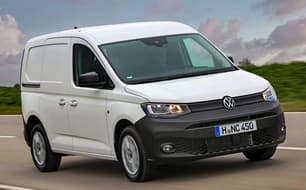
The venerable VW Caddy was launched in 1979 and after five generations and more than four decades of service, it remains one of the world’s most popular range of small vans.
In Australia’s light-commercial vehicle market, the Caddy’s work-focused Cargo model competes in the small van (under 2.5-tonne GVM) segment against the Renault Kangoo and Peugeot Partner.
The VW range offers Cargo (SWB), Cargo Maxi (LWB) and Crewvan (LWB) models with a unique choice of petrol/diesel engines and manual/auto transmissions.
We recently revisited this German workhorse to find out why it remains such a strong seller in Australia from a business perspective.
The D27 Nissan Navara represents badge engineering at its best or worst, depending on your point of view regarding platform sharing. However, when assessed purely on its merits as a standalone tool of trade, the entry-level SL is a competent and economical workhorse that’s worthy of at least cross-shopping with the major players.
It’s not hard to see why the Caddy Cargo maintains its enduring favouritism in the small van class. It has outstanding workhorse capabilities, unmatched five-star safety and drivetrain choice, combined with a spirited car-like driving experience, be it unladen or with a heavy payload. It’s not perfect, but it's also hard to fault in a workhorse role.
It looks like a base model Triton GLX given the Navara SL’s modest front and rear styling tweaks, which are not as substantial nor convincing as platform-sharing rivals like Mazda’s BT-50 or Volkswagen’s Amarok in creating a clear visual distinction from its donor.
Nissan has been equally economical with interior changes. Even so, the work-focused cabin is functional and reasonably spacious for a dual cab, with splashes of satin chrome combined with white upholstery stitching and fake carbon-fibre surfaces providing a touch of style to predominantly grey tones.
Our test vehicle rides on a 2755mm wheelbase with 4500mm overall length, yet its 11.4-metre turning circle is slightly larger than a Toyota HiAce mid-sized van, which highlights the restrictions in steering lock shared by front-wheel-drive vehicles like the Caddy and its French rivals.
Underneath you’ll find robust MacPherson strut front suspension, a coil-spring beam rear axle with Panhard rod, four-wheel disc brakes and electric power-assisted steering.
It comes well armoured for work duties with unpainted dark grey plastic used in areas where bumps, scrapes and wear usually occur like the front/rear bumpers (including the rear pillars from top to bottom), door-handles and door mirror-shells. The bright silver alloy-look plastic wheel-covers can also be easily replaced if damaged by kerbs to keep this van looking sharp on the job.
Its purposeful external appearance is matched by a neat and practical cabin design with wipe-clean rubber flooring and fabric-trimmed bucket seats for driver and passenger. Hard surfaces abound in contrasting shades of grey with splashes of satin chrome.
The minimalist dash design is achieved by corralling most functions into the comparatively small (by today's standards) central touchscreen including often-used climate control, engine auto start-stop etc., which can be fiddly and distracting when driving. Thankfully, at least physical dials for audio volume and tuning remain.
With its 2126kg kerb weight and 3190kg GVM our test vehicle has a useful 1064kg payload rating, so it’s a genuine one tonner.
It’s also rated to tow up to the class-benchmark 3500kg of braked trailer but with its 6250kg GCM rating (or how much it can legally carry and tow at the same time) it would require a sizeable 440kg reduction in vehicle payload to tow its maximum trailer weight.
Not that many (if any) owners of utes this size would need to tow 3500kg but it’s important to be aware of these numbers when towing heavy trailers to avoid dangerous and illegal overloading.
The Navara’s load tub is almost square with its 1555mm length and 1545mm width. It’s also 525mm deep and with 1135mm between the rear wheel housings it can’t fit a standard Aussie pallet but will carry a Euro.
Our test vehicle does not come standard with a tub-liner so its painted surfaces are prone to scratches and dents. There’s four anchorage points for securing loads and the tailgate assist feature allows easier lowering and raising.
The driver and front passenger share good space and comfort, with storage that includes a bottle holder and bin in each door plus a large open shelf above the single glovebox and an overhead glasses holder. The centre console offers flat storage with two USB ports and a 12v socket up front, along with two cupholders in the centre and a lidded box at the back.
Rear seating is also comfortable and surprisingly spacious for tall people, given I’m 186cm and when seated behind the driver’s seat when set in my position I have ample knee and headroom. However, shoulder room is tight for three adults, which is tolerable for short trips but a maximum of two would be preferable for longer drives.
Rear passenger storage includes a bottle holder and bin in each door plus pockets on each front seat backrest. There’s another 12v socket in the rear of the centre console and the centre seat’s backrest folds forward to serve as an armrest with dual cupholders.
The bench seat’s base cushion is fixed, so unlike numerous rivals it can’t swing up and be stored vertically if more internal carrying space is required.
The Caddy’s 1508kg tare weight and 2250kg GVM results in a 742kg payload rating, of which up to 100kg can be legally carried on the roof where external anchorage points are provided for roof racks or rails.
It’s also rated to tow up to 1500kg of braked trailer, although its relatively low 75kg tow-ball download (TBD) limit could present a challenge, given that TBD is typically about 10 per cent of trailer weight. So, a 150kg TBD rating would be better.
Volkswagen also does not publish a GCM (Gross Combination Mass) rating, so we don’t know how much it can legally carry and tow at the same time.
The cargo bay, which offers up to 3.1 cubic metres of load volume, is accessed through a kerbside sliding door or asymmetric rear barn-doors.
Its 1797mm length and 1614mm width with 1230mm between the rear wheel-housings provides good versatility, given it can carry an 1165mm-square Aussie pallet or 1000 x 1200mm Euro 3 pallet, two 800mm x 1200mm Euro pallets, or two 720 x 830mm bread-roll containers.
However, with the sliding side-door’s 695mm opening, all of these would need to be loaded through the rear barn-doors which offer 180-degree opening for easy forklift or loading dock access. The load floor is protected by a thick moulded-rubber liner and there are six load-anchorage points.
The cargo bay walls and doors are lined to mid-height and there are two bright LED roof lights and a handy 12-volt socket.
Driver and passenger have ample cabin storage with large-bottle holders and bins in each front door, a handy pull-out compartment to the right of the steering column, numerous bins embedded in the dash-pad, full-width overhead shelf, a large glovebox and a centre console with dual small-bottle/cup holders and numerous storage nooks.
The fifth generation Navara, which is available only in 4x4 dual-cab ute configuration, comes in four model grades comprising SL ($53,348 plus on-road costs), ST ($56,765), ST-X ($63,177) and Pro-4X ($68,418) designed to cater for commercial applications through to lifestyle/recreational use.
Our test vehicle is the entry-level SL with its list pricing in the same ballpark as workhorse equivalents from major players including the Ford Ranger XL 2.0L auto ($51,130), closely related Triton GLX 2.4L auto ($51,640), Isuzu D-Max SX 2.2L auto ($52,200) and Toyota HiLux Workmate 2.0L auto ($53,990).
Like its Navara siblings it's available only with a 2.4-litre bi-turbo four-cylinder diesel engine and six-speed automatic transmission.
The SL's work-focused standard features include 17-inch steel wheels with 265/65R17 all-terrain tyres and a full-size spare wheel, LED headlights/daytime running lights/tail-lights, tailgate assist, 360-degree camera and front/rear parking sensors to name a few.
The interior is also designed with hard work in mind with its wipe-clean vinyl floor and black fabric trim but there’s also creature comforts like remote keyless entry, single-zone climate control, second-row air vents, power-adjustable lumbar support for the driver’s seat, multi-function steering wheel controls and more.
There’s also multiple USB ports and 12v sockets, a 7.0-inch instrument cluster display and a 9.0-inch touchscreen to control the four-speaker multimedia system which includes wireless Apple CarPlay and Android Auto connectivity and DAB+ digital radio.
Our test vehicle in standard Candy White is the Cargo SWB, which at entry-level is available with a 1.5-litre turbo petrol engine with six-speed manual or seven-speed auto. Or you can step-up to a 2.0-litre turbo-diesel with either a six-speed manual or (like our example) a seven-speed auto for a price of $45,990 plus on-road costs.
That’s higher than its two small van competitors, given the Renault Kangoo SWB petrol auto lists at $42,990 and Peugeot’s Partner Pro Short petrol auto is $39,990, but the Cargo is unique in offering five-star safety and its drivetrain choices.
The work-focused standard equipment list includes 16-inch steel wheels with plastic covers, 205/60R16 tyres and a full-size spare. There’s also an electronic handbrake, separate cargo bay locking system, a reversing camera, rear parking sensors, heated door mirrors, daytime running lights, two USB-C ports and two 12-volt sockets.
A moulded composite bulkhead with window separates the cabin from the cargo bay. The driver also gets a leather-trimmed flat-bottom steering wheel with multi-function controls, plus adjustable lumbar support for both driver and passenger seats.
The four-speaker multimedia system is controlled by an 8.25-inch colour touchscreen with Apple CarPlay, Android Auto and MirrorLink connectivity and FM radio, but no DAB or (sorry, talkback fans) AM band.
Volkswagen also offers numerous paint colour options and four option packs, plus there’s a genuine accessories range containing useful workhorse items like all-weather floor mats, roof racks, cargo barriers, dashcams and more.
The Navara’s 2.4-litre four-cylinder ‘bi-turbo’ diesel engine is equipped with two turbochargers which work in sequence to boost efficiency, with the smaller one providing fast response at low rpm and the larger one optimising response at higher rpm.
It produces 150kW of power at 3500rpm and its sizeable 470Nm of torque is served at full strength between 1500-2750rpm. It’s also Euro 6B emissions compliant using AdBlue.
This is paired with a six-speed torque converter automatic, offering the choice of sequential manual shifting which can be preferable when hauling and/or towing heavy loads particularly in hilly terrain.
The 4x4 system is dual-range, part-time offering 2H (2WD High Range), 4H (4WD High Range) and 4L (4WD Low Range) selected by a dial on the centre console, where you’ll also find a button to engage the locking rear diff.
The most significant differences between the Triton and Navara are in suspension design and tuning, with the D27 Navara replacing the previous D23 generation’s coil-spring rear end with the Triton’s more traditional leaf-spring arrangement.
Nissan has also collaborated with Melbourne-based engineering partner Premcar in developing three unique suspension tuning packages focused on damper (aka shock absorber) refinement, aimed at enhanced steering response, handling stability and ride comfort.
The premium Pro-4X and mid-grade ST-X each have unique settings while the work-focused SL and ST share the same calibration designed for hauling loads, including heavy-duty four-leaf rear suspension. All model grades also feature electric power steering.
Our test vehicle’s premium 2.0-litre four-cylinder turbo-diesel engine, dubbed TDI320, meets Euro6 emission standards using AdBlue, and produces 90kW at 4250rpm and 320Nm between 1500-2500rpm.
The seven-speed dual-clutch automatic offers three drive modes comprising (default) Drive, Sport or sequential manual-shifting using steering wheel-mounted paddles. There’s also an electronically-controlled automatic locking diff.
Nissan claims combined average consumption of 7.7L/100km but the dash display was showing 9.4 at the completion of our 496km test, which included our usual mix of suburban, city and highway driving of which about one third was hauling a near maximum payload.
Our own consumption figure, based on fuel bowser and tripmeter readings, came in slightly lower at 9.1L/100km which is comfortably within the usual 2-3L/100km discrepancy between manufacturer claims and real-world consumption and excellent economy from mostly metro driving.
So, based on our test results, we estimate the Navara SL has a real-world driving range of more than 800km from its 75-litre tank.
The official combined average fuel consumption is a hybrid-like 4.9L/100km and the dash display was showing 5.6L after our 355km test, of which about one third of that distance was hauling a near-maximum payload.
That wasn’t far south of our own fuel-sipping figure of 6.5L/100km, based on actual tripmeter and fuel bowser readings. Therefore, you could expect an excellent real-world driving range of up to 770km from its 50-litre tank.
Large handles on the A pillars assist climbing aboard into a comfortable and spacious driving position, enhanced by steering wheel and seat adjustments (including power lumbar support) plus a left footrest, which ideally could be a tad wider.
The claimed ride and handling changes resulting from Premcar’s suspension tuning are so seamless they would be hard for most Navara drivers to define. All that matters is how it feels behind the wheel.
And I must say it’s a nice thing to drive, which is consistent with all the Premcar-enhanced D23 Navaras we've tested before it, combining excellent steering feel with supple yet responsive ride and handling whether unladen or loaded.
The switch to electric power steering also provides a noticeably light turning effort when parking which becomes increasingly firm with a stronger self-centering effect at highway speeds, like all variable-ratio systems should.
The six-speed auto’s gearing optimises performance in urban use by keeping the engine operating within its peak torque band most of the time, which ensures a consistently energetic response. It’s also a relaxed highway cruiser, requiring less than 2000rpm to maintain 110km/h where low noise levels allow conversations without raised voices.
To test its GVM rating we forklifted 650kg into the load tub, which combined with our crew of two equalled a total payload of 830kg that was still more than 200kg below its legal limit. The heavy-duty rear springs only compressed about 30mm under this loading, which ensured ample bump-stop clearance and no bottoming out on our test route.
Its handling remained surefooted and predictable when hauling this payload, which, combined with the Navara’s hearty 470Nm, ensured it made light work of our 13 per cent gradient, 2.0km long set climb. It also provided strong engine braking on the way down, so overall it proved to be a competent load hauler.
The only negative from a driver’s perspective is the Navara’s inheritance of the Triton’s annoying driver distraction monitor, which even beeped and prompted me to ‘please look forward’ when I dared to look at the central and passenger door mirrors when overtaking another vehicle. Seriously? It’s ironic that a driver distraction monitor can be distracting, but it is.
Its compact external dimensions are deceptive, as the cabin has ample headroom and it’s not hard for even tallish drivers (I’m 186cm) to find a comfortable position, even though the close-fitting bulkhead restricts backrest recline adjustment and the base cushion rake is fixed.
Small vans are the closest you’ll get to a car-like driving experience in light commercials and, given the Cargo’s unique turbo-diesel powertrain, it has unmatched torque output that provides energetic performance.
The shift calibrations of its seven-speed dual-clutch automatic ensure vigorous response in city and suburban driving, given that for most of the time they keep the engine operating between 1500-2500rpm, where its 320Nm of torque is served at full strength.
Combined with nicely weighted steering and four-coil suspension that provides an ideal balance of responsive handling and supple bump absorption, it’s an enjoyable and engaging vehicle to drive. The Sport drive mode and sequential manual-shifting options raise the fun level.
The gearing also ensures low-stressed highway driving with only 1600rpm required to maintain 110km/h, at which speeds the solid bulkhead minimises cargo bay noise that mostly emanates from the rear tyres. However, tyre noise can still be intrusive on certain grades of coarse bitumen.
To test its payload rating, we forklifted 650kg into the cargo bay through the rear barn-doors, which with driver equalled a total payload just shy of its 742kg payload limit. The rear suspension compressed almost 60mm under this weight, with long jounce rubbers positioned inside the rear coil springs providing additional load support and, in effect, a second stage of springing.
The Caddy took this heavy load haul in its stride on city and suburban roads, gliding over bumps without a hint of bottoming-out. The payload’s effect on engine, steering and braking performance was minimal and its handling composure was maintained regardless of speed or road conditions.
It also made light work of our 13 per cent gradient, 2.0km-long set climb at 60km/h, and although engine braking on the way down required some assistance from the quartet of disc brakes to keep speeds in check, they handled this task with ease.
Our only criticism of the driving experience is that, given the substantial blind-spot over the driver’s left shoulder caused by the cargo bay’s solid walls, a Cargo buyer must pay extra to get blind-spot monitoring and rear cross-traffic alert as part of an options pack. We reckon these active features are crucial to safe van operation (any solid-walled van that is) and should be standard.
The Navara has a five-star ANCAP rating (tested 2024), and comes with eight airbags, auto emergency braking (AEB) with pedestrian and cyclist detection and junction assist, front and rear cross-traffic alert, traffic sign recognition, adaptive cruise control, lane-keeping, front and rear parking sensors, 360-degree/reversing cameras, trailer stability assist and lots more.
The rear seat has ISOFIX child-seat anchorages on the two outer seating positions and three top-tethers.
Unmatched by its small van rivals is a five-star ANCAP rating (tested 2021, expires 2027) which applies to all Cargo variants built from July 2022.
It’s equipped with seven airbags, AEB with pedestrian and cyclist monitoring, a reversing camera, rear parking sensors, daytime running lights, non-adaptive cruise control, driver fatigue alert system and more, but you must pay extra for extra safety.
The Nissan Navara comes standard with a five-year/unlimited kilometre warranty but up to 10 years/300,000km with matching roadside assist is available if the car is serviced at Nissan dealers.
Scheduled servicing is every 12 months/15,000km with capped pricing applicable for the first five scheduled services totalling $2495, or an average of $499 which is competitive with numerous well established rivals.
Nissan Australia has a large network of around 180-200 dealers which includes every state and territory.
The Caddy comes with a five-year/unlimited-kilometre warranty and 12 months roadside assist.
Scheduled servicing is every 15,000km or 12 months, whichever occurs first.
An optional five-year pre-paid service package is available for the price of a three-year package ($2000), so that’s two free services and savings of up to $1439 compared to pay-as-you-go capped-price servicing. In other words, an average annual servicing cost of $400.