What's the difference?
The Nissan Juke was meant to herald a new era for Nissan in Australia.
It was the first in a slew of new-generation SUVs and has now been joined by the Qashqai, X-Trail, and Pathfinder as part of a new-look Nissan.
Unlike those others, though, the Juke hasn’t quite resonated with buyers. Since arriving to what Nissan probably expected to be fanfare back in 2020, the new Juke has since sunk to the bottom of its compact SUV segment, outselling only a handful of other models.
So, what went wrong? Is the quirky styling of the Juke too much? Are there too many appealing choices in the compact SUV space? Alternatively, could the Juke be an underrated gem worth checking out?
I find myself in an upper mid-spec ST-L to find out.
The updated Audi Q7 is a bit of a game of ‘spot the difference’ - but even though it’s far from a new generation, the update is more than just some shiny new bits.
While the brand’s first SUV is still in its second generation, a bit of modernised design and some tech tweaks are aimed at keeping it in line with rivals, even as it nears a decade on sale.
As well as the new features, there’s also a new variant bound for Aussie showrooms. So, is it still up to the task?
The Juke is a fun little car. It looks cool, it packs most of the important features and safety equipment, but while it can be fun to drive, it’s also a little clunky around town.
It’s so frustrating, because there is a great car in there somewhere, and it would take only small tweaks and enhancements to bring it out.
Overall, changes to the Q7 aren’t quite revolutionary, but that’s okay because it was already a fantastic large SUV.
The fact Audi has kept the price around the same mark and introduced a cheaper entry-grade should be welcome news for prospective buyers.
But even the existing variants are capable and impressive family haulers… and now they’re just that little bit better.
Note: CarsGuide attended this event as a guest of the manufacturer, with travel, accommodation and meals provided.
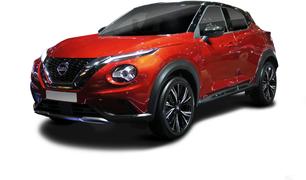
Urban style is clearly what the Juke is about. It’s always been about this, but the original incarnation, while unusual, was a bit bulbous and awkward. The current version is a razor-sharp re-interpretation of the original.
Ugly duckling no more, the Juke blends the elements of Nissan’s current design language with its own unique take, in a clever way.
The roofline and bulbous face of the original car, complete with its ‘eye’ headlights are all maintained, but this time they look more contemporary with a splash of chrome and gunmetal plastic in the face, offset by gloss blacks running down the doorline.
The new light fittings look great and the curviness is also gently off-set with some sharp angles. The massive 19-inch wheels finished in a two-tone gloss black and aluminium brush keep this car looking like a concept come to life. Just don’t crash them into the curb. It would be very easy to.
The cool elements continue inside, with rotary air vents, a blend of textures, including a gloss grey for the vent claddings, with white stitching for the wheel, seat, and into the door cards, too.
There are touches of chrome about the place, and an ambient red LED light surrounding the shifter, which sits on its own little pedestal thing.
It’s quirky and punches above its weight when it comes to soft trims in the doors. Like most higher-grade Nissans the seats are pretty comfy, too, clad in a hard-wearing synthetic leather material.
But it won’t be for everyone, and it’s not without its downsides. The abundance of grey plastic down the centre console is a bit cheap, and the tech offering doesn’t match the youthful style.
The centre screen is adequate, but compared to many rivals it’s a bit small and dull, and the Juke is still missing a digital overhaul for its instrument cluster.
The black headlining, usually reserved for sportier cars, makes the cabin feel smaller than it is.
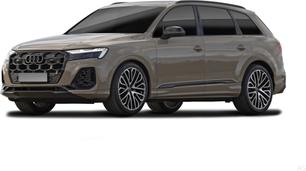
The phrase ‘evolution not revolution’ is applicable here, cliche as it is, with the Q7 having been given a Botox-style lift at the front end.
The standard matrix LED headlights have a higher lighting signature than before, with the lighting elements leading into the lines down the shoulder of the SUV.
The grille now features a hexagonal honeycomb insert, the vertical line styling is now a thing of the past and the functional side vents are a little more aggro.
Overall, it’s a sharper look that brings the Q7 up to date with Audi’s current design language, down to the more angular wheel choices.
At the rear, the new tail-lights are ‘joined’ via a chrome strip spanning the rear, and the lower bumper (with real exhaust exits) has had a refresh.
Audi’s new CI badging (or ‘corporate identity’, pretty sexy stuff) is also present, which includes a new typeface for the ‘Q7’ badge at the rear, which is no longer italicised and is separate from the red ‘S line’ rhombus.
The four rings badge is also flatter and is white with black outlines, rather than a three-dimensional chrome badge.
Inside, the changes are more than skin-deep. In fact, the skin is the same, you’d be hard pressed to notice anything different about the Q7’s interior between pre- and post-facelift without diving into the electronics.
The Juke is a small SUV in the true sense of the word, sitting below the Qashqai which is more like a mid-sizer these days in terms of dimensions.
However, it’s quite cleverly packaged on the inside and is more useful than it first appears.
The front seats, for example, offer heaps of headroom and a surprising amount of width, and while the seats are manual, they’re pretty adjustable. I was able to find a great seating position.
There are big pockets in the doors with an integrated bottle holder suitable for even the largest bottles, although the centre console area is a bit less versatile, choosing its funky design over additional storage.
It features two good bottle holders, but a tiny armrest box and a shallow tray with one 12V socket and a USB-A outlet, as well as an auxiliary audio input under the climate controls.
On the topic of climate controls, I love the fact the Juke maintains a dedicated ventilation panel complete with buttons and dials for all the core functions. No touchscreen nonsense here.
The media screen, as mentioned, is a tad small, and falls victim to glare easily.
The stock Nissan software is a massive upgrade on the brand’s previous-generation products, but while it’s functional it’s far from the prettiest or the fastest on the market.
The back seat offers more space than you might assume, but it’s not as well thought-out as the front of the cabin. At 182cm tall I fit behind my own driving position with just enough space for my knees and just enough headroom.
There are decent bottle holders in the doors, and a further two small ones in the drop-down armrest. The backs of the front seats are clad in that synthetic leather material, which is nice, and have soft pockets, too.
The back of the front centre console offers just a single USB-A outlet and a small cubby. There are no adjustable air vents for rear passengers. It also feels a little claustrophobic back there thanks to the black trim on everything and smaller windows.
Boot capacity for the Juke is impressive for an SUV in this class, with 422 litres on offer, which is close to the volume we’d expect from something a size-bracket up, and 1305L with the second row folded down. There is a space-saver spare under the boot floor.
Audi has changed the layout and added new apps in the main 10.1-inch multimedia touchscreen, though fortunately it still has shortcuts to all the Big Dogs in terms of functions: media, navigation, phone, etc.
On top of that, everything is still in big, easy-to-see (and press) blocky buttons on the main screen.
The 8.6-inch screen below also still has climate controls readily available, and there are still physical buttons for a bunch of functions including drive modes.
The wide 12.3-inch driver display also remains familiar, though now has a higher resolution and more functionality in terms of on-road help and safety - which we’ll come to later in this review.
Aside from the tech, ‘spacious’ is an understatement when it comes to the big Audi’s cabin. In the front seats especially, the Q7’s central tunnel and dashboard are easy to reach without feeling like an enclosure as they wrap around the front passengers.
However, if I had to level one criticism at the usefulness of the Q7’s front row, it would be that despite there being physically plenty of room, storage is at a premium.
For something this big, there aren’t many places to put items that aren’t your phone or a drink.
There are door card holders for bigger bottles, some space for small items, and the cupholders of course, but the space under the central armrest including the phone charger is stingy.
Fortunately, the second row is not lacking space and is modular in its adjustability. Occupants can move seats, adjust their angle, and even sort out the middle seat separately.
Depending on how high up the variant chain you go, separate climate controls for the middle row and the panoramic sunroof help create a comfortable and roomy feeling.
The second row can also be tucked up behind the front row for easier access to the third row, which (if the second row is slid forward a tad) is just spacious enough for an average adult to be relatively comfortable for a short trip.
The third row seats are able to be folded or raised with switches that are accessible from the side doors or the (electric) tailgate, where there’s also a switch to lower or raise the rear suspension by 55mm to aid loading.
On that, the Q7 has a claimed luggage capacity of roughly 295L with all seats up, 780L with the third row folded down and 1908L with the second row lowered.
The Juke range kicks off from just $28,390 which gets you into a base ST and reaches to $36,890 for the top-spec Ti.
We’re driving the $34,440 (before on-road costs) ST-L which is the upper mid-grade car.
It scores concept-style 19-inch alloy wheels, synthetic leather interior trim, an 8.0-inch multimedia touchscreen with Apple CarPlay and Android Auto connectivity, a 7.0-inch digital screen between the analog dials, a surround camera system, single-zone climate, keyless entry and push-start ignition, and LED headlights.
The quite attractive ‘Magnetic Blue’ paint our car wears is a $700 option. For an additional $1133 you can also step up to the ST-L+ grade which adds alternate two-tone seat trim, chrome and black highlights and a 10-speaker Bose audio system.
While this ST-L grade gets the lion’s share of Juke equipment without the price-hike to the Ti (and is therefore the pick of the range) there are some notable items missing at this price.
For example, there’s no wireless phone charging, no head-up display, no fully digital instrument cluster, and no electrical adjustment for the seats. The 8.0-inch multimedia screen is starting to look a bit dated, too.
Still, it looks trendy and those massive wheels are well above the standard for a car at this size or price. So, if you’re going for style over equipment there is a choice to be made here.
Nissan also hasn’t cheaped out on safety equipment, with most active stuff coming standard, even on the base ST. More on this later.
Pricing is about line-ball with its most direct competitors. It’s a tad cheaper than some like the outgoing similarly-styled Toyota C-HR (Koba 2WD - $35,695), or slightly more expensive than others like the current equivalent Ford Puma (ST-Line - $33,190) or Mazda CX-3 (Touring SP - $34,300) although it is also ever so slightly larger than those last two by width, height, and wheelbase.
Four variants are available in the Audi Q7 line-up, excluding the performance-bent SQ7. Well, at the time of the launch event, one of those four is yet to arrive, that being the new entry-grade Q7 45 TFSI which starts from $108,815, before on-road costs. TFSI being ‘Turbo Fuel Stratified Injection’ or Audi-speak for ‘turbo-petrol’.
It’s joined by a diesel-powered 45 TDI which starts from $117,284, before on-roads. But ‘entry-grade’ for the Q7 doesn’t mean skint on goodies, both coming in with standard gear like leather-appointed upholstery with heated electrically adjustable front seats, an electric folding third row, wireless phone charging, screens and tech galore, matrix LED headlights, 20-inch wheels, adaptive air suspension, and a slew of safety features including some new stuff, but we’ll get to that later.
The matrix LEDs are one of the main new bits of kit, though a daytime drive route meant not getting to put those to use. They’re pretty, though…
The 45 grades can be upgraded with the $3900 'Premium Package' to add 21-inch alloys, four-zone climate control, black exterior styling and coloured interior ambient lighting.
Stepping up from the 45s are the 50 TDI S line and 55 TFSI S line, which together at $136,815 each form the next rung up from entry.
They’ve got 21-inch wheels and an S line exterior pack along with tinted privacy glass to tell them apart from the entry 45s from the outside, but inside there’s four-zone climate control, ambient lighting, a Bang & Olufsen sound system, a head-up display and proper leather upholstery for the seats.
Australian 50 TDIs and 55 TFSIs come standard with an S line interior pack that includes sports seats, leather steering wheel and shifter, aluminium inlays and door trim, plus black headlining and floor mats with contrast stitching.
There are two option packs at this level: the $4200 'Luxury Seat Package' adds S sports seats that feature an integrated headrest, Valcona leather with diamond stitching, ventilation for the front seats and heating for the second row’s outboard seats.
Then there’s a 'Premium Plus Package' for $5500 which brings 22-inch alloys, sport-tuned adaptive air suspension, dynamic all-wheel steering, a black exterior styling pack and power-assisted closing doors.
Given the update is all up relatively minor, prospective buyers will be pleased to know the same can be said for the pricing changes - even a year ago, the prices for the Q7 variants that were on sale at the time were within a couple of thousand dollars of where they are now.
In the Juke’s messy engine bay lies a 1.0-litre, three-cylinder, turbo-petrol engine which sends 84kW/180Nm to the front wheels.
Nissan has its own 'HR10DET' engine code for this unit but it’s actually a Renault 'H5Dt' engine as evidenced by Renault logos all over the place.
Power is communicated by a seven-speed dual-clutch automatic which has been a source of strife for this car since it arrived. This very European engine and transmission combination is one which the Juke shares with its Renault Captur cousin.
I can’t believe I’m actually saying this, but I would prefer a continuously variable transmission (CVT) which Nissan uses elsewhere in its range. It would solve maybe the main issue with this car, which we’ll explore up next in the driving section of this review
The four drivetrain options for the Q7 line-up are split between the two ‘grades’, with the 45 TFSI and TDI powering the 'entry-level' cars and the 50 TDI and 55 TFSI as the feature-packed variants.
The most affordable option is the 45 TFSI, which runs a 2.0-litre, four-cylinder, turbo-petrol engine making 185kW and 370Nm.
Like all variants in the Q7 range, the 45 TFSI engine powers all four wheels via an eight-speed automatic transmission. Audi claims the 45 TFSI will hit 100km/h in 7.3 seconds, if that’s your thing when it comes to three-row SUVs.
The rest of the line-up is powered by different versions of the brand’s 3.0-litre V6, all turbocharged, and all with 48-volt ‘mild hybrid’ (MHEV) tech aiming to increase efficiency.
The 45 TDI is, of course, a turbo-diesel 3.0-litre V6 that makes 170kW and 500Nm, also sending power and torque to all four wheels via the same style transmission. Audi says this one knocks over 100km/h in 7.1 seconds.
Similarly, but with more power and torque, the 50 TDI is also powered by a turbo-diesel unit as the name suggests. This one puts out 210kW and 600Nm, making it likely the best choice for towing and such even though all V6 variants boast a 3500kg braked towing capacity. The 50 TDI’s figure to hit 100km/h is a claimed 5.9 seconds.
Finally, the 55 TFSI makes 250kW and 500Nm, and boasts a 5.9-second claimed 0-100km/h time.
One of the reasons this car comes equipped with a dual-clutch automatic is to chase fuel efficiency as well as emissions output. On paper DCT autos don’t suffer the inherent losses of a traditional torque converter transmission.
The official combined cycle fuel consumption figure is 5.8L/100km. My week of driving, weighted slightly more towards freeway conditions, produced a marginally higher average of 6.8L/100km. It’s not the claim, but it’s pretty good.
This little engine requires mid-shelf 95RON unleaded fuel, and the Juke has a 46-litre fuel tank, suggesting a driving range of 793km using the official fuel consumption number.
As you might expect, diesel versions of the Audi Q7 are claimed to use less fuel than their petrol counterparts, so let’s start with those.
The 45 TDI boasts a claimed 7.0L/100km consumption figure, while the 50 TDI is a little higher at 7.1 litres. Both have 75-litre fuel tanks, and should therefore theoretically get more than 1000km out of a fill.
On to the petrol models, the four-cylinder TFSI 45 has a claimed 9.3L/100km efficiency figure and the V6 TFSI 55's number is 9.0L/100km.
Given the nature of the driving and groups sharing cars during the launch event, we’ll wait until we’re next in a Q7 for a longer time before doing our own efficiency test.
The Juke can be fun to drive, and I wanted to like it more, but the transmission its peppy little engine is paired with is frustrating.
Outputs of 84kW/180Nm doesn’t sound like a lot, but power isn’t the problem. The little engine has a fun turbo-surge which pairs with the Juke's light frame to make for a car which is quite athletic when you push it.
The issue is a mountain of turbo-lag conspires with the clunky dual-clutch automatic to make it far too sluggish off the line.
There’s a full second (or two, at times) to wait for any power to arrive, which simply isn’t good enough at T-junctions and roundabouts, the kind of situations a little urban SUV like this will constantly be encountering.
Nissan says the transmission software was even updated after the Juke’s launch, but it’s still not where it should be.
It has good traits, too. When you’re out on the open road, it has quick, snappy and well-defined shifts, and the engine is much better when it’s being properly pushed, too.
It has a gruff, entertaining tone, and the Juke’s light frame, firm ride, and comparatively heavy steering make it a joy to throw into some corners.
The long wheelbase for such a small SUV, paired with a decent set of tyres, also keeps it confident when its predecessor was a little clumsy.
Again, though, the reasonably hard ride, not helped by the very large wheels, isn't its best trait in an urban environment. The Juke is by no means uncomfortable, it just seems like the priorities for this little SUV aren’t in the right place.
I’ve said this before but there’s a great car in here somewhere. The Juke is fun to drive in the right environment, it’s just this environment is not where most prospective buyers will primarily be looking to use it.
What could fix this issue? A different transmission perhaps. Better yet, an e-Power hybrid powertrain.
Aside from the mild-hybrid now standard on the Q7’s V6 models, there’s not a whole lot to report on in terms of new tricks or surprises from behind the wheel.
But that’s okay, because it means the Q7 remains a supremely comfortable and capable large SUV.
Our test route consisted of plenty of rural driving, with a combination of surfaces that would in some family haulers see the suspension and maybe even steering show cracks in their ability - but the Q7 remains composed.
Given its weight and size, it can feel a little hefty around sharper corners, but the Q7 in these variants (i.e, not its performance-focused SQ7 sibling) isn’t built to be hustled like that.
It feels like the kind of air-suspended loungeroom-on-wheels that would be at home barreling down the autobahn at 180km/h and being completely undramatic about it.
Still, this model shares some moving parts underneath with the likes of the extremely capable Porsche Cayenne, and while the Q7 isn’t quite a giant hot hatch, the sound foundations shine through dynamically.
Of course, when it comes to powertrains, there isn’t really a wrong answer, each engine fits a purpose.
If you’ll ever need to tow (and you can at up to 3500kg braked), the low-down steady urge of the 50 TDI is probably your best bet, but even the 45 TDI is a solid choice for long-range motoring.
The petrol models will better suit those in city situations, and while they never feel truly urgent, the 55 TFSI isn’t without some impressive push for something of this size.
The Juke's standard active safety features include freeway-speed auto emergency braking, lane departure warning with lane keep assist, blind-spot monitoring with rear cross-traffic alert, adaptive cruise control and traffic sign recognition.
Last time I reviewed this car I complained about the way it vibrates the steering wheel when the lane keep function decides you’re going out of your lane. But having since experienced so many more invasive lane keep systems, this one seems comparatively low-key.
Elsewhere, the Juke gets the standard array of six airbags (dual front, side, and curtain) and wears a maximum five-star ANCAP safety rating to the 2019 standards.
The Q7 is a maximum five-star car according to ANCAP, but the list of safety features is dozens long.
The highlights include adaptive cruise assist, lane assist and side assist, surround view cameras and new traffic sign recognition plus warnings for approaching cyclists and the like.
In fact, Audi claims there are more than 30 active safety features, and almost all of them are standard across the range. The only one that isn’t is 'Parking Assist' with 'Park System Plus', as Audi calls it - the base 45 TFSI is only equipped with Park System Plus and not Park Assist.
Basically, the 45 TFSI can’t take over the task of parking itself, while the others can.
It’s all handled through radars, cameras, and sensors and when you’re on the road functionality is relatively unobtrusive which is a plus!
For reference, the Q7 has eight airbags including dual-frontal, side-chest airbags for front and second row outboard passengers, plus side head-protecting or curtain airbags for both rows.
On top of that, there are ISOFIX points not only in the second row, but also in the third, totalling five spots all up.
Nissan offers the Juke with a five-year, unlimited km warranty, with five-years of roadside assist included.
It requires servicing every 12 months or 20,000km and the cost is subject to a capped price servicing program for the first six years.
This averages $651.33 annually, which is not cheap for a small SUV in this class.
However, there is also the option of a pre-paid five-year service plan which brings the annual cost over five years down to a more reasonable $429.60.
But, notably, it does not include the pricy $1521 sixth-year interval. It’s worth asking yourself how long you’ll own the car for before splurging on it.
Audi’s five-year/unlimited kilometre warranty is pretty standard for a premium brand, but five years of free roadside assist and the ability to add a package to extend the warranty both add a little extra to the deal.
For the Q7, a five-year servicing plan is $3820, while the $4370 'Audi Advantage' plan adds two years to the warranty, two more services, and two more years' roadside assist.