What's the difference?
For 15 years the Mitsubishi ASX has been one of the most popular SUVs in Australia. Well into its life cycle, it maintained strong sales thanks to keen pricing and a reputation for reliability.
The second-generation ASX is finally here, but it’s a very different proposition to the original.
For starters, the new model is a twin of French brand Renault’s Captur small SUV. That model is not currently sold here, so Mitsubishi has clear air, for now.
Secondly, it’s no longer cheap. Pricing puts this new model into the high-$30,000 section of the segment, but it also gains modern tech and specs.
Whether buyers care that the ASX has gone upmarket remains to be seen. But we attended the Australian launch to see if French flair has improved the ASX formula.
Things are going well for Subaru. In the first half of 2023, all of its models in Australia are outselling their figures for the same time last year by hundreds, some even by thousands.
Except for one model, the XV. In fact, sales have plummeted! So what happened to it? It was one of the brand’s top sellers, right?
Well, it’s still here, but now it’s called Crosstrek in Australia as it already is in the rest of the world. And maybe we lied a little - it’s selling very well. In June 2023 it outsold the Forester and Outback, both well established models in Subaru’s local history.
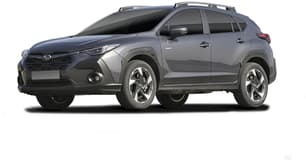
But the name isn’t all that’s new, because this Impreza-spinoff SUV now comes as a hybrid - available here as the Crosstrek Hybrid S.
Traditionally, Subaru has been pretty… traditional. So, will a step towards the future - electrification, that is - help or hinder the Crosstrek’s rise to mass popularity?
There is no question the new ASX is a much better car to drive than the model it replaces. This one is actually fun behind the wheel. The tech represents a massive upgrade, so too does the interior design and practicality. The fact is, it’s a much more expensive car than the old ASX. It is a European built and designed small SUV with loads more tech and features so when you consider that, the pricing makes more sense.
Regardless of the previous model, this new ASX impresses. It’s not perfect - the LS is missing too many items, no hybrid, slightly firm ride - but it’s now a genuine rival for higher quality rivals in the small SUV segment. If the ASX is in your price bracket, it might be time to add it to the consideration list.
It’s not perfect, in fact, the Crosstrek has a few factors that would probably turn off groups of buyers at a time, but Subaru knows its audience isn’t ‘everyone’.
Subaru customers aren’t trying to get their fuel efficiency below 4.5L/100km, nor find the car with the most luxurious interior. They’re looking for a practical Jack or Jill of all trades, which the Crosstrek does rather well for its segment.
Few small SUVs are as agreeable on rough and unsealed roads without sacrificing suburban comfort, while its features list is practical and provides plenty for the money.
Unfortunately, the hybrid system is a little underwhelming, and if it’s the main draw of the Crosstrek for you, it could be worth considering the less expensive ($38,590) Hybrid L or even a hybrid rival like the Toyota Corolla Cross or Mitsubishi Eclipse Cross.
If the all-round ability of the Crosstrek is the draw, however, the non-hybrid L is still an excellent offering and doesn’t use a lot more fuel than the Hybrid - plus it’s several grand cheaper at $41,490.
The Crosstrek is great for active people who need a bit of flexibility in one car but for the vast majority, the hybrid probably isn’t the sweet spot in the range. However, that won’t hinder the Crosstrek as an overall model, its popularity is already proven, and the option of a Hybrid puts Subaru a little closer to the eventual necessity of electrification.
The look of the new ASX is not a huge surprise given it’s based on the second-generation Renault Captur that launched in 2021. Actually the ASX we get is the mid-life facelift for the ASX/Captur twins in Europe, so the design has been refreshed.
At 4238mm long, 1797mm wide, 1585mm tall and with a 2639mm wheelbase, the new ASX is 127mm shorter, 13mm narrower, and 55mm lower than the original, but the wheelbase is only 31mm shorter.
It has a round almost bubble like quality to the exterior design, and not in a bad way. The redesigned front end has Mitsubishi flavour thanks to the ‘Dynamic Shield’ front-end signature, while the sleek headlights and black and chrome grille give off an almost menacing look.
C-shaped tail-lights at the rear flank a massive ‘Mitsubishi’ badge and the lower cladding ensure there’s no doubt this is an SUV.
It’s a handsome car and should get some attention on the road.
Inside, it’s not the last word on interior design, but it’s well laid out and functional. It’s definitely another massive leap over the old model.
At the launch there were no LS grades to drive, but the Aspire comes with cool grey cloth trim and roofliner that adds a nice contrast to the darker plastics and finishes. It’s more vibrant than the top-spec Exceed which has an all-black interior with leather-appointed seats.
The top two grades feature a floating console where the gear shifter is housed (a standard shifter in LS, and notch-like ‘eShifter’ in Aspire and Exceed), while the big multimedia screen dominates the dash.
Perhaps unsurprisingly, the new Crosstrek looks an awful lot like its a development of the Subaru XV.
Which, given the latter’s popularity, is a very good thing.
While there are a lot of similarities, especially when it comes to some of the more rugged elements, the Crosstrek still manages to look quite new.
It’s rugged without having too many ‘busy’ design elements and it even looks at home in inner-city suburbs.
Of course, its raised body and cladding are mostly for practical reasons, but it gives the small SUV an adventurous aesthetic that separates it from city-focused rivals.
As essentially a high-riding development of the Impreza hatch, its size and proportions also make it look more like a ‘big car’ than a small SUV.
This is an area the ASX excels in.
Up front there are loads of storage options. Multiple nooks for mobile phones, keys and other items, and the Aspire and Exceed get a wireless charging pad and extra storage under the shifter.
The central bin isn’t massive but doesn’t need to be with all the other cubbies, and there is ample room for large and tall bottles in the door bins.
A pair of USB-C ports and a 12V port up front handle electronics.
Thankfully there are physical controls for climate control at the base of the multimedia screen. The other functions housed in the screen like vehicle information and connectivity options are logically laid out and the system is not overly complicated.
Opting for the Aspire or Exceed means you get the brilliant Google Built-in, which is exactly what it sounds like. It’s essentially the Google operating system but for your multimedia screen so you have in-built Google Maps, Play and Assistant. Log in to your Google account and all your favourite places show up on Maps, and you can also log into Spotify and the like. It's a great set-up.
The seats are supportive and well bolstered. Much nicer than the old ASX’s overly cushioned seats.
The second row has more space than you’d expect looking at the car. It’s not cavernous by any stretch, but clever touches like scalloped out front seatbacks and roofliner ensure decent leg, toe and headroom, even with the sunroof in the Exceed. However, three adults in the rear isn’t super comfortable - we tried. Kids should be fine.
Amenities include more USB-C ports, rear air vents (very rare in this category), storage for small bottles in the door, phone holders in the door arm rests, dual map pockets, but no central armrest, which is no great loss.
That rear pew is comfy and more supportive than the old ASX. And it has a neat party trick. You can slide the entire row (via the base) forwards by up to 16cm, making for more cargo space in the boot. It also folds 60/40 split and when the boot floor is in its highest setting the seats fold flat, aiding loading.
Yet another clever feature is the split level boot. It features under-floor storage that adds a handy 183 litres to the cargo capacity.
With all seats in place Mitsubishi says the cargo space is 484 litres, which is 23 per cent more than the old model. If you slide the rear seat forward as far as it goes that increases that figure to 616L. And if the second row is folded flat the capacity is 1596L.
Interestingly, despite having space for one under the bottom boot floor, a spare wheel (even a temporary one) is not a standard feature. Instead the ASX comes with a tyre repair kit and offers a temporary spare wheel as part of its accessories offering for $750. If you’ve got the space for a spare wheel, why not make it standard? Especially when Mitsubishi is a popular brand in regional and rural areas.
Practicality is pretty much a staple of Subaru as a brand, so it should be a huge surprise that it feels that way from the driver’s seat.
The interior doesn’t look futuristic, but it does look functional.
For example, even though the centre of the dash is all screen - and we love buttons for climate controls around here - the controls for air conditioning and temperature are at least always present on the screen, no sub-menus needed.
The phone charger is large enough for even very tall phones (looking at you, Samsung Galaxy S20 Ultra, pictured), and it’s out of the way to minimise extra digital distraction.
The steering wheel’s buttons, while many, are all clear and simple, as is the iPad-like icon layout on the multimedia screen.
Storage in the front is miles ahead of the rear seats, a large central bin with two cupholders, a big glove box, and decent space for water bottles in the door cards. In the rear, two central cupholders in the armrest and a small space in the door.
But there is a decent amount of space for an adult to sit in the rear, even if the sides of the roof are a little close to the head. It’s a little like the front, where the seats are supportive and easy to adjust to a comfortable position.
Further back, the boot space is a relatively small 315 litres, though its slightly larger than the 291L the petrol versions come with - that extra space likely swallowed by a spare tyre in the petrol versions, as opposed to the smaller batteries taking up some space in the hybrids.
So, let’s get straight to the big news. This new ASX has gone up in price in a big way. The previous entry point was a touch under $27,000 before on-road costs for the GS auto.
The new model now starts at $37,740 BOC, which is about the same price as the flagship grade of the previous-generation ASX.
There are three grades - LS, Aspire and Exceed. Like for like the LS is $7K dearer than the old LS. The Aspire is $42,690 and the Exceed tops out at $46,490.
Yes, this is a significant change in price and positioning for the ASX. But the only relationship this car has to the previous model is its name. If Mitsubishi gave it a different name, the pricing announcement may not have attracted so much attention.
This pricing shifts the Spanish-built ASX into a new sub-section of the mainstream small SUV segment, away from other cheapies like the Suzuki Vitara, MG ZS and GWM Haval Jolion. It’s now closer to the likes of the Honda HR-V, Nissan Qashqai and Subaru Crosstrek.
The previous model was dated in every area, but it really lagged when it comes to in-car and safety tech. This new model addresses that.
In terms of standard gear, the list is decent without being jaw dropping.
The LS comes with a 10.4-inch multimedia screen with wireless Apple CarPlay and Android Auto, DAB digital radio, Bluetooth, six-speaker audio, digital driver display, two USB-C ports, proximity key, keyless entry and start, single-zone climate control, power and heated door mirrors, cloth seats and 17-inch alloy wheels.
Aspire and up gain the Google built-in platform that includes integrated Google Maps, Play and Assistant, as well as in-house sat-nav, three drive modes (Comfort, Sport, Perso), auto-dimming rear-view mirror, wireless device charger, privacy glass, 18-inch alloy wheels and power-folding mirrors.
The flagship Exceed adds a panoramic sunroof, two-tone paint, leather-appointed seats, heated front seats and power adjust for the driver’s seat.
There are no options aside from accessories.
When you’re wearing a hybrid badge and you’re up against veterans in the field like Toyota with the Corolla Cross, you want to make sure you’re offering up something substantial.
At $45,090, before on-road costs, the Hybrid S tops the range and comes with a features list that screams it from the rooftops. Or the mountaintops. Or at least as far as the gravel tracks will take you towards the mountaintop.
From the outside, 18-inch wheels are the first indicator for the ‘S’ grade - note that hybrids don’t come with spare wheels, just repair kits - as well as body coloured door handles and black plastic trim and cladding, aside from the gloss mirror caps.
The door mirrors are heated and fold away when parked, while up top there’s a sunroof flanked by roof rails, with a styled spoiler at the rear.
Interestingly, there’s no power tailgate.
LED DRLs and headlights are automatic and are aided by steering responsive active cornering lamps, while the wipers are auto rain-sensing.
Inside, dual-zone climate control and heated front seats (the driver’s is eight-way power adjustable) for the cold - all seats are leather accented - while the steering wheel and shifter are also leather-wrapped.
Tech is covered off by the usual 11.6-inch portrait touchscreen centrepiece, with sat-nav, AM/FM and digital radio, wireless Android Auto and Apple CarPlay, USB-A and USB-C plugs (in the rear, too), a wireless phone charger, and a 10-speaker Harman Kardon sound system over the usual six-speaker set-up. There’s even an auxiliary audio input.
The driver display is a small 4.2-inch unit flanked by physical dials.
For now, all grades of the new ASX use the same 1.3-litre four-cylinder turbocharged petrol engine offering up 113kW of power and 270Nm of torque. That’s up on the old 2.0-litre naturally aspirated unit’s 110kW/197Nm.
This is paired with a seven-speed dual-clutch transmission driving the front wheels only, so there’s no all-wheel-drive version.
Mitsubishi is looking into the mild hybrid and full hybrid versions that are offered in Europe but not confirmation on those as yet.
This is perhaps the part of the review you’re most interested in - as well as the following sections on efficiency and maybe driving - if the ‘Hybrid’ part of the Crosstrek Hybrid S’ name brought you here.
Like its design and interior, the engine will be familiar to anyone who has owned or driven a relatively recent Subaru - a 2.0-litre flat-four petrol engine good for 110kW/196Nm - which means it makes a little less than the standard petrol variant’s 115kW.
However, the electric motor is capable of its own 12kW/66Nm outputs, though Subaru doesn’t supply a claimed total maximum for the whole powertrain.
Drive is transferred to all four wheels - it is a Subaru after all - via a seven-step continuously variable transmission (CVT).
The new ASX consumes 6.4 litres of fuel per 100 kilometres on the combined cycle and emits 142 grams per kilometre of CO2.
That’s a decent figure for sure, but not quite as frugal as the 1.3-litre Nissan Qashqai, which manages 5.8-6.1L/100km.
The ASX drinks 91 RON fuel and has a 48-litre tank which makes for a theoretical driving range of about 750km.
Subaru claims the Crosstrek Hybrid will sip 6.5L/100km on the combined cycle, which isn’t enough to blow anyone away, even when you take into account the extra fuel needed for permanent all-wheel drive. The AWD Corolla Cross Hybrid comes with a claimed 4.4L/100km.
Compare this to the 8.5L/100km reading the Crosstrek returned after our time with the car, mostly with a (somewhat unkind) mix of inner-city and semi-rural backroad driving, and it’s clear the Crosstrek isn’t one of the most frugal cars in its class.
More highway driving would certainly have lowered the figure - we’ve achieved 8.0-litres on previous testing with a non-hybrid Crosstrek - but perhaps being top of the charts for efficiency isn’t necessarily what Subaru buyers are looking for.
Of course, the Crosstrek Hybrid S employs a couple of features to avoid using fuel where it can be avoided, such as auto stop-start and its (relatively mild) electric system taking over when mostly coasting or the engine isn’t required.
Look, it’s fair to say the original ASX was not a driver’s car. Reliable? Yes. Spacious? Absolutely. Great value? You bet. But fun to drive? Not so much.
So it’s good news then that the new-gen ASX is much more engaging to drive. I quite enjoyed the current-gen Renault Captur the last time I drove it, and the underpinnings of the ASX are the facelifted version of that Captur.
The 1.3-litre turbo-petrol unit might not be ultra quick off the mark, but it is sprightly and really comes alive when you’re at speed. It also has a decent engine note.
I've recently driven another Renault model with basically the same powertrain but it suffered from dreadful lag - a combination of a turbocharger and a dual-clutch transmission.
I had expected the same of the ASX, but there’s little lag to speak of. And the transmission is much smoother in this application. It doesn’t hold gears or do anything DCTs are known for, which is a lovely surprise.
Steering is sharp enough and the feel can be adjusted in the settings. Aspire and Exceed grades come with Comfort, Sport and Perso mode, which is for personalisation.
Ride quality is fine on smooth roads but big pot holes and other bumps are felt in the cabin. It is a European car, so no surprise that it’s been tuned for a more European experience. It’s not so firm it’ll dampen the drive experience, but it could be a touch more supple.
On that, the ASX has not undergone a local ride and handling tuning program like the one its larger Outlander stablemate has benefited from.
That doesn’t mean you can’t have fun in the ASX - you can. It handles high-speed bends on country roads surprisingly well, with more grip than you’d expect. There’s a little body roll but nothing dramatic.
More time behind the wheel is needed, but the tight chassis means the ASX likes a corner.
The cabin has better insulation than the outgoing model but it’s still not the most hushed small SUV money can buy. But it’s another element that’s far from a dealbreaker.
Two things stand out after a short stint behind the wheel of the Crosstrek Hybrid, and both become more cemented over time.
The first is that the ‘Hybrid’ part of the ‘Crosstrek Hybrid S’ isn’t quite as prominent in its real-world impact as it is in its name.
The 110kW engine doesn’t feel like it’s being massively helped along by any electric assistance, and the electric motor is very rarely doing the work by itself, as you’d find in any hybrid from Toyota or Honda.
That’s a shame, because the Crosstrek could do with a little extra oomph, if not for getting up to speed then for avoiding thrashy engine sounds under acceleration.
The CVT, while not necessarily detrimental to its performance, doesn’t help with that.
But balancing that out is a chassis and platform that’s engaging and predictable - and that’s predictable as a good thing - making the Crosstrek pleasant to pilot.
Its controls like steering and braking are nicely weighted for low speeds, commuting, and for more spirited driving, while the suspension and chassis handles surfaces from smooth suburban roads, to city tram tracks, to unsealed roads with ease, soaking up bumps and shakes nicely.
If you’re noticing a theme in this review, it’s that Subaru doesn’t seem to be chasing any ‘best at’ metrics in favour of giving the Crosstrek the ability to do a range of different driving and being at least satisfactory in any given area.
The new ASX is yet to be assessed for crash safety by ANCAP, but Mitsubishi is anticipating a four-star rating to match its European score.
It comes with six airbags, but no front centre bag for side collisions. It also gets a reversing camera and front parking sensors.
All the expected advanced driver assistance systems (ADAS) are present like auto emergency braking, lane departure warning and prevention, emergency lane assist, traffic sign recognition and a less invasive driver attention alert than is found in some of Mitsubishi’s other models.
The base LS misses out on features like blind-spot warning, rear cross-traffic alert, and adaptive cruise control (it has old-school cruise control) as well as front parking sensors. At least some of these could have been standard.
One neat feature is the personalised driver profile that allows you to determine what ADAS features you want active each time you get behind the wheel.
The launch cars we drove were missing an ADAS feature that will be included on all customer cars, so we will reserve judgement on the effectiveness of the safety suite. However, it doesn’t appear that they are too overzealous.
As the range-topper, the Subaru Hybrid S comes with the lot in terms of safety.
And even though it hasn’t been tested by ANCAP yet, it’d be a shock if its score was anything less than the maximum five stars.
It’s what the XV scored in 2017, and the brand hasn’t missed out on full marks since the Impreza and Foresters of the early 2000s.
Nine airbags include dual front, dual front side, dual curtain, driver's knee, far side, and front passenger seat cushion airbags, plus Subaru’s 'EyeSight' safety suite does the work in crash prevention.
On top of the standard safety features you’d expect from any new car like electronic stability control and ABS, there’s a ‘Pedestrian alert system’, emergency lane keep assist with departure warning and prevention, a ‘Driver Monitoring System’ that includes drowsiness and distraction warnings, sensors and monitors for blind spots and rear cross-traffic, and of course parking sensors.
Some less common features of EyeSight include ‘Lead Vehicle Start Alert’, ‘Pre-Collision Braking System’, ‘Pre-Collision Throttle Management’, ‘Intelligent Speed Limiter’ as well as ‘Speed Sign Recognition’ and ‘Brake Light Recognition’.
Specific to the S, is a surround-view parking camera, high beam assist, plus front- and side-view monitors to help avoid kerbing wheels or bumping towbars.
It’s all fairly well implemented in the Crosstrek, though some of its chimes can be a bit much - the driver distraction alert can mistake a quick climate control change at the lights for a proper lapse of focus, while an alert for approaching speed and red light cameras comes without any indication of what the noise is for.
Mitsubishi's standard warranty is five years or 100,000km, but if you service your car exclusively at a Mitsubishi dealer, it extends to an impressive 10 years or 200,000km.
You’ll also get 10 years of roadside assistance and capped-price servicing. The servicing schedule is every 12 months or 15,000km.
Service pricing starts from $349, but bigger services every four years or 60,000km will cost circa-$1000. The average price of a service across the 10 years is $568, or the total overall is $5686.
Mitsubishi has an extensive network of 185 dealers across Australia and many in regional areas. So service coverage is among the best in the country.
The Crosstrek is covered by Subaru’s five-year/unlimited kilometre warranty, with servicing intervals coming up every 12 months or 15,000km under Subaru’s five-year capped-price servicing.
Subaru also adds 12 months of free roadside assistance.
This is all fairly standard in the industry, though some brands like Kia and MG offer seven-year warranties, or there’s Mitsubishi with a 10-year warranty (even if it requires certain conditions to be met during the decade).