What's the difference?
Mazda has updated one of its most popular, but rather old models.
Yes, the Mazda CX-3 is still around after more than a decade since its reveal, and it remains almost at the tippy-top of Mazda’s local sales charts.
With the brand having shifted 8221 CX-3s in the first half of 2025, it seems the light updates and modest price rise haven’t scared away any potential customers.
We’ve grabbed a CX-3 Evolve, the second-up of four available variants, to see if the popular light SUV still stacks up, or if you’re better off taking your money elsewhere.
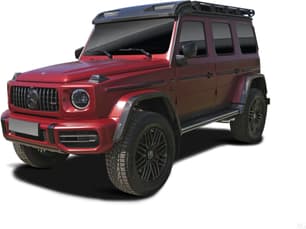
Imagine jumping in the time machine, zapping back to the late 1970s and bringing the team that produced the original Mercedes-Benz G-Wagen into 2025 and showing them where their creation has landed close to half a century later.
They’d be amazed a vehicle looking so much like their military-focused, first-generation model even existed! And once they’d absorbed that incredible fact they’d be stunned to see what lurks under its familiar bodywork.
Because this is the most recent iteration of what’s now referred to as the G-Glass, the pure-electric G580 featuring four individually controlled electric motors - one at each wheel - collectively producing enough energy to power a small town.
Stay with us as we explore this take-no-prisoners EV 4WD that has multiple show-stopping, high-tech party tricks lurking up its sleeve.
‘You get what you pay for’ comes to mind with the CX-3, which is interesting given it’s neither the newest nor most feature-packed SUV in its class.
The ageing light SUV does however offer one of the best-put-together experiences in a car of this size and its engine is powerful for the class. Build quality feels well above par and there aren’t any annoying inclusions that are becoming more common in new cars.
There aren’t many downsides unless you were hoping for a big screen and the ability to play around with software functions, but at this end of the new car spectrum, a car that drives this well and remains stylish a decade on should be applauded.
Put aside its relative (but forgivable) lack of efficiency and somewhat smaller boot than rivals, and the CX-3 nails everything it needs to.
As per the 1979 original, the current G-Class is produced by Magna Steyr in Arnie’s home town of Graz in Austria. And many fundamental things haven’t changed since then. But clearly this EV monster’s exotic electric powertrain is a huge departure.
It retains impressive off-road ability and straight-line speed. But will it hit the mark with top-end luxury 4WDers? Short story, this thing is wild, and it will be irresistible for a likely narrow band of tech-focused ‘must have the latest and greatest’ buyers. Nothing like impressing friends and family with a tank turn.
Note: CarsGuide attended this event as a guest of the manufacturer, with travel, accommodation and meals provided.
For one, there’s the way it looks inside and out.
The Mazda CX-3 hasn’t remained the most popular car in its segment on price, so the fact its styling continues to age gracefully in the design-focused light SUV segment (aimed at young or first-new car buyers) must have something to do with it.
While it’s been lightly updated a couple of times since 2014, the CX-3 is still in its first generation and has stood the test of time.
Looking like a jacked-up Mazda2, the CX-3 brings some traditional aesthetic to a category peppered with more divisive and daring (but admittedly admirable) designs like the Hyundai Venue, Suzuki Ignis (RIP) or the cute but prohibitively expensive Jeep Avenger.
Some elements of the CX-3, like the chrome trim around the grille or the black plastic cladding along the bottom of the body and around the wheel arches, seemed in the past like they had the potential to age poorly, but Mazda’s design language has only slowly changed since 2015, and the CX-3 still looks at-home in the brand’s line-up.
It’s not the most adventurous - even inside its layout is quite basic - but it does give off a premium vibe and the fact it plays things a little bit safe means the CX-3’s broad appeal is undeniable.
Okay, so Mercedes-Benz says, with a straight face, that “with the aim of optimising the vehicle’s aerodynamics” classic G-Class elements have been revised, including the reprofiled bonnet, ‘air curtain’ vents in the flares over the rear wheel arches, A-pillar cladding and the small spoiler on the edge of the roof.
At the same time, the 20-inch wheels are also claimed to be "aerodynamically optimised” and underneath, a 26mm underbody casing made from a mix of materials, including carbon-fibre (attached to the ladder frame with more than 50 steel screws), protects the battery from dust, dirt and rocks.
In ticking off the Edition One, car-spotters should look for black rims with blue brake callipers behind them, blue inserts in the exterior protective strips as well as black door handles and a new rectangular design box on the rear door for storing items such as charging cables, tools or snow chains. If you want a spare wheel, choose the standard model.
An optional black-panel radiator grille ($3800) features tinted lighting units as well as an animated LED light band and chrome surround. The light band can be activated as a running light or an animation when locking and unlocking the vehicle.
And it’s worth noting Mercedes-Benz and the car’s contracted manufacturer, Magna Steyr, have invested much time and many Euros in retaining the car’s classic handle and door lock design. G-Wagen owners will recognise its sound from several kilometres away.
Inside the G580 it’s clear this is one area where the G-Class has progressed enormously over the decades. It’s still quite upright in terms of the dash design, but you’re confronted by twin 12.3-inch screens, supporting the Mercedes-Benz user interface.
All very high-tech, but that’s balanced by an old-school grab-handle for the front passenger to latch onto during off-road work.
The signature turbine-style air vents are located within squared-off panels, and in the limited Edition One you have a blue fleck running through carbon-fibre inserts on the centre console, door cards and that front grab handle. In the standard car it’s a (very attractive) walnut open-pore wood rather than carbon.
A luxurious interior for sure.
The Mazda CX-3 isn’t the most spacious light SUV on the inside, but from either of the front seats it’s clear a lot of thought has gone into the best way to make the cabin work.
For example, precious space hasn’t been wasted by two dedicated cupholders, instead there’s a cupholder in the central storage compartment that’s relatively easy to reach into.
Like its design and some of its features, the CX-3’s layout can’t hide its age - there are still big physical controls for the climate settings, the speedometer is a physical dial and the gear selector is a very traditional style.
Mazda’s soon-to-be-gone media control wheel persists in the CX-3, which is by no means a bad thing. It falls nicely to hand, as with many of the controls in the CX-3. Its seating position isn’t too high and the positions you’re able to get the seat and steering wheel into should accommodate most humans.
Behind the front seats it’s a little more spartan. Space is at a premium, with my 178cm frame fitting in the back seat just enough that I had a fair bit of headroom, but my knees were able to brush the seat in front, set to my own driving position.
There are no ports for charging or vents in the second row, but the fold-down armrest has a clever fold-away cupholder. The window shoulder is a little high for young kids to properly see out, but there’s enough light that it doesn’t feel cramped.
The boot is similarly diminutive, a 264-litre space becoming 1174L with the second row folded down. Compare it with the Hyundai Venue and its 355-litre boot, or the Toyota Yaris Cross and its 390 litres, and the CX-3’s simple, well-constructed interior starts to lose points.
For the record, the G63 is just over 4.6m long and a little more than 1.9m wide with a 2890mm wheelbase. So, not huge, but its close to 2.0m height is hard to ignore.
In the front there’s lots of breathing space, and in terms of storage you have generous bins in the doors with plenty of room for big bottles. Then there’s a centre armrest, which doubles as the top of a deep storage box housing a USB-C port inside.
A sliding roller cover in the centre console reveals two cupholders, another two USB-C sockets, a 12-volt outlet and a wireless charging pad. Add in a big glove box and you’ve got plenty of options in terms of storage, power and connectivity.
In the back, sitting behind the driver’s seat set for my 183cm position I’ve got tons of foot and legroom and, no surprise, lots of headroom.
There’s a fair bit of sculpting in the rear seat, which is as nice as it is unusual (makers often avoid bolsters on the rear seat as it makes the backrest harder to fold flat). And in terms of three-abreast accommodation, a smaller adult will be okay in the centre spot for shorter journeys. Three up to mid-teenage kids will be swimming in it.
Then, for practicality you again have generous bins in the doors. And if you need even more capacity, fold down the centre armrest which houses two different size cupholders.
In the rear of the centre console you’ve got two USB-Cs, a 12-volt power outlet, individual climate control and directional vents.
There are map rockets on the front seatbacks and more air vents in the B-pillar. So, when it comes to comfort, powering up devices and storing ‘things’ you’re well taken care of.
The side-opening tailgate door opens from right to left, which isn’t ideal when parallel parked on the left hand side of the road, but boot volume is over 600 litres (VDA) with all seats upright, expanding to nearly 2000 litres with the 60/40 split-folding rear seat lowered.
There are multiple tie-down hooks, a netted pocket, two lights, a 12-volt outlet as well as a ‘ski-port’ door and sliding cargo cover to enhance practicality and security.
As mentioned earlier, the full-size spare in the standard model, but the Design Box replaces it on the Edition One, although Mercedes-Benz says it’s aiming to make a spare available as an option later in the year.
Upon updating the Mazda CX-3, the Evolve variant is now a $32,100 ask before on-road costs, which is $900 more than before. It’s a little step up from the $30,370 entry price of the Pure, but falls well short of the top-spec Akari’s $38,890 sticker price.
The CX-3 range now comes with updated autonomous emergency braking and adaptive cruise control, with the Evolve specifically scoring new fog lights and keyless entry.
The Evolve also comes with black machined 18-inch alloy wheels, synthetic leather interior trim and front parking sensors.
This is all on top of the CX-3’s standard kit which includes a leather-wrapped gear shift knob, handbrake handle and steering wheel, keyless start, an 8.0-inch multimedia display, wireless Apple CarPlay and wired Android Auto plus LED headlights, daytime running lights and tail-lights.
For its segment, the CX-3 isn’t cheap. The Evolve grade is more expensive than pretty much the entire line-ups of rivals like the Kia Stonic or Hyundai Venue, and its price somewhat lines up with the newer, hybrid-powered Toyota Yaris Cross.
But there’s more to the CX-3 than just a list of features.
The new Mercedes-Benz G580 is priced at $249,900 and a more highly-specified limited Edition One version comes in at $299,900, both before on-road costs.
That’s a price territory where the BMW X5 and X6 M Competition ($244,900 & $250,900) as well as the Range Rover Autobiography ($233,961) live. Not to mention competition from the G580’s still available and appreciably pricier twin-turbo V8 Mercedes-AMG G63 stablemate ($365,900).
As you’d expect, the standard features list is substantial and the highlights are Burmester 3D Surround Sound audio (with digital radio), leather upholstery, keyless entry and start, a multi-function steering wheel trimmed in Nappa leather, power front seats with memory function, heated and cooled cupholders, and wireless smartphone charging.
There’s also dual 12.3-inch driver instrument and central media displays, ambient lighting and adaptive LED headlights as well as Android Auto and Apple CarPlay.
As well as cosmetic changes, covered shortly, the Edition One steps up to ‘Silver Pearl’ and black Nappa leather trim (with blue contrast stitching).
There’s also a range of optional packages bundling up everything from exterior body elements to interior trim and additional multimedia, the latter especially for back-seaters.
The ‘Night Package’ ($4300) includes black exterior mirror housings, black running boards and wheels as well as darkened exterior lights and a radiator shell that can be illuminated for an impressive profile while driving.
A ‘Superior Line Interior Plus Package’ ($14,500) brings full Nappa leather upholstery, ‘Active Multicontour Seat Package Plus’ and grab handles in leather. Then a ‘Manufaktur Exterior Package’ ($4100) finishes the roof, bumpers and wheel arches in ‘Obsidian Black’.
But the one that will score you maximum brownie points with the kids is the ‘Interior Comfort Package’ ($8500), featuring a rear seat entertainment system, including two integrated 11.6-inch touch displays.
The Mazda CX-3 is still powered by a 2.0-litre, naturally aspirated, four-cylinder petrol engine, as has been the case for years. Its outputs remain at 110kW/195Nm.
It drives the front wheels only, via a six-speed automatic transmission.
The G580 is powered by four permanently excited synchronous motors, each delivering around a CLA200’s worth of power and torque to each wheel for overall outputs in excess of 432kW/1164Nm.
Each motor has its own two-stage transmission and power electronics for almost infinite fine-tuning of the direction and amount of drive sent to individual wheels. Merc calls it ‘individual-wheel drive’.
Mazda claims the CX-3 sips 6.3 litres of fuel per 100km, minimum 91 RON petrol, though on test the small SUV returned an 8.1L/100km figure under a mix of urban, highway and some dynamic driving.
With its 48-litre fuel tank, that means you’re realistically likely to get about 550km to a tank, though theoretically given Mazda’s efficiency claim a 760km trip on a single tank would be possible - if you could recreate the test lab conditions.
Housed in a torsion-resistant casing and embedded low down in its ladder-frame chassis, the G580’s 116kWh two-tier, liquid-cooled lithium-ion battery pack delivers a WLTP-rated range of 473km, or 567km on the more lenient NEDC scale.
‘Eco Assistant’ and ‘Range Monitoring’ functions provide continuous information on battery status, energy consumption and estimated range.
Maximum system capacity is 400 volts which enables 200kW DC charging, meaning a 10 to 80 per cent fill in as little as 32 minutes. Maximum AC charging capacity is 11kW.
Claimed energy use is 23.1kWh/100km, and we saw an average of 28.6kWh across urban and highway running on the launch drive program.
Not exactly a ‘green’ EV choice, then, but it’s worth noting a one-year Chargefox subscription is included to off-set the car’s energy appetite.
The light SUV category is an interesting one, as it feels somewhat like a gateway to bigger SUVs for those who get a taste of the higher seating position. But in city and urban areas, a light SUV should be as much car as someone needs - unless they have two kids or a bunch of equipment to get around with.
This comes down to the fact cars like the CX-3 are more efficient and easier to manoeuvre than their larger counterparts. And as light SUVs go, the CX-3 feels solid, confidence inspiring and more capable when outside its inner-city comfort zone.
Its naturally aspirated engine is big for the class. Even if it doesn’t feel the punchiest off the line it offers plenty of flexibility at higher speeds and makes overtaking on the highway feel less daunting than it would otherwise be in a car this small.
Its steering is light, which is an advantage in everyday driving, but has enough feedback that more dynamic driving is still engaging. It’s not sportscar-sharp, but you wouldn’t want it to be.
While its age would suggest the CX-3 should feel unrefined compared to newer small cars and light SUVs because of what lies underneath, Mazda’s work on the little SUV over the years has resulted in a car that feels mature and capable.
The suspension isn’t perfect, but it manages low-to medium speeds elegantly and does a decent job of maintaining stability at high speeds. It feels better than you’d expect from a car this size on the highway.
The 1294kg kerb weight and small-enough 18-inch wheels mean there’s not too much weight to manage, and there’s enough cushion in the tyres that harsh bumps don’t come crashing into the cabin.
While the CX-3 feels refined for its class, don’t expect a dead-quiet ride, as some road and wind noise make their way in above 80km/h. Then there’s the fact its engine and transmission will sometimes need to get a bit raucous when accelerating quickly. Aside from this, the CX-3 around town and in suburban areas feels nice and calm.
So, with 432kW and around 1160Nm, even though the G580 weighs in at around three tonnes, you’re talking 0-100 km/h in 4.7 seconds. And this car gets up and goes… like a beast.
What you don’t get is that traditional Merc-AMG G63 V8 rumble, because, of course, no engine.
But you do get what Mercedes calls ‘G-Roar’, essentially a sound bar at the front of the car also using the audio system inside to give it what is not exactly an engine noise but some sense of the car progressing. And you can turn it off for completely silent running.
‘Electric Dynamic Select’ changes the parameters of the motors, transmission, suspension, ESP and steering as required. On-road that means ‘Comfort’, ‘Sport’ and ‘Individual’ modes, with off-road comprising ‘Trail’ and ‘Rock’. In the Comfort setting drive flows primarily to one axle for optimum energy efficiency.
Suspension is by double wishbones at the front and a De Dion-style live (rigid) axle at the rear. You’ve got the same adaptive-type set-up as per other G-Class models, so ‘Comfort’ and ‘Sport’ modes and of the many traditional G-Class traits this car exhibits, ride quality is one of them.
Even in Comfort you’ll find even little bumps and thumps making their way up into the seat of the pants and the cabin. It is after all a body-on-frame, ladder-chassis type vehicle and that’s not unusual.
In terms of steering, it’s accurate and road feel is good. You’ve got 275-wide Falken Azenis FK520 tyres that are more on- than off-road focused. The car feels stable and nicely planted on the road.
The physical brakes are by ventilated discs front and rear, and the big rotors are the same size (353mm) all around. They work nicely and feel like a conventional set-up.
Regenerative braking kicks in as soon as you lift off the accelerator pedal. The powertrain is harvesting energy as the car decelerates and there are four levels you can adjust with the steering wheel paddles up to a quite aggressive level - not quite, but close to a single-pedal set-up.
Off-road, the G580’s ‘G-Steering’ system allows the wheels to turn at different speeds to induce slight ‘drift-like’ oversteer and tighten the turning circle. It works beautifully and the car’s fording depth is 850mm, a full 150mm more than internal-combustion G-Class models.
A three-speed off-road crawl function is adjustable to speeds as low as 2.0km/h, and the car is claimed to remain stable on sideways slopes up to 35 degrees.
Torque vectoring is used to create ‘virtual diff locks’ and there’s a ‘low-range’ setting. Switch to the ‘Offroad Cockpit’ and data including gradient, lateral inclination, compass readings, tyre pressures and the selected G-Mode appear.
A ‘Transparent Bonnet’ function creates a virtual view of what’s approaching and passing under the front wheels to help the driver pick their way through steep ascents or declines.
For the record, the G580’s approach angle is 32 degrees, departure is 30.7, breakover is 20.3 and ground-clearance is 250mm.
And of course, with the wheels independently powered, the G580’s signature move is what Mercedes-Benz calls a ‘G-Turn’ but the rest of the world calls a tank turn.
If you encounter an obstacle that makes forward progress impossible, the system spins the left- and right-hand wheels in opposite directions so this brute can turn on the spot like an M1 Abrams. You can’t help but crack up laughing when executing this extreme party trick!
In terms of miscellaneous observations around ergonomics and the car in general, it has a 13.6-metre conventional turning circle. So if you’re not using the G Turn function in the car park be ready for a sizeable turning arc.
Also, those aero tweaks here and there seem to have had an effect. Wind noise, especially for such an upright, squared-off design is surprisingly modest. And overall, from a build point of view, this car feels as though it’s been carved from a solid piece of metal. In every aspect it presents as a quality item.
The Mazda CX-3 is technically unrated by ANCAP, though only because its original maximum five-star rating expired after seven years. While this means it easily passes many of ANCAP’s main criteria for safety (and strict Australian Design Rules - ADRs - to be able to be sold here), the CX-3 is missing some recent, more complex safety features.
Not everything is standard across the line-up, either. The Evolve misses out on adaptive headlights, a surround-view parking camera and traffic sign recognition. The base Pure variant also misses out on a front parking sensor.
Fortunately, there are plenty of other key features like seven airbags, dual-front and front-side plus curtain airbags spanning the sides. The CX-3 also has ABS and emergency braking with forward pedestrian detection and rear cross-traffic alert.
There’s lane departure warning, forward obstruction warning, blind-spot monitoring and a driver attention alert for those times you might miss something or - hopefully not often - are distracted.
All these systems are programmed well to minimise interference while driving, making the CX-3 refreshingly trusting of the driver to actually do the job of driving.
Although the Mercedes-AMG G63 carries a maximum five-star ANCAP safety assessment from 2018, the pure-electric G580 is unrated. But crash avoidance tech includes active cruise control, ‘Active Steering Assist’, high-speed AEB, traffic sign recognition, lane-keeping assist, blind-spot monitoring, driver fatigue monitoring as well as a 360-degree camera view and ‘Active Parking Assist’.
And if a crash is unavoidable, there are no fewer than 11 airbags on-board, including driver and front passenger front and side, rear side, full-length curtains, driver and passenger knee and a front centre bag.
There are three top-tether points for child seats across the second row, with ISOFIX anchors on the two outer positions.
Mazda offers a five-year, unlimited kilometre warranty, which is behind the curve for a mainstream brand these days. Rival brands like Kia and Hyundai offer seven years, for example, with some offering up to 10.
Servicing is undertaken every 12 months or 15,000km, whichever comes first, with servicing costing between $353 and $633 per visit. Total cost over the first seven years currently sits at $3233, averaging $462 a service, which is pricey considering the relatively simple mechanicals under the CX-3.
Mazda says there are more than 150 certified service dealerships across the country, with a tool to find the most convenient one for you. Given the CX-3’s advanced age, chances are there won’t be too many mechanical issues that haven’t been worked out in the last decade.
The G580 is covered by Mercedes-Benz Australia’s five-year/unlimited-km warranty, which remains the standard offering in the premium part of the market and an eight-year/160,000km drive battery warranty.
Service intervals are every 12 months or 20,000km with service plan pricing available over three ($2645), four ($3980) and five ($4670) years. In approximate terms, each workshop visit will cost ‘around’ $900. Not exactly cheap, especially for an EV, but this is no ordinary electric vehicle.