What's the difference?
Mazda has updated one of its most popular, but rather old models.
Yes, the Mazda CX-3 is still around after more than a decade since its reveal, and it remains almost at the tippy-top of Mazda’s local sales charts.
With the brand having shifted 8221 CX-3s in the first half of 2025, it seems the light updates and modest price rise haven’t scared away any potential customers.
We’ve grabbed a CX-3 Evolve, the second-up of four available variants, to see if the popular light SUV still stacks up, or if you’re better off taking your money elsewhere.
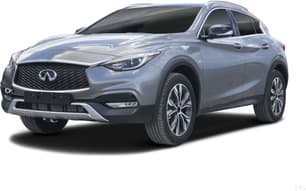
Tim Robson road tests and reviews the 2016 Infiniti QX30 at its Australian launch with specs, fuel consumption and verdict.
There’s no doubt that the compact crossover segment is a vitally important place for any carmaker to be. Nissan’s luxury arm, Infiniti, is no different, and thanks to a decision from its Japanese masters, the diminutive premium brand will go from having no players on the field to having two marquee players in a matter of just a few months.
The architecturally identical front-wheel-drive Q30 launched only a month ago in three variants, and now it’s the turn of the all-wheel-drive QX30 to take to the pitch.
But is there enough of a difference between the two to actually consider them different cars? Is it adding a layer of complexity for the prospective Infiniti customer? As it turns out, the differences run more than skin deep.
‘You get what you pay for’ comes to mind with the CX-3, which is interesting given it’s neither the newest nor most feature-packed SUV in its class.
The ageing light SUV does however offer one of the best-put-together experiences in a car of this size and its engine is powerful for the class. Build quality feels well above par and there aren’t any annoying inclusions that are becoming more common in new cars.
There aren’t many downsides unless you were hoping for a big screen and the ability to play around with software functions, but at this end of the new car spectrum, a car that drives this well and remains stylish a decade on should be applauded.
Put aside its relative (but forgivable) lack of efficiency and somewhat smaller boot than rivals, and the CX-3 nails everything it needs to.
Even though it’s almost identical to the Q30, the QX30 manages to feel sufficiently different in suspension tune and cabin ambiance to be considered different.
It’s a disappointing oversight, though, by Infiniti to deny the base GT such basic safety fundamentals as a rear view camera (which Infiniti assures us is being worked on).
For one, there’s the way it looks inside and out.
The Mazda CX-3 hasn’t remained the most popular car in its segment on price, so the fact its styling continues to age gracefully in the design-focused light SUV segment (aimed at young or first-new car buyers) must have something to do with it.
While it’s been lightly updated a couple of times since 2014, the CX-3 is still in its first generation and has stood the test of time.
Looking like a jacked-up Mazda2, the CX-3 brings some traditional aesthetic to a category peppered with more divisive and daring (but admittedly admirable) designs like the Hyundai Venue, Suzuki Ignis (RIP) or the cute but prohibitively expensive Jeep Avenger.
Some elements of the CX-3, like the chrome trim around the grille or the black plastic cladding along the bottom of the body and around the wheel arches, seemed in the past like they had the potential to age poorly, but Mazda’s design language has only slowly changed since 2015, and the CX-3 still looks at-home in the brand’s line-up.
It’s not the most adventurous - even inside its layout is quite basic - but it does give off a premium vibe and the fact it plays things a little bit safe means the CX-3’s broad appeal is undeniable.
The QX30 is one of the first projects to result from a technology partnership formed between the parent company of Mercedes-Benz and the Nissan-Renault Alliance.
In a sign of how worldly the car industry is becoming, the QX30 is built in Nissan’s Sunderland plant in the UK, using the German Mercedes-Benz A-Class platform and powertrains, all under Sino-French ownership via the Nissan-Renault Alliance.
On the outside, the design that first aired on the Q30 is pretty unique. It’s not a subtle car, with deep crease lines along its sides that, according to Infiniti, is an industry first in terms of manufacturing complexity.
When it comes to differences between the two vehicles, it’s minimal at best. There is a 35mm increase in height (30mm from taller springs and 5mm from roof rails), an extra 10mm in width, and extra trims affixed to the front and rear bumpers. Aside from the all-wheel-drive underpinnings, that is pretty much it for the exterior.
The same black plastic overfenders that are fitted to the Q30 are present on the QX30, with 18-inch rims on both the base model GT and the other variant, the Premium.
The dimensions of the QX30 are also an exact match for those on the Mercedes-Benz GLA, with the long front overhang acting as the main visual connection between the two cars.
The Mazda CX-3 isn’t the most spacious light SUV on the inside, but from either of the front seats it’s clear a lot of thought has gone into the best way to make the cabin work.
For example, precious space hasn’t been wasted by two dedicated cupholders, instead there’s a cupholder in the central storage compartment that’s relatively easy to reach into.
Like its design and some of its features, the CX-3’s layout can’t hide its age - there are still big physical controls for the climate settings, the speedometer is a physical dial and the gear selector is a very traditional style.
Mazda’s soon-to-be-gone media control wheel persists in the CX-3, which is by no means a bad thing. It falls nicely to hand, as with many of the controls in the CX-3. Its seating position isn’t too high and the positions you’re able to get the seat and steering wheel into should accommodate most humans.
Behind the front seats it’s a little more spartan. Space is at a premium, with my 178cm frame fitting in the back seat just enough that I had a fair bit of headroom, but my knees were able to brush the seat in front, set to my own driving position.
There are no ports for charging or vents in the second row, but the fold-down armrest has a clever fold-away cupholder. The window shoulder is a little high for young kids to properly see out, but there’s enough light that it doesn’t feel cramped.
The boot is similarly diminutive, a 264-litre space becoming 1174L with the second row folded down. Compare it with the Hyundai Venue and its 355-litre boot, or the Toyota Yaris Cross and its 390 litres, and the CX-3’s simple, well-constructed interior starts to lose points.
The QX30 is obviously very similar to the Q30 in many respects, but the interior is slightly different, with larger, less cosseting seats up front and slightly higher seats in the rear.
The cabin is also lighter in overall appearance, thanks to a paler colour palette.
There are plenty of neat inclusions, including a pair of USB ports, plenty of door storage, a space for six bottles and a sizable glove box.
A pair of cupholders resides up front, along with a pair in the fold-down armrest in the rear.
There is no particularly logical location for the storage of smartphones, though, and the lack of Apple CarPlay or Android Auto is down to Infiniti opting for its own phone connectivity suite.
A decent 430 litres of luggage space behind the rear seats is contrasted by a cramped rear area for all but the smallest of passengers, while sharply shaped rear door apertures making getting in and out a bit of an ask.
There are two ISOFIX baby seat points and a 12-volt socket in the rear, as well.
Upon updating the Mazda CX-3, the Evolve variant is now a $32,100 ask before on-road costs, which is $900 more than before. It’s a little step up from the $30,370 entry price of the Pure, but falls well short of the top-spec Akari’s $38,890 sticker price.
The CX-3 range now comes with updated autonomous emergency braking and adaptive cruise control, with the Evolve specifically scoring new fog lights and keyless entry.
The Evolve also comes with black machined 18-inch alloy wheels, synthetic leather interior trim and front parking sensors.
This is all on top of the CX-3’s standard kit which includes a leather-wrapped gear shift knob, handbrake handle and steering wheel, keyless start, an 8.0-inch multimedia display, wireless Apple CarPlay and wired Android Auto plus LED headlights, daytime running lights and tail-lights.
For its segment, the CX-3 isn’t cheap. The Evolve grade is more expensive than pretty much the entire line-ups of rivals like the Kia Stonic or Hyundai Venue, and its price somewhat lines up with the newer, hybrid-powered Toyota Yaris Cross.
But there’s more to the CX-3 than just a list of features.
The QX30 will be offered in two variants; the base model GT at $48,900 plus on-road costs, while the Premium will cost $56,900.
Both come equipped with the same engine; a 2.0-litre four-cylinder turbocharged petrol engine that’s sourced from Mercedes-Benz and also used on the Q30 and Merc GLA.
Eighteen-inch rims are standard on both cars, while an electronic handbrake, 10-speaker Bose audio, 7.0-inch multimedia screen and a full set of LED lamps all round are fitted across both variants as well.
Unfortunately, the QX30 GT misses out on a reversing camera all together, a fate it shares with the Q30 GT.
Infiniti Cars Australia told us that this was an oversight at the time the cars were being specced for Australia, particularly in light of the other technologies that the car would receive, like automatic emergency braking.
The company says it’s working hard to bring a reversing camera to the GT.
The top-spec Premium gets leather trim, a powered driver’s seat, and additional safety equipment like a 360-degree camera and radar cruise with brake assist.
The only optional extra on each car is metallic paint.
The Mazda CX-3 is still powered by a 2.0-litre, naturally aspirated, four-cylinder petrol engine, as has been the case for years. Its outputs remain at 110kW/195Nm.
It drives the front wheels only, via a six-speed automatic transmission.
Just the one engine is used across both cars; the 155kW/350Nm single-turbo 2.0-litre four-cylinder petrol engine from the Q30 and A-Class.
It’s backed by a seven-speed transmission and wired into an all-wheel-drive system that is biased towards a front-drive configuration.
Sourced from Mercedes-Benz, up to 50 per cent of drive can be sent to the rear wheels, according to Infiniti.
Mazda claims the CX-3 sips 6.3 litres of fuel per 100km, minimum 91 RON petrol, though on test the small SUV returned an 8.1L/100km figure under a mix of urban, highway and some dynamic driving.
With its 48-litre fuel tank, that means you’re realistically likely to get about 550km to a tank, though theoretically given Mazda’s efficiency claim a 760km trip on a single tank would be possible - if you could recreate the test lab conditions.
Infiniti claims a combined fuel economy figure of 8.9L/100km for the 1576kg QX30 across both the variants; this is 0.5L thirstier than the Q30 version.
Our brief test yielded a dash figure of 11.2L/100km over 150km.
The light SUV category is an interesting one, as it feels somewhat like a gateway to bigger SUVs for those who get a taste of the higher seating position. But in city and urban areas, a light SUV should be as much car as someone needs - unless they have two kids or a bunch of equipment to get around with.
This comes down to the fact cars like the CX-3 are more efficient and easier to manoeuvre than their larger counterparts. And as light SUVs go, the CX-3 feels solid, confidence inspiring and more capable when outside its inner-city comfort zone.
Its naturally aspirated engine is big for the class. Even if it doesn’t feel the punchiest off the line it offers plenty of flexibility at higher speeds and makes overtaking on the highway feel less daunting than it would otherwise be in a car this small.
Its steering is light, which is an advantage in everyday driving, but has enough feedback that more dynamic driving is still engaging. It’s not sportscar-sharp, but you wouldn’t want it to be.
While its age would suggest the CX-3 should feel unrefined compared to newer small cars and light SUVs because of what lies underneath, Mazda’s work on the little SUV over the years has resulted in a car that feels mature and capable.
The suspension isn’t perfect, but it manages low-to medium speeds elegantly and does a decent job of maintaining stability at high speeds. It feels better than you’d expect from a car this size on the highway.
The 1294kg kerb weight and small-enough 18-inch wheels mean there’s not too much weight to manage, and there’s enough cushion in the tyres that harsh bumps don’t come crashing into the cabin.
While the CX-3 feels refined for its class, don’t expect a dead-quiet ride, as some road and wind noise make their way in above 80km/h. Then there’s the fact its engine and transmission will sometimes need to get a bit raucous when accelerating quickly. Aside from this, the CX-3 around town and in suburban areas feels nice and calm.
Again, it would be easy to think that the QX30 would feel almost identical to its lower-riding sibling – but that would be incorrect. We criticised the Q30 for being a bit too buttoned down and unresponsive, but the QX30 feels more lively and involving, thanks to its unique spring and damper set-up.
Even though it’s 30mm higher than the Q, the QX doesn’t feel it at all, with a benign, pleasant ride with good body roll control and competent steering.
Our front-seat passenger complained of feeling a little ‘hemmed in’, which is a valid point. The sides of the car are very high, and the roofline is quite low, exacerbated by the steeply raked windscreen.
The 2.0-litre four-potter is smooth and punchy, and the gearbox well suited to it, but it’s lacking in aural character. Luckily the QX30 does a terrific job of suppressing noise before it gets into the cabin, then…
The Mazda CX-3 is technically unrated by ANCAP, though only because its original maximum five-star rating expired after seven years. While this means it easily passes many of ANCAP’s main criteria for safety (and strict Australian Design Rules - ADRs - to be able to be sold here), the CX-3 is missing some recent, more complex safety features.
Not everything is standard across the line-up, either. The Evolve misses out on adaptive headlights, a surround-view parking camera and traffic sign recognition. The base Pure variant also misses out on a front parking sensor.
Fortunately, there are plenty of other key features like seven airbags, dual-front and front-side plus curtain airbags spanning the sides. The CX-3 also has ABS and emergency braking with forward pedestrian detection and rear cross-traffic alert.
There’s lane departure warning, forward obstruction warning, blind-spot monitoring and a driver attention alert for those times you might miss something or - hopefully not often - are distracted.
All these systems are programmed well to minimise interference while driving, making the CX-3 refreshingly trusting of the driver to actually do the job of driving.
The QX30 gets seven airbags, auto emergency braking, forward collision warning and a pop-up bonnet as standard across the line.
The base GT does, however, miss out on a reversing camera.
The Premium model also offers a 360-degree camera, blind spot warning, radar cruise control and brake assist, traffic sign detection, reverse motion detection and lane departure warning.
Mazda offers a five-year, unlimited kilometre warranty, which is behind the curve for a mainstream brand these days. Rival brands like Kia and Hyundai offer seven years, for example, with some offering up to 10.
Servicing is undertaken every 12 months or 15,000km, whichever comes first, with servicing costing between $353 and $633 per visit. Total cost over the first seven years currently sits at $3233, averaging $462 a service, which is pricey considering the relatively simple mechanicals under the CX-3.
Mazda says there are more than 150 certified service dealerships across the country, with a tool to find the most convenient one for you. Given the CX-3’s advanced age, chances are there won’t be too many mechanical issues that haven’t been worked out in the last decade.
The Q30 is offered with a four-year, 100,000km warranty, and servicing is suggested every 12 months or 25,000km.
Infiniti offers a fixed three-year service schedule, with the GT and the Premium both costing an average of $541 over the three services provided.