What's the difference?
While there are plenty of things that somehow improve with age (art, wine, the seemingly ageless Will Smith, to name but a few), the Hyundai Accent is sadly not one of them.
But then, neither does almost any new cars. With new technology, entertainment and safety features launching daily, and with engines that are getting cleaner, more efficient and smoother all the time, a once all-new model can be left looking positively antique in just a handful of years.
But it’s definitely even worse than normal over at Hyundai; the Korean manufacturer that continues to make great forward strides with every new model. From the members of its fast and frantic N Division to its polished SUVs, to the all-new i30 small car, Hyundai is going from strength to strength with neck-breaking speed.
All of which creates a little problem for the pint-sized Accent, which - having launched back in 2011 - is now starting to feel its age. And unlike the Fresh Prince, it isn’t holding up quite so well.
So in lieu of an all new version, Hyundai streamlined the existing Accent family into one value-packed model in 2017, taking the axe to the Active and SR models and replacing both with a single, Sport trim level, which is available in sedan and hatchback guise.
And in creating the Sport, Hyundai aims to blend the best of the Accent range into one handy package. So have they taught this old dog new tricks?
What’s the closest thing we have to a modern-day Holden Statesman/Caprice?
If, like General Motors, you obliterate Australia’s Own from existence altogether, you’re left with time-honoured rivals also made in this country, like the Ford Fairlane, Chrysler by Chrysler and Toyota’s Crown and Avalon.
But they’re also all in history’s dustbin (well, the American ones, anyway), leaving the humble Camry as the sole living nameplate with any connection to Australian manufacturing.
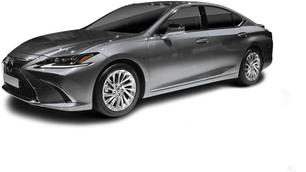
And since the Lexus ES is a close relative, we’re going to take a fresh look at the latest version, with a view of it as a bit of a survivor of a bygone era – where aspirational vehicles were created from normal family sedans.
Just like the Fairlane, Crown and of course, the Caprice.
Launched in mid 2018 but facelifted in 2021, we test the ultimate version of the seventh-generation ES, the 300h Sports Luxury – or SL, if we’re to make yet another tenuous connection to long-gone Holdens.
Let’s go!
It might be getting harder and harder to hide its age, but there is still plenty to like about Hyundai's cheapest car. Those who really love to drive need not apply, and nor should long-distance travellers, but the Accent Sport's alloy wheels, true smartphone integration and plenty of power and USB points will thrill its younger owners, while its long-range warranty and cheap servicing costs don't hurt either.
Still, if you think you can stretch to an i30, you should definitely drive one first.
There’s no denying the Sport Luxury is imposing, spacious, plush, chock-full of kit, efficient, speedy and pleasingly relaxing up to a point.
But its interior is also dated and true ride comfort can be elusive beyond smooth roads for this top-of-the-line version to make the grade as a proper luxury sedan.
The ES 300h feels more like an aspirational Toyota than a Lexus for the (wealthier) masses, especially after recent triumphs like the latest NX and RX SUVs. The Camry DNA is difficult to disguise, as the amused strangers who sat in our test car uninvited thinking it was their Camry highlights.
Sure, the hybrid is no Chevy V8, but in many other ways, the Sport Luxury seems like the modern successor to the Holden Caprice experience.