What's the difference?
While there are plenty of things that somehow improve with age (art, wine, the seemingly ageless Will Smith, to name but a few), the Hyundai Accent is sadly not one of them.
But then, neither does almost any new cars. With new technology, entertainment and safety features launching daily, and with engines that are getting cleaner, more efficient and smoother all the time, a once all-new model can be left looking positively antique in just a handful of years.
But it’s definitely even worse than normal over at Hyundai; the Korean manufacturer that continues to make great forward strides with every new model. From the members of its fast and frantic N Division to its polished SUVs, to the all-new i30 small car, Hyundai is going from strength to strength with neck-breaking speed.
All of which creates a little problem for the pint-sized Accent, which - having launched back in 2011 - is now starting to feel its age. And unlike the Fresh Prince, it isn’t holding up quite so well.
So in lieu of an all new version, Hyundai streamlined the existing Accent family into one value-packed model in 2017, taking the axe to the Active and SR models and replacing both with a single, Sport trim level, which is available in sedan and hatchback guise.
And in creating the Sport, Hyundai aims to blend the best of the Accent range into one handy package. So have they taught this old dog new tricks?
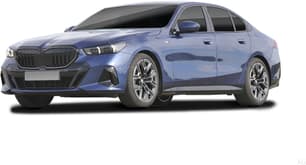
More than half a century of 5 Series pedigree has led BMW to this, the first electric version of its venerable sedan, the i5.
It's true that electric cars come with benefits that suit the realm of luxury (or at least executive) motoring like their effortless acceleration and near-silent operation, so this new G60 5 Series has the potential to be the best yet in its ‘i5’ form.
But there are rivals, well-liked ones at that, which BMW must contend with to snatch the spot at the top of the large premium sedan ladder technically held currently by the Porsche Taycan in terms of sales - though Mercedes’ E-Class would lead if its electric cousin EQE’s sales were combined.
So, with names like that to go up against, BMW better have brought its A-game.
It might be getting harder and harder to hide its age, but there is still plenty to like about Hyundai's cheapest car. Those who really love to drive need not apply, and nor should long-distance travellers, but the Accent Sport's alloy wheels, true smartphone integration and plenty of power and USB points will thrill its younger owners, while its long-range warranty and cheap servicing costs don't hurt either.
Still, if you think you can stretch to an i30, you should definitely drive one first.
There’s no getting around the i5 being a rather expensive offering. More than $150,000 to get into an electric sedan that’s not much faster than a hot hatch is a big ask, but there’s plenty to enjoy about the 5 Series.
Things like its heated leather seats shouldn’t be the reason you’re willing to spend so much on a sedan when a $50,000 hybrid SUV will score you the same, instead it’s the fact the 5 Series is a delight to drive and hasn’t lost the feeling of prestige the badge has earned over the last half a century.
In terms of value - if speed isn’t your focus and you’re less of a gadget-type-operator when looking at cars like this - the 520i has the style and comfort you’d need and at $100K less than the M60.
And in terms of large electric sedans, the i5 eDrive40 is cheaper than a Porsche Taycan (by a little) or an Audi e-Tron (by a lot). The Genesis G80 Electrified is the closest cheaper rival, by about $10K, or the less powerful Mercedes EQE is similarly priced at $154,900.
Essentially, if you’re looking at a 5 Series, it might be worth considering if you really need it to be electric, but if so, there aren’t many alternatives in its category for the price.
Note: CarsGuide attended this event as a guest of the manufacturer, with meals provided.
It looks good, the Accent, just not quite as good as its bigger Hyundai brothers. And that’s got to sting, if only a little bit.
Words like "subtle", "restyled” and “enhanced design” pepper the Accent’s media information, and so we’re not talking massive changes. But the exterior of the Sport looks sharp, especially in the 'Pulse Red' of our test car. Other colours include 'Chalk White', 'Lake Silver', 'Phantom Black', 'Sunflower' (yellow), and 'Blue Lagoon', but there’s no green, orange or grey paint available.
First, though, don’t let the whole 'sport' thing fool you. You’ll find no Fast and Furious body kit, nor is there much in terms of a rear spoiler, side skirts or a rear diffuser. Instead, a silver-framed mesh grille (a smaller version of the one that adorns the i30) blends into the headlights that then sweep back into the body, while subtle power lines create a little dome in the bonnet, starting at the edges of the Hyundai badge and getting wider as they sweep back across the bonnet.
Side on, the alloys are clean and simple, and a single style crease runs the length of the body, intersecting both door handles on each side. At the rear, though, the concave body styling doesn’t quite work so well, ending up looking busier than the rest of the car, and leaving it with too much body and not enough rear window.
Inside, as you can see from our interior photos, there is plenty of hard plastic, but there have been some design flourishes that give them a nicer texture and go some way to disguising the fact they’re hard enough to be used as a weapon in a roadside road rage dispute.
But it’s a simple and clean design, with patterned cloth (what, you were expecting leather seats at this price point?) seats, an uncluttered centre cluster and a sparing use of silver highlights that break up the black of the dash and doors.
You can also option everything from tailored floor mats to interior lighting, forming a kind of personalised premium package for the Accent Sport.
If you’ve watched other members of the BMW family go into a new generation within the last few years - the 3, 4 and 7 Series particularly, you won’t be too surprised by what you see here. Especially with the latter, having seen the petrol variants look roughly the same as the electric ones.
BMW specifically made the petrol 520i and the i5 variants look similar for egalitarian purposes - to not disenfranchise 520i buyers who are still spending a fair chunk of cash but might not be ready to go EV.
That means all three variants score a mix of new and old. The kidney grille remains and isn’t as large as on the M3 or 4 Series, while the bonnet line following it and the ‘character line’ down the car’s side also remain. And yes, the Hoffmeister kink where the C-pillar meets the passenger window’s lower corner is still there.
On that C-pillar though is a ‘5’ stamped into the bodywork, new to this generation, while the front grille as mentioned has a glowing light surround - the brand’s ‘Iconic Glow’ already seen on the 7 Series.
Overall, thanks to being slightly larger in every dimension, the new 5 is starting to look bigger than a 7 Series from a little while ago. And that’s because it is - its body is overall longer than an E65 7 Series from the mid-2000s.
It’s 5060mm long 1900mm wide, 1515mm tall (97mm longer, 32mm wider, and 36mm taller). Its wheelbase is 20mm longer too at 2995mm.
It’s every bit as practical as you might expect, the Accent Sport, given that you’re unlikely to be using something this size as a pseudo moving van anytime soon.
The 4155mm long, 1700mm wide and 1450mm high (the sedan is 4370mm long) Accent Sport's interior dimensions feel spacious up front, and while the front seats are a little too flat, the cabin feels airy and light. There are two cupholders up front, too, and there’s room in the front doors for extra bottles.
Like all Hyundais, the little Accent boasts most of the technology options favoured by younger buyers, like a USB point, an aux connection and two 12-volt power outlets all housed in a tiny storage bin underneath the centre console. There’s a sunglass holder, too, integrated into the roof.
The backseat is sparse but spacious enough, with enough room for adults to sit behind adults in comfort - at least in the two window seats. That’s about it back there, though, with no technology options, vents or air-con controls.
Boot space is a useable 370 litres in hatch guise, but luggage capacity grows to 465 litres should you opt for the sedan, with both of those figures measured in VDA. Optional roof racks and rails (and other offical accessories like a rubber cargo liner, mud flaps or dedicated bike, snowboard and surfboard carriers) help increase the pint-size Accent’s load-lugging ability.
As does a handy (and optional) cargo liner that helps separate your groceries, sitting neatly under the cargo cover that shields you luggage from prying eyes outside. Perhaps unsurprisingly, you can’t get a factory-offered bull bar.
There are two ISOFIX attachment points, one in each window seat, as well as three top-tether points across the back row.
A longer wheelbase means more space inside, where the 5 Series also still looks fairly familiar to those who have spent any significant time in a recent model BMW.
BMW has historically been pretty bang-on with ergonomics, and the new-gen 5 does a good job of sticking to that. Comfortable sports seats and quality feel for the materials on touch points mean the 5 Series feels nice to be in, and relatively restrained interior design for a somewhat luxurious car means it looks nice too.
It’s let down only by a couple of things - its multimedia screen and Operating System 8.5 is a little less simple to use now, and requires more touching the screen than previous iDrive systems, rendering the scroll wheel less useful.
The BMW Interaction Bar too is a little tricky to see controls on, as well as lacking physical feedback for using controls. Vent flow controls are digital sliders on the Bar, while vent direction is controlled by an unusual ‘joystick’ style control nearby.
The rear seat is plenty spacious, as you’d expect from a large sedan, with climate controls and ports for charging devices in the rear.
The price list for the Hyundai Accent range - available only in single, Sport trim - starts at $15,490 for the six-speed manual version, and will cost $2k more ($17,490) for the six-speed auto version, with those prices identical for hatch and sedan versions. So, not much of a walk through a valley of trim levels, then.
Yes, you could be forgiven for asking “how much!?”, given that’s a little more than we’ve grown accustomed to paying for the cheapest - and on perennial runout - Hyundai model, but there are enough standard features on offer to sweeten the deal. Besides, the inevitable drive-away pricing deals will almost certainly improve the value equation, too.
Outside, expect 16-inch alloy wheels and LED indicators integrated into the side mirrors - though there aren't projector headlights, daytime running lights or any of the other, more high-end appointments.
Inside, you’ll find cloth seats, cruise control, air-conditioning, a power window for everyone, powered mirrors, steering wheel controls and a digital clock.
Finally, the tech stuff is covered by an Apple CarPlay-equipped (meaning you can use your iPhone’s GPS as your navigation system) 5.0-inch touchscreen that pairs with a stereo with four speakers. Android Auto is also available, via a 15-minute software upgrade done through the dealer. The screen is too small to use for in-depth stuff, like searching for a phone number, but it mostly does the job just fine.
It also means that, as well as a CD player, you’ll get radio, Bluetooth, MP3, podcast and Spotify access, all played through the car’s sound system. You can forget a subwoofer or DVD player, though, unless you opt for an aftermarket multimedia system.
Sure, that’s not the most comprehensive list of goodies - there aren’t deeply tinted windows, no sunroof and the touchscreen is rather small, and while there’s central locking that allows keyless entry, there's no push-button start.
But then, $15,490 isn’t much in the world of new cars, and so to score alloy rims, powered everything and genuine phone integration (all things that will attract your future buyers - and protect your resale value - should you sell it second hand) is not to be sneezed at.
There are three members of the new 5 Series family from launch, with a base 520i starting things off from $114,900 before on-road costs.
It’s the only petrol-powered (with mild-hybrid, we’ll come back to this) variant in the trio, but it does have a fairly extensive list of features as standard. In terms of tech and comfort, most of what comes with the 520i is available further up the range too, with the major differences being drivetrain related.
In the 520i, the interior upholstery is synthetic ‘Veganza’ leather with Alcantara, though optional Merino leather is a $4000 BMW Individual option. The front seats are heated as standard, however, and electrically adjustable with memory settings and lumbar support.
A 12.3-inch instrument display paired with a 14.9-inch multimedia display are standard across the range, running BMW’s Operating System 8.5, while a head-up display, ambient lighting, wireless phone charging tray and BMW’s ‘new’ Interaction Bar are included too - a crystalline-style strip across the dash with touch-sensitive ‘buttons’ like the climate controls.
A panoramic glass roof - unable to be opened - is standard too, while the 520i’s sound system is a Harman Kardon set-up with 12 speakers.
Exterior features are quite similar to the more expensive i5 variants, with Adaptive LED headlights, automatic boot opening, an M design kit with front and rear aprons, side sills, and BMW’s Iconic Glow kidney grille surround.
Optional in the 520i is an ‘Enhancement Package’ which adds a choice of aerodynamic 21- or 20-inch wheels, metallic paint, and a 655-watt 17-speaker Bowers & Wilkins surround sound system for $5400. One test car on the launch we attended was painted in a BMW Individual colour - Tanzanite Blue - which upped the price to $7800.
Moving up the range to the mid-tier i5 eDrive40, which starts from $155,900, adds Merino leather interior, metallic paint, Bowers & Wilkins surround sound and aerodynamic 20-inch wheels standard, but it also includes adaptive suspension and some other EV-related features.
BMW’s ‘Adaptive Suspension Professional’ comes with Integral Active Steering (rear-wheel steering) and is a step up over the M Sport suspension from the 520i, while its aero wheels function as a way to keep the electric car’s range being affected by resistance.
The eDrive40 also comes with an acoustic protection system to make ‘electric car noises’ to warn pedestrians, as well as BMW’s ‘Iconic Sounds’ for the occupants - basically a system that uses orchestral sounds composed by Hans Zimmer that are affected by acceleration intensity, speed, and drive mode.
It also comes with the standard kit for an electric car, a Mode 2 and Mode 3 charger, cable, and a five-year Chargefox subscription.
The top-spec i5 M60 xDrive ups the cost to $215,900 and the features list again slightly (as well as being far more powerful).
Its suspension is even more advanced, adding the brand’s Adaptive M Suspension Professional with active anti-roll, plus 21-inch aero wheels as a no-cost option. The M60 also gains an M rear boot lip spoiler.
Inside, BMW’s ‘Crafted Clarity Glass’ controls in the centre console are standard, as is ventilation for the front seats and a four-zone automatic air conditioning system.
The one Accent on offer is powered by a single engine; a petrol-sipping (there’s no diesel, LPG or turbo), 1.6-litre motor that will produce a solid-sounding 103kW (138 horsepower) at 6300rpm and 167Nm of torque at 4850rpm. They are good specs, and it stands up to most competitors in an engine vs engine models comparison. It pairs with a choice of six-speed manual transmission or six-speed automatic transmission.
There used to be a fairly underwhelming 1.4-litre engine size paired with a CVT auto in the now-axed Accent variant, but this bigger engine is much, much better, and makes for much happier reading on the specifications sheet.
The Accent is front-wheel drive only, with no 4x4, AWD or rear-wheel drive options available. It will serve up a 900kg braked and 450kg unbraked towing capacity, with an optional tow bar/ball fitted. Kerb weight is listed as between 1070kg and 1170kg.
The Accent Sport uses MacPherson strut front and torsion beam rear suspension (no sophisticated air systems on offer), and Hyundai doesn’t quote any 0-100km/h, acceleration or speed figures.
Despite BMW calling it ‘electrified’, the base 520i is only a mild hybrid so most wouldn’t realise unless they were told.
Its turbocharged 2.0-litre four cylinder puts out a modest 153kW and 330Nm, with power and torque sent to the rear wheels via an eight-speed automatic transmission.
BMW claims it’ll knock over the 0-100km/h sprint in 7.5 seconds, a few seconds too slow to blow anyone’s socks off.
The mid-spec eDrive40 has a little more kick to it, its rear-mounted electric motor capable of 250kW/430Nm and able to cut that time to 6.0 seconds.
It’s fitted with an 84kWh battery to draw its power from, the same as the 442kW/820Nm M60 with its all-wheel drive dual-motor setup.
The M-tuned i5 can hit 100km/h in a claimed 3.8 seconds. Bye bye socks, perhaps.
For fuel consumption, Hyundai claims 6.3 litres (6.6 litres for the sedan) per hundred kilometres on the combined cycle. But as with all of these manufacturer-supplied figures, there’s always a some sort of variation in the real world km/l fuel economy.
Just how much variation is dependent on how heavy your right foot is, but after my (admittedly city-based) week with the car, the trip computer had my mileage at 11.0L/100km. If you were to adopt an eco mode driving style, that would surely improve, though.
The Accent’s fuel tank size is fairly small, with a fuel capacity of just 43 litres - perfect for the city, less so for long-distance cruising. Emissions are a claimed 146g (154g in the hatch) per kilometre of C02.
BMW claims the petrol 520i sips 6.7 litres per 100km from its 60-litre fuel tank, though we were unable to independently test any of the claimed figures on the launch day.
The base car has a theoretical range of 896km if it was possible to achieve the claimed fuel consumption figure for the duration of the whole tank - but it isn’t and realistically you could knock about 20-30 per cent off that, depending on how enthusiastically you drive.
In the i5 variants, the same 84kWh battery provides slightly different ranges due to the eDrive40 using 16.56kWh per 100km, and the M60 using 18kWh.
The eDrive40 has a claimed 550km maximum range, while the M60 has a 506km figure thanks to its extra motor and weight.
With its sharp design and gleaming alloys, the Accent Sport doesn’t look like an entry-level model, and nor is it immediately obvious that it’s the cheapest way into the Hyundai family. The downside, though, is it does feel that way from behind the wheel.
A little harsher, a little more road noise and a little more gruff than Hyundai’s more expensive models (including the very good i30), it’s the unfair victim of the brand’s staggering success, which has left the Accent feeling a bit old-school by comparison.
That said, it's perfectly suited to inner-city life, and if you’re cruising around using minimal inputs, it does it all smoothly and quietly. The steering feels a little slack at slow speeds, with plenty of dead air when you first start turning the wheel, but none of that bothers you much in the city.
With its sharp design and gleaming alloys, the Accent Sport doesn’t look like an entry-level model.
The grunt from that engine is refreshingly ample for a small car, and provides plenty of punch to get you moving from traffic lights, while the seating position is high enough that vision is great out of every window (except the rear - you’ll be using the reversing camera for that one).
Take it out of town, though, and the refinement begins to vanish. The engine sounds harsh under heavy acceleration, the transmission can be confused - especially around 80km/h, where moving your foot a fraction can force continual changes up or down, like it's wrestling with a big life decision.
The only other question mark is over the suspension set-up, which for some reason favours sporty firmness in a car unlikely to be asked to achieve anything more dynamic than sitting at 50km/h. The result is a ride that can feel noticeably firm over bad road surfaces.
The Accent’s 140mm ground clearance (not to mention the fact it’s a front-wheel drive city car) should be enough to persuade you not to test its off-road performance. And its turning radius is 10.4m.
For some cars, the list of features is what really separates the variants, but that’s not the case for the 5 Series. As is a bit of a BMW tradition, the drivetrains dictate the different trim levels and prices, and there are three fairly distinct flavours of 5 Series.
Starting at ground level, the 520i might at first seem like a bit of boring vanilla. Except it’s actually quite smooth and light vanilla.
There’s not a lot to write about when it comes to its drivetrain, but the lightness of its engine and petrol tank combo when compared to EV batteries and motors is refreshing, and makes for a quite dynamic rear-drive sedan.
Its 153kW and 330Nm is delivered smoothly enough with the mild hybrid assistance doing a little in helping responsiveness, but without intervening in the gearshifts it doesn’t feel particularly keen.
It lacks the ride comfort of the i5’s adaptive suspension, but it’s able to be driven in a spirited manner that belies its size and even, to some extent its 1725kg kerb weight. Chocolate sprinkles on the vanilla, if you like.
It’s not fast, but it feels nimble compared to its electric siblings and can carry a fair bit more speed through corners, after which there’s room to notice its rear-drive characteristics.
It’s especially noticeable after getting out of the 2130kg eDrive40, though the extra power from its 250kW/430Nm motor makes for some more spirited acceleration and a little more excitement when exiting a corner, especially if you’re aiming to double-check if it really is rear-wheel drive. There’s a little more than choc-topped vanilla going on here.
The steering is, like in the 520i, direct and responsive, though in most cases is probably best set to ‘comfort’ rather than ‘sport’ in its settings.
The eDrive40 is rather comfortable and capable when barrelling through twisty backroads, and doesn’t feel out of hand for a five-metre-long sedan. It holds its weight well, and telegraphs when you might be approaching the limit quite sensibly.
When considering that, then, it’s impressive how brutally capable the 2305kg M60 is.
Here, we’re looking at a double-choc fudge with extra choc, and maybe some cookie dough in there for good measure. There’s a lot to like, but boy is it heavy.
It’s 580kg (or exactly half a Peugeot 208 GTi) heavier than the 520i, but it feels quick on its feet and its anti-roll seems to do a lot in terms of dynamics, the limiting factor really seems to be its tyres (which can and will squeal quite quickly to let you know when approaching said limit).
While you’ll need to take caution with how much speed you approach a corner with, you’re not going to lack acceleration on the other side, its all-wheel drive being less ‘fun’ but more efficient at getting you away from the bend than in the rear-drive eDrive40.
That adaptive suspension does also translate to a comfortable ride on relatively rough roads - only particularly bad bumps will reveal how much weight and pressure is being placed on each corner of the big sedan.
It’s a pretty straightforward offering here, with six airbags (dual front, front-side and curtain), a reverse camera and the usual suite of driving, traction and braking aids, like power steering, ESP and EBD, headlining a pretty short list of safety stuff.
There are no parking sensors as standard, though, nor will you find AEB, lane departure warning or any other, more advanced features.
The Accent was awarded the maximum five-star ANCAP rating, but the organisation’s demands for safety rating features were less comprehensive when it was crash tested back in 2011.
If you're one who cares about where cars are manufactured, and were wondering where is Hyundai's Accent built, the answer is Ulsan, South Korea. And that’s no bad thing.
ANCAP hasn’t crash tested the new 5 Series. The last generation was a five-star car and it would be unusual to see that change with additional safety features - even with stricter testing.
The 5 Series comes with BMW Driving Assistant Professional as standard, with active cruise, lane assist and departure warning, front and rear cross traffic alert, collision prevention and intervention systems - in fact BMW says it has about 40 safety systems including an augmented reality dash display.
Its list of airbags includes front and side airbags for driver and passenger including one between the two occupants, as well as curtain airbags front and rear.
It’s a very strong ownership picture, with the Accent Sport covered by Hyundai’s five-year/unlimited-kilometre warranty, and requiring a trip to the service centre every 12 months or 15,000km.
A capped-price servicing plan helps take the guesswork out of your service cost, too, with guide prices at between $245 and $345 per year for the first five years.
For known Hyundai Accent issues and common problems, complaints and faults - including any known clutch, suspension, gearbox, engine, battery or automatic transmission problems - head to CarsGuide's dedicated Hyundai Problems page.
One of the most common mechanical questions asked is whether the Accent uses a timing belt or chain, and the Sport uses a timing belt. Check your owners manual for recommended durations between changing it.
Hyundais traditionally score very well in international reliability rating surveys, which helps protect its second-hand ratings.
BMW has a fairly industry-standard five-year/unlimited kilometre warranty on its new cars, while its electric car batteries are covered by an eight year/160,000km warranty.
For servicing, BMW offers numerous discounted packs and deals based on your preferences and desire to pay upfront.
For the 5 Series, a five-year/80,000km basic service package is $2400, though the i5 will have different needs and lower servicing costs not yet listed by the brand.