What's the difference?
Holden's current Astra is the second go the car has had in this country, after first being badged an Opel to the sounds of crickets from the buying public. That hubristic exercise was followed by a brief withdrawal from the Australian market before returning, rather more sensibly badged (and sensibly-priced) as a Holden.
It chugged along quite nicely in 2017. It didn't break any records, no, but regularly broke the 1000 units per month mark to end up with about five percent of the small car market, which it shares with some serious competition from Europe and Japan.
The + in R+ means more safety, but also more money. Safety is good, but do you get anything else for your money?
The humble station wagon has fallen by the wayside in favour of the ever-popular SUV, however, it was once more common for a very good reason.
It offers the space many families crave without having to upsize into a vehicle that can feel big and bulky.
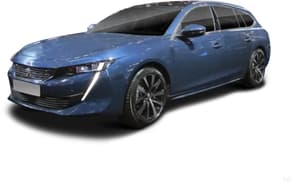
A lot of drivers enjoy the sportier on-road feel and the good-looking styling that often accompanies a wagon. Enter the Peugeot 508 Sportswagon. A model that proves wagons can be hot.
I’m family-testing the top GT plug-in hybrid model this week but there’s not a lot to compare it to because of the interesting engine specs.
So, we’re being a bit cheeky and doing an ‘apples with oranges’ comparo instead.
Being on the premium end, the 508 Sportswagon faces competition from the Audi A4 Allroad 45 TFSI, Genesis G70 Shooting Brake and Volvo V60 Cross Country Ultimate.
It certainly has the looks to turn heads but we’re sussing out whether it’s a practical alternative for families, too.
The Astra's biggest problem is probably the Holden badge. Despite the company's best efforts, some buyers are wary of the company's longevity and some of the other cars in the range do the Astra no favours - Trax, Colorado and Barina feel cheap, because they are. The Astra isn't cheaply made and holds up very well in excellent company.
The Peugeot 508 Sportswagon GT PHEV proves wagons can be extremely stylish but looks aren’t everything and it is an expensive option compared to its luxury rivals. It earns its place with the premium interior but the safety could be improved on and the tech is more confusing than it needs to be. But this wagon offers an alternative for families who are sick of being in an SUV yet still need a little extra space.
My son didn’t go nuts over this and complained about his view.
The Astra is a sleek if slightly anonymous-looking thing. Having said that, it's a really nice design that looks more expensive than it is. That's important in this segment. Holden is at pains to tell us it's from Germany (the Astra is manufactured in Poland) and it does look Euro-influenced. Despite its coupe roofline, it's an easy in-and-out proposition but does sit a little lower than, say, an i30.
The odd blacked-out section of the C-pillar takes a bit of getting used to but the sheetmetal is otherwise faultless and well put together.
Inside it's a sea of grey plastic and various shades thereof, but again, it hangs together really well and is a welcome change from the Teutonically angular Golf. The materials are largely reasonable, but for some reason the stalks feel flimsy to touch and use.
The cloth trim is hardy but comfortable and I was grateful for its relative coolness versus what you might expect from the textile leather you're more likely to get at this level.
The design of this wagon is what wins it the most points. It is a damn fine specimen with the sleek lines in the body panelling and the sexy rear that looks well-proportioned for its 4790mm length.
Dark, narrow windows, 18-inch alloy wheels and a minimalist-looking nose, with fang-like daytime-running lights, all enhance its sporty look.
The rear lights have Peugeot’s signature ‘claw’ design and there’s something suggestively fun about seeing a twin-exhaust on a wagon!
On the interior, the multimedia system takes centre stage and the dashboard looks quite sleek, despite all of the deep cutaways.
The steering wheel is in the compact style that Peugeot is known for but it makes the cockpit feel driver orientated.
The quilted Nappa leather trims and shiny piano-black accents (with the piano-key controls) make for a refined cabin space.
Riding in the front, there's room aplenty for passengers, with good headroom and a well-designed space to maximise what's available. Rear seat passengers do okay as long as the front occupants are being generous, but the seat itself is comfortable and there's even good headroom, despite the falling roofline.
Only the front scores cupholders, with the rear passengers making do with door pockets that might swallow a small bottle. There isn't an armrest or air vents back there either.
There's somewhere for one front occupant to put their phone, a horizontal slot that doesn't like phones with covers or the larger format iPhones or Androids. If your phone does fit (iPhone Xs do, as it happens), it's useful because it's in your eyeline, although a bit untidy if you're plugged into the USB.
The boot starts at a class-compeititve 360 litres, rising to 1210 when you fold the seats down.
The front row gets the most space and you’ll be able to get into a comfortable position even if you’re tall.
However, it is a low car with its 142mm ground clearance and there may be a few grunts as you get in and out (or is it just me?).
My seven-year old loves how easy it is to climb in, though he didn’t have the best view out of the windows because the sills sit high.
The footwell lip also sits quite high, which isn’t an issue until you can’t open your door very wide and then it’s clumsy in a tight parking space.
The electric front seats are very comfortable and the extendable under-thigh support helps to minimise leg fatigue on a longer journey.
Surprisingly, for my 168cm (5'6") height, I have to sit much further back than I ordinarily would to get a comfy driving position.
In the back, you have plenty of headroom but behind my driving position, the legroom could be better.
An adult would still find it fairly comfortable on a longer journey so long as they aren’t behind someone tall. The seats themselves are well-cushioned and you sit in, rather than on top of them.
Individual storage options are good for this class with a dual-opening middle console, glove box and a great utility cubby next to the transmission shifter.
There is also a shelf underneath the centre console that houses the wireless charging pad and two USB-A ports but it’s a tad awkward to use and even see the ports when you're seated.
The amenities are good in the rear but for a top-spec model it’s lacking the luxury items you might expect, like heated seats and climate control but you’ll enjoy map pockets, reading lights, two USB-A ports and directional air vents.
It also has a fold-down armrest with two shallow cupholders, that in a quick turn, might spill their cups!
The boot is a great size at 530L with all seats in use and you can bump it to 1780L with the rear seats folded.
You get a level loading space and a 60/40 split with a ski-port in the back seat, which opens up your storage options.
There is a tyre repair kit rather than a physical spare but the tailgate is powered, which I always like.
The technology is a mixed bag. It looks sharp and the touchscreen multimedia system is responsive but isn’t as easy to use as others I’ve sampled.
It doesn’t have a lot of accessible information or customisations available but it is easy to connect to the wired Apple CarPlay. There is also wired Android Auto for those users and built-in satellite navigation.
The 12.3-inch digital instrument panel is the prettiest piece of tech in the car and there is more customisation available to make it feel yours.
Considering its price point and top-model status, it's more obvious that you miss out on premium items like three-zone climate control, faster USB-C connections and a head-up display.
The Astra range opens with the R which, typically, you'd expect at the other end of the range with a lot more power, but there you go. You'd think the R+ was even more of a beast, but marketing is an imprecise science... apparently.
R isn't for racing, in our case it was a very bright shade of red. Starting at $23,740 for the auto (you can get a manual for a few bucks less), you get 17-inch alloys, a six speaker stereo, cloth trim, air-conditioning, reversing camera, power windows and mirrors, rear parking sensors, cruise control, auto headlights and wipers, remote central locking and a space-saver spare tyre.
The seemingly tiny screen (it's actually a competitive 7.0-inch unit) runs Holden's 'MyLink' but also has Apple CarPlay and Android Auto. For some reason you have to tell it to use those two useful additions rather than the system picking them up through the USB. Mystifyingly the button is marked 'Projection'. Aside from that, the system works well and sounds alright.
The reversing camera is of limited use - you'll see what's behind you but it's very flattened out and super-grainy.
Keeping things simple, there are only two variants for the 508 Sportswagon and our test vehicle is the top GT plug-in hybrid model that will cost $82,915 before on road costs.
That’s a $1000 price hike from last year and sets it well above its rivals with the Audi A4 coming closest at $78,169 (MSRP).
Given its rivals are well known for their luxury, the 508 has a fair bit to live up to but its styling and use of premium materials, like the quilted Nappa-leather trims, help it earn its position within the ranks.
The interior gets some other lovely big-ticket items with the eight-way electric front seats and a two-way memory position function on the driver’s seat.
Both front seats feature a heat function, adjustable lumbar support and a fabulous massage function. The ‘Cat Paw’ option is particularly nice!
However, the back seat misses out on these ‘top-end’ creature comforts.
There is a sunroof optioned on our test vehicle which adds $2500 to the price tag but creates an airy cabin in what would ordinarily be a bat-cave-esque space with that black headliner.
Only one colour is included in the price and our ‘Pearl White’ costs an extra $1050.
Technology has been revitalised with a new 10-inch touchscreen multimedia system and a 12.3-inch digital instrument cluster.
Dual-zone climate control, push-button start, keyless entry and a powered tailgate all add some practicality to every day life, too.
Phone mirroring tech like wired Apple CarPlay and Android Auto are easy to connect to and there are a bunch of charging options available throughout the car, including a wireless charging pad up front.
All-in-all, though, the features list isn’t as long as the price point might suggest.
The whole Astra range is turbo, but here in the cheaper seats it's a surprisingly capable 1.4-litre unit with 110kW and a healthy 240Nm. Power finds the road via the front wheels and a six-speed automatic. It's an otherwise unremarkable technical story, with start-stop to help cut fuel use.
The Astra is rated to tow 750kg unbraked and 1200kg braked.
The GT plug-in hybrid model has a 1.6-litre, four-cylinder turbo-petrol engine, as well as an electric motor that sits on the front axle. It has an eight-speed automatic transmission that produces smooth gear changing driving the front wheels.
The combined outputs are 165kW and 360Nm which means you have a good amount of power for this sized car but it’s not a performance wagon as its 0-100km/h sprint time is 8.3 seconds.
The lithium-ion battery has a small 11.8kWh capacity and will get from 0-100 per cent in three and a half hours on an 11kW system. On my standard house plug, it took closer to six and a half hours.
Holden claims the Astra will drink standard unleaded at the rate of 5.8L/100km on the combined cycle.
Our time with the car, which was a 70/30 mix of suburban and highway, yielded 8.3L/100km, and it's worth noting it was stinking hot for most of the time, so the air-con had to work hard.
The fuel tank is a little on the small side at 48 litres, between five and 10 litres smaller than some of its competitors, like i30 and Golf.
Peugeot says you can travel up to 55km on pure electric function, however my morning (return) school run is 38.4km and the electric range was spent by the time I parked in my garage after starting on a full charge.
Under optimal conditions, where you’re utilising both the engine and motor, the GT PHEV has an official fuel cycle consumption of 1.5L/100km.
After charging it three times, travelling 444km on a mix of open/urban roads and using 33 litres of fuel, my real-world usage came to 7.4L/100km.
You absolutely get the best economy when you regularly charge it but sometimes you just don’t get the time to!
You'll need 43 litres of premium 95 RON unleaded fuel to fill the tank which, using our real-world average consumption figure, translates to a driving range of around 580km.
I'm going to get my biggest gripe with the Astra out of the way first - the driving position is rendered awkward by the pedal placement. Every other part of the driving experience is perfectly fine, with good adjustment in the seat and steering wheel but the pedals are Not Right. The transition from accelerator to brake means a big lift of the right foot rather than a sideways shuffle and that gets boring. Perhaps I'm getting old and my knees are weak, but I ended up left-foot braking for a lot of the time.
On with the show. The Astra's 1.4 litre turbo is a punchy thing, more than vaguely reminiscent of Peugeot's excellent 1.2 in the 308. The six-speed auto isn't quite as well sorted, occasionally lurching a bit on light throttle like a dual-clutch. The pay-off for that is crisp shifts and a positive feel for most of the time.
The thing about the Astra is that it really takes it to its competition from behind the wheel. It feels almost as good as a Golf, i30 and arguably is as good as a Mazda3 thanks to its extra torque and better refinement.
It's very quiet, composed and is good fun if you like that sort of thing. Otherwise, it's streets ahead of the Corolla which continues to sell like it's going out of fashion.
The 508 Sportswagon is an odd car to drive. Around the city, the steering makes it feel like you’re in a go-kart and you may over-correct until you get used to it.
On the open-road, it feels like it gets into its groove but the power reserves feel a tad too shallow as the engine can complain with only a light load.
The suspension is well padded and you won’t notice too many bumps but you do get a fair bit of wind and road feedback at higher speeds.
Because of the narrow windows, I am surprised by how great the visibility is but you feel tiny when you sit next to a big SUV in traffic!
That said, it corners beautifully and taking this on a winding coastal road is super fun.
The brakes are very responsive, which is great in stop-start city traffic but can make it feel a little jerky while navigating a car park.
And on that note, because of the funky steering feel, it takes a moment to calibrate your senses with what the car is doing.
Once you get used to it, it’s simple to park but the quality of the 180-degree camera system is pretty rubbish for where this car sits in the market.
The Astra R+ has six airbags, ABS, stability and traction controls, reversing camera and forward AEB with a delightfully simple yet effective head-up warning.
The Astra range (with the exception of the lowest-spec R) scored a five-star ANCAP safety rating in November 2016.
The 508 has most but not all of the safety features you expect to see in a family car.
The active bonnet is a great feature as it lifts up in a collision to help minimise pedestrian injuries.
However, in the modern market and this being a top-spec model, I am surprised it's lacking a few safety features, namely rear cross-traffic alert.
Other standard safety equipment includes blind-spot monitoring, LED daytime running lights, forward collision warning, lane keeping aid, lane departure warning, intelligent seat belt reminders, front and rear parking sensors, a 180-degree view reversing camera, traffic sign recognition, a driver attention monitor, and adaptive cruise control with stop and go functionality.
The 508 has a maximum five-star ANCAP safety rating from testing done way back in 2018 and it only sports six airbags, which is low for a family vehicle.
The 508 has autonomous emergency braking with car, pedestrian and cyclist detection and is operational from 10.0– 80km/h (5.0 – 140km/h for car).
There are ISOFIX child seat mounts on the outboard rear seat positions and three top tethers in the second row but two child seats will fit best. Front passenger comfort may be compromised when a 0-4 rearward facing child seat is installed.
Holden's three year/100,000km warranty includes roadside assist for the duration. You can also extend the warranty by up to three years or to 175,000km, for an extra cost.
Servicing is scheduled every nine months or 15,000km. Holden calls its fixed-price servicing 'Know Your Price' and it applies for the first six services (63 months or 105,000km). The first four services are set at $249 each, and the final three $309.
On the 508 you’ll enjoy a five-year/unlimited km warranty and the battery is covered by an eight-year or up to 160,000km warranty, which is great.
You can pre-purchase either a three- or five-year servicing plan and the five-year plan costs a flat $2100 or an average of $420 per service which is very reasonable for this class.
Servicing intervals are at every 12months or 20,000km, whichever occurs first.