What's the difference?
Yep, here comes another new brand.
The Australian new car market has been flooded with new car brands in recent years, not exclusively but predominantly from China. GAC is the latest, joining the likes of BYD, Deepal, Geely, GWM, Leapmotor, MG and Xpeng in an increasingly crowded market.
Quite simply, the market is now so crowded it means any new company with long-term aspirations will need to find a way to cut through. Being cheap alone won’t do it, nor will being stylish or nice to drive. No single trait will be enough, instead you will need to tick as many boxes as possible to secure any long-term security.
Which puts a lot of pressure on the Aion V, the brand’s mid-size, all-electric SUV that has just arrived in Australia. It will go head-to-head with the likes of the Geely EX5 and Leapmotor C10 at the more-affordable end of the electric SUV market. But does it tick enough boxes to make an impact? Read on to find out…
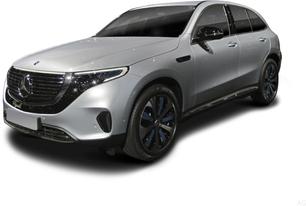
The Mercedes-Benz EQC has been on sale in Australia for a little while now, and aside from the local launch event we haven’t had a chance to spend any quality time with the brand’s first fully electric SUV. Until now.
The EQC 400, as it’s officially known, is the German luxury maker’s first foray into the full-EV landscape, and could arguably be seen as the first true luxury electric SUV on sale in Australia. I mean, yeah, there’s the Jaguar i-Pace, but it has a more premium-sporting intent than the EQC, and the Tesla Model X isn’t aimed at a luxury customer, more so a technologically-minded buyer.
So what’s the Merc EQC like to actually live with? We drove it for a week to find out.
Candidly, I questioned the logic behind GAC entering the Australian market, especially now given the seemingly non-stop influx of other brands. How could it really hope to stand a chance against so many similarly priced and similarly equipped rivals?
Well, the answer is by providing a better product. The Aion V is simply a better package than many of its rivals, Chinese and otherwise, at least based on our initial impressions.
It combines value and practicality but also adds a level of driving comfort and manners its Chinese rivals can’t match.
Is that enough to guarantee success? Not at all, but it’s a strong foundation to start with and at least gives GAC a fighting chance to not get lost in the crowd.
Note: CarsGuide attended this event as a guest of the manufacturer, with accommodation and meals provided.
When I was telling my colleagues about the Mercedes-Benz EQC my summary was, basically, it’s the best electric luxury car I’ve driven.
It’s plusher than a Jaguar i-Pace, more polished than a Tesla Model X - indeed, it feels like a different kind of electric car to both of those models. It’s an impressive foray into the segment, and we can’t wait for the chance to put it against some like-minded electric European luxury SUVs at some point in the future.
One of the most notable elements of the Aion V design is the absence of a ‘GAC’ badge on the front. That’s because, while all GAC models in Australia will be sold under the one name, in its native China there are several different sub-brands. GAC Aion is the ‘new energy vehicles’ brand, focused on electric vehicles (EVs), while the smaller Emzoom SUV is part of the more mainstream Trumpchi brand that offers internal combustion engine models.
It means the three cars sold initially, and even as the brand moves forward with its expansion plans, there will likely be stark visual differences between models because they are effectively different brands. In the same way Holden ended up with a mixture of Opel, Chevrolet and GMC products in its final years.
Having said all that, the Aion V itself is an inoffensive design. It’s not as generic as some of its rivals, with some design character around the headlights and silhouette, so overall it cuts a likeable figure without being particularly memorable.
Like so many modern cars, the Aion V has a very simplistic layout inside, with more screens and less physical buttons and switches to reduce cost and complexity. There’s an 8.8-inch digital instrument display and a 14.6-inch multimedia touchscreen in the centre on the dashboard.
The Mercedes-Benz EQC is entirely different to what we expect from the brand, but it’s really what we expected all along when it came to an electric SUV from the Daimler stable.
It is sleek, streamlined and smooth, with panels that almost look like they’re formed from liquid. And it has the eco-edgy graphics you’d expect, with a specific grille treatment (yes, a real grille), headlights that are unlike any other Benz (they even have an LED that runs the width of the grille), and a rear-end style that looks almost like it was penned with another Stuttgart-based brand in mind… Porsche. I’m talking about Porsche.
But one thing that I really love about the EQC is its moustache. It's more prominent when the car is finished in white paint, but there’s a moustache that former Daimler chief Dieter Zetsche himself could be envious of. And he had one helluva soup strainer.
It is clearly made to be slippery, despite essentially sharing its underpinnings with the more conventionally angular - yet still rounded-edged - GLC SUV.
While it is a nicely styled gizmo, I found there are some things that could be annoying.
For instance, I was trying to plug in at night in a dark area, and while there is a small light above the charge port, other EVs have a light that actually illuminates the area where you’re plugging in.
And also, the plug port is on the driver’s side. If, like me, you had to charge up with the car on the street, it just adds a little bit more anxiety to the whole situation. I shudder to think what could happen if the charger was hit by a passing car - folding the mirrors in is one thing, but you can’t fold the power cable! The lead for the charger is long, thankfully.
I know, most people (maybe even all people!) who buy and EQC are going to have undercover parking in a garage or carport, but it’s still worth remembering that the filler isn’t on the kerb side like a number of other EVs.
It has almost identical dimensions to that car: 4774mm long on a 2873mm wheelbase, with a width of 1884mm and a height of 1622mm. For context, GLC is 4669mm long, same wheelbase, a bit wider (1890mm) and just a little more height (1639mm).
What about interior design? Well it’s also familiarly different, with a number of changes to the materials used but still the same tech and comfort you’d expect. Check out the interior images in the section below.
In terms of practicality there’s a handy space for a wireless smartphone charging pad, and that previously mentioned heated or cooled centre console box. Oddly, though, there is no traditional glove box. Instead there are just a pair of bag hooks ahead of the front seat passenger.
Space is good for a mid-size SUV, with a roomy front and respectable space in the second row. It would comfortably accommodate four adults, so would be a good option for families with older children.
As for the boot, it’s a generous 427 litres and has multiple adjustable floor heights available. Disappointingly, even though it has space for a spare, potentially even a full-size one, it only has a tyre repair kit. That might be fine in some markets around the world, but in the vastness of Australia, that is not the best option. Even a space-saver spare would be a better bet.
If you’re thinking the EQC looks like a seven-seat SUV, you’re wrong. It’s a five-seater, with a decent sized boot, too.
The luggage capacity is 500 litres, which is decent for a car of this size, but bear in mind there is no spare wheel under the boot floor.
Rear seat space is reasonably spacious for someone my size (182cm) sitting behind their own driving position, with decent knee and toe space. Headroom is not terrific, though, and anyone taller will need to watch their head as they get in and out of the car as the top sill eats into space quite a bit.
Any middle-seat passengers might find the room a little less likeable, as the transmission tunnel intrudes quite a bit. Those with big feet might find shoehorning themselves in and out a bit of a challenge as the sills are quite large, and our car even had optional ($1200) “aluminium-look running boards with rubber studs” - side steps, essentially. They get in the way, too.
But if you’re just sitting two abreast in the back the seat comfort is really good, the trim quality is excellent, and there is a flip down armrest with the storage bin and pop out cupholders. There are rear air vents (no climate control adjustment in the back, though, and no USB charging either), and there are two map pockets, plus bottle holders in the doors. Up front you will find a mix of familiar elements if you’ve sat in any recent Benz model, but a few unique finishes and trim elements that might be new to you.
There’s a beautiful horizontal fin theme that runs around the cabin, as well as the now-traditionally audacious looking Burmester sound system speaker covers. They don’t quite gel with the aesthetic, to my eye.
The dash-top material - “fine surface texture”, as Benz calls it - is unlike anything else we’ve seen from the brand, it’s kind of like a soft silky slippery fabric trim. While there are lovely copper trim elements that just add something visually entertaining and appealing to the space.
There is a large covered centre console bin with 2x USB-C charge points and there is an additional USB-C upfront next to the wireless phone charger. The Mercedes touchpad system that aligns with the MBUX media screen is reasonably easy to get used to, but being a Benz there are plenty of options for usability - the centre screen is a touch-capacitive unit, or you can use the steering wheel-mounted controller on the left side of the wheel to control the middle screen. The right thumb controller manages the driver info screen.
It was mostly very easily managed, although the menus did get stuck at times for me - mainly in the section around the energy consumption. Plus I tried the whole “Hey, Mercedes” command thing, and it failed on numerous occasions.
Starting with the basics, the Aion V is a five-seat electric SUV priced from just $42,590, before on-road costs, for the entry-level model.
Now, not too long ago an all-electric SUV for under $45K would be a revelation and would have made an impact on this market. But there are plenty of alternatives to choose from these days at similar money, including the Geely, Leapmotor and the BYD Atto 3.
Even so, at $42,590 for the entry-level Premium and $44,590 BOC for the more-premium-than-Premium Luxury variant, that’s still very competitive pricing.
For that money you get a well-appointed mid-size SUV, with even the base model equipped with LED headlights and tail-lights, 19-inch alloy wheels, a panoramic sunroof, heated and ventilated front seats, dual-zone climate control and a nine-speaker stereo.
Stepping up to the Luxury adds partial genuine leather seats, massaging front seats and a box in the centre console that can act as a fridge and a warmer, depending on your needs.
While neither the cheapest EV nor the best-appointed, the Aion V does a nice job of offering a compelling value proposition in its competitive set.
The EQC is available in two separate lines at the moment. The first is the standard EQC 400, which has a list price of $137,900 plus on-road costs, and then there’s the Art Line edition for $143,800.
There’s no haggling, either. The EQC is part of Benz’s standardised pricing model, and there are nine dealerships/retailers Australia-wide that handle orders for the EQC. Or you can buy it online, if that’s more convenient! However, as we reported at the Australian launch of the EQC, the wait time can be long - up to seven months from clicking ‘order’ to the car arriving in Australia.
What will you get if you do order an EQC? It’s hardly an affordable midsize SUV, but you’re paying for new technology - and you’re getting a pretty well kitted-out car, too.
The standard equipment list includes the AMG Line exterior package, 20-inch alloy wheels, LED headlights and daytime running lights, and a sunroof.
The interior gets the AMG Line treatment with leather upholstery, as well as a 13-speaker Burmester sound system, keyless entry, push-button start, electric tailgate, a head-up display, Mercedes-Benz’s MB-UX media system with twin 10.25-inch screens including Apple CarPlay and Android Auto smartphone mirroring tech, DAB digital radio, sat nav and the option of augmented reality navigation instructions. That system also incorporates Mercedes-Me Connect online capability, including web search.
There’s also an ambient lighting system with 64 colour choices, dual zone climate control, and heated front seats with electric seat adjustment and memory settings.
Thrown in for nix is a five-year Chargefox subscription. Chargefox is Australia’s largest car charging network, with fast charger stations stretching from Cairns to Adelaide (and there’s a cluster in WA as well).
There’s also a comprehensive safety technology suite included. All the details are covered off in the safety section below.
How about rivals? Well, its most natural competitors include the Jaguar i-Pace (from $124,100) and Tesla Model X (from $133,900), and there'll be an Audi e-tron electric SUV on sale in Australia by the end of 2020.
You might also think about the not-quite-fully-electric likes of the Volvo XC60 T8 plug-in hybrid (from $98,990), or even the plug-in hybrid Mercedes GLC 300e (from $83,500).
Both the Aion V Premium and Luxury are powered by a 150kW/210Nm electric motor, which drives the front wheels.
Aion doesn’t claim a 0-100km/h time, but it wouldn’t be quick, at least not in EV terms. If you’re looking for a ludicrously powerful electric car - this ain’t it. It’s a perfectly fine powertrain for the job at hand, but it won’t blow your socks off with its performance and will take more than eight seconds to run 0-100km/h.
The EQC has a power output of 300kW and it has 760Nm of torque, which is enough to see its claimed 0-100km/h acceleration pegged at just 5.1 seconds.
The EQC’s top speed is 180km/h (limited for the sake of the batteries), and it has an 80kWh lithium-ion battery pack.
It uses a pair of asynchronous motors - one front, one rear - and they can alternate to do what’s best in the situation - be it working in 2WD (RWD or FWD), or in AWD.
If you’re thinking about an EQC as a towing option, the towing capacity is 750kg for an un-braked trailer and 1800kg for a braked trailer.
The battery is 75.2kWh lithium-phosphate type, which provides a claimed range of 510km. Importantly, that figure is on the WLTP cycle, not the more lenient Chinese (CLTC) test protocol, so you could reasonably expect close to that target in the real world.
GAC claims it can accept up to 180kW charging speeds, which will get the battery from 10-80 per cent in just 24 minutes.
It also has vehicle-to-load functionality, so you can draw power from the battery for tools or appliances if you need it.
With an 80kWh battery pack and a Type 2 CCS plug (up to AC 7.4kW / DC 110kW) the charge times vary pretty greatly depending on what output you’re powering up from.
Mercedes-Benz says a DC fast charging station should be able to replenish the battery bank in 1 hour 22 minutes (at a maximum of 110kW, though some Chargefox stations offer charge rates up to 350kW) while an AC charging station (like you’d find in car parks) or Mercedes-Benz’s own Wallbox system should take about 12 hours 13 minutes.
Charging from a regular household powerpoint is a last resort option. It is claimed to take 46 hours 40 minutes from empty to full (230-volt outlet, 10-amp/2.3kW). I plugged in to a powerpoint in my house and the car’s info display was stating it would take 9.5 hours to achieve the remaining 16 per cent of charge. It didn’t get to 100 per cent before I had to unplug, however.
My not-so-urban test drive loop commenced with 97 per cent of battery charge and an indicated range of 363km available. The idea was to get a feel for the “range vs reality” of the situation, so I did it in Comfort drive mode with the climate control active and no intent to either thrash the vehicle or baby it to save battery.
My drive ended with 36 per cent indicated charge remaining, after I’d covered 231.6km. That means, based on the car’s own algorithm, that it would have covered 315km before the battery was depleted, which is a long way short of the claimed 434km range.
The indicated energy consumption was 20.8kWh/100km, which is ‘thirsty’ for an EV. On our recent electric car comparison test, the most efficient of our EVs - the Hyundai Ioniq Electric - used just 13.0kWh/100km. Yes, I know the EQC is a lot heavier (2425kg kerb weight), but even the Tesla Model 3 was notably more efficient (18.5kWh/100km) than the EQC over very similar terrain and driving.
However, our testing saw us return an even better consumption rate than Mercedes-Benz’s claimed figure, which is 21.4kWh/100km.
This is perhaps the area where the Aion V surprised the most. One of the most consistent qualities of these new Chinese-developed models is their incompatibility with Australia’s unique road conditions. They have a tendency to lack comfortable, controlled suspension and well-weighted and consistent steering.
That’s not the case with the Aion V, with GAC clearly taking the benefits from the partnerships it has with Toyota and Honda to learn what international markets prefer. Is this a clear standout, class-leading SUV dynamically? No. But it is above-average in the way it rides and handles.
The suspension is well resolved and feels comfortable to live with, while the steering is nice and direct, which will make navigating the cities, suburbs and open roads more easy and enjoyable.
There is still some fine-tuning that could make it better, but overall the Aion V leaves a positive first impression.
If you have a garage and a Wallbox connector, there’s no reason the Mercedes EQC couldn’t be a terrific option as a commuter, a second car, or even your primary vehicle.
The thing with all electric cars is that it’s about settling into a rhythm. If you use the car to commute to work, maybe you can charge it there. Or you might have a solar array and charge at home.
No matter the situation, you’ll be getting a rather nice vehicle to live with, based on my week with the EQC.
It’s a plush car, that’s for sure. The silence it offers is truly relaxing, and there’s effortless torque to pull you away from a standstill. The way you can build pace to overtake, the rush of noise-free acceleration, is pretty astounding. Perhaps not as visceral as in a GLC 63 AMG, but it’s still an experience.
The steering is direct and doesn’t require much thought, though it does lack a little bit of feel. But it’s easy to predict and quick to respond, making for pleasant progress around town. It’s easy to park, as well, with a great surround view camera system, as well as front and rear parking sensors. And if you’re not confident, the car has semi-autonomous parking, too.
The brake pedal feel takes some acclimation, because it responds pretty well, but the action is hard to modulate at times. That is partly due to the brake regeneration system, which actively captures energy that would have otherwise been lost during braking. You can adjust the level of aggression of the regen brakes, too, by tapping either the up or down shift paddles. The most aggressive setting will almost pull you up to a halt from urban speed without any brake pressure required.
The suspension of the EQC feels more settled than the last GLC I drove, and that could be in part due to the extra weight and stiffness of the battery cell under the body. The centre of gravity feels low, and it feels stuck down to the road in most situations.
The ride is mostly fine, but with big 20-inch wheels and low profile tyres, it can jar on hard edges. I also noticed that it can feel a bit unsettled at higher speed, as the body moves around - from side to side - more than I would have expected. It deals well with undulation changes and big dips, and if the surface is good, so are the comfort levels in the cabin.
GAC is offering the same safety equipment across both models, which is a nice touch to avoid any need to compromise.
This includes full airbag protection for all occupants, front and rear parking sensors and a 360-degree camera system.
There’s also a lengthy list of driver assistance features, including adaptive cruise control, autonomous emergency braking, forward collision warning, traffic sign recognition, emergency lane keeping assist, rear cross-traffic alert and door opening warning.
These systems could benefit from some real-world testing and calibration, because while better than some, they were still intrusive and annoying at times - most notably the driver attention monitoring.
ANCAP has not yet tested the Aion V, but it has received a maximum five-star rating from Euro NCAP, which typically carries over to the local body.
It’s a Mercedes-Benz, so as you’d expect the safety offering is comprehensive and extensive.
The EQC received a five-star ANCAP crash test rating in 2019, scoring highly for child occupant protection in particular. But it also has all the safety assist nannies you’d expect, too.
There is autonomous emergency braking (AEB) with forward collision warning that works from 7-200km/h, plus active lane keeping assistance from 60-200km/h and lane departure alert, along with active cruise control, blind spot monitoring, rear cross traffic alert, rear AEB, driver fatigue monitoring, auto high beam lights and tyre pressure monitoring.
There are nine airbags (dual front, front side, rear side, curtain and driver’s knee), and the EQC has a pair of ISOFIX anchor points for baby seats and three top-tether points to affix child seats.
The Aion V is covered by an eight-year, unlimited kilometre warranty which is well ahead of the mainstream pack, typically sitting at five years, unlimited km. The drive battery is also covered for eight years, 200,000km and roadside assist is included for five years. Recommended service interval and costs are still to be confirmed.
But one of the biggest challenges for all these new car brands is finding space in the Australian market - literally. If you want to sell a lot of new cars you need a lot of new car showrooms and if you want to keep customers happy, you’ll need enough service centres to keep cars on the road as much as possible.
GAC has plans to have as many as 100 dealerships in the next five years, but right now it has reportedly less than a dozen. That will make servicing problematic if you do not live in close proximity to a service centre. This isn’t the work of a moment either, with so many new brands fighting for dealership real estate and staff there are only so many places GAC can set up shop.
It mightn’t have the same method of propulsion as a petrol or diesel Merc, but it has similar service requirements. You still need to take it to the workshop for maintenance every 12 months - or every 25,000km! - whichever comes first.
Owners can either pay as they go for servicing, or pay up front and bundle it into their finance. The upfront rate is $1350 for three years/75,000km. Pay as you go will peg you along at $450 (year one), $750 (year two), $450 (year three).
When the EQC launched it came with a three-year/unlimited kilometre warranty plan, but that was recently updated to a five-year/unlimited km plan, bringing Benz inline with the likes of Korean luxury maker Genesis, not to mention the majority of mainstream car brands.