What's the difference?
There’s a new name in the luxury upper-large SUV segment and it’s one many buyers will be unfamiliar with. Enter the Denza B8, a brand positioned to BYD much like Genesis is to Hyundai, or Lexus to Toyota.
The flagship B8 6S leans heavily into luxury, space and rugged, squared-off styling, but the big question is whether it does enough to stand out against established heavy hitters like the Toyota LandCruiser 300 Series, Land Rover Defender and Audi Q7.
And then there’s the bigger question - do we actually need an XL SUV with a plug-in hybrid powertrain? More to the point, who exactly is this pitched at?
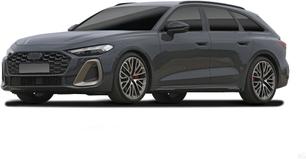
The Audi A5 has done something naughty. It’s replaced the Audi A4.
Or at least that’s the case for now after the Ingolstadt brand made a bit of a mess of its naming strategy.
Essentially, the Audi A5 is now available as a sedan or a wagon, and the next A4 coming soon will be electric. The previous A5 was a swoopier two-door coupe or four-door gran coupe style model. So the A5 is now effectively Audi’s main BMW 3 Series or Mercedes C-Class and CLA rival.
Plus, the Audi S5 is also here to cater to performance car fans.
Can a new platform, a sleek, fresh look and a techy interior do the job?
We’ve been pedalling around the Victorian countryside in the hopes of finding out.
Stick with me, and I reckon we’ll get to the bottom of it. The question about the car, that is, not the bottom of Victoria.
The Denza B8 6S is a luxurious and well-equipped entry into the upper-large SUV segment, with space, comfort and technology that make it a serious contender. Even in six-seat form, it delivers strong family practicality and a level of kit that will appeal to buyers looking for something different in this space.
While the driving experience isn’t always fully convincing, particularly in terms of refinement and handling, its pricing and overall package do a lot of the heavy lifting.
On that basis, it’s a newcomer the established rivals will be wise to keep an eye on.
The Audi A5 remains a convincing option in the premium mid-size sedan category, even with the near-$10K price increase over its equivalent grade A4 predecessor.
Even in its base spec, it’s a lovely thing to drive and adds enough new kit to be a reasonable option when it comes to value. In terms of tech usability, it stands out from rivals. Practicality is still king for Audi.
But for the heart-over-head types, the S5 is fast and fun while remaining a comfortable cruiser and the price is decent. On a personal note, a six-cylinder wagon? That's a big yes from me.
For the time it’s available, it’s hard to go past the value on offer in the S5 Edition One. Getting an AWD V6 with that kind of capability for under $100K is something that's sure to tempt buyers. If it doesn’t, we need to take a good look at ourselves.
Note: CarsGuide attended this event as a guest of the manufacturer, with meals provided.
The B8 is a behemoth, with a strong on-road presence defined by its boxy, chunky styling, side steps, 20-inch Michelin tyres and rear-mounted spare wheel. It channels clear Defender-like cues without feeling like a Temu copy, and overall, it works.
Inside, the cabin leans heavily into a premium feel, with a standout dashboard design that incorporates practical handholds, storage and ambient lighting. The large central display takes centre stage, but it’s the physical gear 'switches' that give the cockpit an aviation-inspired feel.
The gear selector also adds a bit of theatre, tucking itself away into the console when the vehicle is switched off.
Nappa leather upholstery feels soft and high-quality, and the panoramic sunroof makes it feel airy and welcoming. Overall, there’s a strong emphasis on tactile surfaces, and most touchpoints feel appropriately premium.
The A5 incorporates Audi’s new design language in a way that makes the 2026 model stand out from Audi’s older offerings, but we won’t know how well it works in the family until more new-gen Audi cars arrive.
For now, the A5 is a generally handsome car. It very much looks like an Audi from the front, even a recent A4 if you only very quickly glanced.
The aforementioned S line styling does plenty in making even the base Audi A5 look like a properly luxe thing. There were a few double-checks at the launch to make sure drivers were getting into the right cars.
Fortunately the new car’s designers refrained from busying up the car with trim, the only big features being the side vents at the front.
But even in Avant form the S5 looks athletic, quad-exhausts in the lower bar and the angular rear bodywork moving away from the previously softer, more rounded look Audi had gone with before.
Inside, the changes are arguably more obvious. The A5 is now much more ‘screeny’ than before, especially if optioned with the passenger-side touchscreen.
It’s still decidedly Audi in its layout and design, with geometric shapes on the steering wheel, screen housing, door cards and even on the gear shifter, which is no longer the more traditional handle-type.
The front row is spacious, and the seats are downright comfortable on longer drives. With the added functions, it’s easy to feel fresh after a road trip, although the heated seat function runs quite hot even on its lowest setting, making it hard to use for extended periods.
Access to the front row feels more like a step up than a slide in, but it’s still relatively easy thanks to the grab handles and wide side steps. The internal push-button door release is less convincing, though, and can be awkward to locate and use, particularly in low light.
The media system is a highlight, with crisp graphics and a responsive touchscreen. It feels more intuitive than many systems from emerging Chinese brands and connects easily to wireless Apple CarPlay. While integrated climate controls aren’t usually my preference, the shortcut 'three-finger' gesture for temperature and fan speed helps offset some of that frustration.
Up front, storage is bountiful with a large glovebox, a sunglasses holder, a middle console that doubles as a fridge or hotbox, and a large centre console that houses dual wireless charging pads and a handy shelf underneath for smaller items, although this is where the USB-C ports and 12-volt socket are tucked away and they can be a bit fiddly to access.
The second row is just as comfortable as the front, with generous space and supportive seating. The extendable under-thigh support and adjustable armrests add to the comfort, while walk-through access to the third row is useful. That said, families may miss a middle seat, and there are only two top tether anchor points in the whole car.
Features in the second row are well-covered, including climate control, directional airvents and access to the centre console fridge via an electrically sliding drawer, which is ideal for drinks and snacks. The only real omission here is sunblinds but it's not a dealbreaker.
The third row is best suited to children, with limited legroom but still usable for short trips. It does, however, include USB-C ports and directional air vents.
Boot space is generous with up to 902L of capacity with the third row folded and up to 147L with all three rows in place. With the third row folded, it easily swallowed larger items such as a road bike (with the front wheel removed), along with school bags and luggage. The swing tailgate can be a little awkward in tight car parks as it opens towards the road, rather than the kerb, but the soft-close function is a nice bonus.
…and that gear selector is a bit indicative of the new A5’s interior. It’s now more of a switch that requires a little more attention than the traditional shifter, just like the way the more screen-focused interior requires a little more of your eyeball time than physical buttons.
Don’t get me wrong, as far as screens in modern cars go, Audi seems to have made it as easy as possible to use the new-gen software in the A5. The menus are clear, there are good shortcuts and there’s no lag… but buttons are always better when your focus needs to be on the road.
Fortunately the driver display is nice and clear, it’s a good update on Audi’s ‘Virtual Cockpit’ and you can set it to display important information without looking too busy.
Ergonomically, the way the central screen is angled towards the driver, the centre console layout and the small control panel on the door for lights, mirrors and the like all seem to be well considered and mean you don’t have to awkwardly reach for anything.
There are a few quirks specific to the A5 and S5, one being that if you opt for the panoramic sunroof, it comes with a transparency switch rather than a physical cover, so it doesn’t do much to keep the light out.
It’s also good to note that the passenger screen - again, if optioned - turns to privacy mode when playing media so as to not distract the driver. Pretty handy!
Behind the front row, a regular-sized adult should have enough room to sit comfortably for a decent amount of time without feeling cramped. The light through the sunroof comes in handy here.
Behind that is a 445L boot in Sedan form, or 1299L with the rear seats folded down. As an Avant, the space increases to 448L and 1396L respectively.
There are two well-specified grades available in the Denza B8 line-up, and we’re testing the more premium 6S, a six-seater priced from $97,990 before on-road costs.
There aren't many direct rivals if you’re strictly looking at plug-in hybrid powertrains, but in the broader upper-large SUV segment it lines up against heavy hitters like the Land Rover Defender 110 P300e X-Dynamic HSE PHEV (from $143,200 MSRP), the Audi Q7 TFSI S line (from $112,415 MSRP), and the Toyota LandCruiser 300 Series Sahara ZX Hybrid (from $156,810 MSRP). On price alone, the B8 undercuts them all quite comfortably.
Standard equipment is generous. The 6S features Nappa leather upholstery, a panoramic sunroof, heated steering wheel and a versatile centre console that functions as a fridge or hot box. Impressively, all three rows are electrically adjustable, while the front and second-row captain’s chairs also offer heating, ventilation and massage functions.
Technology is a clear highlight, headlined by a 17.3-inch central display and 12.3-inch digital instrument cluster with crisp graphics, alongside an 18-speaker Devialet sound system, coloured head-up display and digital rear-view mirror. You also get wireless Apple CarPlay and Android Auto, six USB-C ports (two per row), a 12-volt socket and dual wireless charging pads.
Practical touches include a full-size spare wheel, soft-close doors (including the tailgate), a Type 2 CCS charging port with DC fast-charging capability, vehicle-to-load (V2L) functionality and three-zone climate control.
The new Audi A5 range starts from $79,900 before on-road costs for the standard A5 Sedan, though the rest of the models available at launch are all S5 variants. A more powerful A5 with 200kW and quattro all-wheel drive will come later, as well as a 270kW plug-in hybrid A5 quattro variant.
For now, the sole A5 in the line-up is well equipped for the price, coming with standard 19-inch alloy wheels, matrix LED headlights with adjustable lighting signatures, keyless entry and digital key via Audi’s app, electric bootlid (or tailgate, given its liftback style) and S line styling as standard.
Interior features include sports seats in real and synthetic leather, heated and electrically adjustable up front, leather steering wheel, tri-zone climate control, a 14.5-inch OLED multimedia touchscreen and 11.9-inch driver display, wireless phone charging as well as wireless Android Auto and Apple CarPlay.
The A5 can be optioned with a Style pack for $3000 which adds 20-inch wheels, tinted glass and black exterior trim. There’s also a Premium pack for $3769 which adds a head-up display, high-power USB ports, a Bang & Olufsen sound system, ambient lighting and front door acoustic window glazing.
The other key variants in the line-up from launch are the S5 Sedan and S5 Avant, coming in at $114,900 and $117,900 respectively. Aside from the more advanced drivetrains, the S5s also gain plenty more features over the A5 including 20-inch Audi Sport alloy wheels, selectable OLED rear lights, tinted windows and more paint colour options.
Inside, Nappa leather-upholstered seats gain cooling and massage functions up front, the steering wheel is heated, and there’s ambient lighting with a ‘dynamic interaction light strip’ that changes colour based on vehicle functions like indicating or changing temperatures.
There’s also a head-up display, high-power USB outlets, a Bang & Olufsen sound system and, perhaps most notably, a 10.9-inch touchscreen for the front passenger as standard. It’s a $1500 option in the A5.
Audi also has a launch variant of the S5, the Edition One, which comes at a lower price and a trim spec closer to the A5, but with the S5’s performance. It has non-adjustable sport suspension, for example, and to score much of the main S5’s kit requires cost-options or option packs.
But the prices are tempting, just $99,900 for the S5 Edition One Sedan or $102,900 for the Avant, $15,000 less than their same-power siblings. For an extra $6000, you can add a head-up display, high-power USB ports and the Bang & Olufsen sound system to the Edition One.
Comparing the entry A5 to the recent entry-level A4, the new A5 wears a price increase of $8000 (the ageing A4 is $71,900), but has more power and a much more modern interior. On price alone it seems a steep jump, but the value is still there compared to rivals. A Mercedes C200 currently starts from $89,900, while a BMW 330i is $92,900.
The B8 6S is a plug-in hybrid, four-wheel drive that pairs a 2.0-litre turbo-petrol engine with two electric motors. Together, they produce up to 425kW and 760Nm.
That output supports a braked towing capacity of up to 3.5 tonnes, making it suitable for serious towing duties, if required.
While it doesn’t feature a traditional mechanical low-range transfer case (it has simulated low-range gearing), it does offer 16 drive and terrain modes, along with a claimed wading depth of up to 890mm for more demanding conditions.
The PHEV combo also gives it a claimed 0-100km/h sprint of just 4.8-seconds but in real-world conditions, initial acceleration off the line can feel a little underwhelming in everyday driving.
The Audi A5 is powered by a four-cylinder turbo-petrol engine which powers the front wheels via a seven-speed dual-clutch automatic transmission. It makes 150kW of power and 340Nm of torque, and should, Audi says, propel the A5 to 100km/h in 7.8 seconds before (eventually) reaching a top speed of 248km/h.
The S5, in all its variants, is powered by a 3.0-litre turbo-petrol V6 which is assisted by a mild hybrid system. It produces 270kW and 550Nm, sending that to all four wheels via a similar seven-speed dual-clutch.
The S5 is much quicker as a result - 100km/h comes along in just 4.5 seconds according to Audi, before reaching a 250km/h top speed.
The B8 offers a claimed WLTP electric-only range of up to 100km, with an overall driving range of around 905km. If you keep the battery topped up regularly, it can significantly extend the time between fuel stops in everyday use.
My trip computer reading of 7.2L/100km reflects a week of more demanding driving, including highway and mountain roads. That puts it a fair way off the claimed combined consumption figure of 3.9L/100km, although not unexpectedly given the conditions.
Charging is handled via a Type 2 CCS port, allowing both AC and DC charging. It supports up to 120kW DC fast charging, which is uncommon for a plug-in hybrid and a welcome inclusion here.
While official charging times aren’t quoted, my testing saw a 20 to 100 per cent charge completed in around 38 minutes on a 150kW charger.
Audi claims the A5 uses 6.9 litres of fuel per 100km, which should theoretically deplete the 56-litre fuel tank after 811km of driving. We couldn’t test this on the launch, but reaching claimed fuel efficiency figures remains an elusive challenge.
The S5, according to Audi, comes with an impressive 7.1L/100km figure in Sedan form, or 7.2L/100km as an Avant. That’s 788km and 777km of theoretical driving range if you’re up for a challenge.
Despite its impressive claimed performance figures, the Denza B8 can feel like a heavy vehicle off the line, with its 3.3-tonne mass noticeable when accelerating into traffic or making quick directional changes.
Once underway, it settles into a more comfortable rhythm. There’s enough performance on tap for everyday driving and hill climbs, where it feels more responsive and capable of keeping pace with traffic. However, under heavier throttle, the power delivery can feel a little unsettled.
Handling is more of a mixed experience. The steering is lighter than expected, which can make the B8 feel slightly vague through turns and at lower speeds. There’s also a noticeable level of vibration through the steering wheel and body, which takes some shine off its premium aspirations.
The double-wishbone suspension does a good job of absorbing larger bumps, but in corners it can feel a touch floaty, with some body roll evident. Visibility is generally good through the front, although the A- and B-pillars are quite thick, with the B-pillar particularly intrusive on the driver’s side.
On the positive side, cabin refinement is strong. Road and wind noise are well contained, even at higher speeds, making it easy to hold conversations across all three rows and appreciate the sound system.
Practicality in tight spaces is another strength. The camera system activates automatically in confined conditions, which is especially useful in car parks and ramps. The 360-degree camera is also impressively clear on the large central display, and it has a sharp 12m turning circle, making the B8 easier to place than its size might suggest.
One of the first press cars I ever drove as an even younger lad than I am now was the circa-2017 Audi S4.
Without the perspective of all the many, many cars I've since driven, that S4 blew my mind a little bit with its combination of capability and refinement.
Now, with the context of most of the cars available to the Australian buyer in mind, it’s reassuring to get into this new generation and find that the mid-size Audi torch has been gracefully passed on.
Audi says the new generation, sitting on its new platform, has more focus on balanced driving dynamics, steering precision and steering feel. Without sacrificing comfort, Audi wants the A5 to be a sharper driver’s car.
It might not gel with the Euro tradition of a rear-drive executive sedan given the base A5 is front-wheel drive - the brand of course focusing on its quattro all-wheel drive system - but the A5 is decidedly agile for its size.
Compared to the S5 especially, as the A5’S 1770kg plays the S5’s 2025kg in Sedan form (2040kg as an Avant). It’s a noticeable weight difference, and it makes the A5 more playful without getting properly ragged.
It also rides on smaller 19-inch wheels and would overall probably make for the better daily driver. Even without the all-wheel-drive traction and extra power the S5 offers, the A5 makes a good case for properly plush commuting. Its 150kW isn’t lacking by any means, and that 340Nm does plenty to help when overtaking.
Its suspension feels well damped, keeping the road’s imperfections out of the cabin without numbing the ride and leaving you without feedback. The steering is similarly direct without being too heavy, making the A5 feel athletic for its size.
But for all the A5’s strengths, there is something undeniable about a six-cylinder European sedan (or wagon). The S5 is heavier, sure, and therefore not as naturally nimble, but it makes up for it. And it’s not just the extra power and mild-hybrid assistance.
It’s a great highway cruiser for a start, but it also adds the confidence of all-wheel drive to a trip, which proved extremely useful on the very rainy winter day we tested it. It holds up well on rough surfaces despite the bigger wheels and extra heft, plus it doesn’t feel out of hand when cornering fast, rolling into a predictable understeer rather than quickly losing traction.
But if you’re in any way conscious of your budget, consider the Edition One. It doesn’t lack any of the key things that make the S5 great, and you get to pocket enough money to buy a second used car.
The B8 holds a maximum five-star ANCAP safety rating based on 2025 testing and is equipped with 11 airbags, including side-chest airbags for all three rows, which is more comprehensive than what you typically see in this segment.
Given its size and relatively chunky pillars, the blind-spot view monitor is particularly useful, projecting a live camera feed of the blind spot onto the display. There’s also a side-exit assist system for added protection when opening doors in traffic.
The safety suite is extensive, with seatbelt reminders across all rows, front and rear parking sensors, a 360-degree camera system, blind-spot monitoring, lane keeping aid, emergency lane keeping assist, lane departure warning, front and rear cross-traffic alert, traffic sign recognition, and front and rear collision warning.
In everyday use, most systems are well calibrated, although the driver monitoring and speed sign recognition alerts can feel overly intrusive at times.
Autonomous emergency braking is also included, with detection for cars, cyclists, motorcycles and pedestrians, operating from 4km/h through to 150km/h.
The A5 and its S5 variants share the same safety features, with the full suite of Audi’s more-than 30 safety and driver assistance systems standard across the line-up.
Physically, the A5 has nine airbags and has been crash-tested by Euro NCAP, the firm awarding it five stars. There's no local ANCAP score as yet.
Some of the key safety features in the A5 and S5 models include a driver attention alert, seatbelt reminders, tyre pressure indicator, adaptive cruise control, lane departure warnings and lane assist, front braking assist, front and rear cross-traffic alert, speed limit sign recognition, surround view cameras and park assist with front and rear parking sensors.
There are also ISOFIX points for fitting child seats to the rear outboard seats.
The B8 is covered by Denza’s six-year/150,000km warranty, which sits in line with expectations for the segment. A pre-purchased five-year servicing plan is available for $3745.50, which is reasonable given the vehicle’s positioning.
Servicing is required every 12 months or 20,000km, whichever comes first. The B8 also supports BYD connected services via an app, including remote vehicle start.
Denza currently has a limited physical footprint, with seven service centres nationwide.
Audi’s five-year/unlimited kilometre warranty is starting to fall behind the industry standard, though is about normal for a premium brand. On top of this, customers can opt to purchase extra years of warranty up to a maximum nine years which costs $3590.
Audi does also offer 12 years of bodywork manufacturing warranty against corrosion or perforation. There’s also five years of Audi roadside assistance.
Servicing intervals for the A5 come in at every 15,000km or 12 months, with customers able to purchase fixed-price servicing plans at a discount compared to paying per service.
A five-year servicing pack for the A5 Sedan is $3360, and for the S5 it’s priced at $3540.