What's the difference?
Back in 2010, Mitsubishi released Australia’s first mainstream electric vehicle (EV) in nearly a century.
That model, the i-MiEV, was a four-seater city-sized Kei car from Japan that cost $48,800, before on-road costs, or from roughly $70,000 in today's money. Little wonder it bombed. That was four times more than petrol-powered equivalents of the time.
Now, in 2026, the new BYD Atto 1 is the first EV sold here since the i-MiEV’s 2013 departure to be considered a four-seater city car.
It’s also the least-expensive EV money can buy, being even cheaper than many internal-combustion engine alternatives like the Mazda 2 and Toyota Yaris hybrid. The fact is, there’s nothing remotely near the Chinese supermini’s base price that’s electric.
But is the Atto 1 any good?
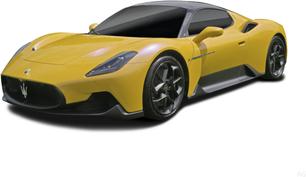
With Ferrari leaving the Fiat-Chrysler family and becoming an independent entity in 2016, Maserati was left without a technology partner.
Suddenly, the Trident brand had to go it alone and come up with its own engines for the first time in more than 20 years. The MC20 sports-car is the result of that rebirth.
While there’s no doubt the Maserati brand has the currency to pull this off, the MC20 is also a big step outside the company’s usual grand-tourer box.
The new coupe is aimed at McLaren, Porsche and even Ferrari buyers, so can the first true Maserati sports car since the MC12 of 2004 walk the walk? And let’s not forget that the MC12 was Ferrari Enzo-based…
No-compromise cars are often the ones that impose the most compromises, and in that sense, the MC20’s shattering on-paper performance means its greatest attributes can’t be enjoyed on a public road.
That’s why this review was conducted entirely on Philip Island’s 4.4km Grand Prix layout. As a result, we can’t tell you much about parking ease or highway fuel consumption. But as for the things that give a super-sports car its identity, read on.
The BYD Atto 1 has already earned its place in history as the cheapest new EV ever sold in Australia. And the good news is that, on the strength of bigger-battery Premium version, it rarely puts a foot wrong as a city car, exceeding performance, efficiency, refinement and comfort expectations. The Atto 1 really delivers around town.
But the baby BYD’s price is too close to larger EVs with better range, while extended exposure reveals issues with seat comfort, touchscreen access/distraction, ADAS interference and nervous steering feel at speed. Australian road tuning is required to rectify these.
Still, as a cheap urban EV runabout, the Atto 1 Premium still (just) stands alone. A glimpse into the future, someday, all city cars will likely follow in the bold BYD’s footsteps.
With a 320km/h-plus top speed and the ability to get from rest to 100km/h in under three seconds, there’s no doubting the MC20 meets or exceeds its performance brief. But when you’re paying these prices, there must be more than just the measurable stuff going on.
And there is. The MC20 brings a big dollop of purity to the ranks of current supercars, doing away with all-wheel drive and hybrid tech and relying instead on and old-school approach in terms of handling and overall feel.
Anybody who wants to argue that call has plenty of alternatives to the MC20 from other manufacturers, and for some of us, that less-is-more thing will ring true.
Note: CarsGuide attended this event as a guest of the manufacturer, with meals provided.
Fun fact. Designer Wolfgang Egger was responsible for the gorgeous Alfa Romeo 156 of 1997 among others, as well as some Audis and Lamborghinis later on. You can definitely see the latter’s influence in the Atto 1’s angular face.
Based on the Dolphin architecture and badged the Dolphin Surf elsewhere (as well as Seagull but that name wouldn’t fly here), the BYD’s boxy proportions are pure supermini and is about the size of the previous-generation Honda Jazz.
However, the designers have added some crossover cues to the styling, including plastic cladding around the wheel arches, to give it a pseudo SUV look.
Inside, though, the Atto 1 is unashamedly hatchback in layout and appearance, with a contemporary, minimalist dash, big central touchscreen with precious few buttons and loads of storage.
In other words, a typical modern small car from China.
Perhaps the most striking thing about the MC20’s design is that it’s so restrained. You won’t find wings, vents, fins and diffusers all over the car, but rather an overall shape that creates downforce, rather than that job falling to tacked on additions.
And, like any modern supercar worth its salt, the MC20 is based around a carbon-fibre tub for rigidity and low weight. From that tub structure are hung aluminium front and rear subframes which, in turn, mount the suspension and other mechanical bits.
The wind tunnel still got a huge workout in the car’s development, of course, but the aim was to integrate the downforce-inducing elements rather than having them demanding your optical attention.
As a result, the whole car is an upside-down wing, if you want to simplify it. But a very pretty upside-down wing.
This gives the MC20 a smooth, sleek look that stands it apart from the rent-a-racer crowd and supports the theory that sometimes, less is, indeed, more.
Some of the detailing is lovely, too. The vents cut into the Perspex rear windscreen form Maserati’s trademark trident shape, there’s lots of visible carbon-fibre inside the door jambs, there’s lashings of Alcantara inside and the two-tone body kit breaks up the shape perfectly.
Elements we’re not so sure about include the 'Park' button mounted way down low under the dashboard, and the swing-up, scissor-type doors, which, if your more than about 180cm tall, still require you to duck under them.
On the upside, the carbon-and-leather steering wheel with its integrated controls is gorgeous to hold and gaze at.
The BYD’s boxiness sure pays dividends accessing the Atto 1's interior, aided by tall doors, a high roof and lofty seating.
Initial impressions are very positive.
Lots of space, a decent driving position (in the Premium at least; the Essential has rake-only steering adjustment), grippy little wheel and a solid look and feel impart a sense of quality. This does not seem built down to a price.
The elevated centre console/fixed armrest provides ample storage below and easy reach of USB ports, sturdy cupholders above and a raised smartphone rest that doubles as a charger (again, only on Premium), allowing for quick downward glances without having to touch the device. Helpful.
Further points are won due to the very clean and minimalist dash presentation, with an electronic instrument display ahead of the driver (not a given nowadays thanks to Tesla’s minimalism-gone-mad influence), offering all the information you need in a concise and notably colourful manner.
That 10.1-inch central touchscreen, meanwhile, is probably one of the better examples from China, possessing superficially logical operation, clear markings and a row of fast-access icons for climate, audio, vehicle function, home screen and other controls.
However, the more time you spend in the Atto 1, the more the cabin doesn’t stand up that well under scrutiny.
The shapely tombstone-style front seats, which look a million dollars, are comfortable on short journeys but disappoint during longer drives, revealing a lack of sufficient back and thigh support.
There are no regenerative braking paddle shifters for single-pedal driving, just an on/off tile requiring a distracting and time-consuming touchscreen-menu deep-dive.
In fact, most functions demand at least one or two eyes-off-the-road-ahead prods of the screen, which is annoying and potentially hazardous.
Using the climate control is a good (bad) example.
Infernally fiddly screen slide controllers that are hard to pin-point with a hovering finger while the car is moving, let alone modulate, leads to temperature-selection fury. And those vinyl seats are clammy regardless of humidity levels and their perforations don’t help. Setting the desired climate environment is an utter faff.
And why must BYD’s synthetic leather smell so pungent? The off-gas odour can be nauseating for some on warmer days.
Worse still, even a glance towards the touchscreen sets off the distraction nannies. Frustrating. So is the intrusive lane-keep assist tech, unless you keep the car perfectly centred, with its constant nudging of the wheel while it nags away. More like Aggro 1.
Inevitably, turning these and other ADAS warnings off requires several menu deep-dives, leading to more driver-distraction paranoia. It’s a circle of stupidity for tech that’s meant to protect. And every new drive defaults to ‘on’. It's an infuriating mess.
Meanwhile, the Atto 1’s (two-person-only, remember) rear seat area also starts off promisingly, with easy entry/egress, adequate space (even for long legs and big feet) and a backrest and cushion combo offering sufficient comfort and support.
Amenities include useful door storage, overhead grab handles and map pockets, while the back of the centre console provides a cubby area just wide enough hold a bottle or larger keep-cup. That’s necessary because there is no folding armrest or subsequent cupholders back there, nor reading lights or USB ports.
And while the upward sweep of the window line means the rear can seem dark, the shape of the front seats allows some vision around and even through them for rear occupants.
Further back, the boot area is larger than the BYD’s diminutive size suggests, at 308 litres with backrests erect and 1037L with them folded forward.
The deep floor hides an even deeper cavity that’s large enough for charger cables, laptops and other paraphernalia that should be out of sight. That almost negates the need for the AWOL luggage cover.
But there's also a tyre repair kit instead of a spare wheel in there, and regular readers will know how incorrect that is. Every vehicle sold in Australia should come with one. Even city cars.
Loading/unloading is easy and there are hooks to secure things to, but clearing the high lip may be an effort for some.
And, though an EV, the is no extra storage to be found under the bonnet. The Atto 1 has no front boot, or froot.
Although the MC20 has a front and rear luggage compartment, they’re both small enough to be pretty much useless. This is a shame, because as a long-weekend getaway car, the Maserati otherwise makes a strong case for itself.
The other area that suffers for the car’s art is the interior practicality. While the driving position is great and the pedals and wheel relationship is spot on, when it comes to storing anything, you’re on your own. Best the MC20 can offer is a single cupholder at the rear of the central tunnel.
The mid-engined layout also means there’s precious little vision through the back window. To counter that, Maserati has fitted the MC20 with an interior rear-view mirror that can act as a conventional mirror (you can still see only the engine) or as a screen for the rear-mounted camera.
The catch is the image projected to the 'mirror' lacks depth of field and forces the driver to refocus on the image rather than simply glance at it.
And… what a perfect time to release Australia's cheapest new EV!
Sat alongside the base Essential from $23,990 (all prices are before on-road costs unless otherwise stated) is the Premium as tested here, starting from $27,990 and representing a $4000 difference.
But oh, what a difference.
The cheaper Essential comes with a 30kWh battery, providing a WLTP range of just 220km. Usefully, the Premium’s battery is 44 per cent larger at 43.2kWh, boosting range to a more-comfortable 310km, while power jumps by 77 per cent.
Every Atto 1 includes synthetic leather-trimmed seats, a 10.1-inch central touchscreen, rear camera with sensors, adaptive cruise control as part of some Advanced Driver Assist Systems (ADAS) tech (more on safety later on), wireless Apple CarPlay and Android Auto and even Vehicle to Load (V2L) functionality, so you can use your hairdryer on the fly. Handy!
However, the Premium ups the ante with a surround-view monitor, powered and heated front seats, reach as well as rake adjustment for the steering wheel, a wireless charger, LEDs rather than halogen headlights and 16-inch alloy wheels instead of 15-inch steelies with hubcaps.
But… both are four-seaters only. And neither offers an exterior temperature gauge, remote keyless entry from the passenger side (you’ll always need to press a fob), a luggage cover or a spare wheel – just the totally-unsatisfactory tyre repair kit.
Plus, there’s no heat pump so, in winter, turning the temperature up will drag range down noticeably, while a lack of liquid cooling for the battery will do the same during a hot Aussie summer, since the AC has to work overtime doing that job instead.
And we’re not convinced the Atto 1 represents such great value.
Yes, that small-battery Essential undercuts every hybrid bar Suzuki’s (mild-hybrid) Swift, including the MG3 Hybrid+ and Toyota Yaris HEV, and even the ageing Mazda 2 petrol costs more, but its limited range means it’s better as an inner-urban, small-distance-only commuter proposition. Best as a second or even third car.
Meanwhile, the bigger-battery Premium is priced perilously close to significantly larger EVs with greater range, including BYD’s own Dolphin from $29,990, the MG4 Urban from $31,990 drive-away, GAC Aion UT from $32,990 drive-away and the coming Geely EX2.
And, alongside cheaper-still petrol-powered alternatives such as the Kia Picanto, MG3 and MG5 sedan, there are also smaller SUVs that slip beneath the bijou BYD, like the Chery Tiggo 4, Haval Jolion, Hyundai Venue, Mahindra XUV 3X0 and MG ZS.
What we’re saying is, unless the Atto 1’s sub-four-metre length and narrowness are paramount, it’s behind the eight-ball for value against an array of more-substantial alternatives costing not much more.
Still, we get this is that rare thing today, a truly-new city car and we’re here for that.
Maserati has followed the lead of many a high-end carmaker by using the options list to ramp up the profitability of the MC20. Of course, that’s after the MSRP of $438,000 has been dealt with by your accountant.
The point is that you kind of need to suspend disbelief when it comes to supercars and their value-for-money credentials. By any sane, conventional measure, they’re seriously over-priced, but within its peer group, the Maserati is neither the cheapest nor the most expensive way to go this fast.
But back to those options: Again, it’s all a case of throwing away what you think you know, because there are several options for the Maserati that cost more than a good, brand-new hatchback.
The carbon-fibre engine cover alone will cost you a staggering $13,164, and according to Maserati management, it’s a popular option.
Then, there are the carbon-fibre brakes which not only cost $28,961, but if you want the yellow-painted calipers, that’ll be another $2962.
The hydraulic front-lifter which allows you to deal with driveways and speed humps is a monstrous $8721, but at least there’s some engineering in that. Unlike the black-roof option which is, er, a black roof at $10,202. And the external carbon-fibre kit? A cool $92,806!
The Atto 1's electric motor is offered in two output choices. Either way, it can be found under the bonnet and driving the front wheels via a single-speed transmission.
The Essential scores a low-power version making 65kW and 175Nm of torque, which is enough for a 0-100km/h sprint time of a still-decent 11.1 seconds, while the Premium’s high-power unit ups those to 115kW and 220Nm respectively, shaving two seconds off in the process. Top speed is said to be 135km/h.
Note that, while the latter grade’s 43.2kWh battery adds 96kg overall compared to the smaller 30kWh model, it still enjoys a way-superior power-to-weight ratio of 82.7kW/tonne versus just 50.2kW/tonne.
Previous generations of Maseratis borrowed Ferrari (both brands were once part of the extended Fiat Chrysler family) technology for their drivelines in a deal that allowed both brands to share the cost of development.
And since having a Ferrari-built engine in your car was never seen as a sale hindrance, it was a sweet deal for Maserati. But when Ferrari was spun off and became a publicly-owned company in 2016, Maserati’s supply of engines dried up.
The solution was to take engine design in-house and the twin-turbocharged 3.0-litre V6 in the MC20 is one of the first fruits of that.
While it’s undoubtedly a high-tech powerplant, in other respects it’s fairly conventional. Maserati, for instance, has a long history with the V6 layout, and there’s no hybrid element to the driveline. Nor is there a hybrid option.
Maserati claims the V6 is the world’s most powerful six-cylinder production-car engine and, with no less than 463kW at 7500rpm and 730Nm between 3000 and 5500rpm, that’s a credible statement.
Technical details that you won’t see on most road cars include a dry-sump lubrication system (where the engine oil lives in a remote tank rather than the hot sump of the engine itself) and a sophisticated fuel injection system with two injectors per cylinder.
The real trick, however, is an ignition system with two spark plugs per cylinder. There are also effectively two combustion chambers, the first ensuring multiple flame fronts to achieve a more complete burn of the fuel in the main combustion chamber.
The rest of the driveline is similarly aimed at the purists out there; the transmission is an eight-speed dual-clutch, driving not all four wheels, but only the rears through a mechanical limited-slip differential.
Selectable drive modes from GT (the default setting) through to 'Wet', 'Sport', 'Corsa' (Track) and 'ESC Off' tailor the shift points, throttle sensitivity and suspension behaviour, but still allow for full engine power.
The official consumption average for the Essential is 15.5kWh/100km and its 30kWh 'Blade' LFP (Lithium Iron Phosphate) battery offers a WLTP range of 220km.
The 43.2kW Premium bumps the energy use figure up to 16kWh/100km but offers 310km WLTP.
We came close to latter claim, with 263km of mixed driving and still showing about 10 per cent of range left, while the car’s consumption readout averaged 13.7kWh/100km overall. That rose to 16.5kWh/100km during a stint of harder, highway-heavy driving.
Charging times vary. With an 11kW AC capability on both grades, the Essential needs up to 16 hours and the Premium 22 hours plugged into a regular socket, and five and seven hours respectively using an optional 7.0kW Wallbox.
Meanwhile, switching to DC fast charging, the Essential’s 65kW capability means a 10-80 per cent top-up can be achieved in under 40 minutes, against the 85kW Premium’s 30 to 50-minute requirement.
Fuel economy is probably not going to be top of mind for most MC20 buyers, but the official combined figure of 11.6 litres per 100km is still pretty greedy by 2022 standards.
Balanced against the available performance, however, and an engine making more than 600 old-fashioned horsepower with that combined fuel-economy number is still cause to reflect on modern technology and efficiency.
The MC20 has a 60-litre fuel tank, making it a handy cross-country car for weekends away.
Sadly, we cannot comment on how the 65kW/175Nm Essential drives, but with 77 per cent more power and 25 per cent more torque, the 115kW/220Nm Premium’s performance is one of its calling cards.
Lively off the mark, even in Eco, it thrives in inner urban environments, with instant throttle response for effortlessly zippy and smooth acceleration, as you’d expect of an EV.
And it just keeps on keeping on at speed, giving the Premium a terrific breadth of performance flexibility. We’re now very curious to see how the Essential goes.
Armed with light and alert steering, the Atto 1 can weave in and out of traffic gaps with confidence and precision, and is backed up by a super-tight turning circle to boot, so parking manoeuvres around town is a doddle.
BYD’s decision to set up the chassis for a soft, long-travel suspension is appreciated, since the Premium takes most bumps and humps in its stride, making this one of the comfier city cars around.
Road and tyre noises are omnipresent, but aren’t not too bad overall by supermini standards, while the Hankook 185/55R16 tyres deliver sufficient grip, even over some rain-soaked roads we endured.
Most of these Atto 1 attributes also translate well at freeway speeds, with the Premium offering ample muscle for overtaking, slick steering responses and a planted chassis feel.
But, once you hit some faster corners, the BYD’s reactive steering, lofty seating and cushy suspension conspire to create considerable body movement, especially through tighter bends, scrubbing the front wheels as it turns wide (understeer).
Yet, press on a bit harder, the Atto 1 can instantly change its attitude to oversteer, feeling darty as weight shifts from the rear, making the steering suddenly too sharp and the car too nervous, Even experienced drivers might hesitate to carry on. And this happened on dry roads.
Of course, the BYD is a city car so not designed for sports-car handling, but it does lack the confidence and control of a hard-driven Mazda 2 or Suzuki Swift. Strangely, it seems more SUV-like than supermini, dynamically.
Most owners won't care, but they will have to live with the infuriating ADAS tune, with inexplicably sudden braking when the adaptive cruise control is on, and lane-support systems that all-too-often tug and bleat endlessly like an agitated goat, becoming too distracting, and requiring far-too-fiddly touchscreen menu diving to silence, especially as they default back on with every restart.
The driver-attention warning is also in a semi-permanent state of nerves, squawking all-too-regularly unless the driver is sat perfectly still, and will easily escalate the danger level to “take-a-break” should you dare move about in your seat. Which would be regularly, due to the latter’s lack of enduring support. A literal and metaphorical pain.
Clearly, then, the Atto 1 can really do with some Australian road tuning and on a number of fronts at that. Until this happens, these are the dark clouds blighting the blue skies that this car’s otherwise sunny disposition delivers with every urban drive on a daily basis.
Or, in other words, stick to the urban jungle.
Here’s where your half-a-million bucks has gone.
The MC20’s acceleration is absolutely shattering and is all the more amazing for the fact the car uses neither all-wheel drive grip nor hybrid torque to achieve its sprinting abilities.
While the V6 is not the most sonorous of powerplants, it does manage to sound high-end and pretty sophisticated and it’s never as shouty as some of its opposition which seem to confuse decibels with kiloWatts.
While the sheer thrust confirms the existence of two turbochargers, the lack of lag (or throttle delay) and the ability to charge into the rev limiter in the lower gears does not.
Even though power peaks at 6500rpm (as with many a modern turbo motor) the MC20 will happily smash on to the redline at 8000rpm; sometimes too happily if you don’t have your finger over the upshift paddle. As with other good modern turbocharged units, this one doesn’t actually feel overtly turbocharged.
The transmission shifts relatively smoothly in GT mode, but as you crank up the mode selector to Sport, the shifts become very fast with an accompanying jolt through the backrest as each gear clicks home. The shifting process is fairly foolproof, although you do get full over-ride, so you need to pay attention.
Both the cars we were able to sample at Philip Island were sporting the optional carbon-ceramic braking package, and one was also fitted with the optional 'birdcage' alloy wheels which are lighter.
Each of them needed a firm shove on the pedal to slow things down, but it’s true the lighter wheels seem to be worth their almost-$3000 ask as that car required less leg-pressure for the same result.
The lack of a hybrid element to the driveline, as well as the rear-drive layout, suggests a degree of purity of purpose in the car’s design. And that’s backed up by its behaviour in the first corner.
Fundamentally, instead of just hurling it at an apex and allowing the electronics to sort it all out for you, the Maserati requires a more 'classical' technique if it’s to really shine.
It doesn’t, for instance, reward trail-braking (where you continue to brake once you’ve turned into a corner) and would much prefer you get your braking over and done with before applying any meaningful steering lock.
Ignore this, and the rear weight bias of the mid-engined layout can see the car try to yaw, with the rear end becoming light and the vehicle over-rotating (which is a spin, to you and I).
Similarly, getting on the power before you’ve actually got the MC20 turned, can unload the front end and send the front wheels ploughing (ploughing is an exaggeration, but at the speeds we’re dealing with here, even a small degree is a big deal) towards the outside of the turn.
Ultimately, then, the technique becomes a text-book case of brake, turn and then power out, at which point the MC20 reveals itself to be huge fun and incredibly fast. The only thing to deal with then is the knowledge that whatever happens next is going to happen extremely quickly.
The Atto 1 debuted in China back in 2023, but this is a facelifted, international-market version evolved mainly for European consumers, so crash-tested by Euro NCAP only last year, and scoring a maximum five-star ANCAP rating.
Note, though, that while the baby BYD includes Autonomous Emergency Braking (AEB) with forward collision warning, lane-departure assist and adaptive cruise control as standard, there is no blind-spot monitor or rear cross-traffic alert. Odd for a city slicker.
Six airbags are fitted, including curtain protection for all outboard occupants, while there are two rear-seat sited ISOFIX anchorage points and child-seat tether points behind each backrest.
Neither ANCAP nor Euro NCAP have tested the MC20 for crash safety, so we can’t give it a star rating.
But the lack of standard safety gear such as rear-cross traffic alert and blind-spot monitoring (it’s optional at $2797) can’t go unmentioned. That’s especially concerning when you consider the mid-engined layout makes for very poor rear visibility.
Here’s where the BYD slips up a bit.
Yes, it comes with a better-than-industry-standard six-year warranty, but many rivals offer between seven and 10-year coverages, while the Atto 1’s mileage warranty is capped at 150,000km when most others include unlimited mileage. And roadside assistance is only for one year, as well.
Service intervals are every 12 months or 20,000km. Capped-price servicing is available, but no precise figures were available at the time of publishing.
Estimates are from under $200 for the first and third annual services, and from $500 and $650 for the second and fourth yearly visits, respectively. Please check with BYD for updated figures.
Currently there are about 105 BYD service outlets throughout Australia, with 30 more expected by the middle of 2026. This should address one of this brand's biggest concerns – sufficient after-sales care.
High-end cars often disappoint on the details, and the Maserati is no different here, offering just a three-year factory warranty (albeit with unlimited kilometres).
That trails even the most humble commuter cars these days, and suggests there’s still a degree of indifference from some carmakers. And, possibly, their customers.
There is, however, the option of fixed-price servicing for the MC20 with the first three years’ worth of servicing costing $4000.
Scheduled services are every 15,000km or 12 months, whichever comes first.