What's the difference?
Audi’s littlest and most affordable SUV, the Q2, has been updated with new looks and tech, but something else has snuck in with it. Or should I say roared in? It’s the SQ2, with a whopping 300 horsepower and a snarling bark.
So, this review has something for everybody. It’s for those who want to know what’s new for the Q2 in this latest update - those thinking of buying a cool-looking little SUV from Audi - and for those who want to wake their neighbours up and frighten their friends.
Ready? Let’s go.
What sets the most iconic Jaguars apart?
Here’s a theory. Consider history’s greatest: the 1948 XK, its 1961 E-Type replacement and the first XJ of 1968. We’re talking about a grand tourer, sports car and luxury sedan respectively that broke ground in each of their segments.
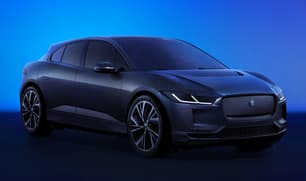
Despite being a sales disappointment, let’s add the 2018 I-Pace to this elite group.
Like the others, it was a pioneer, this time in the luxury electric vehicle (EV) SUV field, beating most competitors and seemingly influencing newer ones ever since, from the excellent Kia EV6 to the coming Mercedes-Benz EQE SUV.
Now, five years and a comprehensive update later, we revisit the 2023 I-Pace to see if it’s still a standout.
The Q2 is good value and great to drive – especially the SQ2. The exterior looks new, but the cabin feels older than the larger Q3, and most other Audi models.
More standard advanced safety tech would make the Q2 even more appealing, as would a five-year, unlimited-kilometre warranty. While we’re at it, a hybrid variant would make enormous sense.
So, a great car, but Audi could offer more to make it an even better proposition for buyers.
In the 1960s Jaguar used to promote its range as providing “grace, space and pace”. Nowadays, the I-Pace may as well also be known as the I-Grace and I-Space, because all three terms still ring true.
Jaguars were never cheap but the greatest hits felt like exceptional value because they were special. The same applies here. Five years might seem like an eternity, but age has not yet wearied the British luxury EV SUV nearly as much as you might imagine. Especially when optioned up as per our test vehicle.
Bereft of any post-modern brand baggage, the I-Pace remains a modern great. If only more buyers would catch on to that.
This updated Q2 looks almost identical to the previous one and really the only changes are subtle styling tweaks to the front and back of the car.
The front air vents (they aren’t real air vents on the Q2, but they are on the SQ2) are now larger and pointier and the top of the grille is lower. Around the back, the bumper now has a similar design to the front, with those pointy polygons set wide apart.
It’s an angular little SUV, full of sharp-edged shapes like some kind of acoustical wall in an auditorium.
The SQ2 just looks more aggro, with its metallic-trimmed air vents and beefy quad exhaust.
The new colour is called Apple Green and it’s not really like any colour on the road – well not since 1951, anyway when this hue was hugely popular on everything from cars to telephones. It’s also very close to Disney’s “Go Away” green – look it up and then ask yourself if you should be driving a car that’s kind of invisible to the human eye.
I digress. Other colours in the range include Brilliant Black, Turbo Blue, Glacier White, Floret Silver, Tango Red, Manhattan Grey and Navarra Blue.
Inside, the cabins are the same as before, apart from the larger, sleeker media display, and there are some new trim materials, too. The 35 TFSI has silver inlays with a diamond paint finish, while the 40TFSI has aluminium door sills.
The Q2 has beautiful quilted Nappa leather upholstery, which goes beyond just covering the seats and to the centre console, doors and armrests.
All options offer well laid out and premium feeling cabins, but the disappointing part is that it's an older Audi design, which started out in the third-generation A3, launched in 2013, and still exists on the Q2, even though most Audi models, including the Q3, have the new interior design. This would bug me if I was thinking about buying a Q2.
Have you thought about a Q3? It’s not that much more in price, and it’s a tad bigger, obviously.
The Q2 is tiny, at 4208mm end to end, 1794mm wide and 1537mm tall. The SQ2 is longer at 4216mm long, 1802mm wide and 1524mm tall.
Five years on, from the bold cab-forward silhouette to the high-riding crossover proportions, the I-Pace is a distinctive and handsome machine, offering progressive, flowing aerodynamics that have as much to do with function as they do with form. This is an out and proud EV.
But there’s the rub. Perhaps the disappointing sales reception is down to it being too removed from what many consumers might expect a Jaguar to look like.
Grille-aside, there isn’t enough connection with stablemates like the woefully-underrated XE or F-Pace, while traditionalists – many of them Americans – wanting classic XJ or XK retro schtick are also plum out of luck. Cover the badge and the styling could be from any (forward-thinking) carmaker.
Or maybe it’s because the I-Pace, whose body is 94 per cent aluminium to help offset the weight of the batteries, looks compact in photos, like a crossover hatchback, when in reality it is surprisingly large, belying its sleek styling by packing in plenty of space inside.
Speaking of which, let’s take a closer look.
The Q2 is basically a current model Audi A3, but more practical. I’ve lived with the A3 Sedan and Sportback and while rear legroom is just as confined in those as it is in the Q2 (I’m 191cm and need to squish my knees behind my driving position) getting in and out is easier in the SUV, with its elevated ride height and taller door apertures.
The easier access helps enormously when helping kids into their child seats. In an A3 I need to kneel on the footpath to be at the right level to put my son into the car, but not with the Q2.
The boot space of the Q2 is 405 litres (VDA) for the front-wheel-drive 35 TFSI and for the SQ2 it’s 355 litres. That not bad, and the large hatch makes for a big opening, which is more practical than a sedan’s boot.
Inside, the cabin isn’t enormous, but rear headroom is good, thanks to the fairly high roof.
Cabin storage isn’t terrific, although the front door pockets are big and there are two cupholders up front.
Only the SQ2 has USB ports in the back for rear passengers, but all Q2s have two USB ports up front for charging and media – plus all have wireless charging for phones.
Yes, compared to the vast mega screens invading most new models of today, the I-Pace’s dashboard layout is looking, well, off the pace. On first glance at least, this is definitely a product of the previous decade.
But as far as design elegance and functionality are concerned, Jaguar seems to have created a timeless piece of crafted automotive interior architecture that – consequently – holds up very well.
Or, in other words, the I-Pace provides a welcome sanctuary away from the infuriating folly of today’s faddish, fiddly and infuriatingly distracting touchscreen interiors. Maybe some old-school XJ smarts live on in this EV after all.
Look past the dated dashboard design, and the cabin’s overriding impression is of solidity and quality. No cheap plastics or rough surfaces here, just restrained luxury.
While electronic displays with very-analogue-style dial options amid digital driving data take care of the instrumentation ahead of the driver, a modestly-sized touchscreen is set at a lower plain so as to not dazzle and distract the job of vehicle controlling with data-overload, while under that is smaller display for climate control. More on that later.
Part of the Pivo Pro multimedia system, that central touchscreen is switched on and ready for use before the ignition button is even pressed, for immediate action.
No delaying-tactic welcome fanfare as the system boots up as per almost every other carmaker’s set-up, either. Just instant gratification, ironically. This dash is starting to feel like a resto-mod, with all the latest tech behind that Boris-era façade.
Plus, besides being fast, it is logically laid out and avoids confusing sub-menus. Nice swipey action, too. Some familiarisation is required at first, but the system makes sense. And if you need volume adjustability, you turn a physical knob. As the ergonomics lords intended. Easy.
Speaking of which, let’s get the sensible stuff out the way. Because it sits at near-SUV height, the I-Pace is easy to get in and out of as long as you’re aware of the swooping roofline out back. And you sit up high, affording excellent forward vision ahead.
Sinking yourself into the front seats, the Jaguar lives up to its old luxo-barge reputation in that they’re sumptuous yet firm in back-location and support, providing hours of comfort if required.
The driving position is superb, with ample adjustment and those thoughtfully-placed switchgear and controls coming into play.
Storage is ample, with deep door pockets, a sizeable centre console bin and even a secret cubby underneath the rear seat.
The Jaguar provides five USB outlets and two 12V sockets. And ventilation is as effective as you need it to be.
Problems? Pleasingly, our Graz-built Jaguar suffered from no breakages or squeaks. It is as well-screwed together as you’d expect from a luxury SUV, so there are no issues there to moan about.
However, rear vision is poor due to the tapering rear windows and shallow tailgate glass. In turn, the back-seat area can seem a bit dark and hemmed-in without the (optional) fixed glass roof.
The glove box is disappointingly shallow. And, though simple in execution, the climate control can be fiddly to figure out at first.
Of greater concern is the counter-intuitive transmission selection, since the ‘DNRP’ buttons are placed in descending order, putting ‘Drive’ up top and ‘Park’ down at the bottom.
On several occasions, ‘D’ was selected instead of ‘P’ or ‘R’, nearly leading to unintended forward acceleration into parked cars or walls directly ahead.
As mentioned earlier, our test HSE features the optional suede dash and pillar covers; along with the beautiful woven grey flannel-like trim on Alcantara-like seats, they add a distinctive classy ambience – and that’s something that translates out back, too.
While you wouldn’t call it a large wagon, it is more than sufficiently spacious for two adults, while middle-seat space is A-OK for smaller folk only as the ceiling tapers a bit too much for taller passengers. Legroom is exceptional, thanks in part to a stretchy near-3.0-metre wheelbase.
The bench seat itself does not slide or recline, but the 40/20/40-split backrest seems sufficiently angled for comfort and support, while the cushion is sprung enough not to lead to achy thighs, even for longer-legged occupants.
Amenities include rear-facing air vents, a centre armrest with two cupholders, two USB and a single 12V port, overhead grab-handles and reading lights, (quite shallow) door pockets, four coat hooks and some under-seat storage.
Further back, the Jaguar’s boot area is set up high, so requires some lifting to get heavier objects in, but the floor is long and flat, and the overall volume is quite practical. Capacity varies from 656 litres to 1453L with the backrests dropped. You can fit a 1797mm by 1244mm object in two-seater only mode.
There’s storage underneath for charging cables, as well as straps and hooks to secure loose items. And, as mentioned earlier, buyers can order a space-saver spare if the tyre-repair kit is undesirable. Note, too, that a sizeable ‘frunk’ front trunk is good for a couple of soft overnight bags.
Overall, then, equipped as our $180K HSE was, the I-Pace’s interior is likely to impress.
The Q2 entry grade is the 35 TFSI and it lists for $42,900, while the 40 TFSI quattro S line is $49,900. The SQ2 is the king of the range and lists at $64,400.
The SQ2 has never been to Australia before, and we’ll get to its standard features in a moment.
Aussies have been able to buy a 35 TFSI or 40 TFSI since the Q2 arrived in 2017, but now both have been updated with new styling and features. The good news is the prices have only gone up by a few hundred bucks, compared to the old Q2.
Standard on the 35 TFSI are LED headlights and taillights, LED DRLs, leather seats and steering wheel, dual-zone climate control, Apple CarPlay and Android Auto, eight-speaker stereo with digital radio, front and rear parking sensors and a rear-view camera.
That was all standard on the previous 35 TFSI, but here’s what’s new: an 8.3-inch media screen (the old one was seven inches); a proximity key with push button start (great news); wireless phone charging (brilliant), heated exterior mirrors (more helpful than you’d think), ambient interior lighting (aww… pretty); and 18-inch alloys (heck yes).
The 40 TFSI quattro S line adds sports front seats, drive-mode selection, a power tailgate, and paddle shifters. The previous one had all that, too, but this new one has the sporty S line exterior body kit (the previous car was just called Sport not S line).
Now, the 45 TFSI quattro S line may appear not to get much more than the 35 TFSI, but the extra money is getting you more grunt and an awesome all-wheel-drive system – the 35 TFSI is front-wheel-drive only. If you love driving and can’t afford the SQ2, then $7K extra for the 45 TFSI is absolutely worth it.
If you have saved all your pennies and the SQ2 is what you’re zeroing in on, then here’s what you get: Metallic/pearl effect paint, 19-inch alloys, matrix LED headlights with dynamic indicators, the S body kit with quad exhaust, sports suspension, Nappa leather upholstery, heated front seats, 10-colour ambient lighting, stainless-steel pedals, auto parking, a fully digital instrument cluster, and a 14-speaker Bang & Olufsen stereo.
Of course, you get an incredible high-output four-cylinder engine, too, but we’ll get to that in a moment.
Unveiled for the 2021 model year elsewhere but finally released just this year in Australia, the updated I-Pace EV400 (denoting the maximum power output in braked horsepower) brings minor visual changes, but more important ones underneath, too.
Most noteworthy are a larger onboard charger (from 7.0kW to 11kW) to substantially increase charging times, an advanced new-from-the-ground-up multimedia system, improved climate control, better surround-view camera options including integration with the rear-view mirror (dubbed 'ClearSight') and wireless charging updates.
They help smother some of the Austrian-built Jaguar EV’s wrinkles against a growing army of fresher alternatives, including the EV6, Audi e-tron (soon to gain the Q8 prefix), BMW iX, Lexus RZ and Mercedes-Benz EQC.
Kicking off from $148,800 (all prices are before on-road costs), the ‘24MY’ (2024 model year) EV400 SE is the latest I-Pace’s opening gambit, though we’re testing the HSE flagship version from $165,600.
Both grades feature an electric motor on each axle for all-wheel drive, a 90kWh battery pack and Jaguar's R-Dynamic pack.
Standard features include LED automatic headlights, electric/heated door mirrors, flush exterior door handles, an acoustic and heat-deflecting windscreen, rain-sensing wipers, keyless entry/start, a rear-view camera, part-leather upholstery, front sports seats with electric adjustment and driver’s side memory plus adaptive cruise control with lane-assist.
There's also dual-zone climate control with remote cabin pre-conditioning, configurable ambient cabin lighting, electronic instrumentation, Bluetooth connectivity, Apple CarPlay/Android Auto compatibility, digital radio, wireless charging, over-the-air updates for the 'Pivo Pro' multimedia system, voice control, a public charging cable, perimeter alarm and three-year subscription to Secure Tracker car finder, a powered tailgate, a bicycle-carrier preparation kit, 20-inch alloy wheels and a tyre-repair kit.
There is no spare wheel fitted but a space-saver is available at extra cost.
Stumping up another $16,800 for the HSE nets you upgrades like leather trim, heated/cooled front seats, heated rear seats, suede headlining, fixed panoramic roof, animated indicators, approach lights in the exterior mirrors, a head-up display (HUD) and different wheels.
On the safety front, both grades feature six airbags and a decent level of driver-assist technologies including autonomous emergency braking (AEB) as expected at this price point. More on those in the Safety section below.
Now, the I-Pace EV400 HSE R-Dynamic we tested was a 23MY model, which differs from the above in that it started from over $5000 less at $160,217, but isn’t as well equipped as the 24MY.
It also included a number of options that bumped the price up to a tad under $180,000, starting with the $5008 'Premium Black Pack', ushering in air suspension, a rear spoiler, black exterior trim highlights and 22-inch glossy black alloys.
Other goodies included a fixed panoramic roof ($3580), adaptive dampers ($2405), four-zone climate control ($1820), carbon-fibre trim finish ($1521), that ClearSight rear-view mirror ($1131), full-colour HUD ($1040), Privacy Glass ($845) and no-cost 'premium textile' (non-animal derived) upholstery.
The point is, to specify your I-Pace to what you see in our images, you’ll need to add nearly $20K to an already hefty starting price.
This is par-for-the-course for most premium brands, though paying extra for cupholders, a HUD and rear-seat climate control when some carmakers include them seems mean at these prices.
There are three grades and each has a different engine.
The 35 TFSI has a new 1.5-litre four-cylinder turbo-petrol engine making 110kW and 250Nm; the 40 TFSI has a 2.0-litre turbo-petrol four making 140kW and 320 Nm; and the SQ2 has a 2.0-litre turbo-petrol as well, but it puts out a very impressive 221kW and 400Nm.
The 35 TFSI is front-wheel drive, while the 45 TFSI quattro S line and SQ2 are both all-wheel drive.
All have a seven-speed dual clutch automatic transmission – nope you can’t get a manual. There are also no diesel engines in the line-up.
I drove all three cars and, from an engine perspective, it’s like turning the ‘Smile Dial’ up from Mona Lisa in the 35 TFSI, to Jim Carrey in the SQ2, with Chrissy Teigen in between.
Built around a standalone architecture with no internal combustion engine versions, the I-Pace EV400 is fitted with two permanent magnet synchronous electric motors – one above the front axle and one located on the rear axle. Each produces 150kW of power and 348Nm of torque, for a system output total of 294kW and 696Nm.
Tipping the scales at 2226kg, this means the EV400 has a power-to-weight ratio of a very healthy 132kW/tonne, helping this electric crossover cross the 100km/h marker in 4.8 seconds, on the way to a top speed of 200km/h.
With a single-speed transmission sending torque to a motor on each axle, the I-Pace has permanent all-wheel drive.
The I-Pace’s standard suspension is double wishbones and coils up front and an integral link independent set-up out back.
Nowadays, the standard wheel size in the SE is 245/50R20, though ours was fitted with 255/40R22 – along with air suspension and adaptive dampers. These profoundly alter ride comfort. Towing capacity is 750kg braked or unbraked.
Ground clearance is usually 174mm, but with the air suspension, that increases to a handy 241mm in its maximum height setting. At speeds over 105km/h I-Paces with air suspension drop a further 10mm to aid efficiency. Which brings us to…
Audi engines are superbly modern and efficient – even its monster V10 can shut down cylinders to save fuel, and so can the new 1.5-litre four-cylinder engine in the 35 TFSI. Audi says that over a combination of urban and open roads, the 35 TFSI should use 5.2L/100km.
The 40 TFSI is thirstier at 7L/100km, but the SQ2 demands a bit more at 7.7L/100km. Still, not bad.
What’s not good is the lack of a hybrid, PHEV or EV variant of the Q2. I mean the car is small and ideal for the city, and therefore a perfect candidate for an electric version. Not having a hybrid or EV is why the Q2 model range doesn’t score well for its overall fuel economy.
With a 400V architecture, the I-Pace EV400 has the charging capability of most EVs, but not the Hyundai Ioniq 5 and 6, Kia EV5, EV6 and EV9, Genesis GV60 and Porsche Taycan/Audi e-tron GT fraternal twins, which have an 800V capability.
Under the floor is a 90kWh lithium-ion battery, with a useable capacity of 84.7kWh.
For AC charging, it uses a Type2 connector with 11kW capacity, or for DC fast charging, it has a maximum 104kW capacity via a CCS port. Both are located in the left-hand-side mudguard.
Jaguar says the official combined average consumption is 23kWh/100km. Our car’s trip computer showed we averaged 24.2kWh/100km.
The WLTP range is 408km, or 446km under the more-lenient NEDC regime. Fully charged, our vehicle indicated 407km of range in normal mode and 415km in 'Eco' mode.
After 345km, our distance-to-empty read 14km, meaning we averaged a very reasonable 359km under absolutely normal urban conditions, with some freeway driving thrown in.
Using a 150kW DC fast charger, we added 200km of range in exactly 30 minutes. It cost us around $31.
For the record, AC charging from empty to full using a regular household socket will take nearly 44 hours, or 13.5hr and just 9.25hr if you have access to a 7kW or 11kW Wallbox, respectively.
Meanwhile, a 50kW DC fast charger needs 75 minutes to go from 10-80 per cent full, or 45 minutes with anything above a 105kW charger, as that’s the Jaguar’s maximum capacity.
When it comes to the driving part, Audi can almost do no wrong – everything the company makes, whether it’s low powered or rip-your-face-off fast, has all the ingredients for engaging driving.
The Q2 range is no different. The entry-grade 35 TFSI has the least grunt and, with its front wheels pulling the car along, it’s the only one in the family that’s not blessed with all-wheel drive, but unless you’re doing laps at a track you’re not going to be wanting more power.
I drove the 35 TFSI for more than 100km on the launch, through the country and into the city, and in all situations, from overtaking on highways to merging and slow traffic, the most affordable Q2 performed well. That 1.5-litre engine is responsive enough and the dual-clutch transmission changes swiftly and smoothly.
Superb steering and good visibility (although that rear three-quarter view is slightly obstructed by the back pillar) makes the 35 TFSI easy to drive.
The 45 TFSI is a good mid-point between the 35 TFSI and the SQ2 and comes with a very noticeable bump in oomph, while the extra traction from the all-wheel drive is a reassuring addition.
The SQ2 isn’t the hardcore beast you might think it is – this thing would be super easy to live with daily. Yes, it has firm sports suspension, but it’s not overly hard, and that engine, which nudges almost 300 horsepower, doesn’t feel like a Rottweiler on the end of a leash. If anything, it’s a Blue Heeler that loves to run and run, but is happy to take it easy and get fat.
The SQ2 is my pick of the bunch, and not just because it’s quick, agile, and has an intimidating growl. It’s also comfortable and luxurious, with sumptuous leather seats.
One of the great EV questions is just how premium brands like Jaguar, BMW and Mercedes-Benz can justify their higher prices, when comparatively inexpensive alternatives from BYD, Hyundai and Kia rely on similar electric motor tech.
Indeed, a Tesla Model Y Performance offers the same acceleration and a higher top speed at nearly $100K under our EV400 HSE as tested.
But then you snuggle into that opulent cabin, buckle up, and realise that – just as the original XJ changed big luxury sedans forever back in ’68 with its sophistication and lush ride – the I-Pace still sets the tone for luxury EV SUVs.
Push the D button and – even in 'Comfort' mode – the Jaguar steps off the line briskly. A long-travel accelerator pedal tune disguises the fact that the EV400 is actually sensationally fast, as it swiftly yet silently streaks towards triple digits in no time at all, accompanied by a dull turbine-like drone.
Select 'Dynamic' mode, and the I-Pace’s performance lives up to both the make and model names, offering instant, pinned-back-in-your-seat thrust as well as ample muscle as it glides along.
Flex your right foot and you're already tailgating Mercedes AMG and BMW M-Sport SUVs in no time. Immediate, addictive speed.
A low centre of gravity; that double wishbone and multi-link suspension layout; near 50/50 weight distribution – we’re expecting something special here, and happily, the I-Pace as optioned up with air suspension, adaptive dampers and 22-inch wheels refuses to disappoint.
The sheer urgency from the twin electric motors is matched by reassuring grip and control, even over the rain-soaked hills we belted along.
Beautifully weighted steering, offering lots of road connection, adds to the sense of confidence and calm, as the Jaguar handles corners with a flat, contained composure.
It’s only when you’re really fanging it through tight and twisty turns that this EV SUV starts to feel its considerable mass.
Keep in mind that our HSE included the optional air suspension and adaptive dampers, because together they provide impressive suppleness and sweet isolation (in Comfort mode, obviously) to go with the I-Pace’s unassuming agility.
They allow for those oversized alloys to swell out the arches without resulting in a ruinous ride – something you’d get a taste of if you switch to Dynamic mode, where everything stiffens up noticeably.
Thus specified, we’d imagine the softness would be well off the scale on the standard 20-inch rubber.
As tested, our HSE is one of the most enjoyable luxury SUVs to drive and travel in at speed, regardless of what sort of fuel you’re using.
Downsides? Around town, the limited side and rear vision mixed with the Jaguar’s two-metre width makes manoeuvring a little daunting at times.
The turning circle is on the larger side. And the traffic sign recognition tech is far from reliable and doesn’t work in concert with the adaptive cruise control so can’t automatically alter speed to what’s signposted.
Yet our biggest gripe is the lack of greater single-pedal braking when lifting off the throttle.
A set of paddles to alter the regeneration braking force as per Hyundai’s set-up would be appreciated.
This is one of the single biggest giveaways to the Jaguar’s advancing years.
Still, as a hushed, refined, comfortable and forcefully quick luxury EV SUV experience, the I-Pace, with the choice options as fitted, remains a fierce opponent against newer alternatives. Especially from behind the wheel.
The Q2 was given the maximum five-star ANCAP rating when it was tested in 2016, but by 2021 standards it is light on advanced safety tech.
Yes, AEB with pedestrian and cyclist detection is standard on all Q2s and the SQ2, and so is blind-spot warning, but there’s no rear cross traffic alert or reverse AEB, while lane-keeping assistance is only standard on the SQ2, along with adaptive cruise control.
For a car that will most likely be purchased by younger people, it doesn’t seem right that they’re not being protected as well they would be in more expensive Audi models.
For child seats, there are two ISOFIX points and three top-tether anchor mounts.
A space-saver spare is under the boot floor.
Tested in 2018, the I-Pace scored a maximum five-star ANCAP crash-test rating.
It managed to do well in all four of the independent body's disciplines, especially so for occupant protection at 91 and 81 per cent for adults and children, respectively, while vulnerable road users (cyclists and pedestrians) fared worst with a still-adequate 73 per cent rating.
Six airbags are fitted (dual front, head/side front and head/side rear outboard occupants), along with a raft of driver-assist systems, including AEB, lane-alert, lane-assist, blind-spot monitoring, rear-collision monitor, rear-traffic monitor, adaptive cruise control with steering assist, driver fatigue monitor, tyre pressure monitors, emergency call out and traffic sign recognition with adaptive speed limiter tech.
Note the AEB operates from 5.0km/h to 85km/h, and functions in day and night conditions in all cases including cyclists and pedestrians. The lane support systems operate from 50km/h to 180km/h.
Additionally, you’ll find anti-lock brakes with electronic brake-force distribution and brake-assist, as well as stability and traction controls.
Two outboard rear-seat ISOFIX latches are fitted, along with a trio of top-tether anchorage points for child seats.
No front occupant knee or centre-front airbags are fitted.
The pressure for Audi to move to a five-year warranty must be hugely intense, with Mercedes-Benz offering one, along with pretty much every other mainstream brand. But for now, Audi will only cover the Q2 for three years/unlimited kilometres.
As for servicing, Audi offers a five-year plan for the Q2 costing $2280 and covering every 12-month/15000km service over that time. For the SQ2, the cost is only a fraction higher at $2540.
The I-Pace is covered by an industry-average five-year/unlimited kilometre warranty, along with five years of roadside assistance.
Additionally, owners will enjoy five years/130,000km of free scheduled servicing. These are at 12 months or 26,000km.
Jaguar says the EV traction battery is covered by an eight-year/160,000km warranty, with a minimum of 70 per cent state of health.