What's the difference?
Audi’s littlest and most affordable SUV, the Q2, has been updated with new looks and tech, but something else has snuck in with it. Or should I say roared in? It’s the SQ2, with a whopping 300 horsepower and a snarling bark.
So, this review has something for everybody. It’s for those who want to know what’s new for the Q2 in this latest update - those thinking of buying a cool-looking little SUV from Audi - and for those who want to wake their neighbours up and frighten their friends.
Ready? Let’s go.
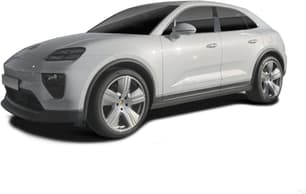
This might be the biggest gamble in Porsche's history. It's the latest version of its best-selling car, the Porsche Macan, only this one has a very big difference.
You see, this time, it’s all-electric. There is not an internal-combustion engine (ICE) in sight. And that makes climbing into an entry-level Macan significantly more expensive than ever before.
So, will this bold shift help or hinder the Macan in Australia? And is this the country’s best all-electric SUV?
There’s only one way find out.
The Q2 is good value and great to drive – especially the SQ2. The exterior looks new, but the cabin feels older than the larger Q3, and most other Audi models.
More standard advanced safety tech would make the Q2 even more appealing, as would a five-year, unlimited-kilometre warranty. While we’re at it, a hybrid variant would make enormous sense.
So, a great car, but Audi could offer more to make it an even better proposition for buyers.
There is no doubting the substance of the Porsche Macan Electric. Its ride, steering and poise make it a joy to drive on twisting roads, and it ticks the practicality boxes, too.
The only lingering question is whether enough people are ready to make the all-electric switch. Only then will we know if Porsche's Macan gamble has paid off.
Note: CarsGuide attended this event as a guest of the manufacturer, with travel, accommodation and meals provided.
This updated Q2 looks almost identical to the previous one and really the only changes are subtle styling tweaks to the front and back of the car.
The front air vents (they aren’t real air vents on the Q2, but they are on the SQ2) are now larger and pointier and the top of the grille is lower. Around the back, the bumper now has a similar design to the front, with those pointy polygons set wide apart.
It’s an angular little SUV, full of sharp-edged shapes like some kind of acoustical wall in an auditorium.
The SQ2 just looks more aggro, with its metallic-trimmed air vents and beefy quad exhaust.
The new colour is called Apple Green and it’s not really like any colour on the road – well not since 1951, anyway when this hue was hugely popular on everything from cars to telephones. It’s also very close to Disney’s “Go Away” green – look it up and then ask yourself if you should be driving a car that’s kind of invisible to the human eye.
I digress. Other colours in the range include Brilliant Black, Turbo Blue, Glacier White, Floret Silver, Tango Red, Manhattan Grey and Navarra Blue.
Inside, the cabins are the same as before, apart from the larger, sleeker media display, and there are some new trim materials, too. The 35 TFSI has silver inlays with a diamond paint finish, while the 40TFSI has aluminium door sills.
The Q2 has beautiful quilted Nappa leather upholstery, which goes beyond just covering the seats and to the centre console, doors and armrests.
All options offer well laid out and premium feeling cabins, but the disappointing part is that it's an older Audi design, which started out in the third-generation A3, launched in 2013, and still exists on the Q2, even though most Audi models, including the Q3, have the new interior design. This would bug me if I was thinking about buying a Q2.
Have you thought about a Q3? It’s not that much more in price, and it’s a tad bigger, obviously.
The Q2 is tiny, at 4208mm end to end, 1794mm wide and 1537mm tall. The SQ2 is longer at 4216mm long, 1802mm wide and 1524mm tall.
The Macan Electric looks sharp, all aerodynamic and swept-back like a range-maximising electric SUV should.
There’s functional method behind all this swoopy styling, too. The headlights look as though they’ve been chiselled into the body work, and at the grille, you’ll find active venting to help with cooling when needed.
There is also a sizeable front splitter that looks very much like the Macan is sticking its jaw out. All of which is to assist with aero and range.
It’s also a dual charging port layout with access left and right, though the latter is AC charging only, while the one on the left does both.
Step inside the Macan and you’ll find a familiar and very welcoming space. I especially like the twin-screen set-up that looks great in the way it's kind of embedded into the dash. Each is big, clear and easy to use.
I also really like the control panel that gives you quick-button access to the climate control, and the haptic feedback is next level, with the whole screen clicking in or out whenever you hit a button.
That said, in Turbo-guise you’re dropping almost $200,000, and some of the materials feel too hard and plasticky at that price point.
The Q2 is basically a current model Audi A3, but more practical. I’ve lived with the A3 Sedan and Sportback and while rear legroom is just as confined in those as it is in the Q2 (I’m 191cm and need to squish my knees behind my driving position) getting in and out is easier in the SUV, with its elevated ride height and taller door apertures.
The easier access helps enormously when helping kids into their child seats. In an A3 I need to kneel on the footpath to be at the right level to put my son into the car, but not with the Q2.
The boot space of the Q2 is 405 litres (VDA) for the front-wheel-drive 35 TFSI and for the SQ2 it’s 355 litres. That not bad, and the large hatch makes for a big opening, which is more practical than a sedan’s boot.
Inside, the cabin isn’t enormous, but rear headroom is good, thanks to the fairly high roof.
Cabin storage isn’t terrific, although the front door pockets are big and there are two cupholders up front.
Only the SQ2 has USB ports in the back for rear passengers, but all Q2s have two USB ports up front for charging and media – plus all have wireless charging for phones.
There is a little open-sesame magic at play with the Macan, and that starts at the frunk, where, if you lovingly caress the bonnet, it will automatically pop open for you, revealing an 84-litre storage space.
Rubbing the charging port will see it slide open, too, but just in case you’re not the kind of person who likes to fondle their car in public, you can use the key.
The Macan’s boot is a little more traditional, opening to reveal 540 litres (but just 480 litres in the 4S or Turbo) of storage with the rear seats in place, with a wide, flat and very useable area for your goodies.
The back seat of the Macan feels spacious enough, without being outstanding. There’s more than enough space for my 175cm frame, with enough knee and head room, but the way the middle console juts out will definitely eat into leg room for any middle-row passenger.
Elsewhere you get air-con controls with vents, along with bottle storage in each of the doors. There is also a pull-down divider that’s home to two extra cupholders.
The Q2 entry grade is the 35 TFSI and it lists for $42,900, while the 40 TFSI quattro S line is $49,900. The SQ2 is the king of the range and lists at $64,400.
The SQ2 has never been to Australia before, and we’ll get to its standard features in a moment.
Aussies have been able to buy a 35 TFSI or 40 TFSI since the Q2 arrived in 2017, but now both have been updated with new styling and features. The good news is the prices have only gone up by a few hundred bucks, compared to the old Q2.
Standard on the 35 TFSI are LED headlights and taillights, LED DRLs, leather seats and steering wheel, dual-zone climate control, Apple CarPlay and Android Auto, eight-speaker stereo with digital radio, front and rear parking sensors and a rear-view camera.
That was all standard on the previous 35 TFSI, but here’s what’s new: an 8.3-inch media screen (the old one was seven inches); a proximity key with push button start (great news); wireless phone charging (brilliant), heated exterior mirrors (more helpful than you’d think), ambient interior lighting (aww… pretty); and 18-inch alloys (heck yes).
The 40 TFSI quattro S line adds sports front seats, drive-mode selection, a power tailgate, and paddle shifters. The previous one had all that, too, but this new one has the sporty S line exterior body kit (the previous car was just called Sport not S line).
Now, the 45 TFSI quattro S line may appear not to get much more than the 35 TFSI, but the extra money is getting you more grunt and an awesome all-wheel-drive system – the 35 TFSI is front-wheel-drive only. If you love driving and can’t afford the SQ2, then $7K extra for the 45 TFSI is absolutely worth it.
If you have saved all your pennies and the SQ2 is what you’re zeroing in on, then here’s what you get: Metallic/pearl effect paint, 19-inch alloys, matrix LED headlights with dynamic indicators, the S body kit with quad exhaust, sports suspension, Nappa leather upholstery, heated front seats, 10-colour ambient lighting, stainless-steel pedals, auto parking, a fully digital instrument cluster, and a 14-speaker Bang & Olufsen stereo.
Of course, you get an incredible high-output four-cylinder engine, too, but we’ll get to that in a moment.
The Macan arrives with four trim levels, the entry-level Macan, the Macan 4, Macan 4S and then the flagship Macan Turbo. The latter is just a name Porsche now applies to its go-fast models — obviously there isn’t an actual turbo in action.
The new electric range opens with the Macan, which lists at $128,400, before on-road costs. A reminder here that the old entry-level Macan with an ICE powertrain would have set you back less than six figures, so this one represents quite the jump.
Now, it should be pointed out that you can still buy the previous-generation ICE Macan, at least until supply runs dry. The brand isn’t getting any more, but suggests there are enough in the country to satisfy demand until around Q2 next year.
Next is the 4, which is $134,400 and adds a second e-motor. Then comes the 4S, yours for $149,300, before the range tops out with the Turbo, which climbs to $184,400. All prices before on-road costs.
Those are big numbers, but at least Australian-delivered cars are some of the best-specified on the planet.
That starts with the Macan, which gets a 12.6-inch digital instrument cluster, and a second 10.9-inch central touchscreen with Apple CarPlay and Android Auto.
It rides on 20-inch alloys, has synthetic-leather seats that are heated up front and Australian cars get things like the clever 'Porsche Active Suspension Management' (PASM) system as standard.
Next up is the Macan 4, which adds a second electric motor, but otherwise largely mirrors the base car’s spec. Next on the list is the 4S, which rides on a different 20-inch alloy, picks up LED matrix headlights, sports a better Bose stereo, a panoramic roof and four-zone climate control.
Finally, the Turbo is the big dog of the electric Macan range, packing serious power, but also arriving with its own 20-inch alloy wheel design (with 21-inch wheels a no-cost option) — an augmented reality head-up display, and things like the 'Porsche Electric Sport Sound', the 'Sport Chrono Package' and a performance-focused 'Sport+' drive mode.
There are three grades and each has a different engine.
The 35 TFSI has a new 1.5-litre four-cylinder turbo-petrol engine making 110kW and 250Nm; the 40 TFSI has a 2.0-litre turbo-petrol four making 140kW and 320 Nm; and the SQ2 has a 2.0-litre turbo-petrol as well, but it puts out a very impressive 221kW and 400Nm.
The 35 TFSI is front-wheel drive, while the 45 TFSI quattro S line and SQ2 are both all-wheel drive.
All have a seven-speed dual clutch automatic transmission – nope you can’t get a manual. There are also no diesel engines in the line-up.
I drove all three cars and, from an engine perspective, it’s like turning the ‘Smile Dial’ up from Mona Lisa in the 35 TFSI, to Jim Carrey in the SQ2, with Chrissy Teigen in between.
The entry-level Macan is equipped with a single rear-mounted electric motor, and it will make a total 250kW (265kW with launch control activated) and 563Nm, which is enough to push the cheapest Macan to 100km/h in 5.7 seconds.
The 4 then adds a second electric motor for AWD, upping the grunt to 285kW (300kW with the launch function) and 650Nm, and drops the sprint to a brisk 5.2 seconds.
The 4S is probably the performance sweet spot, with its dual-motor set-up generating 330kW (380kW in launch) and 820Nm, and a blistering sprint of just 4.1 seconds.
But the Macan Turbo is a true monster. We’re talking 430kW (470kW with launch control), 1130Nm and a sprint to 100km/h that’s as fast as a Carrera Cup race car – just 3.3 seconds.
It’s twin-motor, all-wheel drive and offers the kind of brutal acceleration that gives you a little facelift every time you step on the accelerator.
Audi engines are superbly modern and efficient – even its monster V10 can shut down cylinders to save fuel, and so can the new 1.5-litre four-cylinder engine in the 35 TFSI. Audi says that over a combination of urban and open roads, the 35 TFSI should use 5.2L/100km.
The 40 TFSI is thirstier at 7L/100km, but the SQ2 demands a bit more at 7.7L/100km. Still, not bad.
What’s not good is the lack of a hybrid, PHEV or EV variant of the Q2. I mean the car is small and ideal for the city, and therefore a perfect candidate for an electric version. Not having a hybrid or EV is why the Q2 model range doesn’t score well for its overall fuel economy.
Every Macan is fitted with a big 100kWh lithium-ion battery, which helps deliver a solid driving range no matter which one you choose.
The entry-level Macan will cover the most distance, at a claimed 654km, while the 4, 4S and Turbo will travel 624km, 619km and 616km, respectively.
The Macan rides on an 800V architecture, and is set up for 270kW DC high-speed charging, which will take 21min to go from 10 to 80 per cent. It will also accept 11kW AC charging, which should take 10 hours to go from empty to full.
Worth noting, though, that most home wall boxes are around 7.0kW, which means a full charge would take more like 13 hours plus.
When it comes to the driving part, Audi can almost do no wrong – everything the company makes, whether it’s low powered or rip-your-face-off fast, has all the ingredients for engaging driving.
The Q2 range is no different. The entry-grade 35 TFSI has the least grunt and, with its front wheels pulling the car along, it’s the only one in the family that’s not blessed with all-wheel drive, but unless you’re doing laps at a track you’re not going to be wanting more power.
I drove the 35 TFSI for more than 100km on the launch, through the country and into the city, and in all situations, from overtaking on highways to merging and slow traffic, the most affordable Q2 performed well. That 1.5-litre engine is responsive enough and the dual-clutch transmission changes swiftly and smoothly.
Superb steering and good visibility (although that rear three-quarter view is slightly obstructed by the back pillar) makes the 35 TFSI easy to drive.
The 45 TFSI is a good mid-point between the 35 TFSI and the SQ2 and comes with a very noticeable bump in oomph, while the extra traction from the all-wheel drive is a reassuring addition.
The SQ2 isn’t the hardcore beast you might think it is – this thing would be super easy to live with daily. Yes, it has firm sports suspension, but it’s not overly hard, and that engine, which nudges almost 300 horsepower, doesn’t feel like a Rottweiler on the end of a leash. If anything, it’s a Blue Heeler that loves to run and run, but is happy to take it easy and get fat.
The SQ2 is my pick of the bunch, and not just because it’s quick, agile, and has an intimidating growl. It’s also comfortable and luxurious, with sumptuous leather seats.
Porsche seemed at pains to prove that, though the all-electric Macan has lost its ICE heart, it's still worthy of the badge, and still very much a Porsche.
First stop, then, was the Norwell race circuit in Queensland, to put the Macan through its paces with 0-100km/h sprints, drifting (well drift attempts... ) on a watered-down skid pan and finally some high-speed running on the circuit.
And two things immediately became very clear. The first, and most obvious, was that, like the first men on the moon, we were likely among only a handful of people that might ever take their all-electric Porsche mid-size SUV to a race track. And second, this is one seriously sorted electric car.
Happily, for the many (read: every) owners who won't be pulling out of a pit garage at their next local track day, the Macan is actually more enjoyable on the road than it is on the track.
On the latter, there's a freedom to push too hard – what with the lack of trees, guard rails or oncoming traffic – and cracks do appear, mostly from the screaming tyres struggling with the two-tonne-plus weight.
But on public roads, where a thick fog of consequence prevents you pushing too hard, the Macan is a gem.
Porsche tends to have a knack for these things, I know, but the Macan is a seriously smooth and satisfying drive.
The ride is bang-on (comfortable enough on rougher surfaces, firm and grippy enough on twisting roads) and the steering is direct and confidence-inspiring.
Body-roll has been largely banished, too, with the Macan staying flat, stable and satisfying, even on the tighter stuff.
In much the same way the ICE Macan defined what it meant to be a driver's SUV, I think this one does the same in the EV space. And the fact that it does it with five seats and a decent boot is a sizeable bonus.
But there's no denying it lacks in the emotion department. That sense of excitement, the sound track, the hard-to-define fizz – as competent its this, and as weaponised as the EV powertrain is – it does feel a little clinical, like a tool doing its job and doing it well.
One important caveat. We've driven the 4 and Turbo to date. The entry-level Macan and the mid-tier 4S are still incoming. And I suspect I wouldn't be dropping my deposit on the Turbo.
Yes, the power is ridiculous, but I don't reckon you need it. For me, the 4 is more than enough, but I suspect the real performance sweet spot will be with the 4S.
The Q2 was given the maximum five-star ANCAP rating when it was tested in 2016, but by 2021 standards it is light on advanced safety tech.
Yes, AEB with pedestrian and cyclist detection is standard on all Q2s and the SQ2, and so is blind-spot warning, but there’s no rear cross traffic alert or reverse AEB, while lane-keeping assistance is only standard on the SQ2, along with adaptive cruise control.
For a car that will most likely be purchased by younger people, it doesn’t seem right that they’re not being protected as well they would be in more expensive Audi models.
For child seats, there are two ISOFIX points and three top-tether anchor mounts.
A space-saver spare is under the boot floor.
The Porsche Macan Electric is yet to be assessed by ANCAP, or by Europe’s NCAP, but it doesn’t appear to be missing any key equipment from its safety list.
That includes curtain airbags that extend all the way to the boot, AEB with pedestrian detection, lane keeping assist, a surround view camera and 'Intersection Assist'.
The pressure for Audi to move to a five-year warranty must be hugely intense, with Mercedes-Benz offering one, along with pretty much every other mainstream brand. But for now, Audi will only cover the Q2 for three years/unlimited kilometres.
As for servicing, Audi offers a five-year plan for the Q2 costing $2280 and covering every 12-month/15000km service over that time. For the SQ2, the cost is only a fraction higher at $2540.
The Porsche ownership experience is frankly underwhelming by modern standards, with the brand offering just a three-year/unlimited kilometre warranty, plus an eight-year/160,000km battery warranty.
The positive, though, is that servicing should only be required every two years or 30,000km. You also buy a prepaid service plan for three, four or five years, priced at $1495, $2795, $2995.