What's the difference?
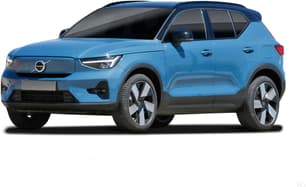
The XC40 Recharge Twin Motor is the flagship model for the segment leading small electric SUV from Volvo.
Well positioned in terms of price, specifications and driving range, it continues to prove itself a fierce rival to the Mercedes-Benz EQA, Lexus UX and newcomer BMW iX1.
But does it bring its A-game to every attribute buyers in the small electric SUV segment demand? In this review, we put it to test to find out.
Being a true Jack of all trades in the car world is rare.
Generally speaking, a vehicle is either capable or comfortable. Attractive or aerodynamic. Practical or performance orientated. And problems arise when cars try to do all those things well, all at the same time.
Which make the Lexus LC 500 Convertible such an interesting proposition. Because it is, without doubt, stylish, and lavishly equipped. It’s also rather large and rather heavy. All of which is perfect for cruising the Bondi foreshore.
But it’s also equipped with a thumping V8 engine and a throaty exhaust that sounds like bricks in a blender on the overrun. It’s stiffer than the LFA supercar, and plenty powerful, which should deliver one of Lexus’ sportiest-ever drives.
So can the LC 500 really do it all? Let’s find out.
The Volvo XC40 Recharge Twin Motor is a cute small electric SUV that offers a decent specs list and a sweet urban driving experience. It’s not the nicest ride on a longer journey but it does have a decent range to be able to tackle one, if needed. I didn’t love the interior design but there’s lots the XC40 gets right.
Stunning to behold, and even more so to listen to, the LC 500 Convertible with no doubt turn as many heads as its owners surely want it to. It's not the final word in performance, but it's a lavishly equipped transporter none the less.
The XC40 Recharge sees some design changes from its fuel-based counterparts and that’s mainly seen in the front because you get a body-coloured panel instead of a standard grille. The 20-inch alloys feature a chunkier-looking design but the front still boasts the cool ‘Hammer of Thor’ headlights (which I'm rather fond of).
The interior is where the electric powertrain loses me because the fuel-based equivalent is so much nicer inside with its leather-accented upholstery and trims.
It's lovely that there has been a conscious effort to use recycled materials and non-leather upholstery throughout but I'm left with the strange-feeling that synthetic seats don’t reflect the grade or price level of this car.
Other than the cool-looking topography inserts on the dash and front doors and the 9.0-inch vertical multimedia system, it’s pleasant but a little basic in the cabin. Which is shame because the exterior is cute as hell.
It’s eye-catching, the LC 500, if big, bolshy convertibles are your thing, and especially viewed front-on, where the aggressive nose design ends in a sharp crease in the mesh grille. I love the headlight design, too, which bleeds back into the body work, but also merges with the vertical light cluster that bookends the grille.
The side view is all shining alloys and sharp body creases, too, leading to an oversized boot that stores the fabric, aluminium and magnesium roof structure, which drops or raises in 15 seconds at speeds of up to 50km/h. The design fits into what Lexus calls an “impossibly small space behind the seats”.
Inside, it’s a snug but luxurious space, wrapped largely in leather and equipped with a wealth of technology. It’s a point we’ve made before, but why Lexus perseveres with its trackpad infotainment control technology is beyond us, but there’s no denying the cabin of the LC 500 is a wondrous place to spend time.
We particularly like the integration of the centre screen, which is recessed beneath the leather-wrapped edge of the dash. While some look like an afterthought, this appears to have been included in the broader design philosophy.
Front passengers enjoy the most space and I have plenty of head- and legroom up front. It’s a really easy car to get in and out of and the individual storage is very good for the class.
Front passengers enjoy a glove box, middle console with a removeable bin, two cupholders, utility tray and skinny drink bottle holders in the storage bins in the doors.
In the rear, passengers get map pockets on the backs of the front seats, two cupholders in the fold-down armrest and small storage bins in each door.
The synthetic leather-trimmed seats look neat and tidy but are very hard in the cushion, which makes them a tad uncomfortable on longer trips. The rear seats are much the same.
Charging options throughout the car are good with the front enjoying a 12-volt port, two USB-C sockets and a wireless charging pad to choose from. The rear also gets two USB-C ports and there's another 12-volt outlet in the boot.
The rest of the technology is easy to use once you spend some time with it. The 9.0-inch touchscreen multimedia system features built-in Google Maps, Assistant and Play Store apps, as well as, YouTube.
The 12.0-inch digital instrument panel isn’t customisable but I like the way it pulls through the satellite navigation screen and directions.
Because of the dual-motor powertrain, your boot capacity drops to 419L from 452L for the single-motor variant. It is large enough for my grocery shop and random errands and you can fold the floor up to create a deep storage well for additional space. Fold the 60/40 split-folding rear seat and available space expands to 1295 litres.
I don’t like the hardened cargo liner, it feels and looks a little cheap, but I do like the powered tailgate. There’s also handy frunk storage of 31L, which is perfectly sized for any charging cables you will have.
It’s not, really. But then, what were you expecting?
As mentioned above, the interior feels snug for upfront riders, but not in a bad way. More that elements of the interior feel like they’re reaching out to greet you, leaving you with the impression of being tucked into the cabin.
Backseat riders are out of luck, though, with the seats really only reserved for emergencies. Legroom is tight, and while Lexus promises the roofline is about on-par with the Coupe, it’s not going to be a comfortable journey.
The LC 500 Convertible stretches 4770mm in length, 1920mm in width and 1350mm in height, and it rides on a 2870mm wheelbase. It will sit four at a pinch, and provide 149 litres of luggage space.
There are two ISOFIX attachment points in each of the rear seats, as well as top-tether points.
There are two powertrain options in the XC40 family, a mild-hybrid or pure electric. The latter gets two variants and we’re in the top-spec Recharge Twin Motor, which is priced from $85,990, before on-road costs. This positions it in the middle of its nearest rivals but in its family line-up it’s a big $23K jump from its Ultimate B4 AWD combustion equivalent.
The standard features list for the XC40 is robust and there are some great premium features, like the electrically-adjustable and heated front seats with extendable under-thigh support and electric lumbar control.
A panoramic sunroof makes the cabin feel light and airy, the rear outboard seats have heat functions and the driver enjoys a heated steering wheel. You also get a premium 13-speaker Harman Kardon sound system in the Twin Motor.
Other premium features include pre-entry and after-park climate control (perfect for those super-hot days) and a hands-free powered tailgate.
Technology highlights include a complimentary four-year subscription for the built-in Google Assistant, Google Maps and Google Play Store which are accessed via the portrait-style 9.0-inch multimedia touchscreen.
There's also access to apps like YouTube, which delighted my seven-year old and would be handy on any charging stints for some diversion. It's surprising there isn't wireless functionality for Apple CarPlay and Android Auto but they can be hooked up via cable.
It costs $214,000 - and that’s rather a lot of money - but unlike some premium and luxury cars, with Lexus, once you’ve handed over the cash, that’s it. There’s no tempting option list to lure you into parting with even more of your hard earned.
And I mean that literally - Lexus proudly proclaims that “there is no option list” for the LC 500 Convertible, so suffice it to say it arrives with plenty of gear.
Take a deep breath…
You get 21-inch two tone alloys, triple-stack LED headlights, keyless entry, retractable door handles and rain-sensing wipers outside, while inside, you’ll find dual-zone climate, leather-accented seats which are heated and ventilated, neck-level heating for when the roof is down, a heated steering wheel and sports pedals.
The tech stuff is handled by a 10.3-inch centre screen with Apple CarPlay, Android Auto and on-board navigation, both of which are controlled via Lexus’ impossible-to-kill touchpad. There’s a second, 8.0-inch screen for the driver, and the lot pairs with an impressive 13-speaker Mark Levinson stereo.
There’s also a heap of safety stuff, but we’ll come back to that in a moment.
If that’s not enough for you, you can spring for the Limited Edition, which is $234,000 for each of its 10 available examples. It arrives in a unique Structural Blue hue, with a white leather interior with blue highlights. It is designed to be the most blue of blues, too, with Lexus saying the paint colour was the result of a 15-year research project. Which sounds like a thrilling way to spend a decade and a half.
The XC40 Recharge Twin Motor features two electric motors which are powered by a large 82kWh lithium-ion battery and produce a combined power output of 300kW and 670Nm of torque.
Which is downright fun because it can do a 0-100km/h sprint in just 4.8-seconds!
It’s a lusty power plant, this one, and not something you immediately expect to find in a luxurious Lexus convertible.
The 5.0-litre V8 produces 351kW and 540Nm - 260kW of which arrives from 2000rpm - and it sounds like a God of Thunder as it’s doing it.
It pairs with a 10-speed automatic and sends all that grunt to the rear tyres, with Lexus’ Active Cornering Assist and a mechanical limited-slip differential helping you to not make a mess of things when tackling corners.
The official energy consumption figure is 19kWh/100km and I averaged 19.2kWh over a fair mix of urban and open-road driving. The energy consumption isn't bad but some rivals do sit closer to that 16.5kWh mark.
The official driving range is up to 485km for this model but I only ever saw a top range of 410km. That's not terribly surprising given I wasn't shy with the power use but there was a little bit of range anxiety on longer trips.
The XC40 Recharge Twin Motor has a Type 2 CCS charging port which means you can benefit from faster charging speeds. On an 11kW AC charger you can go from 0-100 per cent in eight hours but on a standard three-pin house plug socket expect that wait time to go up significantly.
On a DC fast charger expect to go from 10-80 per cent in as little as 33-minutes.
Remember when I said it was lusty V8? When has that ever been good news for fuel use?
Lexus reckons you’ll get 12.7L/100km on the combined cycle, but the temptation of all that grunt will pretty much ensure that never happens. Emissions are pegged at 290g/km of C02.
The LC 500 Convertible’s 82-litre fuel tank only accepts 98RON fuel.
Like the Polestar 2 there’s no ignition button on the XC40. You shift into drive to ‘turn on’ and after you park, you simply get out to turn it off. It takes a little while to get used to but it’s a cool feature.
The twin motors deliver a hefty kick and you never worry about not having ‘enough power’. In the city it’s zippy but on the open-road you also feel comfortable getting up to speed or overtaking because the power distribution is so well-balanced because it’s an AWD.
I customised my steering wheel ‘feel’ to firm and it makes the handling crisp and direct. You feel like you’re in total control whenever you have to tackle be it tight streets or small car parks.
The blind-spot visibility is compromised by how wide the B and C-pillars are and I find that I'm relying a lot more on the blind-spot monitoring system to compensate.
The XC40 loses a few points for me in terms of ride comfort. As mentioned, the seats aren't terribly comfortable but the suspension is hard enough that you notice every bump, as well.
Road noise is also quite pronounced and it doesn’t sound refined when you drive at higher speeds, which is a shame. The flip-side, though, is that you don’t notice those things as much on short, urban trips.
The standard regen braking isn’t customisable and you don’t notice it until you switch over to a 'one-pedal' function. I found this function uncomfortable to use as it’s very aggressive and creates a jerky driving experience.
Because of its 4440mm length and tiny 11m turning circle, you won’t struggle in a car park! The 360-degree view camera system and front and rear parking sensors make it easy to navigate a tight spot.
This is a joy to park. It’s so easy.
It’s a tough nut to immediately crack, the LC 500 Convertible.
It feels like it really wants to be a super-accomplished performance car, and on longer, more sweeping bends it is, with that thick flow of power ensuring you simply surf through corners before rocketing out the other side, the air filled with that growling exhaust note as your right foot finds its way to the carpet.
But on the tighter stuff, there are some factors that play against it. The suspension feels sorted and that engine is always willing to deliver, but for mine, the steering and brakes felt a little disconnected from the experience, not inspiring much in the way of late-braking confidence. And then there’s the sheer two-tonne-plus weight of the thing, which can’t be totally hidden, even by Lexus’ best wizardry.
Don’t get me wrong, it’s very capable, even on surprisingly tight stuff. It’s just that there’s something of a disconnect between car and driver.
That’s not a bad thing, really. Are you really buying a premium convertible to attack a mountain pass? Probably not. And keep it flowing through corners and the LC 500 Convertible will keep a smile painted on your face, owing mostly to wave of torque you can ride to your destination.
Hovering your foot over the accelerator must surely be what the President feels like whenever he stands near the nuclear football, with that big V8 always ready to turn on the fireworks.
Away from the red mist, you’ll find the LC 500 Convertible positively flows from destination to destination, the 10-speed gearbox - which can feel flustered at pace - seamlessly flicking through its options, and the ride in its most comfortable settings disposing of most road imperfections before they enter the cabin.
The cabin is also very cleverly insulated, not just when the four-part roof is up, but also when it’s down, with the climate and ambience of the interior largely unaffected by what’s going on in the outside world.
The XC40 has a long safety features list but a standout is the Volvo designed 'Side Impact Protection System' (SIPS) that reinforces the car's steel framework at the sides and disperses energy in a side collision.
Other standard features include full LED external lights, daytime running lights, adaptive cruise control, rear cross-traffic alert, blind-spot monitoring, driver attention alert, forward collision warning, lane departure alert, lane keeping aid, intelligent seatbelt reminders, traffic sign recognition, 360-degree camera system, front and rear parking sensors.
The XC40 has a maximum five-star ANCAP safety rating from testing done in 2018. It has seven airbags, including a driver's knee bag and features high individual scoring for adult and child occupant protection at 97 per cent and 84 per cent, respectively.
The XC40 has AEB with car, pedestrian and cyclist detection and is operational from 4.0-210km/h. It's usual to see that top speed sit closer to 180km/h, so that's very good.
A cool feature for any parents out there is the second key which you can program to limit stereo volume levels and set a maximum speed allowance. It's even coloured bright orange so there are no chances of a sneaky switcheroo!
There are ISOFIX child-seat mounts on the rear outboard seats and three top-tether anchor points for any families out there but two seats will fit best.
The Lexus LC 500 Convertible arrives with six airbags, a reversing camera with guide lines, parking sensors, and the usual suite of traction and braking aids, but there’s much more to the safety story, too.
The more high-tech stuff includes parking sensors, pre-collision assist with AEB, lane keep assist, blind-spot monitoring, rear cross-traffic alert and active cruise, as well as bespoke convertible safety gear, like active roll bars that deploy when the car is in danger of rolling over, protecting the occupants beneath that soft roof.
The ongoing costs are pretty solid with the XC40 coming with a usual five-year/ unlimited warranty term but the drive battery is covered for eight years/160,000km.
You can pre-purchase a five-year/150,000km servicing program for a flat $3000 or an average of $600 per service, which is a bit expensive for the class. Servicing intervals are great at every two-years or 30,000km, whichever occurs first.
You get complimentary roadside assistance for five-years through Assist Australia and if you meet certain criteria, you can extend that by a further three years, which is handy.
Lexus vehicles are covered by a four-year, 100,000 kilometre warranty, and the LC 500 Convertible requires servicing every 15,000kms.
Lexus's Encore ownership program includes pick-up and drop-off servicing, but the new Encore Platinum level for owners of its more exclusive models unlocks even more stuff.
One is a new On Demand service, which allows owners to book a different style of car when heading off on a holiday or business trip. The loans are available in your state or somewhere else in Australia if you're travelling, with your car waiting for you at Qantas Valet for you when you arrive.
The On Demand service is available on four occasions over your first three years of ownership (which is also the length of the Encore Platinum membership).