What's the difference?
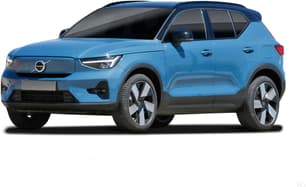
The XC40 Recharge Twin Motor is the flagship model for the segment leading small electric SUV from Volvo.
Well positioned in terms of price, specifications and driving range, it continues to prove itself a fierce rival to the Mercedes-Benz EQA, Lexus UX and newcomer BMW iX1.
But does it bring its A-game to every attribute buyers in the small electric SUV segment demand? In this review, we put it to test to find out.
The 2022 Mitsubishi Eclipse Cross has a new high-tech powertrain that allows it to run as an electric car, or run using the petrol engine, or even use both at the same time.
But the new hybrid SUV is not like a Toyota hybrid - because this one can be plugged in at home to recharge the batteries, and you should be able to get at least 50 kilometres of EV driving out of just a few dollars worth of electricity.
We’re talking about the new 2022 Mitsubishi Eclipse Cross Plug-in Hybrid EV, or PHEV as we’ve called it in the past. The brand has renamed it to include both ‘Hybrid’ and ‘EV’ in the name because, well, it reckons those terms have a bit more cut-through today than when the company first launched its Outlander PHEV back in 2014.
But with the new Eclipse Cross PHEV variants attracting a huge premium over the regular petrol-turbo models, does the extra money buy you a better car? Let’s find out.
The Volvo XC40 Recharge Twin Motor is a cute small electric SUV that offers a decent specs list and a sweet urban driving experience. It’s not the nicest ride on a longer journey but it does have a decent range to be able to tackle one, if needed. I didn’t love the interior design but there’s lots the XC40 gets right.
The Mitsubishi Eclipse Cross Plug-in Hybrid EV is an interesting inclusion for the brand, especially as it is typically considered a ‘value player’ in the market.
But with negligible real-world fuel consumption benefits if you drive beyond the limited EV range and a high price premium over the non-PHEV models, it’s important you see if the sums add up for your particular needs.
Primarily going to use the car for running around town? Cool. Think the 50-ish-kay EV range will work for you and make you happy? Amazing. Sold on the look of the car? Hat tipped.
But let me say this - if you are considering the Eclipse Cross PHEV, there are some alternatives you should also have on your list, including the MG HS PHEV, the Hyundai Ioniq PHEV, Kia Niro PHEV, and - the one I’d buy - a Toyota RAV4 Hybrid. For me, plug-in hybrid tech is a bit of a halfway house, in most instances offering too high a price premium for the range you’re getting to drive electric. Heck, a Kona Electric isn’t much more than the top-spec Exceed PHEV, and I’d have that if I wanted a real day-to-day EV experience.
The XC40 Recharge sees some design changes from its fuel-based counterparts and that’s mainly seen in the front because you get a body-coloured panel instead of a standard grille. The 20-inch alloys feature a chunkier-looking design but the front still boasts the cool ‘Hammer of Thor’ headlights (which I'm rather fond of).
The interior is where the electric powertrain loses me because the fuel-based equivalent is so much nicer inside with its leather-accented upholstery and trims.
It's lovely that there has been a conscious effort to use recycled materials and non-leather upholstery throughout but I'm left with the strange-feeling that synthetic seats don’t reflect the grade or price level of this car.
Other than the cool-looking topography inserts on the dash and front doors and the 9.0-inch vertical multimedia system, it’s pleasant but a little basic in the cabin. Which is shame because the exterior is cute as hell.
You’re going to be able to tell the PHEV model from its more conventional counterparts by those oversized ‘Plug-in Hybrid EV’ badges on the front doors, and if you want to tell those behind you what you’re driving, there’s also a ‘PHEV’ badge there, too. Wait, wasn’t the plan to do away with the term ‘PHEV’, Mitsubishi?
But aside from that, the outside features just the different 18-inch alloy wheels (which are the same on all PHEV models, no matter the cost - I think that’s a bit lame, because if I’m spending $7500 on the Exceed I’d like a different wheel design!). Oh, and the Aspire and Exceed get that different lower front splitter, too.
Plus the PHEV has two fuel filler doors - one on each side of the car over the rear wheels. The driver’s side one is the EV charging ports (x2 - detailed below), and the passenger’s side one is for the petrol. Note: while the EV port is push-openable, the petrol cap still requires you to lift a lever in the driver’s footwell.
It may be categorised a small SUV but at 4545mm long, riding on a 2670mm wheelbase, 1805mm wide and 1685mm tall, it’s big for its boots. The popular Mazda CX-5 is only 5mm longer, and it plays in the midsize SUV segment!
Inside there are some design differences, with a specific gear joystick-style selector, and a different instrument panel.
It is impressive how the brand has managed to shoehorn a petrol engine, two electric motors, a battery pack and more into the car, but there are some practicality implications. Read about them in the next section.
Front passengers enjoy the most space and I have plenty of head- and legroom up front. It’s a really easy car to get in and out of and the individual storage is very good for the class.
Front passengers enjoy a glove box, middle console with a removeable bin, two cupholders, utility tray and skinny drink bottle holders in the storage bins in the doors.
In the rear, passengers get map pockets on the backs of the front seats, two cupholders in the fold-down armrest and small storage bins in each door.
The synthetic leather-trimmed seats look neat and tidy but are very hard in the cushion, which makes them a tad uncomfortable on longer trips. The rear seats are much the same.
Charging options throughout the car are good with the front enjoying a 12-volt port, two USB-C sockets and a wireless charging pad to choose from. The rear also gets two USB-C ports and there's another 12-volt outlet in the boot.
The rest of the technology is easy to use once you spend some time with it. The 9.0-inch touchscreen multimedia system features built-in Google Maps, Assistant and Play Store apps, as well as, YouTube.
The 12.0-inch digital instrument panel isn’t customisable but I like the way it pulls through the satellite navigation screen and directions.
Because of the dual-motor powertrain, your boot capacity drops to 419L from 452L for the single-motor variant. It is large enough for my grocery shop and random errands and you can fold the floor up to create a deep storage well for additional space. Fold the 60/40 split-folding rear seat and available space expands to 1295 litres.
I don’t like the hardened cargo liner, it feels and looks a little cheap, but I do like the powered tailgate. There’s also handy frunk storage of 31L, which is perfectly sized for any charging cables you will have.
Up front, the cabin is a pretty smart place, with nice enough materials and finishes, and a few good storage options. There’s a cubby in front of the shifter, but oddly enough it doesn’t have a wireless charger (there are 2x USB 2.0 ports above) and isn’t quite big enough for a smartphone (even the smaller ones don’t fit there all that easily), and there are cup holders between the seats, a decent covered centre console bin, and door pockets large enough for bottles.
The PHEV models get a different instrument cluster dial for EV driving readout info, but all have the old-school 4.2-inch TFT colour display that lacks the size and usability of some rivals with larger info screens - the MG HS PHEV, for instance, has a 12.3-inch digital display, which shows you a lot more info than this tiny little screen does. Heck, there’s not even a digital speedometer in there - and you only get one if you buy the Exceed model, which has a head-up display (HUD).
That’s part of the problem with the way this car’s interface operates. If you want the most detailed information you need to use the touchscreen media system, but that negates the usability of the media functions. On multiple occasions I found myself switching between Apple CarPlay phone calls and searching for that particular driving info screen I found most useful (there are about 15 screens to choose from, and plenty of them are hard to decipher).
It’s a huge disappointment for a customer who might want to see all that detailed information but also listen to a podcast, answer a call, follow their phone’s mapping or just have anything other than the hybrid info come up on the infotainment screen. The screen itself - an 8.0-inch unit, with sat nav integrated into the top spec only - is fine, but small compared to today’s rivals.
In the back seat, there’s a compromise for cabin space. The leg room is good, but the seat has been bumped up to accommodate some of the electrical hardware and the petrol tank, meaning someone my size (182cm/6’0”) will find they’ve got enough room for their legs but not their head, and those even larger will really need to take care getting in and out. While pre-facelift examples of this car had a clever sliding second row seat, that’s gone. It was never a feature in any PHEV version, and undoubtedly the layout of the battery pack has something to do with that.
The double pane sunroof no doubt eats into the space in the rear to a degree as well, and in the Exceed it likely feels a bit more cramped because of the black headliner.
While three adults could potentially fit across the back row for very short trips, there are dual ISOFIX and three top-tether points for child seats. The Exceed is the one you want if you’re aiming to treat your rear-seat passengers right: it has heated rear outboard seats, rear directional air vents and two USB ports for charging - the ES and Aspire miss out on all that stuff.
Boot space is 359L (VDA) for PHEV models, which is a step down from the 405 litres (VDA) for the non-hybrid models. There is extra hardware under the floor, and you don’t get a spare wheel in the PHEV models either - instead there’s a tyre repair kit. For context, we only just managed to fit all three CarsGuide hard suitcases (124L, 95L and 36L) in the boot of the PHEV version, while it was far less of an issue in the non-PHEV.
Oddly, no model comes with a power tailgate.
There are two powertrain options in the XC40 family, a mild-hybrid or pure electric. The latter gets two variants and we’re in the top-spec Recharge Twin Motor, which is priced from $85,990, before on-road costs. This positions it in the middle of its nearest rivals but in its family line-up it’s a big $23K jump from its Ultimate B4 AWD combustion equivalent.
The standard features list for the XC40 is robust and there are some great premium features, like the electrically-adjustable and heated front seats with extendable under-thigh support and electric lumbar control.
A panoramic sunroof makes the cabin feel light and airy, the rear outboard seats have heat functions and the driver enjoys a heated steering wheel. You also get a premium 13-speaker Harman Kardon sound system in the Twin Motor.
Other premium features include pre-entry and after-park climate control (perfect for those super-hot days) and a hands-free powered tailgate.
Technology highlights include a complimentary four-year subscription for the built-in Google Assistant, Google Maps and Google Play Store which are accessed via the portrait-style 9.0-inch multimedia touchscreen.
There's also access to apps like YouTube, which delighted my seven-year old and would be handy on any charging stints for some diversion. It's surprising there isn't wireless functionality for Apple CarPlay and Android Auto but they can be hooked up via cable.
The 2022 Eclipse Cross PHEV line-up is expensive compared to the petrol-turbo models.
The ES AWD has a list price (all prices MSRP, before on-road costs) of $46,490, while the mid-spec Aspire costs $49,990 and the top-end Exceed lists at $53,990.
I know they’re not like-for-like in every instance - the ES and Aspire petrol-turbo models are 2WD, not AWD, for example, and there are some specification differences, too - but the price jump from each respective non-PHEV version is $15,500 (ES), $14,250 (Aspire) and $12,500 (Exceed).
Yikes.
You’d really, really have to want the EV driving experience to justify that additional expenditure, right?
Here’s a rundown of the specifications across the three PHEV grades.
Standard for the $46,490 ES grade are 18-inch alloy wheels, LED daytime running lights, halogen headlights, keyless entry and push-button start, cloth interior trim, manual front seat adjustment, an 8.0-inch touchscreen media system with Apple CarPlay and Android auto, a reversing camera, a four speaker stereo, digital radio and a rear cargo blind.
Step up to the $49,990 Aspire and you score LED headlights and fog lights, a lower body kit, heated front seats, faux-leather and microsuede trim, auto wipers, adaptive cruise control, an eight-speaker stereo, surround view camera, front and rear parking sensors, and an array of safety equipment that we’ll cover off in the safety section.
Choosing the range-topping $53,990 Exceed model nets you leather seat trim, a heated steering wheel, a head-up display - making it the only grade with a digital speedo! - as well as sat nav, a dual pane sunroof, and a black headliner in the cabin.
The XC40 Recharge Twin Motor features two electric motors which are powered by a large 82kWh lithium-ion battery and produce a combined power output of 300kW and 670Nm of torque.
Which is downright fun because it can do a 0-100km/h sprint in just 4.8-seconds!
The plug-in hybrid version runs a non-turbocharged 2.4-litre Atkinson cycle petrol engine producing just 94kW and 199Nm.
Meagre outputs, but the petrol unit is backed by two electric motors - the front motor has outputs of 60kW/137Nm, while the rear motor produces 70kW/195Nm. It’s all controlled by a single-speed transmission.
There is no ‘combined power output’ figure, but there is a 13.8kWh lithium-ion battery pack as part of the equation as well.
The engine can power the battery pack in series hybrid driving mode, so if you want to top up the batteries before you get to a city, you can. And there is regenerative braking, of course. More on recharging in the next section.
The official energy consumption figure is 19kWh/100km and I averaged 19.2kWh over a fair mix of urban and open-road driving. The energy consumption isn't bad but some rivals do sit closer to that 16.5kWh mark.
The official driving range is up to 485km for this model but I only ever saw a top range of 410km. That's not terribly surprising given I wasn't shy with the power use but there was a little bit of range anxiety on longer trips.
The XC40 Recharge Twin Motor has a Type 2 CCS charging port which means you can benefit from faster charging speeds. On an 11kW AC charger you can go from 0-100 per cent in eight hours but on a standard three-pin house plug socket expect that wait time to go up significantly.
On a DC fast charger expect to go from 10-80 per cent in as little as 33-minutes.
The Eclipse Cross PHEV has an official combined cycle fuel consumption figure of 1.9L/100km. That’s astounding, really, but you need to realise that the test calculation is only for the first 100 kays - there’s a really good chance your real-world consumption will be a lot higher, as you can only deplete the battery charge once before calling on the engine (and your petrol tank) to juice it back up.
Electric driving range is stated at 55km based on NEDC cycle testing, while the WLTP rating is a more realistic 45km. In our testing we fell between the two during our “fully charged” 100km run, in which the electric charge initially ran for 50km. But, over the 100km run, the dashboard info screen said the car used “82 per cent” electric driving, while somehow also showing 3.9L/100km for petrol consumption.
I did the numbers at the fuel filler, and the actual return was 4.5L/100km. That’s okay, but not nearly as spectacular as you might hope, and I’ve seen very close in a RAV4 hybrid - which in most instances is cheaper than the Eclipse Cross despite being bigger and, frankly, a lot better.
I also ran the car for a further 100 kays without plugging in, just to see what the ‘worst case scenario’ might be - and it wasn’t too bad, with the fuel consumption jumping to a real-world return of 5.5L/100km. But again, that’s worse than you’ll likely get with a RAV4…
When it comes to charging/recharging, there is available AC charging using a Type 2 plug that can fully recharge the battery in as little as 3.5 hours, according to the brand. DC fast charging with a CHAdeMO plug should fill from zero to 80 per cent in 25 minutes. Maximum charge input is 3.6kW.
Like me, you’ll want to do the maths to see what is going to be the most economical way to run your car - aside from just plugging it in at the office and hoping nobody notices.
A standard 10-amp household plug - which should take about seven hours to replenish the batteries - could cost as little as $1.88 to get back your circa-50km EV range - that’s based on overnight charging, off-peak, on an average 13.6c/kWh electricity price. Of course, if you’re considering a PHEV, you might have a solar array and the electricity could well be free. Good for you.
But remember, there’s more to it than just the electricity costs - you need to also consider the additional purchase budget required just to get into the PHEV model over a regular Eclipse Cross.
Like the Polestar 2 there’s no ignition button on the XC40. You shift into drive to ‘turn on’ and after you park, you simply get out to turn it off. It takes a little while to get used to but it’s a cool feature.
The twin motors deliver a hefty kick and you never worry about not having ‘enough power’. In the city it’s zippy but on the open-road you also feel comfortable getting up to speed or overtaking because the power distribution is so well-balanced because it’s an AWD.
I customised my steering wheel ‘feel’ to firm and it makes the handling crisp and direct. You feel like you’re in total control whenever you have to tackle be it tight streets or small car parks.
The blind-spot visibility is compromised by how wide the B and C-pillars are and I find that I'm relying a lot more on the blind-spot monitoring system to compensate.
The XC40 loses a few points for me in terms of ride comfort. As mentioned, the seats aren't terribly comfortable but the suspension is hard enough that you notice every bump, as well.
Road noise is also quite pronounced and it doesn’t sound refined when you drive at higher speeds, which is a shame. The flip-side, though, is that you don’t notice those things as much on short, urban trips.
The standard regen braking isn’t customisable and you don’t notice it until you switch over to a 'one-pedal' function. I found this function uncomfortable to use as it’s very aggressive and creates a jerky driving experience.
Because of its 4440mm length and tiny 11m turning circle, you won’t struggle in a car park! The 360-degree view camera system and front and rear parking sensors make it easy to navigate a tight spot.
This is a joy to park. It’s so easy.
If you’re after that electric car thrill of near-silent, almost mind-blowing acceleration, the Eclipse Cross mightn’t be the right car for you
But if swift progress and the buzz you get from taking off from the traffic lights without any hesitation at all is more your thing, it could be great for you. And if you’re not quite ready to go “full EV”, then it’s probably something you’re considering.
The EV driving mode is the best driving mode in this car. You can run it just on the petrol engine to ensure you save your battery range, and you might choose to do that when you’re driving on the freeway and know you’re approaching an urban area where the EV goodness will be better used. Or you could have it so it's using battery and petrol power, and that’s where you’ll get maximum combined performance.
But running the car in the default, EV-prioritised mode means you will make the best of this powertrain's strengths, because - for the fifty odd kays you’ll get out of the battery - it’s pretty good.
It’s also impressive the way this powertrain dips between petrol engine, battery pack or both at higher speeds. When the battery range had depleted on my test drive, the engine kicked in almost imperceptibly, working to power the car and also generate more electricity for the battery pack. It then dipped out of petrol, back to battery, and so on and so forth, multiple times during my drive.
The best thing about the way it did so was that it was smooth. There is barely any vibration from the petrol engine, the transmission doesn’t have any gears to fumble with, and overall the refinement is really good.
There are drive modes - Eco, Normal, Snow, Gravel and Tarmac - and in my test I kept to Normal. I did fiddle with the regenerative braking reactiveness, though, using the paddleshifters to dial up or down the aggressiveness of the energy recoup system. It doesn’t feel as aggressive as some pure electric cars, but thankfully it has a decent pedal feel and progression when you apply the brakes yourself.
The steering is light and lacks feel, and doesn’t offer that much engagement or involvement. That might matter to you if you’re like me. I wish it was more fun. But at least it’s easy to park.
While the suspension is fine and comfortable on the highway, it can feel wooden and the ride is quite lumpy at low speeds. It never really feels all that well resolved for urban driving, which is a bit of a downer considering that’s likely where a car like this will spend most of its time
The tune of the suspension - being a bit firm at lower pace - surprisingly doesn’t have any payoff when it comes to cornering, as it lacks a bit of body control, shifting its weight side to side.
All in all it is a decent plug-in hybrid offering – and will be perfectly suitable to someone who wants some EV driving as a part of their lifestyle. It’s just a matter of doing the maths as to whether it will work for you.
The XC40 has a long safety features list but a standout is the Volvo designed 'Side Impact Protection System' (SIPS) that reinforces the car's steel framework at the sides and disperses energy in a side collision.
Other standard features include full LED external lights, daytime running lights, adaptive cruise control, rear cross-traffic alert, blind-spot monitoring, driver attention alert, forward collision warning, lane departure alert, lane keeping aid, intelligent seatbelt reminders, traffic sign recognition, 360-degree camera system, front and rear parking sensors.
The XC40 has a maximum five-star ANCAP safety rating from testing done in 2018. It has seven airbags, including a driver's knee bag and features high individual scoring for adult and child occupant protection at 97 per cent and 84 per cent, respectively.
The XC40 has AEB with car, pedestrian and cyclist detection and is operational from 4.0-210km/h. It's usual to see that top speed sit closer to 180km/h, so that's very good.
A cool feature for any parents out there is the second key which you can program to limit stereo volume levels and set a maximum speed allowance. It's even coloured bright orange so there are no chances of a sneaky switcheroo!
There are ISOFIX child-seat mounts on the rear outboard seats and three top-tether anchor points for any families out there but two seats will fit best.
All Mitsubishi Eclipse Cross models have been awarded a five-star ANCAP crash test safety rating based on 2017 testing for the pre-facelift model.
The range has increasing levels of safety technology the more you spend, but all variants have forward autonomous emergency braking (AEB) with forward collision warning (operates between 5km/h and 80km/h) and the AEB includes pedestrian detection (between 15km/h and 140km/h).
Standard on all grades is a reversing camera, rear parking sensors, seven airbags (dual front, driver’s knee, front side, side curtain for both rows), active Yaw control, stability control, and anti-lock brakes (ABS) with brake force distribution. Lane departure warning is standard too.
Spend up on the Aspire for adaptive cruise control, blind-spot monitoring, rear cross-traffic alert, and front parking sensors. From Aspire up to Exceed, there’s the addition of the brand’s Ultrasonic Misacceleration Mitigation System, which can dull throttle response to prevent potential low speed collisions.
No speed sign recognition is available, and therefore no smart cruise control either. Plus there is no lane centring system fitted either, and nor is there a driver attention monitoring system, so it’s falling behind on the tech front.
The Mitsubishi Eclipse Cross is built in Japan.
The ongoing costs are pretty solid with the XC40 coming with a usual five-year/ unlimited warranty term but the drive battery is covered for eight years/160,000km.
You can pre-purchase a five-year/150,000km servicing program for a flat $3000 or an average of $600 per service, which is a bit expensive for the class. Servicing intervals are great at every two-years or 30,000km, whichever occurs first.
You get complimentary roadside assistance for five-years through Assist Australia and if you meet certain criteria, you can extend that by a further three years, which is handy.
There’s a huge 10 year/200,000 kilometre warranty on offer - but it’s valid if you maintain your car with Mitsubishi’s dedicated dealer service network over the 10 years/200,000km timeline, or else you get a five-year/100,000km plan.
But while the rest of the car will be covered by that decade-long warranty if you service it with Mitsubishi, the battery is only covered for eight years/160,000km, no matter where you have the car serviced.
Maintenance is due every 12 months/15,000km. But just a note - the more complex powertrain means higher service costs than the regular turbo-petrol versions. The annual fees are: $299, $399, $299, $399, $299, $799, $299, $799, $399, $799; so an average cost of $339 for the first five years, or $558.90 per visit over 10 years/150,000kn.
Included for customers who service their car with the brand is four years of roadside assist.
Do you have questions over reliability, issues, concerns, recalls, automatic transmission problems, or anything else of that ilk? Check out our Mitsubishi Eclipse Cross problems page.