What's the difference?
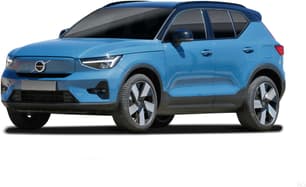
The XC40 Recharge Twin Motor is the flagship model for the segment leading small electric SUV from Volvo.
Well positioned in terms of price, specifications and driving range, it continues to prove itself a fierce rival to the Mercedes-Benz EQA, Lexus UX and newcomer BMW iX1.
But does it bring its A-game to every attribute buyers in the small electric SUV segment demand? In this review, we put it to test to find out.
Make no mistake, you are looking at the biggest challenge the all-conquering Tesla Model Y has ever faced in Australia.
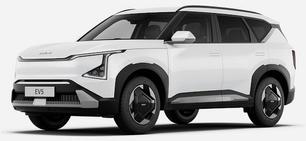
It’s the Kia EV5, a mid-size, all-electric SUV the Korean brand thinks will be its best-selling EV by some margin.
Oh, and it’s cheaper than the Tesla, by more than a little bit.
So, is this the electric SUV that might finally put an end to Tesla’s winning run in Australia?
The Volvo XC40 Recharge Twin Motor is a cute small electric SUV that offers a decent specs list and a sweet urban driving experience. It’s not the nicest ride on a longer journey but it does have a decent range to be able to tackle one, if needed. I didn’t love the interior design but there’s lots the XC40 gets right.
The size is right, the price is right and the drive is right – three things that make the Kia EV5 a pretty formidable foe, and the kind of vehicle that might finally be able to break through the wall of the temple of Tesla in Australia.
Note: CarsGuide attended this event as a guest of the manufacturer, with accommodation and meals provided.
The XC40 Recharge sees some design changes from its fuel-based counterparts and that’s mainly seen in the front because you get a body-coloured panel instead of a standard grille. The 20-inch alloys feature a chunkier-looking design but the front still boasts the cool ‘Hammer of Thor’ headlights (which I'm rather fond of).
The interior is where the electric powertrain loses me because the fuel-based equivalent is so much nicer inside with its leather-accented upholstery and trims.
It's lovely that there has been a conscious effort to use recycled materials and non-leather upholstery throughout but I'm left with the strange-feeling that synthetic seats don’t reflect the grade or price level of this car.
Other than the cool-looking topography inserts on the dash and front doors and the 9.0-inch vertical multimedia system, it’s pleasant but a little basic in the cabin. Which is shame because the exterior is cute as hell.
If you’re familiar with any of Kia’s EV designs, and specifically the EV9, you’ll already know the Kia EV5, which looks a lot like a shrunken version of the company’s biggest electric 4WD.
But this one looks a bit smaller, a bit more familiar looking, and maybe a bit more accessible than the hyper-modern EV9.
Honestly, it looks like a contemporary, mid-size SUV that could be powered by anything.
There are a couple of EV5 design elements I really like. The first is the combination of hard edges and subtle curves, which combine really well. I also love the lighting treatment up front, which gives the EV5 a bold and unique light signature, especially at night.
Inside, it’s another story of familiarity, with a clean, high-tech cabin and Kia’s common twin-screen set-up. Actually, it’s more a triple screen, with two 12.3-inch screens, and a 5.0-inch climate monitor between them.
The materials are all nice, and they look great, but they don’t exactly melt under the touch, and that gives the EV5’s cabin a hard edge I don’t love.
I do, however, love the inclusion of some physical buttons, so you’re not pawing through the screen to access every in-car function.
And one final design quirk. I know it looks like it has an old-school bench front seat, but you can’t use it as a third seat in front. Kia says it’s just a design flourish. But it is also somewhere safe to pop your phone or other small valuables to stop them sliding about when you're on the road.
Front passengers enjoy the most space and I have plenty of head- and legroom up front. It’s a really easy car to get in and out of and the individual storage is very good for the class.
Front passengers enjoy a glove box, middle console with a removeable bin, two cupholders, utility tray and skinny drink bottle holders in the storage bins in the doors.
In the rear, passengers get map pockets on the backs of the front seats, two cupholders in the fold-down armrest and small storage bins in each door.
The synthetic leather-trimmed seats look neat and tidy but are very hard in the cushion, which makes them a tad uncomfortable on longer trips. The rear seats are much the same.
Charging options throughout the car are good with the front enjoying a 12-volt port, two USB-C sockets and a wireless charging pad to choose from. The rear also gets two USB-C ports and there's another 12-volt outlet in the boot.
The rest of the technology is easy to use once you spend some time with it. The 9.0-inch touchscreen multimedia system features built-in Google Maps, Assistant and Play Store apps, as well as, YouTube.
The 12.0-inch digital instrument panel isn’t customisable but I like the way it pulls through the satellite navigation screen and directions.
Because of the dual-motor powertrain, your boot capacity drops to 419L from 452L for the single-motor variant. It is large enough for my grocery shop and random errands and you can fold the floor up to create a deep storage well for additional space. Fold the 60/40 split-folding rear seat and available space expands to 1295 litres.
I don’t like the hardened cargo liner, it feels and looks a little cheap, but I do like the powered tailgate. There’s also handy frunk storage of 31L, which is perfectly sized for any charging cables you will have.
At 4615mm in length, 1875mm in width, 1715mm in height, and with a wheelbase of 2750mm, the Kia EV5 is roughly the same size as a Tesla Model Y, so if you’re ever sat in the back of the Tesla, you’ll have a fair idea of what to expect here.
Sitting behind my own 175cm driving position, I found I had a heap of knee room, more than enough headroom, and I reckon you could fit three adults across the back seat pretty easily, too.
There are a couple of design flourishes I really like, too. The pull-down divider that separates the backseat is home to two cupholders, which isn’t unusual, but what is new to me is the unique positioning of the USB charge ports, which are in the middle-back of the front seats, right above the storage pocket, so you have somewhere to pop your phone and cable when you're charging.
There is also a deep storage draw between the two front seats. It’s just for extra storage in the Air and Earth, but in the GT-Line it’s heated and cooled, which means hot pies or cold drinks when you’re on the move.
The EV5 might be an all-electric vehicle, but it’s still a mid-size SUV, which means there are certain standards it has to hit to be taken seriously, and one of those is boot space.
Up front there’s 67 litres of space in the fruit, or frunk, while the boot holds 513L with the rear seats in place – that number obviously growing as you begin folding them flat.
It is also a hugely customisable space. There’s heaps of under-floor storage below the removable panels. There’s also vehicle-to-load capability, which takes the form of a standard power point in the boot that can use the vehicle’s battery to power pretty much whatever you want.
Finally, there are adjustable luggage hooks, so you can carry bigger or smaller bags as you wish.
There are two powertrain options in the XC40 family, a mild-hybrid or pure electric. The latter gets two variants and we’re in the top-spec Recharge Twin Motor, which is priced from $85,990, before on-road costs. This positions it in the middle of its nearest rivals but in its family line-up it’s a big $23K jump from its Ultimate B4 AWD combustion equivalent.
The standard features list for the XC40 is robust and there are some great premium features, like the electrically-adjustable and heated front seats with extendable under-thigh support and electric lumbar control.
A panoramic sunroof makes the cabin feel light and airy, the rear outboard seats have heat functions and the driver enjoys a heated steering wheel. You also get a premium 13-speaker Harman Kardon sound system in the Twin Motor.
Other premium features include pre-entry and after-park climate control (perfect for those super-hot days) and a hands-free powered tailgate.
Technology highlights include a complimentary four-year subscription for the built-in Google Assistant, Google Maps and Google Play Store which are accessed via the portrait-style 9.0-inch multimedia touchscreen.
There's also access to apps like YouTube, which delighted my seven-year old and would be handy on any charging stints for some diversion. It's surprising there isn't wireless functionality for Apple CarPlay and Android Auto but they can be hooked up via cable.
The cheapest EV5, the Air, arrives in two guises, Standard Range or Long Range, and the former is something of a bargain.
It’s the only EV5 to get included on-road costs, and Kia is asking $56,770, on the road. That puts it well below the Tesla Model Y. As of right now, the single-motor Tesla is $60,868, on the road, in NSW.
Next is the Air Long Range, which lists at $61,170, before on-road costs. The EV5 Earth occupies the middle rung, at $64,770, before on-roads, while the yet-to-arrive flagship, the GT-Line, is a considerable $71,770, before on-road costs.
Air models get 18-inch alloys, LED lighting all around, roof racks and power mirrors, while inside there are cloth and synthetic leather seats, with a massage function for the driver, along with a synthetic leather steering wheel and LED interior lighting.
Tech is covered by twin 12.3-inch screens, with a smaller 5.0-inch climate screen sandwiched between them, and there’s in-built nav, a six-speaker stereo and Apple CarPlay and Android Auto.
The Earth then adds 19-inch alloys, gloss black exterior design flourishes and privacy glass, while inside, the seats are now entirely synthetic leather. You also get a second V2L connection, as well as a powered tailgate.
Finally, the GT-Line gets pretty much everything Kia could throw at it, including 20-inch alloys, auto-flush door handles, a panoramic sunroof, two-tone seats which are now billed as offering "premium relaxation", wireless phone charging, fingerprint recognition, a heated steering wheel and an augmented-reality head-up display.
The XC40 Recharge Twin Motor features two electric motors which are powered by a large 82kWh lithium-ion battery and produce a combined power output of 300kW and 670Nm of torque.
Which is downright fun because it can do a 0-100km/h sprint in just 4.8-seconds!
The entry-level EV5 Air is available in Standard Range or Long Range guises, both powered by a single front-mounted electric motor, producing 160kW and 310Nm.
The Standard Range will clip 0-100km/h in 8.5 seconds, while the extra weight of the bigger battery slows down the sprint in the Long Range, taking around 8.9 seconds.
The Earth is a twin-motor AWD offering, with a motor at each axle, lifting outputs to 230kW and 480Nm, dropping the sprint to a brisk-feeling 6.1 seconds. The incoming GT-Line gets the same powertrain.
The official energy consumption figure is 19kWh/100km and I averaged 19.2kWh over a fair mix of urban and open-road driving. The energy consumption isn't bad but some rivals do sit closer to that 16.5kWh mark.
The official driving range is up to 485km for this model but I only ever saw a top range of 410km. That's not terribly surprising given I wasn't shy with the power use but there was a little bit of range anxiety on longer trips.
The XC40 Recharge Twin Motor has a Type 2 CCS charging port which means you can benefit from faster charging speeds. On an 11kW AC charger you can go from 0-100 per cent in eight hours but on a standard three-pin house plug socket expect that wait time to go up significantly.
On a DC fast charger expect to go from 10-80 per cent in as little as 33-minutes.
The Air Standard Range gets a 64.2 kWh lithium iron phosphate battery, weighing in at a hefty 428kg, which delivers a claimed driving range of 400km. The Air Long Range, the Earth and the incoming GT-Line all share the same 88.1kWh battery, upping the range to 555km, 500km and 470km, respectively.
So, if driving range is at the very top of your must-have list, the Air Long Range is the car for you.
All cars can take 7.0kW home AC charging, while the dual-motor versions are set up for 11kW AC charging. Fast charging. When it comes to fast charging, all models can plug into a 350kW charger, taking them from 10 percent to 80 per cent in less than 40minutes.
Like the Polestar 2 there’s no ignition button on the XC40. You shift into drive to ‘turn on’ and after you park, you simply get out to turn it off. It takes a little while to get used to but it’s a cool feature.
The twin motors deliver a hefty kick and you never worry about not having ‘enough power’. In the city it’s zippy but on the open-road you also feel comfortable getting up to speed or overtaking because the power distribution is so well-balanced because it’s an AWD.
I customised my steering wheel ‘feel’ to firm and it makes the handling crisp and direct. You feel like you’re in total control whenever you have to tackle be it tight streets or small car parks.
The blind-spot visibility is compromised by how wide the B and C-pillars are and I find that I'm relying a lot more on the blind-spot monitoring system to compensate.
The XC40 loses a few points for me in terms of ride comfort. As mentioned, the seats aren't terribly comfortable but the suspension is hard enough that you notice every bump, as well.
Road noise is also quite pronounced and it doesn’t sound refined when you drive at higher speeds, which is a shame. The flip-side, though, is that you don’t notice those things as much on short, urban trips.
The standard regen braking isn’t customisable and you don’t notice it until you switch over to a 'one-pedal' function. I found this function uncomfortable to use as it’s very aggressive and creates a jerky driving experience.
Because of its 4440mm length and tiny 11m turning circle, you won’t struggle in a car park! The 360-degree view camera system and front and rear parking sensors make it easy to navigate a tight spot.
This is a joy to park. It’s so easy.
First things first – I spend most of my time behind the wheel of the EV5 Earth, which though it shares its dual-motor powertrain with the GT-Line, is actually the fastest of the lot owing to the extra weight of Kia's flagship.
That means zero to 100km/h in just over six seconds, and trust me when I say this, that is more than fast enough. I know you read about EVs knocking off the sprint to 100km/h in supercar-besting times, but you don't need that sort of crazy acceleration in a family-focused mid-size SUV.
Actually, forget needing, you don't want it. The EV5 feels more than punchy enough, without shaving years off your life every time you plant your foot.
Fit for purpose, then, which is exactly how I'd describe the rest of the EV5's very good drive experience. Kia's Australian ride and handling wizards have once again had their way with the EV5, and the result is an EV that handles most everything Australian road surfaces can throw it at it with ease.
Surprisingly, it's maybe not quite as dynamically sharp as the bigger EV9, but it's always comfortable, without feeling floaty or disconnected, and it will happily grip its way around tighter corners without tipping from side to side, either.
There are a couple of small quirks, though. The first is the steering, which is definitely responsive and confidence inspiring, but it also has a kind of artificial weight or heaviness at times that feels a bit disconnected from what's happening beneath the tyres. And the cabin can be a little noisy through wind, too.
But these are small beans, really. The EV5 is comfortable and capable, and without the harsh ride or too-sharp steering that can be found in some of its rivals.
We drove it for hours across all sorts of road surfaces, and in all sorts of conditions, and found very, very little to complain about.
The XC40 has a long safety features list but a standout is the Volvo designed 'Side Impact Protection System' (SIPS) that reinforces the car's steel framework at the sides and disperses energy in a side collision.
Other standard features include full LED external lights, daytime running lights, adaptive cruise control, rear cross-traffic alert, blind-spot monitoring, driver attention alert, forward collision warning, lane departure alert, lane keeping aid, intelligent seatbelt reminders, traffic sign recognition, 360-degree camera system, front and rear parking sensors.
The XC40 has a maximum five-star ANCAP safety rating from testing done in 2018. It has seven airbags, including a driver's knee bag and features high individual scoring for adult and child occupant protection at 97 per cent and 84 per cent, respectively.
The XC40 has AEB with car, pedestrian and cyclist detection and is operational from 4.0-210km/h. It's usual to see that top speed sit closer to 180km/h, so that's very good.
A cool feature for any parents out there is the second key which you can program to limit stereo volume levels and set a maximum speed allowance. It's even coloured bright orange so there are no chances of a sneaky switcheroo!
There are ISOFIX child-seat mounts on the rear outboard seats and three top-tether anchor points for any families out there but two seats will fit best.
Every EV5 gets a comprehensive safety offering, including 'Advanced AEB' that includes junction crossing, lane oncoming and lane changing alerts. There’s rear-cross-traffic alert, semi-autonomous highway cruising and a whole heap more.
If you want a blind-spot view monitor, surround-view monitor or remote park assist, you’ll need to spring for the GT-Line.
The EV5 hasn’t been crash-tested yet, but Kia will be shooting for the maximum five-star ANCAP rating.
The ongoing costs are pretty solid with the XC40 coming with a usual five-year/ unlimited warranty term but the drive battery is covered for eight years/160,000km.
You can pre-purchase a five-year/150,000km servicing program for a flat $3000 or an average of $600 per service, which is a bit expensive for the class. Servicing intervals are great at every two-years or 30,000km, whichever occurs first.
You get complimentary roadside assistance for five-years through Assist Australia and if you meet certain criteria, you can extend that by a further three years, which is handy.
The EV5 is covered by Kia’s seven-year, unlimited-kilometre warranty, and you can prepay your servicing costs, too.
Three years will set you back $980, five years is $1535 and the full seven years will set you back $2431 ($347 per workshop visit), which is category competitive.