What's the difference?
It’s been in Australia since 2019 and despite the arrival of a comprehensively upgraded version in late 2023, the Tesla Model 3’s once gargantuan popularity has been declining in recent years.
A seemingly never-ending influx of pure-electric alternatives, primarily from China, has eroded the mid-size sedan’s positioning as the go-to, best-value EV choice.
But to its credit Tesla has again evolved the Model 3 proposition with the introduction of this Long Range Rear-Wheel Drive grade in October last year, at the time positioning it as “the longest-range EV in Australia”.
Since then, Tesla has adjusted the model grade name to Premium Long Range Rear-Wheel Drive.
Some additional tweaks, made in response to customer feedback, also illustrates the EV pioneer’s determination to step up in the face of increasingly fierce competition.
So, does this latest Model 3 do enough to earn a spot on your electric vehicle shopping list? We spent a week behind the wheel to find out.
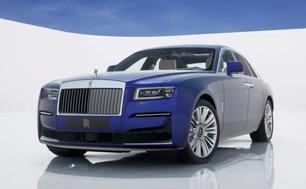
It’s finally happened: Rolls-Royce has become so divorced from the everyday world of common folk that it's no longer even sharing the previously agreed meanings of words. Rolls has its own meanings, possibly its own language, which must be spoken with a plum on the tongue.
They’ve been heading here for a while. For example, at Rolls, “affordable” means the car we're driving today, the Rolls-Royce Ghost Series II, which is yours for just $680,000 (an indicative price, bumping to $800K for the Black Badge). And “iconic British marque” means, obviously, “BMW bought us in 2003, so there might be some German bits”.
It turns out that “driver-focused” means something different at Rolls-Royce, too. Thanks to a smattering of chassis innovations, Rolls says this updated 2025 Ghost is “the most driver-focused V12 Rolls-Royce ever”. Which is “a side of Ghost’s character that our clients increasingly and enthusiastically embrace”.
Don’t fall for it. The Ghost’s extra focus is not actually very focusy, and its additional dynamism is really only more dynamic in the way that a bed that could corner at all would be more dynamic than a normal bed. None of that matters.
The reason it doesn’t matter is because the Ghost Series II is wonderful. Indeed, it is very nearly perfect. Which is a word that even Rolls won’t quibble over.
Tesla has done enough with the introduction of this Premium Long Range RWD variant to keep the Model 3’s head well and truly above water in an increasingly competitive segment. After more than six years it still looks good, with a pleasant cabin environment, plenty of performance and leading energy efficiency. Safety is top-shelf and it stands up well in terms of practicality and driving dynamics.
That said, the ownership proposition is average, the determination to make so many functions screen-based is frustrating and the optional Full Self-Driving system is unconvincing. With the Model S and Model Y now discontinued globally it will be interesting to see how the Model 3 continues to evolve.
In a disruptive era when the coachbuilder has pivoted to SUVs like the Cullinan, a sort of London black cab that’s been dipped in opulence, and succeeds despite itself, and the brand’s grand, million-dollar EV, the Spectre, the Ghost is a safe and familiar space.
A beautiful, long, broad, immaculate land boat. It’s a space Rolls inhabits with relish.
The Ghost Series II feels nothing like a track-day option when you’re behind the wheel. But it might do if you were stepping out of a Phantom. Or a Cullinan. Or a Wraith. Especially if you’re stepping out of the back doors.
It’s the perfect driver’s car. As long as all your other cars are also Rolls-Royces.