What's the difference?
Would you consider a European-made small SUV with a terrific turbo engine from one of our all-time favourite hot hatches, a reliable torque-converter auto, ample room for five plus luggage, and all from under $40K?
You’d be at the very least a bit curious, right?
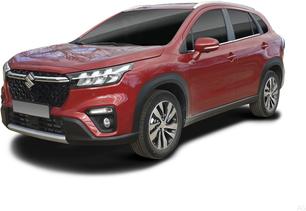
Behold the latest Suzuki S-Cross! Okay. It’s been around the sun nearly a dozen times. And you can clock its age in a couple of key areas.
But this crossover from the class of 2013 is not even close to being the oldest-in-show (stand up, Mitsubishi ASX). And, as our testing revealed, the S-Cross can still teach far newer rivals like the Kia Seltos, Mazda CX-30, Haval Jolion and Subaru Crosstrek a thing or two.
Because thoughtful design is timeless. Time, then, to crack open the S-Cross.
Do you like swimming against the tide? Do you like to zig when everyone else is zagging? Are you unafraid of making the unpopular choice?
Well, if you align with the above, I have just the car for you.
The Volvo ES90 pushes against most current trends. The luxury sedan used to be the measure of a brand, but not anymore. These days the luxury market is defined by SUVs and sedans have been reduced to an afterthought for many.
But if you’re willing to think outside the SUV-shaped box, there is a lot to like about Volvo’s new luxury offering. Whether it’s a true sedan or not is open to debate, but what it isn’t is an SUV and for those willing to live that counter-culture lifestyle this may be right for you.
Back in the day, you’d hear people say they’d never buy an all-new car, but instead get the last of the old model that would have had all the bugs ironed out.
If this sort of homespun logic makes sense, then maybe the latest S-Cross might just be the perfect SUV car for you.
Not only has it been in production for years, there is nothing fundamentally wrong with it. Indeed, for performance, packaging and ease, it does plenty that's right. Thoughtful design is timeless.
But there are newer alternatives that look way fresher (particularly inside) yet cost the same or less, and offer more, including updated driver-assist safety.
Still, you can do a lot worse than take an S-Cross for a test drive.
More stylish than ever before, as quiet and refined as you'd expect from a luxury car and yet the stand out feature might once again be safety. Despite seemingly every new car being loaded to the gills with safety features, Volvo has managed to demonstrate industry best-practice and leads the way again.
I would encourage engineers from every other car brand to drive the ES90 to learn how to better integrate the modern suite of active safety features like forward collision warning and lane departure warning.
But beyond that, is the ES90 a car worthy of consideration? Well, pretty much everything it does the EX90 does too, so if you prefer an SUV that’s definitely worth consideration. But if you don’t want an SUV, if you prefer a sedan or just love to be different, the ES90 is a very attractive proposition in more ways than one.
It took Suzuki not one, not two, but three goes before the stylists succeeded in making the S-Cross look good.
The original was like an early Nissan Dualis clone, but all droopy faced, so they grafted on an aggressively toothy face back in 2016 that only a gargoyle’s mother could love.
At least this latest version – said to have been designed in Italy, no less – no longer looks like Frankenstein’s monster.
Released during 2022, the blockier nose, squared-off profile and restyled posterior are meant to make the S-Cross seem larger than its more-successful (and prettier) Vitara sibling, which uses the same platform, by the way.
Not a bad makeover job as far as big facelifts go, then, especially considering the Suzuki’s windscreen, doors and roof remain as before.
Discussing Volvo design will draw different opinions depending on your age. As a millennial, I grew up at a time when Volvos were, to quote a famous movie line from the 1990s, ‘boxy, but good’.
But over the past two decades Volvo has smoothed off those boxy edges and become one of the most style-conscious car companies in the world. It has embraced its now-unique place as a Scandinavian carmaker and uses softer edges and more Nordic design themes (such as light coloured interior woods) to ensure the ES90 is simply a good-looking car.
What it isn’t, at least not technically-speaking, is a sedan. That’s because it has a liftback rear-end design, rather than a traditional ‘three-box’ sedan with a conventional boot. That shouldn’t be a deal-breaker for anyone and it means it’s a far more practical design.
It also sits taller than a conventional ‘sedan’, which is an increasingly common trait for modern European sedans as they try to woo would-be SUV buyers. It’s not a lot, you certainly wouldn’t call it a tall or high-riding car, but it is noticeable.
Ends up as an ‘in-between’ design, neither one thing or the other. The closest thing it reminds me of is the short-lived BMW 5-Series GT, which is damning with faint praise, but it speaks to the challenge of making something that simply isn’t an SUV appealing to the modern SUV-obsessed market.
The very stylish cabin features that previously mentioned light coloured wood (at least in our test car) and that unique Scandinavian look. It’s the closest you’ll get to sitting in a Swedish lounge room on wheels.
It might be an old interior, but at least Suzuki got the fundamentals right in the first place, while also bothering to update the electronics for it to at least seem more contemporary.
Basics first. In typical SUV fashion, entry and egress are excellent, via tall and wide doors with corresponding apertures. There’s a pleasing sense of space for taller occupants, especially in terms of leg and head room.
Once sat in the driver’s seat, the mid-last-decade looking dashboard is instantly familiar and completely non-intimidating.
Concise and surprisingly elegant analogue dials (now with an auxiliary digital speedo, at last) sit ahead of the driver, along with a reach-and-height-adjustable steering column that allows for people of all shapes and sizes to find the right position. Deep windows provide extensive vision and let lots of light inside, too.
Finished in what looks like stitched leather and chainmail-inspired inserts, the front seats in this Plus grade are wide enough for comfort yet bolstered enough for some support through corners.
We rate them, though driver-lumbar and front-passenger height adjustments are disappointingly absent.
Years ago, reviews lambasted manufacturers for providing “too many buttons”, but after an endless succession of touchscreens housing most (if not all) audio, climate and vehicle control access, we miss the days of the button-fest.
If you do too, the S-Cross obliges with array of climate-control switches and driver-assist buttons located around the driver for fast and definite access.
On the other hand, while Suzuki’s new 9.0-inch touchscreen does a fine job housing other vital vehicular and multimedia functions, it drops the ball with no volume knob.
The alternative looks like a slide control but relies on clumsy pushing. Fail. Luckily the steering-spoke-sited toggles do the same job far better, at least for the driver.
Kudos, too, for the effective and intuitive multimedia system, that packs a lot in a small-ish space. The excellent surround/aerial-view camera rates a mention, as well as wireless Apple CarPlay that hardly ever drops out.
Nobody is going to mistake the extensive plastic trim and other finishes as premium, but it isn’t horrendous, doesn’t inflict occupants with the cheap off-gas stink often found in bargain-basement brands, and absolutely nothing rattled or squeaked in our time with the Suzuki.
Storage is also impressive, from the large glove box and deep centre bin/armrest to bottle-gobbling pockets on all four doors. Cups are also well-catered for.
However, betraying the S-Cross’ age are the AWOL wireless charging, head-up display (at this price… ), USB-C outlets and configurable instrumentation.
Moving on to the rear seat reveals a family-friendly environment as far as space is concerned, with adequate comfort provided by the (slightly) reclinable backrest and (fixed) cushion. The windows lower all the way down and the folding centre armrest has a cupholder, too.
But while you’ll find a single map pocket and overhead grab handles, there are no USB ports (at all), nor overhead reading lights or rear-facing air vents.
Never mind. At least the rear backrest reclines (a tiny bit) for added comfort, while further back, boot capacity is a useful 430 litres.
The load area is flat and wide and a space saver spare wheel is located underneath the boot floor.
The backrest has a 60/40 split and the floor can be positioned in different locations. Volume jumps to 1230L with the backrests dropped.
If you rate space, practicality and ease above modernity, then, the S-Cross still holds up remarkably well. Just keep in mind that its interior will appear dated compared newer and flashier competition.
In terms of space the ES90 is very generous, which it should be given it's a five-metre long car. There’s loads of room front and the back so you’ll seat four adults in absolute comfort, and can squeeze in a fifth if needed. Thanks to the relatively flat floor, as well as the panoramic roof that can either be opaque or clear, the cabin feels spacious and bright even in the rear.
As for luggage space, the boot measures 424 litres, and obviously it’s very easy to access via the power liftgate. But it’s still not as big as an SUV. The EX90 offers up 655 litres of space in its five-seat configuration. Which is at least a small part of the explanation why SUVs have become the more popular choice.
But what really stands out in the cabin isn’t the space, it’s the technology. The ES90 Ultra’s multimedia system is centred around a 14.5-inch touchscreen that runs all the car’s key functions; you also get a 9.0-inch driver’s display.
Notably, Volvo has opted to offer Google’s operating systems built-in, which means while you can still run Apple CarPlay or Android Auto, if you have a Google account you can sign-in and have your contacts, address book and other details integrated into the car.
It’s a really fast system, too, supported by the most powerful software Volvo has ever put inside one of its cars. Having a big tablet-style screen is great and feels very modern, but if it runs slowly, with lag between commands, it’s not as useful. This Volvo system, particularly the transitions between menus and even the voice assistant, reacts with lightning-fast speed.
Then there’s the sound system we mentioned earlier. It’s a 25-speaker Bowers & Wilkins set-up with 'Dolby Atmos' and an app called Abbey Road Studios. This app has been produced in conjunction with the iconic recording studio made famous by The Beatles. The speakers and the app were all developed together to provide a superior audio experience.
The speakers themselves are incredibly powerful while staying crystal clear, with the Abbey Road app providing the ability to change the sound between 'Modern' and 'Vintage' settings that make you feel like you’re inside a recording studio.
Put simply, it is as impressive a sound system as I’ve ever experienced in a car.
As we’ve established, the base S-Cross Turbo front-wheel drive (dubbed 2WD in SUV-speak) starts from $39,990 (all prices are drive-away), while the Plus version tested here costs $42,490 drive-away.
But, just a couple of years back, the pre-facelift S-Cross version kicked off from about $10K less. And, before that, much the same car could be had for mid-$20K.
Suzuki doesn’t make it easy for itself, does it.
At least the S-Cross comes with a decent rollcall of kit, including dual-zone climate control, a 7.0-inch touchscreen, DAB+ digital radio, satellite navigation, wired Apple CarPlay/Android Auto, front fog lights, keyless entry/start, heated front seats, electrically folding and heated exterior mirrors, rear privacy glass and 17-inch alloy wheels.
'Autonomous Emergency Braking' (AEB), lane keep assist, a blind-spot monitor, rear cross-traffic alert, front and rear parking sensors, automatic LED headlights with high beam assist, adaptive cruise control and a reverse camera headline the standard safety items. More on those in the Safety section below.
For a $2500 premium, the S-Cross Turbo Plus ushers in a larger (9.0-inch) touchscreen, wireless Apple CarPlay/Android Auto, a 360-degree surround-view camera, leather trim and polished alloys.
This lines up with the all-wheel drive (AWD) Prestige AllGrip equivalent, though it misses out on the latter’s panoramic sunroof.
Price and equipment-wise, the Plus matches rival mid-grade 2WDs like the Toyota Corolla Cross GXL, Nissan Qashqai ST+, Mazda CX-30 G20 Touring, Kia Seltos Sport+ and Mitsubishi Eclipse Cross Aspire.
Just keep in mind, all are substantially newer generationally than the S-Cross, even though it did go under the scalpel a couple of years back.
The ES90 range consists of two models at the time of publication both powered by a single, rear-mounted electric motor, with the twin-motor option available on the EX90 SUV currently not offered in Australia (emphasis on the word ‘currently’).
The range begins with the Pure from $88,880, before on-road costs, and is completed by the current range-topping Ultra variant, which we're testing, priced from $107,990, plus on-roads.
That means it’s cheaper than its direct rivals in the luxury electric sedan market. Audi’s e-tron GT starts at more than $200,000, the BMW i5 line-up is priced from $155,900 and the Mercedes-Benz EQE range begins at $134,900. So, even with this more expensive Ultra variant, Volvo has a clear head-start on the competition.
And Volvo hasn't managed that by skimping on standard equipment. The ES90 comes loaded with adaptive air suspension, 22-inch alloy wheels, a comprehensive safety package (as you’d expect from Volvo) as well as an electrochromic panoramic roof, a smart key you can add to your phone and 'Nordico' upholstery - Volvo’s sustainable synthetic leather.
There’s also a 25-speaker Bowers & Wilkins sound system, but more on that later…
Here’s where the S-Cross definitely does not show its age, because Suzuki sure knows how to engineer a great engine. And automatic transmission, too. Take note, rivals.
Of course, we’re talking about the long-lived 'BoosterJet' powertrain, as found in the terrific Swift Sport hot hatch.
In this case, the 1.4-litre twin-cam, direct-injection, turbo-petrol four-cylinder engine delivers 103kW at 5500rpm and 220Nm of torque between 1500-4000rpm. Tipping the scales at 1260kg, this results in a power-to-weight ratio of 82kW per tonne.
Not huge numbers, granted, but this little firecracker certainly punches above its weight in the seamless way performance is served up, helped out by the intelligent spread of ratios from the standard six-speed torque-converter automatic transmission, with paddle shifters included. Sadly, no manual gearbox is available.
As the name suggests, the ES90 Single Motor is powered by a single, rear-mounted electric motor that drives the rear wheels via a single-speed transmission. The motor makes a healthy 245kW and 480Nm, so the 0-100km/h sprint time is 6.6 seconds - sprightly for such a big car.
As alluded to earlier, there is a Twin Motor, all-wheel drive ES90 variant available in overseas markets, with 500kW, but Volvo Australia is yet to confirm when, or even if that will arrive here.
Suzuki reckons the S-Cross will average 5.9L/100km on the combined cycle, though keep in mind that it requires expensive 95 RON premium unleaded petrol.
As far as carbon dioxide emissions are concerned, that translates to between 138 and 145 grams/km.
We managed about 7.7L/100km – and this included some very spirited performance testing with the air-con always on, against the trip computer’s more-accurate-than-expected 7.4L.
With a 47-litre fuel tank, expect a range of about 790km between refills.
Built on Volvo’s 800-volt electrical architecture, the first Volvo to feature the technology, the ES90 is powered by a 92kWh battery that provides up to 554km of driving range on a single charge.
Volvo quotes an NEDC energy consumption of 18.5kWh/100km, with 300kW DC charging able to take the battery from 10 to 80 per cent in 22 minutes. A full, empty to 100 per cent charge using a 16A outlet will take 10 hours.
It should be noted that the EX90 SUV will be upgraded to the 800V architecture with the 2026 model year introduction.
So, if you’ve read this far down, you might have been pleasantly surprised by the S-Cross' spacious and practical interior, ease of operation and decent equipment levels.
Yet the main event lives under the bonnet.
Let’s start with the performance. Throttle response is instant and lag-free, allowing for strong acceleration right from the get go. No jerkiness, no delays, no hiccups.
On the move, the S-Cross' power delivery continues to impress, feeling smooth and slick across the rev range. The finely-tuned torque-converter auto – rather than a CVT continuously variable transmission or dual-clutch – must surely play a role in this Suzuki's effortlessly consistent performance.
Where the turbo engine really shines, though, is at higher speeds, with ample power and torque still left in reserve for when you need to overtake or pull away in a hurry.
Delightfully muscular yet super creamy to boot, the BoosterJet remains one of the best internal combustion engine choices available in any small or medium-sized SUV, regardless of price and positioning.
If only Suzuki put a little more love into the S-Cross’ dynamics.
As with the AWD model, the S-Cross 2WD features electric rack and pinion steering, while its suspension consists of a MacPherson strut-style design up front and a torsion beam rear-end arrangement.
While easy and precise, with a tight-ish turning circle for easy urban manoeuvrability, the steering feels too light after all that delicious oomph on offer, especially at higher speed.
This is doubly disappointing, because the chassis is quite firmly set-up, meaning the S-Cross offers sharp yet controlled handling that allows it to be hustled quickly and confidently through fast corners.
We suspect the high-quality Michelin 215/55R17 tyres help. And, speaking of rubber, road noise is fairly subdued out on the open road.
Criticisms? Unlike in the AWD version, the 2WD seems a little skittish at speed on gravel. It’s a good thing the well-modulated driver-assist systems are at the ready. Unlike in so many other SUVs, including in MGs and Havals, their intervention isn’t too zealous or ill-judged.
Also, the Suzuki’s ride around town can be a bit stiff, but never harsh, over smaller-frequency bumps and surface irregularities.
Still, our overall impression is that the eager S-Cross feels far newer to drive than its birth date suggests. That turbo powertrain must take the credit for much of that.
As you’d expect from a luxury, electric car the ES90 is a quiet and refined vehicle to drive. Being a Volvo, the company has used its experience where it matters, and there is excellent insulation from the outside world. Unlike some EVs that lose the engine and hope that just makes things quieter, the ES90 gives you a genuine feeling of insulation from the exterior hustle and bustle.
Performance is adequate from the single motor but it’s by no means a sports sedan with only 250kW/480Nm and such a big vehicle. But it has the instant response that is an EV trademark so it has all the performance this type of car and the drivers it will attract would likely need. If buyers start banging on the door for more power, Volvo can oblige, but for now it does the job you expect of a luxury four-door.
While it has the sedan silhouette, the taller body and raised ride height on the air suspension are noticeable. You will find yourself looking up at SUV drivers, but not all of them. It’s roughly the same seat height as you’ll find in a modern small SUV, so a slight elevation rather than a big boost.
The ride is what you expect from this type of car. You can adjust the suspension and steering between ‘soft’ and ‘firm’ settings, but even with the latter selected there is a lot of compliance and the ride remains comfortable.
The steering is fine most of the time, but when you have to do parking maneuvers you certainly notice the ES90's steer-by-wire technology. The steering literally feels like an old computer game steering wheel set-up, with very little resistance as the wheel lightly spins from lock-to-lock. It’s not a bad feeling, but it is a bit odd and takes some getting used to.
The ultimate take-away from the driving experience is just how relaxed it is - quiet and effortless are the two words that probably best sum it up.
While the pre-facelift S-Cross from 2013 to 2022 managed a maximum five-star crash-test score, no ANCAP rating information is available for the current JYB series.
There is a decent amount of safety gear as standard, though, including autonomous emergency braking (AEB), lane departure warning, blind-spot monitoring, rear cross-traffic alert, 'Weaving Alert' (a driver-drowsiness warning prompt), front/rear parking sensors, adaptive cruise control (with full-stop functionality) and auto high beams.
Note that while the adaptive cruise control brings you to a halt, there’s no traffic-follow function as found in newer systems, betraying the S-Cross’ advancing years.
Plus, Suzuki does not supply information about the AEB and other driver-assist tech’s operating parameters.
Also fitted in every S-Cross are seven airbags (dual front, dual front side, curtain and driver’s knee), electronic stability control, anti-lock brakes with electronic brake-force distribution and brake-assist.
The rear seats contain a trio of child-seat tether anchorages, as well as an outboard pair of ISOFIX attachments.
This is obviously the area that Volvo is famous for, but with seemingly every other brand forced to raise their own safety features over the years, does the Swedish brand still do anything special on this front?
Absolutely.
Put simply the Volvo suite of active safety systems is better developed and better integrated. Every rival car to the ES90 will have a similar list of features, including adaptive cruise control, forward collision warning, lane departure assist, road sign information and more. But Volvo has made it work so well that unlike rival models, you never even think of turning them off, they don’t beep and bong ad nauseum, they only work if you need them in an emergency - which should be the standard.
One thing to note is the ‘bump’ on the roof (you may see in the images) to house a Lidar system. However, Volvo split with its supplier and has decided to abandon this technology for the ES90. That means the 2026 model year examples will not have the roof bump, but still come loaded with five radars, seven cameras and 12 ultrasonic sensors for the excellent coverage of the surrounding environment.
The only thing that stops the ES90 being worthy of a 10/10 safety score is the lane keeping assist could do with some fine-tuning, as it has a tendency to move in the lane slightly too much.
There is no current ANCAP score for the ES90, but the EX90 SUV does, and given the organisation's previous sharing of scores between different models based on the same core underpinnings, there is no reason to believe the ‘sedan’ wouldn’t be just as safe.
Suzuki offers an industry-average five-year/unlimited kilometre warranty and roadside assistance.
Service intervals are every 12 months or 10,000km, while basic capped-price servicing is available, with pricing ranging from a low of $329 per service up to a high of $539 for the first five years/50,000km. The average of $397 isn't particularly cheap.
The ES90 is covered by Volvo’s five-year, unlimited kilometre warranty, which is competitive for the luxury market even if it’s shorter than the cover some mainstream brands offer.
Servicing costs are currently unclear, at the time of publication. Volvo Australia typically offers five-year servicing plans for its models but is yet to finalise the cost for its electric vehicles.
Despite its long history in Australia, Volvo still has a relatively small footprint in this country with only 28 dealers/service centres spread across the country. However, more are planned to expand that coverage in the coming years.