What's the difference?
It’s an increasingly rare combination. An affordable sports car with a naturally aspirated engine in the front, driving the rear wheels through a manual gearbox.
In the not-too-distant future enthusiast drivers will be talking about the good old days when the second-generation Subaru BRZ was sitting new in showrooms with a sub-$45K price sticker on the windscreen.
And maybe this BRZ S manual represents your last chance to acquire a mainstream performance-focused combustion car offering such a pure experience behind the wheel.
It’s roughly 12 months since Subaru launched the current BRZ in Australia, well ahead of its Toyota GR86 twin, with the first 500 examples selling in the blink of an eye.
So, now that the dust has settled, and a relatively modest price rise from earlier in the year has been bedded down, it’s time to catch up with Subaru’s in-demand two-door.
Can it really be eight years since we first lay eyes on the current-shape Mini – and 20 seasons since the BMW-led brand revival burst onto the scene?
With much input from now-defunct Rover, the 2001 R50 was all about reinvention, attitude, fashion and athleticism for the new millennium. These also defined the two following generations (R56 of 2006 and F56 of 2013), along with stingy equipment levels and laughably high-priced options. On-paper value-for-money was never a Mini strong suit.
But fads come and fads go, and by early 2021, BMW seemed to have finally realised that Mini fans are ageing and the market is changing, as reflected in the ever-smaller pool of city cars and superminis. The days of looking cool at the wheel of this retro icon are long gone.
Result? A couple of years into the F56’s facelift – which itself brought a long list of improvements to help keep the old show-pony fresh – BMW has ushered in another round of updates, streamlining the way you buy a Mini in the process via – shock, horror! – ‘free’ specification packages.
We take a look at the popular Cooper 3DR Hatch Classic Plus to see if the Mini’s still got it for 2022.
The Subaru BRZ S has so much going for it. Smile-inducing dynamics combined with a noticeable power boost relative to the first-gen version, as well as impressive economy for a car of this type, good value and sleek design. But even in the typically confined world of sports cars, practicality is a negative. The 2+2 layout doesn’t offer a whole lot of flexibility, and in-cabin storage is less than ideal. However, the biggest mark-down goes against the baffling omission of the EyeSight safety suite on this manual version.
It’s reassuring to realise that the British-built Mini’s German masters have not stood still over the past eight years.
This second facelift of the third-generation Cooper three-door hatch has freshened up the appearance on the outside, improved the look inside and provided a refined yet dynamic driving experience that fits in with the British brand’s reputation.
But the real shock is how reasonably priced the Classic Plus package is, especially when you consider that the Mini provides a truly unique proposition that’s backed by reassuringly high-quality BMW engineering.
A Cooper offering decent value-for-money? In 20 years, that’s certainly a first worth celebrating.
The original Subaru BRZ/Toyota 86 design wasn’t broken, so, how do you freshen up a winning formula without spoiling it in the process?
That was the challenge facing Project Chief Designer, Koichi Matsumoto and his team at Toyota. As was the case with the first-gen car, Subaru is responsible for engineering and manufacturing, while Toyota took care of the car’s design.
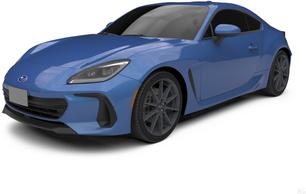
And the result is a smooth evolution of the original BRZ’s look and feel, using confident, simplified lines to create a more substantial, mature presence.
Large, angular LED headlights, defined by LED DRLs around their perimeter, deep gills feeding air to the front brakes, and a protruding chin spoiler contribute to an intense, focused expression at the front.
One of the most common owner upgrades to the original BRZ/86 was a ‘plus-one’ step up in wheel diameter from the standard 17-inch rims to 18s. And Subaru is now ahead of that game fitting handsome 10-spoke, 18-inch alloys as standard on the base and S model of the current car. They fill the arches nicely, and again, make the BRZ look more serious and grown up.
Large vents behind the front wheel arches are functional, allowing cooling air to escape cleanly once it’s passed through the brakes, and thick integrated side skirts enhance the car’s aggressive stance.
Things have been kept simple at the back, with the steeply sloped rear window running seamlessly into the boot, which kicks up abruptly with a large lip spoiler on its trailing edge. Elongated LED tail-lights wrap around the rear corners to neatly finish off the clean rear-end treatment.
The interior will be familiar territory for owners of the original BRZ because nothing fundamental has been changed.
Grippy sports front seats are trimmed in synthetic suede (perforated on the central panels) with leather accents, while red highlights and contrast stitching rev up the racy feel.
The dash set-up also has echoes of the previous car, although the media screen is bigger and better, the instruments are digital and LCD displays have been added to the climate adjustment knobs. A mechanical handbrake, located on the ‘correct’ (right-hand) side of the transmission tunnel and alloy pedal covers help build the cool, sports car vibe.
Yes, even after all these years. After all, BMW’s Mini has been more successful commercially than BMC’s original ever managed, primarily due to a massive uptake in the United States and China.
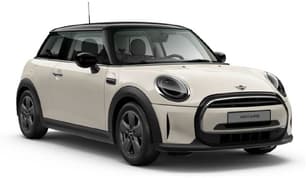
You can see why. The pert bug-eyed looks, frameless doors, chunky cabin, circular interior themes and, of course, the reputation put it in a unique place amongst today’s far more homogenised small car alternatives.
Interestingly, the most recent update in early 2021 has resulted in a sleek and more-focused look that moves away from the over-the-top caricature of previous iterations, though the black band around the nose cone might take some getting used to. Even the OTT Union Jack tail-light LEDs seem toned down.
And, like we said, there’s nothing like it on the market anymore. Once upon a time, close (if not exactly direct) opponents included the Alfa Romeo Mito, Audi A3 three-door, Honda CR-Z, Hyundai Veloster, Peugeot 208 GTi, Volkswagen Beetle… but they’re all gone.
Practicality was never going to sit near the top of the design and engineering priority list for this car, But that said, it’s a ‘2+2’, meaning there’s enough room for adults to sit comfortably up front, and nowhere near enough room for that to happen in the rear.
Skilled contortionists or pre-teenage kids are the only realistic +2 candidates. Headroom is laughable, legroom is non-existent, and if, for whatever reason, you do need to squash a couple of grown-ups back there, be prepared to slide the front seats forward to an uncomfortable, borderline unsafe degree. And stand-by for the chiropractor bills!
Aside from that, storage is more often than not an ‘either-or’ proposition. There are two cupholders in the centre console, but they’re inside the lidded bin between the front seats. So, space for keys, a wallet and phone… or a couple of cups.
Same with what Subaru cheekily calls “door pockets with integrated bottle storage”. Yeah, nah, there’s a recess large enough for a bottle, and a small slot beside the armrest.
The glove box is okay, but it’s chock-full of a small phone book-sized (remember those) owner’s manual set. Maybe best to set that aside somewhere. But the good news is there’s a 12V socket in there.
Speaking of power and connectivity, there are also two USB-A sockets and an ‘aux-in’ jack in the centre console box.
When it comes to the boot, there’s good news and bad news. Good news is there’s a full-size alloy spare in there. Bad news is it sits flat in the floor and takes up a lot of the already tight 201-litre space. Practical when you have a flat. Not so much when you’re trying to fit the groceries in.
An unlikely side benefit is the dish of the alloy spare helps keep small items under control once you’re underway. Which is extra handy because there aren’t any tie-down anchors included.
From the moment you open the light yet solid front door, it’s obvious that the Mini is a different type of small car.
The frameless doors give it a hardtop feel, though it’s a shame the necessary thick B-pillar doesn’t allow for the rear windows to find down for a truly ‘60s American hardtop-style open side experience.
The Classic Plus’ standard front seats are a highlight. Superbly supportive and with extensive adjustment permutations so even taller and heftier folk can find the right position, they help create a snug yet not cramped environment, with a low, focused driving position that’s easy to get comfy behind thanks to endless column and seat adjustability. One does peer over that bulky dashtop though.
The 5.0-inch black-panel instrumentation redesign does much to reduce the old Mini tweeness inside, with motorcycle-style digitised analogue-look dials and fresh new graphics and functionality (with new ‘favourites’ shortcuts added) for the rectangular centre multimedia screen. Based on BMW’s excellent iDrive system, it’s all easy and intuitive to operate.
However, that dash is looking old and messy now, with its small letter-box screen and messy buttons, though the toggle switchgear is pleasant to operate and adds to the Mini’s sense of occasion too. The kerbside mirror won’t automatically dip in reverse, and Android Auto users aren’t accommodated like Apple CarPlay users are.
Still, storage is sufficient for most peoples’ needs as long as the things they need put away aren’t too large, backed up by a foldable armrest-cum-cubby and handy pair of big cupholders ahead of the gear lever – which is an ex-BMW design that takes a minute to get used to but works just fine.
For a three-door four-seater coupe, practicality is better than you might imagine, aided by good all-round vision and thoughtful packaging.
Access to the rear is obviously not going to be the Hatch’s easiest party trick, but a single-action lift-up latch that slides and automatically returns the front seat back to the original spot helps enormously. It’s not too much of a struggle sliding between seat and pillar as well.
Once sat out back, you’ll find a firm but inviting bench and backrest (for two), a pair of cupholders and map pockets, a trio of cupholders as well as elbow rests incorporated into the side panels. All double up as receptacles for odds and ends. Lots of glass and those upright pillars impart a surprisingly spacious feel.
Speaking of back-seat room, because it’s only a two-seater configuration, there’s a welcome amount of acreage for elbows, shoulders and bottoms, while legroom isn’t too bad for a 178cm adult sat behind themselves. There’s nothing cramped or oppressive in the Classic Plus we’re in, save perhaps for the endless black trim.
However, betraying the F56 Cooper’s age, while the front centre-armrest sited smartphone charger is accessible to rear-seat occupants, there are no USB ports of any variety or overhead lighting in this sunroof-equipped example. Nor will you find a folding centre armrest or overhead grab handles. In fact, the latter is only provided for the front-seat passenger.
Also, keep in mind that passengers cannot crack a window back there.
Further back, a can of goo in lieu of a spare wheel means the boot floor is deeper than you might imagine, with a small compartment below the second floor for added hidden storage. Beyond that, it’s an F56 Mini, so a 211L capacity and a pair of 60:40-folding backrests into the cabin as your lot luggage-capacity wise.
If you want practicality Mini offers the F55 5DR Hatch (278L) or our favourite of the lot, the lovely Clubman with 360L. Or if you don’t mind your Mini looking like a gargoyle, the Countryman extends that again to between 405L and 450L depending on rear-seat position.
At $41,590, before on-road costs, the six-speed manual version of the BRZ S lines up against a couple of similarly priced front-engine, rear-drive manual sports cars.
For starters, there’s Toyota’s 86 at $43,240 for the six-speed, and the difference boils down to a few specification tweaks, because these near identical twins roll down the same assembly line at Subaru's Gunma plant, north west of Tokyo.
Another traditional rival is Mazda’s evergreen MX-5, the most comparable model being the RF, with its folding hardtop, starting at $42,650.
From there it gets trickier. Nissan’s new Z has the same powertrain configuration, with a six-speed manual available. But it’s a more serious proposition with a twin-turbo V6 under the bonnet and a $73,300 price tag to match.
Or what about the mid-engine, RWD Porsche 718 Cayman at $122,800 for the six-speed manual. At three times the price it makes the BRZ look like a cracking bargain.
So, aside from the safety and performance tech covered a little later, what does your circa $40K bring in terms of features?
Well, the standard equipment list includes, dual-zone climate control, cruise control, and an 8.0-inch multimedia touchscreen managing navigation, vehicle settings, and the six-speaker audio system, the latter featuring Bluetooth, Android Auto and Apple CarPlay connectivity, as well as digital radio and voice recognition.
There’s also keyless entry and start, a customisable 7.0-inch digital instrument cluster, a reversing camera, a leather steering wheel and gear shift (with red contrast stitching), synthetic ‘Ultrasuede’ seat trim (with leather accents), heated front seats, 18-inch alloy wheels, and the auto LED headlights are self-levelling and steering-responsive (the DRLs and tail-lights are LED, too).
You’ll have to adjust the front seats manually, although that can be understood in terms of cost and weight-saving. And all-in-all it’s a pretty solid equipment package relative to the price-point and direct competitors.
Let’s see what BMW introduced back in early 2021 that’s reignited our interest in the Mini.
Firstly, it brought in more standard equipment. Then some of the more popular personalisation options were bundled up into those packages. And, finally, a few exterior trim alterations here and there, as well as a restyled front bumper and alloy wheels, have freshened up the appearance.
The base Cooper Classic from $37,500 before on-road costs (ORC) includes automatic transmission (sadly a manual gearbox is no longer offered), LED lighting front and rear, cloth seat facings, piano-black interior trim, digital instrumentation, an 8.8-inch touchscreen, wireless phone mirroring and charging, digital radio, reverse camera, parking assistant (that steers the car into parallel spots automatically), front and rear parking sensors and 16-inch alloy wheels (with no spare).
On the safety front you’ll find six airbags, autonomous emergency braking (AEB), lane departure warning and adaptive cruise control with stop/go, among a host of other technologies. See the safety section below.
Personalisation packages are a big part of the Mini’s appeal, and the Classic offers at no-cost the choice of four exterior colours (white, black, red or blue), three roof/mirror cap/ combos (body colour, black or white), two alloy designs (five- or 14-spoke) and black or white stripes.
Our red test car was the Classic Plus from $41,000 plus ORC, which means keyless entry, more-bolstered ‘leatherette’ sports seats, front seat heaters, a panoramic sunroof, Harman Kardon audio upgrade, eco and sport extra driving modes, stronger window tinting and 17-inch alloys in either silver or black, as well as three additional colour choices (green, grey and silver). All for a surprisingly reasonable $3500 more.
This would be your Mini starting point, and not the Mini Yours from $46,000 before ORC, which is more a styling exercise with leather upholstery, fancier trim, ambient lighting and 18-inch alloy wheel options.
At the Classic Plus price point, rivals are scarce, and none with three-door hatchback bodies except for the smaller and outdated Fiat 500/Abarth 595 twins, while the Audi A1 and Citroen C3 are both presented in more pedestrian five-door hatchback guises – something that the F55 Mini 5DR Hatch competes against anyway.
The hardcore Toyota Yaris GR AWD pocket rocket perhaps comes closest in spirit but that’s more of a Cooper S JCW competitor, meaning the Mini Cooper really is in a space of its own.
The BRZ is powered by a naturally aspirated, 2.4-litre, horizontally-opposed four-cylinder petrol engine.
This all-alloy (FA24) unit features a combination of port- and direct-injection, as well as ‘Dual AVCS’ variable (inlet and exhaust) valve timing to produce 174kW at 7000rpm and 250Nm at 3700rpm.
It’s a derivative of the previous car’s ‘FA20’ engine, with the cylinder bores increased from 86mm to 90mm, to bring capacity up from 2.0 litres to 2.4 litres.
Drive goes to the rear wheels through either a six-speed automatic transmission, or as tested here, a six-speed manual gearbox.
Worth noting this package addresses one of the most common criticisms of the superceded, first-generation BRZ. That is, it needed more power.
While some owners were happy with the power-to-weight balance of the original 2.0-litre car, others turned to various tweaks, including forced-induction, to up the ante.
But the second-gen car adds an extra 389 ccs, 22kW and 38Nm in an attempt to satisfy those with a need for extra speed.
One of the stronger petrol engine families of the last decade is BMW’s B-series modular in-line units, in B38 1.2-litre and 1.5-litre three-cylinder, B48 2.0-litre four-cylinder and B58 3.0-litre six-cylinder formats.
The Cooper uses the B38A15M1, meaning a 1499cc 1.5-litre three-pot turbo featuring an aluminium block and head, a twin-scroll turbocharger, direct injection, variable valve lift (Valvetronic) and variable valve timing (Double VANOS).
It pumps 100kW of power at a peaky 6500rpm and 220Nm of torque from just 1480rpm to 4100rpm – enough for a 0-100km/h dash time of 8.2 seconds on the way to a 210km/h top speed.
Mounted transversely, it drives the front wheels via a seven-speed dual-clutch transmission (DCT) dubbed Steptronic in Mini-speak – a switch from earlier F56 examples from a few years back that used a six-speed torque-converter auto. The floor shifter has the typically-BMW back for up/forward for down shift pattern. For paddle shifters you need to step up to the Cooper S with the B48 2.0-litre engine.
The Mini’s UKL1 platform (Untere Klasse, German for ‘lower class’) modular architecture is spread between the F55 (5DR), F56 (3DR) and F57 (Convertible) models, and employs MacPherson-style struts up front and a multi-link rear end. A longer version of this also underpins the larger Mini Clubman and Countryman as well as BMW’s 1 Series, 2 Series (not coupe and convertible), X1 and X2.
Subaru’s official fuel economy number for the combined (ADR 81/02 - urban, extra-urban) cycle for the six-speed manual BRZ is 9.5L/100km (six-speed auto - 8.8L/100km), the 2.4-litre four emitting 217g/km of CO2 in the process.
Over a week of city, suburban, and some freeway running we saw a dash-indicated average of, you guessed it, 9.5L/100km. And doing the arithmetic after filling up at the bowser we arrived at an average of 9.1L/100 for the same period. Not bad for a sporty coupe like this.
Pricey 98 RON premium unleaded is required, though, and you’ll need 50 litres of it to fill the tank.
Using the official number that translates to a range of 526km, which rises to just under 550km using our real-world (at the pump) number.
Running on 95 RON premium unleaded petrol, our Cooper managed a worthy 7.1L/100km in a fairly demanding mix of heavy urban commuting traffic and higher-speed performance testing. The trip computer was showing high-6s, so it wasn’t far off the truth.
The official figure should average out at 5.6L/100km, for a carbon dioxide emissions rating of 128 grams per kilometre. With a 44L fuel tank, the potential range-average is 785km.
The sports experience begins the moment your backside hits the driver’s seat. And to get to that point in the BRZ you have to be fairly athletic and flexible.
At just 1.3m tall this car is something of a low-rider, and you find yourself grabbing the A-pillar with your right hand, and adopting a ‘swing-down-and-in’ entry technique, bookended by a ‘grab-and-lift’ approach on the way out.
And that’s if you can open the door all the way. Sporty coupes look sleek, but those lengthy doors mean when you're parked next to another car in the shopping centre you have to fold yourself up like an origami crane for exit or entry. Literally, a pain.
But once settled behind the wheel, the BRZ is all business, with a simple, logical layout for all major controls and the heavily bolstered sports seat enhancing the cockpit feel.
The signature churn of the Subaru starter motor fires up the 2.4-litre ‘flat’ four and the first push into first gear highlights how smooth, yet precise the six-speed ‘box is.
Once on the move the second-gen BRZ’s extra torque is immediately noticeable, especially low down, and the way it’s delivered is more linear.
For context, as soon as tuners started putting the first generation 2.0-litre BRZ on the dyno, reports of a “mad” torque profile began to emerge. A distinct dip in pulling power at around 4000rpm was a bit of a head-scratcher, but the new 2.4-litre not only delivers more torque, its smoother arrival makes a notable difference.
You can expect 0-100km/h acceleration in the high six-second bracket (auto around 7.5sec) but it’s when the road starts to twist this car comes into its own.
Suspension is strut front, double-wishbone rear, and the BRZ uses aluminium front hubs to reduce unsprung weight, while Toyota's GR86 sticks with steel.
The Subaru also features a hollow sway bar, as well higher spring rates (all around), specific dampers, a firmer rear trailing link bushing, and a stiffer rear sub-frame.
The ‘flat’ engine helps lower the car’s centre-of-gravity, while the rear track has been widened by 10mm for extra stability. And if you really want to get the bit between your teeth a Torsen-type limited slip differential ensures drive is going to the rear wheel that can make best use of it.
At 1289kg the BRZ is quite trim, with things like an alloy roof, bonnet, and front fenders making a significant contribution to weight loss. Even the fuel lid is resin!
Tyres are 215/40 Michelin Pilot Sport 4 compared with the intentionally less-sticky Michelin Primacy rubber fitted to the previous BRZ. While I get that the intention was to make the car a little looser and prone to breaking traction, I prefer the extra grip of these Pilot Sports.
Precise and balanced, with great steering feel, the BRZ is a joy to punt along a quiet B-road. Thanks to the upgraded tyres and LSD, power down out of tighter corners is exceptional.
The flip side is you’ll need to be prepared for a firm ride over typically pock-marked Aussie roads. It’s just part of the deal when you sign on for a sports car at this price point.
The horizontally-opposed engine’s characteristically choppy sound adds to the fun, but bear in mind part of that is Subaru’s ‘Active Sound Control’ system using a speaker behind the dash to enhance it. You might not care, but I always feel short-changed when synthetic sound is brought into play.
Braking is by vented rotors front and rear (294 fr / 290mm rr), with two piston calipers at the front and singles at the rear. They’re great, and the pedal set is ideal for a bit of old-school heal-and-toe shifting on the down changes.
In a word, feisty.
Though only a three-pot turbo, the charming B38 1.5-litre engine is one of the best of the breed, offering a broad performance spectrum that allows it to rev cleanly and pull strongly all the way to the 7000rpm limit.
Additionally, the auto shuffles between its seven forward ratios seamlessly, for super-smooth progress.
However, around town, there is the usual momentary DCT hesitation from standstill, which can be quite frustrating if you’re in a hurry. Once that and the turbo wakes up, the Cooper will surge ahead with impressive determination, but instantaneous acceleration isn’t in this Mini’s repertoire. The previous, old six-speed torque-converter auto was far more immediate to throttle inputs.
Note that selecting Sport in the drive mode kicks things along a little more urgently. As such, and at this price point, we’d like to see a pair of paddle shifters to add to that experience, especially now as there’s no manual gearbox on offer. The 'Green' eco mode, on the other hand, throttles things back to a slightly more leisurely pace to conserve fuel.
Minis are renowned for their direct steering and sharp handling, and the Cooper doesn’t disappoint.
At parking speeds, there’s heaps of electric assistance to make manoeuvring about easy – and don’t forget about the standard park assist system to lend a helping hand here – while out on the open road, the flat, precise and confident cornering imparts a wonderful sense of security and connection with the road that, for keener driver, is worth the price of entry alone.
Never nervous, yet always alive in your hands. Assisted by grippy Goodyear Eagle 205/45R17 rubber, you feel the expensive engineering going on underneath to keep everything in order and precisely where the driver needs the car to be. Even when caned along.
But… you also feel the at-times firm ride over the ragged urban streetscapes that Coopers will undoubtedly traverse most days, though it isn’t as abrupt or choppy as in previous iterations with this-sized wheel/tyre package. Plus, coarse bitumen surfaces make for a fair amount of road noise intrusion at times.
That said, if your regular commute takes in fresh, smooth roads, then the Mini shines.
If all this sounds awfully familiar, then keep in mind that the Cooper is very much a baby BMW in behaviour as well as demeanour.
Manual gearbox models are a surprising weak point in Subaru’s traditionally robust active safety offering.
All BRZs are fitted with a reversing camera, blind-spot monitoring, lane change assist, and rear cross-traffic alert under the umbrella of ‘Vision Assist’, but only the auto features high-beam assist and reverse AEB, as well.
Then there’s the yawning chasm otherwise known as ‘EyeSight’; standard on the auto BRZ but unavailable on the manual.
This means a host of crash-avoidance features are left out of this car, including AEB, adaptive cruise, lane departure warning, ‘Lane Sway Warning’, and more.
Why, is a mystery because other brands are able to make these systems work on manual models. And all Subaru Australia will say is it’s working with the factory to rectify the situation as soon as possible. But it’s been this way for years.
Yes, tyre pressure monitoring and (non-adaptive) cruise control are on the standard equipment list, but the loss of the EyeSight package is a significant one, and something you’ll want to consider carefully before opting for this three-pedal model.
If a crash is unavoidable, the airbag count runs to seven - dual front, dual front side, dual curtain and driver’s knee. And there are child seat top tether points and ISOFIX anchors for both rear seat positions.
At the time of writing the Subaru BRZ had not been safety assessed by ANCAP.
Tested all the way back in April 2014, the F56 Cooper managed a disappointing four-star ANCAP rating.
Among other complaints, the organisation called out marginal driver chest and abdomen protection in a side impact, poor pedestrian protection in a frontal impact and a lack of sufficient driver-assist safety systems.
However, since then, the Cooper has been upgraded, and addresses the latter with standard AEB with pedestrian detection, Forward Collision Warning with braking pre-conditioning, Lane Departure Warning and assist, and adaptive cruise control with stop/go with speed limiter.
There’s also automatic parking, front and rear parking sensors, Emergency Assistance, runflat tyre indicator, six airbags (driver, front-passenger, front seat-mounted side airbags and side curtain), stability and traction controls, electronic differential lock, anti-lock brakes with Brake Assist and Cornering Brake Control, two rear-seat sited ISOFIX child-seat anchorage points and child-seat tether points behind the backrest.
Note that the tyres are runflat items, which are designed to be driven on straight after a blow-out or sudden pressure loss to safety.
Subaru covers its Australian line-up with a five-year/100,000km warranty, which is now cost-of-entry in the local new car market, and 12 months roadside assistance is included.
Service intervals are 12 months/15,000km, and a ‘Capped Price Servicing Program’ is available over five years/75,000km.
A one month health check is free with annual maintenance averaging $478 per service over the five years. Not outrageous, but not amazing, either.
Like BMW, Mini offers a three-year/unlimited kilometre warranty, which trails Mercedes-Benz’s five years and behind the seven-year unconditional warranty pioneered by Kia. A three-year roadside assistance package is also included.
Additionally, the car tells the owner/driver when it needs servicing, meaning it is condition-based rather than time-based scheduling. In the UK, it is generally recommended every 12 months or 10,000km is a good rule of thumb, just to be safe.
Owners can also purchase a five-year/80,000km service plan to help save money.