What's the difference?
MG needs a win, and the MG4 Urban may be the right car at the right time to give the Chinese brand a major boost.
It has been a rough few years for MG, with sales in decline for the past two years, which has seen it tumble from Australia’s favourite Chinese car maker to a distant fourth place behind BYD, GWM and Chery.
Part of that could be because of its rapid expansion, both in terms of its total number of models but also the size of the vehicles it’s offering. The larger QS SUV and U9 ute have both received underwhelming responses from the car-buying public.
So, MG has returned to its roots - small, affordable cars. The MG4 Urban, not to be confused with the MG4 Hatch, is its new price-leading electric car and the company’s new management hopes it leads a sales revival.
Thinking of a Toyota GR Supra, eh? Well, come on in, your timing is perfect.
See, up until halfway through last year the Toyota GR Supra only came with an automatic transmission, so I was jumping up and down to drive this version with the six-speed manual.
To me, it’s the way the Supra should be. Not having a manual gearbox in a car like this is like spending the day at an amusement park but not going on any rides.
Not only that but the Supra now has more power than it did when this generation launched in 2019.
See what I mean about your timing?
In a lot of ways the Supra is now complete.
Well that was what I wanted to verify when I tested the entry grade GT, along with what it was like to live with daily, the fuel consumption, warranty and even its practicality; fitting all of me and my stuff.
The MG4 Urban is not only the right car at the right time, perfectly catering to buyers looking to avoid rising petrol prices, it’s also a welcome return-to-form for MG as a brand.
MG is seemingly at its best when it sticks to small cars. It has traditionally excelled with the MG3 and ZS, smaller, more affordable products that keep expectations in check and can win over customers looking for the best bang-for-their-buck rather than simply the best car.
That’s not to say the MG4 Urban isn’t a good car. It offers tremendous value for money, excellent interior space and drives nicely, so anyone who has been considering making the switch to an EV should seriously consider this new arrival.
Note: CarsGuide attended this event as a guest of the manufacturer, with meals provided.
The Toyota GR Supra GT is a superb sports car that’s relatively easy to live with in the city even with the manual gearbox and incredibly fun to drive out where the roads are free from traffic.
Not only is the GT great for the price compared to rivals but it’s the pick of the Supra range.
MG says the design inspiration for the MG4 Urban came from the $100,000 Cyberster. While there are certainly a lot of differences between that roadster and this hatchback, the air-intakes and wheel design are indeed very similar. And I guess the badge is the same too, so there’s that…
But, comparing it to the Cyberster misses the point. What makes the MG4 Urban’s design more interesting is the bits you can’t see. While it shares the same name as the MG4 Hatch, this car has almost nothing in common with it. That’s because this new MG4 Urban is based on the brand’s newer EV underpinnings that debuted on the MGS5 EV.
That means the MG4 Urban is front-wheel drive, whereas the hatch is rear-wheel drive, and because of the way the battery is integrated into the chassis, it creates not only a bigger hatchback but also one with a different shape.
The Urban is more ‘cab forward’ (to use design parlance) meaning a shorter bonnet, which creates more cabin room. It also means there is more boot space because the powertrain is located up front.
MG does a good job with cabin presentation too. It’s another step forward for the brand, improving the overall level of fit and finish from its earlier models, to create a cabin that looks modern and doesn’t feel like it has been built to a price.
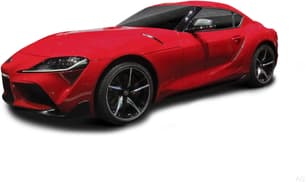
Perhaps it’s just me but I think the Supra looks exactly how it should look - like a Hot Wheels car.
Seriously, how good does the back view look? I love the spoiler that angles up like a crazy ski jump and the tail-lights integrated underneath it.
I love the huge rear hunches swollen like they’ve been stung by an enormous wasp. Check out the roof - see how it’s curved? And that bonnet with the vent above the wheel arches, I love the styling of every millimetre of this car.
But my neighbour doesn’t. I pulled up and said, “How good does this look?” And he gave me this stare like I was bonkers.
I don’t know, maybe you and I have the same excellent taste, but if there’s anything I hate it's anything that’s boring.
To me the BMW Z4 ‘twin’ is getting very close to the boring end in the styling department.
Talking of BMW, the Supra's interior is very BMW from the indicators stalks to the media system and climate control set-up.
It’s a modern and minimalist cabin… if only there wasn’t a cupholder right where my elbow goes. That’s a good place to stop and talk about the Supra GT’s practicality.
As I just mentioned, the cabin is bigger than the other MG4, which creates good space in both seating rows.
Up front they’ve placed the gear selector on the steering column to create space for more storage in the centre of the car. That means there’s plenty of shelves, cubbies and cup holders to take care of your small (and not so small) items, spread across the cabin.
As for the boot, the switch to a front motor and a smaller rear suspension means a 382-litre boot with all seats up and 1266L if you drop the back seats. Plus there’s a 98L underfloor storage spot, in place of a spare wheel (with a puncture repair kit included instead).
The design of the key controls are simple and easy to use, with a digital display for the instruments ahead of the driver and a 12.8-inch multimedia screen in the centre of the dashboard.
Navigating the menus is relatively straightforward but in a victory for user-friendliness, MG has listened to feedback (and incoming Chinese government regulations) and added some physical controls. There are buttons and a dial for the air-conditioning system and a volume knob for the sound system.
The good news is that if you’re tall like me (189cm) and mainly legs then you’ll have more than enough legroom and headroom because the footwells are impossibly deep and the seats can be lowered to what feels like ground level.
Actually, you are almost at ground height in this car so the bad news if you’re as tall as me you’ll probably have to crawl out of the car on all fours.
The cabin of the Supra doesn’t do the storage space thing well. Sure there are two cupholders but their location is the same place my elbow frequents while changing gears and resting.
The wireless phone charging area is good and easy to access, but the door pockets are as thin as post box slots so if it’s letters you’re storing there you’re in luck.
If it’s anything thicker than that you’ll be left looking around for a place to put your purse or wallet and end up throwing it in the phone charger space if the passenger seat is taken.
You could always ask your co-pilot to hold onto your things which reminds me to tell you that the Supra is a two-seater only. There are no back seats, and there’s no option to have back seats.
If you’re looking for a sports car with rear seats (although space will be limited) for the same money then there’s the Audi A4 45 TFSI and at an even lower price is the Ford Mustang GT.
If you look over your left shoulder while in the driver’s seat of the Supra GT you’ll see into the boot - there’s no wall separating the cabin from the cargo area. This is handy for throwing a school bag in as I did for my son on the morning drop off, but also means your items may make an unexpected visit to the cockpit if you stop suddenly.
The boot is large for a sports car at 296 litres (VDA) and it managed to fit our large CarsGuide suitcase with space to spare as you can see in the images.
MG made its reputation in Australia by selling some of the most-affordable models on the market, filling the hole left by mainstream brands like Toyota, Hyundai and Mazda as they increased the entry-level prices in their respective line-ups. Something MG itself tried with the HS, QS and U9, as it expanded beyond the once-popular MG3, MG5 and ZS.
The MG4 Urban is a return to form in that sense for MG, with this new small car starting at just $31,990 drive-away. For context, the MG4 Hatch starts at $37,990 drive-away, so this is a much cheaper proposition. That starting price is for the MG4 Urban Standard Range, the Extended Range variant is priced from $34,990 drive-away.
That pricing does not feel accidental from MG Australia, despite what they may suggest when pressed. That’s because the new BYD Atto 2, the direct rival to the Urban, starts at $31,990 plus on-road costs. Even so, BYD has the last laugh, because it offers both the BYD Atto 1, which starts at $23,990, and the Dolphin, which is priced from $29,990 - to undercut the MG4 Urban, even if neither are considered direct competitors.
In terms of specification, both the Standard Range and Extended Range have the same equipment with the exception of the obvious - a bigger battery, and more power from the motor.
Standard equipment highlights include 17-inch alloy wheels, LED headlights and tail-lights, a leather-wrapped steering wheel, PVC seat upholstery, heated front seats, Bluetooth connectivity with wireless Apple CarPlay and Android Auto, in-built navigation and a six-speaker stereo.
The Toyota GR Supra GT with the manual gearbox lists for $87,380 and you’ll pay the same price for the same car with the automatic transmission.
Yes, almost $90K might sound like a lot of money for a Toyota (unless it’s a LandCruiser) but it’s actually a bargain considering the GTS grade above costs $10K more and has the same engine plus pretty much the same features apart from a fancier stereo, head-up display and 19-inch alloys (rather than the 18s on this GT).
Also, if you didn’t know already the Supra is a BMW/Toyota joint venture model aligned with the BMW Z4, and if you want the Beemer version with the same engine as the Supra GT you’ll pay $139,800 for it.
So see, it’s a bargain in comparison.
The standard features list of the GT has pretty much everything you need. There’s a proximity key, LED headlights with adaptive high beam, active cruise control, sat nav, wireless Apple CarPlay and Android Auto, a 10-speaker stereo, wireless phone charger, heated and power adjustable seats, shifting paddles and sports pedals.
Great features, but let down only by a small 8.8-inch screen for your media and nav. Still, that absolutely shouldn’t be a deal-breaker for you.
The rivals? Well, clearly the BMW Z4 which is way more expensive, but also there is the Nissan Z which costs between $70-$80K and is also a hoot to drive.
Add the Ford Mustang GT to your research list, as well. It’s not as agile as the Supra but it’s quick, fun and sounds better to my ears.
The MG4 Urban Standard Range is powered by a 110kW/250Nm electric motor that drives the front-wheels via a single-speed transmission. The Extended Range has slightly more performance, 118kW and 250Nm, but aside from that they are the same motor.
You’re looking at a Supra that could be the peak of its model evolution because since the generation’s arrival in 2019 Toyota has increased the power of the 3.0-litre turbo-petrol in-line six-cylinder from 250kW to 285kW (torque remains the same at 500Nm) and introduced a six-speed manual.
This 3.0-litre six-cylinder turbo-petrol is the only engine you can have with the Supra, there are no four cylinders or V8s - now there’s an idea.
Toyota says the 0-100km/h time for the GR Supra with the manual gearbox is 4.4 seconds and 4.1 seconds for the automatic which comes with a ‘launch control’ feature.
Of course, all Supras are rear-wheel drive.
The biggest difference between the two MG4 Urban variants is the battery. The Standard Range has a 43kWh battery good for 316km of driving between charging, while the Extended Range gets a bigger 54kWh battery to make it capable of up to 405km.
We didn’t drive the car long enough to get a clear indication of real-world efficiency and range, but it performed well during our drive in suburban Sydney. The steady stop-start traffic gave the battery its best chance to perform well and the early indications are its range is close to claim, at least under the right circumstances. We’ll have to reserve definitive judgement until we’ve had a longer test drive.
What MG was very keen to highlight are the cost savings of buying an EV at a time of sky-high petrol prices. The company made a point that using off-peak electricity, which can be had for just 6c per kW from certain providers, means you can replenish the battery of the MG4 Urban Standard for just $3.44.
Toyota says the 3.0-litre six-cylinder straight-six turbo-petrol engine in the Supra GT paired with the six speed manual gearbox should use 8.9L/100km after a combination of open and urban roads.
I did a week’s worth of city commuting and then a couple of hundred kilometres on country roads, but no motorways and the trip computer told me I was averaging 10.3L/100km.
Not bad for a big engine in a car tuned for performance, driven by a big kid who feels like he’s playing with somebody else’s toys.
Premium 95 RON fuel is recommended, although 'standard' 91 is acceptable. A 52-litre fuel tank translates to a theoretical range of around 580km, dropping to approximately 500km using our real-world number.
What really stood out about the MG4 Hatch is its rear-motor, rear-wheel-drive layout, which made it a very dynamic and almost sporty car. In my 2023 review I called it “a genuinely enjoyable small car to drive".
The MG4 Urban doesn’t quite leave the same impression. Again, we had only a brief and (appropriately) urban test drive around Sydney’s beachside suburbs, but the MG4 Urban proved competent rather than commendable.
But, let’s be honest, unless you’re looking for driving thrills in the wrong place (affordable, city-focused hatchbacks) the MG4 Urban does the job it is required to do. It’s as nice as any other mainstream hatch to drive from Point A to Point B.
The ride could be a little softer and more compliant, with the suspension feeling too firm at times, but with its electric motor it’s a quiet and relaxed driving experience. The electric motor provides adequate performance too, certainly more torque in less time than you’ll get in a petrol-powered hatch.
Curiously, MG Australia executives said the MG4 Urban was locally evaluated and tuned but could only offer a vague mention of ‘holistic’ changes to better suit it to local conditions, rather than pointing to any specific Australia-developed changes to the suspension, steering or powertrain.
Ah, but what about living daily with a manual? As a car enthusiast most of the cars I’ve owned have been manuals and I’ve rarely cursed them because I love to drive.
But there were times when they were a pain, such as in traffic, or in traffic on steep streets and in traffic in shopping centres. Did I mention in traffic, also?
But on the nice roads with bends and dips, hills and sweeping corners, hairpins and twisty parts in places without traffic, then all is forgiven.
And so it goes with the manual version of the Supra.
Making life easier in the Supra GT is a clutch pedal without much travel so you don’t feel as though you’re at the gym doing a one-sided leg press.
I found the shifts themselves, while short, to be less than smooth. At first, I thought that the clunky changes might have been because the gearbox hadn’t been run in yet, but the odometer was saying 7500km, so this could just be the nature of the gearbox and after a few days I became used to it.
The rev-matching feature of this gearbox is a nice touch, especially on those sporty drives when you change into a gear and you’re thrown straight back into the power band again.
Superb balance, great steering with a nose which points exactly where you want it to and that magnificently smooth turbo-petrol in-line six posting all its meaty grunt to the rear wheels just behind your shoulders makes for a sports car that’s fun, talented and quick.
Good brakes (348mm ventilated rotors with four piston calipers at the front and 330mm discs with single piston calipers at the rear) and grippy Michelin Pilot Supersport tyres (255/40 fr - 275/40 rr) complete a great package.
A ride that’s still comfortable over bad Sydney roads and surprisingly good visibility made the Supra easy to live with in the city, from parking to school drop offs.
Yes, used it each day for the school run with my older child and the grocery shopping.
It may be small and cheap, but that doesn’t mean MG has cut corners on safety. The MG4 Urban comes equipped with the MG Pilot and a suite of active safety features, including adaptive cruise control, autonomous emergency braking, lane keep assist, blind spot monitoring, driver attention monitoring and speed limit notification.
The latter two are the most evident, as they provide a steady soundtrack of beeps as you drive along. Take your eyes off the road for more than a few seconds as the driver attention system fires up, while the speed sign recognition gets busy in Australia’s ever-changing speed limits.
While MG has undoubtedly improved the sensitivity of some of these systems compared to other models, they are still more active than rival products. Perhaps more concerning, the speed limit recognition repeatedly beeped to tell me I was in a ‘25km/h’ zone, which is simply not a recognised speed limit on Sydney roads.
Like so many other brands, MG needs to further refine these active safety systems in order to make the driving experience more relaxed and less distracting.
MG says the MG4 Urban has secured a five-star rating from Euro NCAP, which is expected to be carried over by ANCAP.
The GR Supra GT has not been crash tested by ANCAP, but its BMW Z4 twin scored a maximum five stars when it was tested by the European equivalent Euro NCAP.
Still, the Supra has seven airbags, there’s AEB with pedestrian and cyclist detection, lane keeping assistance and blind spot warning, plus front and rear parking sensors. There are seven airbags on board.
There’s no spare wheel, but there is a tyre inflation kit which should get you out of trouble.
The MG4 Urban is covered by the brand’s 10-year/250,000km warranty, as long as you service it at an official MG service centre. If you don’t get your car serviced with the company directly, your warranty reverts to seven-year/unlimited km coverage.
Servicing intervals are every 12 months or 25,000km and will cost you $1366 over the first five years. The cheapest visit is just $149 but the major service, after four years, is a pricey $472, which does push against the idea that EVs are cheaper to service due to less moving parts.
Toyota covers the GR Supra GT with its five-year, unlimited kilometre warranty. Servicing is required every 12 months or 15,000km and is capped at $415 per service.
The warranty is the industry standard in terms of time and kilometre length, and the capped service prices are very reasonable - a lot more affordable than a car with a prestige badge on the bonnet, too.