What's the difference?
The Mercedes-Benz Sprinter has long been a formidable competitor in the Light Duty (3501-8000kg GVM) division of Australia’s highly competitive Heavy Commercial vehicle market.
The popular range offers a choice of panel van, cab-chassis and minibus body styles, four turbo-diesel engine variants (plus an all-electric drivetrain), three wheelbase lengths and for panel vans plus the choice of two roof heights.
An extensive overhaul of the Sprinter range in 2024 brought extra safety technologies, new comfort and convenience features and other benefits, which Mercedes-Benz claims can help drivers work more efficiently. We recently put one of the latest models to the test.
Toyota claims its first HiLux BEV (Battery Electric Vehicle) has been designed primarily with mining, business and government fleet customers in mind, by combining the iconic ute’s 4x4 all-terrain capability with zero tailpipe emissions only a full-electric drivetrain can deliver.
To prove its suitability for harsh Aussie conditions, Toyota claims the HiLux BEV has undergone more than two years of testing on site with major mining companies, covering thousands of kilometres in ambient temperatures up to 50 degrees.
We recently sampled the HiLux BEV as a daily driver in metropolitan use, to see if its mining-focused credentials translate to being a practical alternative to traditional diesel power for tradies working in busy urban environments.
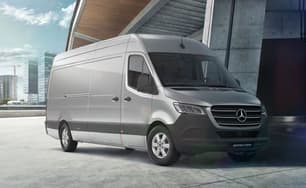
Given the original Sprinter was released in 1995, it’s not surprising the current third-generation model feels like it’s benefitted greatly from decades of continuous refinement. Although the list price difference between our test vehicle and its closest Chinese rival is substantial, the 417 MWB Panel Van is hard to fault in terms of driver comfort, safety and all-round competence. It really is very good.
Given the HiLux BEV was developed in close cooperation with mining companies, its relatively short driving range appears tailor-made for that role given the daily driving distances (typically around 150km or less) in underground and open-cut mining operations. However, determining if our SR5 test vehicle is equally well suited to urban tradie duties would require careful analysis of driving range and payload/towing requirements, to determine if its emissions-free high purchase price can be justified.
The 417 MWB Panel Van rides on a 3665mm wheelbase (the shortest of three Sprinter wheelbases) and is almost 6.0 metres long (5932mm), more than 2.0 metres wide (2020mm) and stands almost 2.4 metres tall (2378mm). Its 12.4 metres kerb-to-kerb turning circle is impressively tight for a vehicle of this length.
It rides on simple and rugged MacPherson strut front suspension, with a robust live axle/leaf-spring arrangement under the tail. Steering is via rack and pinion and it has disc brakes all around.
Look beyond the optional silver metallic paint on our example and there’s extensive use of unpainted dark grey plastic on all the external surfaces where hard-working vans are most prone to wear and tear, including the hubcaps, front/rear bumpers, grille, door-handles/mirror shells and along the sides.
Its work-focused exterior styling is nicely integrated, combined with an equally neat and functional interior design that offers a visually-pleasing combination of patterned fabric seat-facings and hard surfaces that blend different shades of grey with splashes of satin chrome and piano black.
We also like the feel and response of mechanical switches (rather than touchscreen prompts) for adjusting settings like cabin temperature, fan speed and media volume.
Externally the only visual differences between a HiLux BEV and its diesel SR5 equivalent are the BEV's solid front grille, a Type 2/CCS charging port for the propulsion battery located behind a hinged body flap on the front passenger side and aerodynamically-tuned 17-inch alloy wheels designed to minimise drag and optimise driving range. It also has unique rear suspension (see Motor).
The BEV variant has benefitted from the latest HiLux generation's exterior and interior styling updates in keeping this iconic workhorse looking fresh, particularly up front with its high slimline headlights, imposing body-coloured grille and trapezoidal side air intakes.
This more hard-edged look is also evident in the BEV's interior which although embracing new dash and centre console designs fortunately adheres to the time-proven practicality and user-friendliness of traditional 'piano key' buttons for its climate control plus a large dial for off-road drive settings (see Motor).
With its 2215kg kerb weight and 4100kg GVM, our test vehicle has a sizeable 1885kg payload rating.
It’s also rated to tow up to 2000kg of braked trailer and with its 6100kg GCM (or how it can legally carry and tow at the same time), that means it can tow its maximum trailer weight while hauling its maximum payload to ensure optimum versatility.
The cargo bay, which offers a cave-like 9.0 cubic metres of load volume and internal lighting front and rear, has internal dimensions of 3316mm length (with bulkhead), 1732mm width and 1719mm height.
So, with 1350mm between the rear wheel-housings, it can comfortably fit two standard 1165mm-square Aussie pallets or up to four 1200 x 800mm Euro pallets, held in place by a choice of 10 floor-mounted load-anchorage points.
The cargo bay is accessed through a single kerbside sliding door with a wide 1260mm opening, or symmetrical rear barn-doors with large handles on each pillar to assist operator access.
The barn-doors also have internal storage bins and open to a full 180-degrees to assist forklift and loading dock access. Thoughtfully, their hinge design also holds the doors firmly open at 180 degrees, to minimise the chance of wind gusts slamming them shut with potential injury to the operator.
There’s also plenty of cabin storage starting with two tiers of bins in each door, with the highest being spacious enough to hold large bottles.
There's also a deep shelf on the passenger side lower dash, a large lidded compartment in the central dash-pad and overhead shelves with lockable storage on the passenger side. Plus, the dash offers a total of eight cup/small-bottle holders.
The base cushion of the two-passenger bench seat is also hinged at the front, which allows it to tilt forward and provide access to a large hidden storage area beneath.
A crew of three can travel in relative comfort (for a commercial van that is) thanks to a central seating position that provides a sturdy hoop-handle for support, sufficient knee clearance from the dash even for tall people, and a reasonably flat and spacious floor area.
The cabin also features the latest next-gen 'MBUX' multimedia system with 10.25-inch touchscreen, which for the first time offers wireless connectivity for Apple CarPlay and Android Auto.
There’s also digital radio and enhanced functionality including an optional navigation upgrade with seven years of map updates.
Our test vehicle’s 2455kg kerb weight is 300kg more than its diesel sibling, which combined with its 3170kg GVM leaves a 715kg payload rating that’s 250kg lower.
The HiLux BEV is also rated to tow up to 2000kg of braked trailer (1500kg less than the diesel) and its 4670kg GCM rating (or how much it can legally carry and tow at the same time) would leave just 215kg of payload capacity if towing its maximum trailer weight. This could easily be used up by two big tradies before you could add their tools, so it’s important to be aware of these load ratings if planning to tow.
tub, is equipped with anchorage points front and rear plus hydraulic tailgate dampers to assist opening and closing. Load tub access is made easier and safer by concave side-steps behind the rear wheels.
Like its diesel sibling, rear seating for tall people offers minimal knee/shoulder/head room, combined with a notably short distance between the top of the base cushion and floor creating a steep thigh angle that concentrates body weight on your lower back.
Driver and front passenger storage includes a bin and bottle holder in each door, cupholders on either side of the dash and upper and lower glove boxes. The centre console has wireless phone charging up front, two more cupholders in the centre and a lidded box at the back containing the V2L (Vehicle to Load) AC inverter with domestic three-pin plug and a 12V accessory socket.
Rear passengers get a bottle holder and bin in each door plus pockets on both front seat backrests, a fold-down centre armrest with two more cupholders plus two USB-C charging ports and adjustable air vents on the rear fascia of the centre console.
There’s no under-seat storage available and the vehicle’s portable AC charging cable, which is stored in a zip-up bag, has no dedicated storage area so must be carried on either the cabin floor or in the load tub.
Our test vehicle is the 417CDI MWB (Medium Wheelbase) Panel Van with standard roof height, which comes equipped with a 2.0-litre, four-cylinder, turbo-diesel engine and nine-speed automatic transmission for a list price of $86,018.
Our example is fitted with a couple of factory options, including the 'Cargo Pack' ($2265) which comprises a two-passenger bench seat, solid cabin bulkhead with fixed window and side-entrance assist handle, wooden cargo bay load floor and floor-to-roof wall-trim using 5.0mm-thick wood panelling.
It also has optional 'High-Tech Silver' metallic paint ($2534) which combined with the Cargo Pack raises the total price to $90,817.
In addition to the latest model’s upgraded safety (see Safety) and comfort/convenience (see Design) features, our test vehicle comes standard with 16-inch steel wheels and 235/65 R16C tyres plus a full-size spare, keyless start, steering wheel paddles for manual shifting, multi-function leather steering wheel, three USB-C ports and two 12-volt sockets, side marker lights and heated exterior mirrors.
There’s also daytime running lights, a parking package with reversing camera and front/rear parking sensors, traffic sign assist, tyre pressure monitoring and lots more.
The HiLux BEV range offers a choice of dual cab ute/dual cab-chassis in base SR model grade or the premium SR5 dual cab ute. Given its commercial fleet focus, exterior colours are limited to standard Glacier White or Frosted White/Ash Slate premium paint options.
Our SR5 test vehicle, like all HiLux BEVs, comes standard with a dual-motor 4x4 drivetrain and 59.2kWh lithium-ion propulsion battery for a list price of $82,990, before on-road costs. Its Ash Slate premium paint adds $675.
This list pricing is way above that of its SR5 48V diesel auto equivalent ($65,990) and its only full-electric ute rival in the form of KGM’s (formerly Ssangyong) Musso EV AWD ($64,000, drive-away).
For that sizeable spend the HiLux BEV’s standard equipment list contains unique features comprising a bespoke 12.3-inch driver’s digital cluster with EV instrumentation, an equally new electronic shift lever for the shift-by-wire BEV functionality plus exterior changes (see Design). Other standard equipment includes:
The (OM654) 2.0-litre, four-cylinder, turbo-diesel, which meets Euro 6 emissions standards using AdBlue, produces 125kW of power at 3800rpm with peak torque of 400Nm served between 1700-2400rpm. The nine-speed torque converter automatic offers the choice of sequential manual-shifting using the steering wheel-mounted paddles.
The HiLux BEV is equipped with two electric motors delivering full-time four-wheel drive. The front motor drives the front wheels and produces 82.2kW of power and 205.5Nm of torque. The more powerful rear motor driving the rear wheels produces 129.3kW and 268.6Nm.
Combined maximum power output is officially rated at 144kW but there’s no official combined torque figure given that the electric motors produce their peak torque at different times.
These motors drive the wheels through chassis-mounted transaxles equipped with single-speed transmissions. They are synchronised electronically using ‘fly-by-wire’ accelerator and gear/mode selection.
The centre console-mounted shifter controls conventional drive selections (Park, Drive, Reverse) plus offers a ‘B’ setting for optimum regenerative braking, to minimise brake pedal use and maximise battery charging.
Its full-time 4x4 system automatically distributes torque on demand between the front and rear wheels according to traction sensors. The driver can choose between three drive modes (Normal, Sport and Eco) and has access to a multi-terrain system (MTS) which optimises traction in different terrain across six settings including Auto, Dirt, Sand, Mud, Mogul and Snow.
The strengthened chassis frame provides protection for the propulsion battery mounted between the main rails. Toyota claims the battery subframe has been designed for flexibility to tolerate high levels of torsional twist when off-roading. It features a full undercover to protect high voltage parts from water splash or other damage and shares the same 700mm wading depth as the diesel version.
HiLux BEV also features a unique De Dion-type (rigid hollow beam axle) leaf spring rear suspension, with the transaxle mounted on the chassis frame to reduce unsprung weight and the beam axle with traditional leaf springs allowing efficient load carrying and off-road performance.
The dash display was claiming average combined consumption of 9.5L/100km when we stopped to refuel at the completion of our 281km test, of which about one third of that distance was hauling a heavy payload (see Driving).
Our own figure of 11.7 (based on actual fuel bowser and tripmeter figures) was higher but still reasonable economy for a vehicle in this GVM class in mostly urban use.
So, based on our own figures, you could expect a ‘real world’ driving range of around 800km from its 93-litre tank, which has been enlarged from 71 litres as part of the latest upgrades.
The HiLux BEV has an official driving range of up to 315km based on the optimistic NEDC combined cycle test procedure.
When we collected our test vehicle the propulsion battery charge was at 100 per cent but the displayed estimated driving range was 272km.
We initially drove 84km unladen in metro traffic (using only Normal/Eco drive modes and max regen braking) with average combined energy consumption of 28.3kWh/100km, which was way above the sub-20kWh/100km figure needed to crack the claimed 300km-plus of driving range.
After recharging to 100 per cent for our GVM test, the estimated driving range dropped to 266km. On this second charge we drove another 173km, of which more than 100km was hauling a full payload which saw a spike in energy consumption to 31kWh/100km. We finished our test with 19 per cent charge and 50km of driving range remaining.
Our total test distance was 258km during which we achieved average energy consumption of 27.8kWh/100km. Therefore, based on our consumption figure, you could expect a driving range in real-world urban use of around 200-220km.
Toyota claims a 10-80 per cent charge time of approximately 30 minutes using a (150kW) DC fast charger or 10-100 per cent in about 6.5 hours using (10kW) AC charging.
Large handles on the doors and overhead shelves assist climbing aboard and there’s enough adjustment in the well-bolstered seat and leather-rimmed steering wheel to find a comfortable position.
Driver views from all angles are excellent thanks to well-designed mirrors along with cameras supported by active aids like blind-spot monitoring etc.
The cabin, with its high roof relative to seat height, has a spacious and airy feel and all controls are reasonably intuitive and easy to reach.
Unladen ride quality is surprisingly supple for a vehicle with a 6.0-tonne-plus GCM rating, combined with excellent steering feel that strikes a fine balance between minimal turning effort at low speeds (for loading etc) and firm handling response at higher speeds.
The drivetrain is also energetic, pulling strongly and cleanly from 1000rpm even though its maximum torque is tapped higher in the 1700-2400rpm zone. The automatic transmission has admirable refinement, with near-seamless shifting between its nine ratios.
The Sprinter is also impressively quiet at speeds up to 80km/h. Tyre and wind noise (the latter mainly around the large door mirrors) naturally increase at highway speeds, but remain far from intrusive. And with the engine requiring less than 2000rpm to maintain 110km/h, it’s well-suited to highway work.
To test its load-carrying ability, we forklifted 1.3 tonnes into the cargo bay which with driver equalled a payload of 1.4 tonnes. That's still almost half a tonne less than its limit.
Not surprisingly, it handled this load with ease, as handling and braking were largely unaffected and the ride quality became smoother thanks to such a big increase in sprung weight. Even so, the rear springs only compressed about 30mm.
It easily conquered our 13 per cent gradient, 2.0km-long set climb at 60km/h with this load onboard, as the auto downshifted to fourth gear to tap maximum torque when hauling this load to the summit.
Engine-braking on the way down, in a manually-selected second gear, wasn’t as robust but not unexpected given a 2.0-litre engine trying to restrain 1.4 tonnes of payload on a steep descent. Even so, the quartet of disc brakes efficiently kept speeds in check.
Overall, it was an impressive performance. However, we did note that the speed sign recognition function was not working for the duration of our test. And some welcome enhancements would be a driver’s left footrest and a fold-down inboard armrest for the driver’s seat, as fitted to its smaller Vito sibling.
It also rides and handles much like its diesel stablemate. The most noticeable differences are the smooth yet energetic power delivery and the near silence of its drivetrain, with most cabin noise coming from the tyres which is also far from intrusive.
Near instant torque from its dual electric motors provides lively response for a vehicle of this size and weight. While it doesn’t nail your eyeballs to the back of your head like some EVs, it does provide spirited acceleration from standing starts and takes less than 10 seconds to reach triple-digit speeds.
To test its GVM rating we forklifted 650kg into the load tub which with driver was lineball with its peak payload rating. The leaf-spring rear suspension only compressed about 40mm under this weight leaving ample bump-stop clearance that ensured no bottoming-out on our test route.
In true HiLux tradition, the ride quality noticeably improved and the chassis and drivetrain were more than capable of hauling this payload on a variety of roads. Overall, it’s a competent load hauler like its diesel stablemate, albeit always with an eye on the battery charge given its limited range.
ANCAP ratings do not apply to Heavy Commercial vehicles. Even so, in addition to the Sprinter’s existing long menu of passive and active safety features, the latest range adds significant enhancements as standard equipment including thorax-protecting airbags for driver and passenger, lane-keeping assist, traffic sign assist, rain-sensing wipers, tyre pressure monitoring and a parking package with reversing camera and front/rear sensors.
Also new is ‘Moving Off Information Assist’ which utilises a camera mounted in the grille plus six ultrasonic sensors to monitor an area 3.7 metres in front of the steered direction of the vehicle and 0.5 metres to the side.
This automatically activates at start-up and remains active up to 10km/h. So, if a road user is detected in the monitored area, the driver is alerted by audible and visual signals.
The latest range also introduces ‘Sideguard Assist’ which provides extended detection in the blind-spot on the passenger side. It activates when the vehicle is stationary and at low speeds, providing an extra set of eyes during parking, low-speed manoeuvring and traffic congestion.
Our test vehicle comes standard with a five-star ANCAP rating (tested 2025) and a suite of passive and active safety features including:
The HiLux BEV's advanced Active Driver Assistance Systems (ADAS) display good refinement in terms of not being overly intrusive or reactive during normal driving, in stark contrast to some rivals equipped with often annoying (and ironically distracting!) driver distraction monitors.
Warranty is five years/250,000km whichever occurs first and includes a roadside assist support package.
Scheduled servicing is every 12 months/40,000km. Pay-as-you-go capped-pricing for the first five scheduled services totals $5905, or a pricey average of $1181 per year. Service plans are also available.
The HiLux BEV comes standard with a five-year/unlimited km warranty and separate five-year warranty covering the propulsion battery which can be extended for up to five years (so 10 years in total) with an annual battery health check. The propulsion battery is also covered by an eight-year/160,000km capacity warranty if its energy storage falls below 70 per cent of the original capacity.
Scheduled servicing is every six months/10,000km with capped pricing of $220 per scheduled service for the first five years (or 10 services in total).
The company has a vast network of more than 275 dealerships across Australia including all states and territories and many regional areas.