What's the difference?
Surprisingly, for people who would rather be driven than drive themselves, there are quite a few options available in the large luxury sedan market.
While on the whole sedans have fallen from favour, this niche corner of the market continues to let the three-box design thrive.
The options here have changed a bit in the last few years, though, so how does the Lexus flagship, the LS fit into the picture? I drove one around for a week to find out.
The XC40 Recharge Twin Motor is the flagship model for the segment leading small electric SUV from Volvo.
Well positioned in terms of price, specifications and driving range, it continues to prove itself a fierce rival to the Mercedes-Benz EQA, Lexus UX and newcomer BMW iX1.
But does it bring its A-game to every attribute buyers in the small electric SUV segment demand? In this review, we put it to test to find out.
The LS500 is the least logical version of the most logical option in the ultimate luxury sedan segment in which logic doesn’t often apply at all.
Take from that what you will, but if it was me being driven around I would definitely be opting for the hybrid version of the LS instead for its smooth electrified driving characteristics and lower operating costs.
The Volvo XC40 Recharge Twin Motor is a cute small electric SUV that offers a decent specs list and a sweet urban driving experience. It’s not the nicest ride on a longer journey but it does have a decent range to be able to tackle one, if needed. I didn’t love the interior design but there’s lots the XC40 gets right.
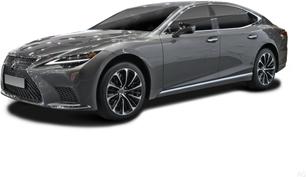
The distinctive but conservative style of Lexus is on full show across the LS’s massive frame. Like other cars in its class, it’s very much the image of the brand itself with styling points strong, but to me not as impressive as the LC500, which is a definitive expression of the brand.
The LS also has many styling points of the previous-generation Lexus design language which are in the process of being phased out.
The car was only updated last year, bringing with it a more recent interpretation of the brand’s big spindle grille, pointy headlight profile, and angular but traditional rear.
The LS - even in this Sports Luxury guise - does look quite menacing from certain angles. The width and stance of this car is accentuated by its curvaceous rear guards and big square front bumper, with the elegance of a classic three-box sedan maintained in a side profile.
The chrome wheel finish is a bit much for my taste, but there’s no doubt they’re real show pieces. They’d better be, too, because I hear they are incredibly expensive should you need to replace one.
The inside has highs and lows but it’s the place where you can most tell the LS has been on sale for a while.
I love the plush seats, big screen, integrated analogue clock and three-dimensional door card design, which sell the flagship luxury feel.
But this car’s age is on show with its clunky and much maligned 'Remote Touch' pad controller (which Lexus is at long last phasing out in its new cars), last-generation software suite, and its small, crowded instrument cluster.
There are a whopping nine interior trim combinations to choose from and ours has the most recently added black leather and ‘Nishijin Haku’ themed highlights which are meant to be inspired by the way "moonlight sits on an open sea".
The feel is a bit '90s, a rough textured fabric with a silver detailing and elements clad in a thin platinum foil, making you feel like you’re in a classic high-class Japanese taxi.
But I’ll admit it plays well with the ambient lighting effect in the doors, and is a unique selling point compared to the standard leather finish.
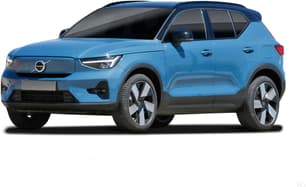
The XC40 Recharge sees some design changes from its fuel-based counterparts and that’s mainly seen in the front because you get a body-coloured panel instead of a standard grille. The 20-inch alloys feature a chunkier-looking design but the front still boasts the cool ‘Hammer of Thor’ headlights (which I'm rather fond of).
The interior is where the electric powertrain loses me because the fuel-based equivalent is so much nicer inside with its leather-accented upholstery and trims.
It's lovely that there has been a conscious effort to use recycled materials and non-leather upholstery throughout but I'm left with the strange-feeling that synthetic seats don’t reflect the grade or price level of this car.
Other than the cool-looking topography inserts on the dash and front doors and the 9.0-inch vertical multimedia system, it’s pleasant but a little basic in the cabin. Which is shame because the exterior is cute as hell.
For passengers, as you’d expect, the LS is stellar. The massive outboard rear seats offer plenty of room, and are complete with reclining, message, and cooling functions.
Adjustable vents feature, with quad-zone climate, and the screens come with individual headphone jacks and HDMI-in so you can bring with you all sorts of entertainment options for those longer journeys.
Other suitable additions worth noting include the wine cooler (although it’s a bit small for anything other than minibar-sized beverages, hardly the 007 trope of rolling out a full-size bottle of Bollinger), flip-down mirror with a light in the roof, and the touch panel controls in the armrest. I also appreciate the built-in sunshades. Nice touch.
Less impressive is the general vibe of the middle seat. With a large raised centre split in the floor and such wide and lavish outboard seats, the middle seat feels a bit forgotten.
Up front, the practicality offering includes a high level of adjustability for the seats to suit a wide range of driving positions, electrical adjust even for the steering column, and a nice wide seat which you simply sink into.
Of course, soft finishes adorn even unseen parts of the cabin so you’ll never touch a nasty hard plastic, and there are large storage areas in both the doors and centre console box.
This big armrest console also hides the USB connectivity within, and there’s a set of big cup holders with a flip-away lid if you want the wood grain design uninterrupted when they are not in use.
I have to mention the useless touchpad controller here, but hand the brand props for offering a collection of climate shortcut buttons on the dash, an actual volume knob, and truth be told you don’t need the touchpad anyway because the screen is touch. Just be ready for the matching last-generation software, which isn’t the best to use or navigate.
The boot has a volume of 440 litres which sounds plentiful, but the actual use of it is a reminder of one of the reasons SUVs are so popular.
Yes, it’s big and reasonably deep, but putting the largest CarsGuide case in there proved a bit clumsy as you have to lift it over the tall rear bumper and it only just clears the top of the relatively small opening.
I love sedans, but this is one area where you can see the benefit of a hatch opening, particularly if you were frequently doing the airport run.
Front passengers enjoy the most space and I have plenty of head- and legroom up front. It’s a really easy car to get in and out of and the individual storage is very good for the class.
Front passengers enjoy a glove box, middle console with a removeable bin, two cupholders, utility tray and skinny drink bottle holders in the storage bins in the doors.
In the rear, passengers get map pockets on the backs of the front seats, two cupholders in the fold-down armrest and small storage bins in each door.
The synthetic leather-trimmed seats look neat and tidy but are very hard in the cushion, which makes them a tad uncomfortable on longer trips. The rear seats are much the same.
Charging options throughout the car are good with the front enjoying a 12-volt port, two USB-C sockets and a wireless charging pad to choose from. The rear also gets two USB-C ports and there's another 12-volt outlet in the boot.
The rest of the technology is easy to use once you spend some time with it. The 9.0-inch touchscreen multimedia system features built-in Google Maps, Assistant and Play Store apps, as well as, YouTube.
The 12.0-inch digital instrument panel isn’t customisable but I like the way it pulls through the satellite navigation screen and directions.
Because of the dual-motor powertrain, your boot capacity drops to 419L from 452L for the single-motor variant. It is large enough for my grocery shop and random errands and you can fold the floor up to create a deep storage well for additional space. Fold the 60/40 split-folding rear seat and available space expands to 1295 litres.
I don’t like the hardened cargo liner, it feels and looks a little cheap, but I do like the powered tailgate. There’s also handy frunk storage of 31L, which is perfectly sized for any charging cables you will have.
The Lexus LS is it, the flagship sedan in the Japanese premium outfit’s line-up. It’s available in two trim levels, either the borderline aggressive F-Sport or plush Sports Luxury.
It’s also available with two drivetrain choices, with no price difference between them. The F-Sport starts from $195,953, before on-roads, while the one we’re testing here, the Sport Luxury starts from $201,078.
This pricing is below par for big luxury sedans designed to be ridden in rather than driven, making it a relatively good-value proposition straight out of the gate.
The entry-level Mercedes-Benz S-Class (the S450) starts from $243,890, the single version of the BMW 7 Series (740i M Sport) starts from $268,900, leaving only the Audi A8 (50TDI) even close when it comes to pricing, which starts from $202,700. We don’t get its Korean rival, the Genesis G90 in Australia yet.
‘Value’ or not, the LS has its work cut out for it, as this particular corner of the executive transport marketplace is probably more about badge cred than it is logic, and the 500 Sports Luxury is at a further disadvantage, as it doesn’t offer the Lexus unique selling point, a silky smooth hybrid system.
Ask yourself, when it comes down to it, if money was no object would you rather have a Grand Seiko or a Rolex?
Again, logic doesn’t apply, but the Lexus does offer pretty much everything buyers in this class should be after.
Inclusions on every LS are 20-inch alloy wheels, adaptive LED headlights, 12.3-inch multimedia touchscreen with Apple CarPlay, Android Auto, and built-in navigation, a 23-speaker Mark Levinson branded audio system, climate control with interesting ‘infra-red body temperature sensors’, heated and cooled front seats with 28-way power adjust, a heated steering wheel, full four-door keyless entry with push-button start, ambient interior lighting, a panoramic view camera, electric motion-sensing boot, radar cruise, and connected services.
Just to remind you this Sport Luxury grade is the one to be driven in, not drive yourself, unlike the F-Sport alternative it scores dual 11.6-inch rear seat entertainment touch panels with HDMI input, full quad-zone climate, power reclining for the rear outboard seats with message functions, a drop-down armrest console with a climate control panel, electric sunshades for the rear three windows, a cooler box, seat ventilation, and two additional airbags for the rear seats. Proper plush. Wish it came with a driver, too.
Things you miss out on for picking this one? Not much, the F-Sport scores a more aggressive dash, an 'LFA-Style' cluster, bolstered front seats, sport steering wheel, variable gear ratio steering with rear steering, high performance brakes, and active stabilisers.
There are two powertrain options in the XC40 family, a mild-hybrid or pure electric. The latter gets two variants and we’re in the top-spec Recharge Twin Motor, which is priced from $85,990, before on-road costs. This positions it in the middle of its nearest rivals but in its family line-up it’s a big $23K jump from its Ultimate B4 AWD combustion equivalent.
The standard features list for the XC40 is robust and there are some great premium features, like the electrically-adjustable and heated front seats with extendable under-thigh support and electric lumbar control.
A panoramic sunroof makes the cabin feel light and airy, the rear outboard seats have heat functions and the driver enjoys a heated steering wheel. You also get a premium 13-speaker Harman Kardon sound system in the Twin Motor.
Other premium features include pre-entry and after-park climate control (perfect for those super-hot days) and a hands-free powered tailgate.
Technology highlights include a complimentary four-year subscription for the built-in Google Assistant, Google Maps and Google Play Store which are accessed via the portrait-style 9.0-inch multimedia touchscreen.
There's also access to apps like YouTube, which delighted my seven-year old and would be handy on any charging stints for some diversion. It's surprising there isn't wireless functionality for Apple CarPlay and Android Auto but they can be hooked up via cable.
The LS500 packs a 3.4-litre twin-turbocharged V6 petrol engine with impressive peak outputs of 310kW/600Nm.
This engine is designed to replace a V8 in terms of its power and feel, and in a lot of ways it does.
It might surprise you to learn the only other place you’ll see this engine used in Australia is the Toyota LandCruiser 300 Series.
The alternative present in the LS500h is a hybrid version of the same engine, sans the turbos.
With its electric assistance, power outputs are lower than this turbo version, but get close with a combined total of 264kW.
While I like the walloping nature of the turbocharged V6 we drove, I think the hybrid is a no-brainer choice for reasons explained in the driving segment.
The XC40 Recharge Twin Motor features two electric motors which are powered by a large 82kWh lithium-ion battery and produce a combined power output of 300kW and 670Nm of torque.
Which is downright fun because it can do a 0-100km/h sprint in just 4.8-seconds!
Given the angry sounds emanating from under the bonnet of this LS every time I put my foot on the accelerator, I was surprised to find overall fuel consumption for the week was surprisingly good.
I used the LS to drive mostly around town, and yet it beat its own urban claim of 14.2L/100km, settling at 12.9L.100km, closer to the combined fuel figure of 10L/100km.
The hybrid is said to nearly halve this consumption, and I’m inclined to believe it based on previous experience with Toyota/Lexus hybrid systems.
The LS500 requires at least 95RON unleaded fuel and has an 82-litre fuel tank. That means you're looking at a range of around 635km, using our real-world figure.
The official energy consumption figure is 19kWh/100km and I averaged 19.2kWh over a fair mix of urban and open-road driving. The energy consumption isn't bad but some rivals do sit closer to that 16.5kWh mark.
The official driving range is up to 485km for this model but I only ever saw a top range of 410km. That's not terribly surprising given I wasn't shy with the power use but there was a little bit of range anxiety on longer trips.
The XC40 Recharge Twin Motor has a Type 2 CCS charging port which means you can benefit from faster charging speeds. On an 11kW AC charger you can go from 0-100 per cent in eight hours but on a standard three-pin house plug socket expect that wait time to go up significantly.
On a DC fast charger expect to go from 10-80 per cent in as little as 33-minutes.
For a seemingly very sophisticated car, there’s something decidedly unsophisticated about the way the LS500 feels from behind the wheel.
Immediately, it feels nowhere near as cutting edge or even as special as something like the LC500, which to me becomes the truest expression of everything Lexus.
No, the LS500 in this turbo V6 guise feels a little bit too old-fashioned. It’s quiet and under acceleration feels like a V8 of just a few years ago, but the Aisin-sourced traditional torque converter automatic transmission is, dare I say, ordinary, lacking the finesse of its German rivals. It’s a problem which is easily solved. Pick the hybrid.
Elsewhere the experience is decidedly Lexus. If you’ve driven even an IS the experience is very familiar in the LS. The touchpoints all match, the steering is light and smooth with a healthy serve of electrical assistance, and, for the most part, the ride is as floaty and comfortable as you’d expect.
I say ‘for the most part’ because there are limits to what the LS’s adjustable-height air suspension will filter out on the enormous 20-inch wheels, complete with run-flat tyres.
Small bumps and potholes are dispatched with ease. Anything too large which passes a certain thud-factor will definitely be communicated to the cabin, though, making for a strange all-or-nothing ride quality.
It is impeccably silent inside, though. The engine is distant, even under load, and tyre noise is virtually non-existent thanks to specially designed alloy wheels with hollow chambers designed to minimise this effect. Now that’s more like what I expect from a Lexus.
It handles very well for such a big unit, making it at least decent to drive for the few buyers who will actually take the helm themselves.
This is no land yacht, it’s a surprisingly agile and adept machine when faced with a bit of blacktop. And it's here where the turbocharged V6 comes into its own compared to the hybrid, offering superior driver engagement.
Like the Polestar 2 there’s no ignition button on the XC40. You shift into drive to ‘turn on’ and after you park, you simply get out to turn it off. It takes a little while to get used to but it’s a cool feature.
The twin motors deliver a hefty kick and you never worry about not having ‘enough power’. In the city it’s zippy but on the open-road you also feel comfortable getting up to speed or overtaking because the power distribution is so well-balanced because it’s an AWD.
I customised my steering wheel ‘feel’ to firm and it makes the handling crisp and direct. You feel like you’re in total control whenever you have to tackle be it tight streets or small car parks.
The blind-spot visibility is compromised by how wide the B and C-pillars are and I find that I'm relying a lot more on the blind-spot monitoring system to compensate.
The XC40 loses a few points for me in terms of ride comfort. As mentioned, the seats aren't terribly comfortable but the suspension is hard enough that you notice every bump, as well.
Road noise is also quite pronounced and it doesn’t sound refined when you drive at higher speeds, which is a shame. The flip-side, though, is that you don’t notice those things as much on short, urban trips.
The standard regen braking isn’t customisable and you don’t notice it until you switch over to a 'one-pedal' function. I found this function uncomfortable to use as it’s very aggressive and creates a jerky driving experience.
Because of its 4440mm length and tiny 11m turning circle, you won’t struggle in a car park! The 360-degree view camera system and front and rear parking sensors make it easy to navigate a tight spot.
This is a joy to park. It’s so easy.
This Sports Luxury version of the LS500 has everything and then some. The usual key highlights are included: high-speed radar based auto emergency braking with pedestrian and cyclist detection as well as intersection assist and fully adaptive cruise control, lane keep assist with lane departure warning, blind spot monitoring with rear cross traffic alert, rear auto braking, traffic sign assist, adaptive headlights, and a panoramic parking camera.
Specific to the Sports Luxury is two additional rear airbags for a total of 12. Despite this thorough suite of equipment, the LS has not been tested by ANCAP.
The XC40 has a long safety features list but a standout is the Volvo designed 'Side Impact Protection System' (SIPS) that reinforces the car's steel framework at the sides and disperses energy in a side collision.
Other standard features include full LED external lights, daytime running lights, adaptive cruise control, rear cross-traffic alert, blind-spot monitoring, driver attention alert, forward collision warning, lane departure alert, lane keeping aid, intelligent seatbelt reminders, traffic sign recognition, 360-degree camera system, front and rear parking sensors.
The XC40 has a maximum five-star ANCAP safety rating from testing done in 2018. It has seven airbags, including a driver's knee bag and features high individual scoring for adult and child occupant protection at 97 per cent and 84 per cent, respectively.
The XC40 has AEB with car, pedestrian and cyclist detection and is operational from 4.0-210km/h. It's usual to see that top speed sit closer to 180km/h, so that's very good.
A cool feature for any parents out there is the second key which you can program to limit stereo volume levels and set a maximum speed allowance. It's even coloured bright orange so there are no chances of a sneaky switcheroo!
There are ISOFIX child-seat mounts on the rear outboard seats and three top-tether anchor points for any families out there but two seats will fit best.
Lexus offers a five-year and unlimited kilometre warranty, and LX buyers get three years of complimentary membership to the brand’s ‘Encore Platinum’ owner experience, which includes three years of capped price servicing, free loan cars at the time of service, invites to events, discounts on fuel at Ampol outlets, and four uses of ‘Lexus On Demand’ which lets owners swap into another Lexus model for up to eight days at a time, as well as eight free uses of valet parking at certain locations.
Servicing on the LS occurs once every 12 months or 15,000km and is fixed for the first three years at $595. Very cheap for the space it plays in.
The ongoing costs are pretty solid with the XC40 coming with a usual five-year/ unlimited warranty term but the drive battery is covered for eight years/160,000km.
You can pre-purchase a five-year/150,000km servicing program for a flat $3000 or an average of $600 per service, which is a bit expensive for the class. Servicing intervals are great at every two-years or 30,000km, whichever occurs first.
You get complimentary roadside assistance for five-years through Assist Australia and if you meet certain criteria, you can extend that by a further three years, which is handy.