What's the difference?
Surprisingly, for people who would rather be driven than drive themselves, there are quite a few options available in the large luxury sedan market.
While on the whole sedans have fallen from favour, this niche corner of the market continues to let the three-box design thrive.
The options here have changed a bit in the last few years, though, so how does the Lexus flagship, the LS fit into the picture? I drove one around for a week to find out.
In a world where car upgrades often feel like saying, “Can I upsize that?”, it’s refreshing to hop into the updated Audi S3 Sportback.
The flagship RS 3 may still be the holy grail of hot hatch dreams, but with boosted engine outputs and upgraded tech, the S3 is stepping up.
Is the S3 Sportback the smarter pick over pricier rivals? It delivers serious performance and polish without stretching into RS 3 territory. With fierce competition in the segment, let’s see what this contender brings to the table.
The LS500 is the least logical version of the most logical option in the ultimate luxury sedan segment in which logic doesn’t often apply at all.
Take from that what you will, but if it was me being driven around I would definitely be opting for the hybrid version of the LS instead for its smooth electrified driving characteristics and lower operating costs.
The updated Audi S3 Sportback is a fun-sized dynamo with impressive outputs and athletic road manners. It’s missing a few premium features, but its compact size paired with a gutsy engine makes it a compelling option for drivers who don’t want to compromise on performance (just space).
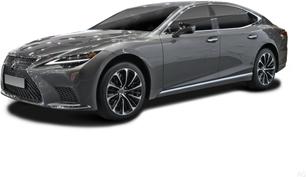
The distinctive but conservative style of Lexus is on full show across the LS’s massive frame. Like other cars in its class, it’s very much the image of the brand itself with styling points strong, but to me not as impressive as the LC500, which is a definitive expression of the brand.
The LS also has many styling points of the previous-generation Lexus design language which are in the process of being phased out.
The car was only updated last year, bringing with it a more recent interpretation of the brand’s big spindle grille, pointy headlight profile, and angular but traditional rear.
The LS - even in this Sports Luxury guise - does look quite menacing from certain angles. The width and stance of this car is accentuated by its curvaceous rear guards and big square front bumper, with the elegance of a classic three-box sedan maintained in a side profile.
The chrome wheel finish is a bit much for my taste, but there’s no doubt they’re real show pieces. They’d better be, too, because I hear they are incredibly expensive should you need to replace one.
The inside has highs and lows but it’s the place where you can most tell the LS has been on sale for a while.
I love the plush seats, big screen, integrated analogue clock and three-dimensional door card design, which sell the flagship luxury feel.
But this car’s age is on show with its clunky and much maligned 'Remote Touch' pad controller (which Lexus is at long last phasing out in its new cars), last-generation software suite, and its small, crowded instrument cluster.
There are a whopping nine interior trim combinations to choose from and ours has the most recently added black leather and ‘Nishijin Haku’ themed highlights which are meant to be inspired by the way "moonlight sits on an open sea".
The feel is a bit '90s, a rough textured fabric with a silver detailing and elements clad in a thin platinum foil, making you feel like you’re in a classic high-class Japanese taxi.
But I’ll admit it plays well with the ambient lighting effect in the doors, and is a unique selling point compared to the standard leather finish.
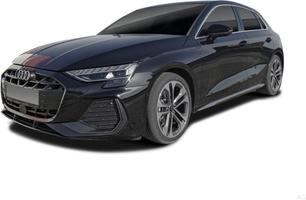
The S3 Sportback may be a small car, but its S design features, like the stylised blackout grille, matrix LED headlights, and 19-inch alloys with red brake calipers, give it a distinctly athletic and fun-loving vibe. It’s compact, but definitely not diminutive and carries serious road presence. It’s hot hatch meets fun-size.
Inside, the S3 looks fabulous. Integrated ambient lighting, a sharp dashboard treatment and a driver-focused cockpit all lend it a premium feel.
The front seats look properly sporty with their integrated headrests, and the quilted Nappa leather upholstery feels great, especially with the eye-catching red contrast stitching.
As for technology, it’s as high-end as you’d expect with a 10.1-inch touchscreen multimedia display and 12.3-inch digital instrument cluster taking centre stage.
The only drawback? No sunroof. Combined with the black headliner and compact cabin, it can feel a little gloomy at times. Still, it’s a cabin you’ll enjoy spending time in.
For passengers, as you’d expect, the LS is stellar. The massive outboard rear seats offer plenty of room, and are complete with reclining, message, and cooling functions.
Adjustable vents feature, with quad-zone climate, and the screens come with individual headphone jacks and HDMI-in so you can bring with you all sorts of entertainment options for those longer journeys.
Other suitable additions worth noting include the wine cooler (although it’s a bit small for anything other than minibar-sized beverages, hardly the 007 trope of rolling out a full-size bottle of Bollinger), flip-down mirror with a light in the roof, and the touch panel controls in the armrest. I also appreciate the built-in sunshades. Nice touch.
Less impressive is the general vibe of the middle seat. With a large raised centre split in the floor and such wide and lavish outboard seats, the middle seat feels a bit forgotten.
Up front, the practicality offering includes a high level of adjustability for the seats to suit a wide range of driving positions, electrical adjust even for the steering column, and a nice wide seat which you simply sink into.
Of course, soft finishes adorn even unseen parts of the cabin so you’ll never touch a nasty hard plastic, and there are large storage areas in both the doors and centre console box.
This big armrest console also hides the USB connectivity within, and there’s a set of big cup holders with a flip-away lid if you want the wood grain design uninterrupted when they are not in use.
I have to mention the useless touchpad controller here, but hand the brand props for offering a collection of climate shortcut buttons on the dash, an actual volume knob, and truth be told you don’t need the touchpad anyway because the screen is touch. Just be ready for the matching last-generation software, which isn’t the best to use or navigate.
The boot has a volume of 440 litres which sounds plentiful, but the actual use of it is a reminder of one of the reasons SUVs are so popular.
Yes, it’s big and reasonably deep, but putting the largest CarsGuide case in there proved a bit clumsy as you have to lift it over the tall rear bumper and it only just clears the top of the relatively small opening.
I love sedans, but this is one area where you can see the benefit of a hatch opening, particularly if you were frequently doing the airport run.
Like most hatches, the front row enjoys the most space. While it’s cosy, it never feels cramped. The seats are firm yet comfortable, thanks to their adjustability and expandable under-thigh supports. Access is fairly easy with wide door apertures, though the low seating position might earn a few grunts, especially from taller folks.
Storage up front is well sorted, with a glove box, a small centre console, a dedicated phone cradle and a couple of cup and bottle holders. It’s about what you'd expect for a car this size, but it's enough to keep things tidy.
There are plenty of charging options, with two USB-C ports in each row and a wireless charging pad up front.
The multimedia system is intuitive and easy to use. The touchscreen is responsive, and wireless Apple CarPlay connected without fuss and stayed connected all week. Wireless Android Auto is available, too.
Built-in sat nav is clear, and I love the way directions pull through to the digital instrument panel. The Sonos sound system? Pretty darn good. My son and I had more than one mini-concert on the school run.
As for the rear row, it definitely reminds you this is a small car. At 168cm, I found it on the cramped side of cosy and my husband just laughed when I asked him to try it! The wheel arch also cuts into the door aperture, making access a little awkward. Best to think of it as occasional adult seating. But given the size, that’s no surprise.
Amenities in the back are decent with a couple of map pockets, cup and bottle holders, as well as a fold-down armrest, those USB ports and rear temperature control (but curiously, no fan control). The seats are comfortable enough, but space is limited. Realistically, it’s best suited for two passengers, not three.
Boot space is quite practical. The wide opening and manageable load lip height make it easy to slide items in and out. It offers 325L of space, less than its key rivals, but expands to 1145L with the rear seats folded flat. The handy 40/20/40 split also adds versatility. Under the boot floor, you’ll find a tyre repair kit.
The Lexus LS is it, the flagship sedan in the Japanese premium outfit’s line-up. It’s available in two trim levels, either the borderline aggressive F-Sport or plush Sports Luxury.
It’s also available with two drivetrain choices, with no price difference between them. The F-Sport starts from $195,953, before on-roads, while the one we’re testing here, the Sport Luxury starts from $201,078.
This pricing is below par for big luxury sedans designed to be ridden in rather than driven, making it a relatively good-value proposition straight out of the gate.
The entry-level Mercedes-Benz S-Class (the S450) starts from $243,890, the single version of the BMW 7 Series (740i M Sport) starts from $268,900, leaving only the Audi A8 (50TDI) even close when it comes to pricing, which starts from $202,700. We don’t get its Korean rival, the Genesis G90 in Australia yet.
‘Value’ or not, the LS has its work cut out for it, as this particular corner of the executive transport marketplace is probably more about badge cred than it is logic, and the 500 Sports Luxury is at a further disadvantage, as it doesn’t offer the Lexus unique selling point, a silky smooth hybrid system.
Ask yourself, when it comes down to it, if money was no object would you rather have a Grand Seiko or a Rolex?
Again, logic doesn’t apply, but the Lexus does offer pretty much everything buyers in this class should be after.
Inclusions on every LS are 20-inch alloy wheels, adaptive LED headlights, 12.3-inch multimedia touchscreen with Apple CarPlay, Android Auto, and built-in navigation, a 23-speaker Mark Levinson branded audio system, climate control with interesting ‘infra-red body temperature sensors’, heated and cooled front seats with 28-way power adjust, a heated steering wheel, full four-door keyless entry with push-button start, ambient interior lighting, a panoramic view camera, electric motion-sensing boot, radar cruise, and connected services.
Just to remind you this Sport Luxury grade is the one to be driven in, not drive yourself, unlike the F-Sport alternative it scores dual 11.6-inch rear seat entertainment touch panels with HDMI input, full quad-zone climate, power reclining for the rear outboard seats with message functions, a drop-down armrest console with a climate control panel, electric sunshades for the rear three windows, a cooler box, seat ventilation, and two additional airbags for the rear seats. Proper plush. Wish it came with a driver, too.
Things you miss out on for picking this one? Not much, the F-Sport scores a more aggressive dash, an 'LFA-Style' cluster, bolstered front seats, sport steering wheel, variable gear ratio steering with rear steering, high performance brakes, and active stabilisers.
The A3 Sportback comes in three trim levels, with the S3 technically sitting in the middle, just below the performance-focused RS 3. It's priced from $78,800, before on-road costs, and it shares the same platform and underpinnings as the Volkswagen Golf R. Surprisingly, our test vehicle isn’t significantly more expensive than its Golf R rival which comes in at $70,990 MSRP.
That makes it a more affordable option when compared to premium rivals like the BMW M135 xDrive which starts at $83,600 MSRP and the Mercedes-AMG A35 which comes in at $89,700 MSRP.
The update sees engine outputs improve with it gaining 17kW and 20Nm of torque, resulting in a total of 245kW and 420Nm.
Feature highlights include 19-inch alloy wheels, red brake calipers, electrically-adjustable and heated front seats (with expandable under-thigh support), rear privacy glass, quilted Nappa leather upholstery and 'S Sport' suspension with damper control which lowers the ride height lowered by 15mm.
The updated technology is well-rounded and now comes with wireless Apple CarPlay and Android Auto. There's also three-zone climate control, a 10.1-inch touchscreen multimedia display, a 12.3-inch digital instrument cluster, digital radio, four USB-C ports, a wireless charging pad, built-in satellite navigation and a 15-speaker Sonos 3D sound system.
Still, despite its premium hot hatch status, this grade skips a few luxury touches. Ventilated front seats, a heated steering wheel, heated rear outboard seats and a sunroof are all missing. The BMW M135 xDrive, notably, includes all of these as standard.
Even the powered tailgate with kick-functionality is an optional extra here, adding $660 to the price. At this level that should be standard.
The LS500 packs a 3.4-litre twin-turbocharged V6 petrol engine with impressive peak outputs of 310kW/600Nm.
This engine is designed to replace a V8 in terms of its power and feel, and in a lot of ways it does.
It might surprise you to learn the only other place you’ll see this engine used in Australia is the Toyota LandCruiser 300 Series.
The alternative present in the LS500h is a hybrid version of the same engine, sans the turbos.
With its electric assistance, power outputs are lower than this turbo version, but get close with a combined total of 264kW.
While I like the walloping nature of the turbocharged V6 we drove, I think the hybrid is a no-brainer choice for reasons explained in the driving segment.
The S3 Sportback wears the quattro badge proudly, meaning it’s all-wheel drive and it pairs a tweaked seven-speed automatic transmission with a 2.0-litre turbocharged, four-cylinder petrol engine.
This update brings a bump in performance over the previous model, including the addition of a rear torque splitter. Power is now up to a gutsy 245kW and 420Nm of torque, launching the S3 from 0 - 100km/h in just 4.7 seconds. That’s proper hot hatch territory.
Given the angry sounds emanating from under the bonnet of this LS every time I put my foot on the accelerator, I was surprised to find overall fuel consumption for the week was surprisingly good.
I used the LS to drive mostly around town, and yet it beat its own urban claim of 14.2L/100km, settling at 12.9L.100km, closer to the combined fuel figure of 10L/100km.
The hybrid is said to nearly halve this consumption, and I’m inclined to believe it based on previous experience with Toyota/Lexus hybrid systems.
The LS500 requires at least 95RON unleaded fuel and has an 82-litre fuel tank. That means you're looking at a range of around 635km, using our real-world figure.
The S3 Sportback has an official combined fuel consumption figure of 7.9L/100km and a 55-litre fuel tank, giving it a theoretical driving range of up to 696km.
Its key rivals hover around similar numbers, so it's right on the mark for the segment. After a mix of long-distance drives and my usual urban errands, my real-world figure came in at 8.0L/100km - very close to the claim, which I’m pretty happy with.
For a seemingly very sophisticated car, there’s something decidedly unsophisticated about the way the LS500 feels from behind the wheel.
Immediately, it feels nowhere near as cutting edge or even as special as something like the LC500, which to me becomes the truest expression of everything Lexus.
No, the LS500 in this turbo V6 guise feels a little bit too old-fashioned. It’s quiet and under acceleration feels like a V8 of just a few years ago, but the Aisin-sourced traditional torque converter automatic transmission is, dare I say, ordinary, lacking the finesse of its German rivals. It’s a problem which is easily solved. Pick the hybrid.
Elsewhere the experience is decidedly Lexus. If you’ve driven even an IS the experience is very familiar in the LS. The touchpoints all match, the steering is light and smooth with a healthy serve of electrical assistance, and, for the most part, the ride is as floaty and comfortable as you’d expect.
I say ‘for the most part’ because there are limits to what the LS’s adjustable-height air suspension will filter out on the enormous 20-inch wheels, complete with run-flat tyres.
Small bumps and potholes are dispatched with ease. Anything too large which passes a certain thud-factor will definitely be communicated to the cabin, though, making for a strange all-or-nothing ride quality.
It is impeccably silent inside, though. The engine is distant, even under load, and tyre noise is virtually non-existent thanks to specially designed alloy wheels with hollow chambers designed to minimise this effect. Now that’s more like what I expect from a Lexus.
It handles very well for such a big unit, making it at least decent to drive for the few buyers who will actually take the helm themselves.
This is no land yacht, it’s a surprisingly agile and adept machine when faced with a bit of blacktop. And it's here where the turbocharged V6 comes into its own compared to the hybrid, offering superior driver engagement.
The S3 Sportback sounds as mean as it looks, and it delivers on that promise with effortless grunt. Acceleration is immediate, with plenty of power on tap when you need it. It’s just fun all around.
The lowered sports suspension and wide tyres do bring some extra noise into the cabin, even at lower speeds. You might find yourself repeating things to rear passengers now and then, but it never feels overwhelming.
Steering and suspension are on the firmer side, so yes, you’ll feel the bumps but the payoff is sharp, responsive handling. Quick lane changes and winding coastal roads are where this car shines.
Visibility is about what you’d expect from a low-slung hot hatch. The pillars don’t obstruct the view, but sitting beside a towering SUV at the lights can make you feel a bit... compact.
Cornering is a strong suit, thanks to the car’s wide stance and AWD system. It feels confidently planted in most conditions. That said, I noticed the occasional wobble through the rear frame on rough sections in heavy rain.
Its compact size makes parking a breeze, especially with the help of multiple sensors. The reversing camera is crisp, but at this price point, the lack of a 360-degree camera view feels like a missed opportunity.
This Sports Luxury version of the LS500 has everything and then some. The usual key highlights are included: high-speed radar based auto emergency braking with pedestrian and cyclist detection as well as intersection assist and fully adaptive cruise control, lane keep assist with lane departure warning, blind spot monitoring with rear cross traffic alert, rear auto braking, traffic sign assist, adaptive headlights, and a panoramic parking camera.
Specific to the Sports Luxury is two additional rear airbags for a total of 12. Despite this thorough suite of equipment, the LS has not been tested by ANCAP.
The S3 isn’t covered by its 2WD sibling's maximum five-star ANCAP safety rating but it is well-equipped with safety features all the same.
Safety equipment includes blind-spot monitoring, side exit assist, rear cross-traffic alert, lane departure alert, lane keeping aid, park assist, reversing camera, front/rear parking sensors, forward collision warning, autonomous emergency braking and adaptive cruise control with stop and go function.
It also has six airbags but misses out on a front centre airbag. None of the driver assist systems are intrusive to daily driving, which I always like.
The rear row has ISOFIX child seat mounts and three top-tether anchor points but only two child seats will fit.
Lexus offers a five-year and unlimited kilometre warranty, and LX buyers get three years of complimentary membership to the brand’s ‘Encore Platinum’ owner experience, which includes three years of capped price servicing, free loan cars at the time of service, invites to events, discounts on fuel at Ampol outlets, and four uses of ‘Lexus On Demand’ which lets owners swap into another Lexus model for up to eight days at a time, as well as eight free uses of valet parking at certain locations.
Servicing on the LS occurs once every 12 months or 15,000km and is fixed for the first three years at $595. Very cheap for the space it plays in.
Audi backs the S3 Sportback with a five-year/unlimited kilometre warranty, which is on par with its European rivals. A five-year pre-paid servicing plan is available for $2890 which is cheaper than pay-as-you-go and reasonable for the class.
For those looking to go the extra mile, the 'Audi Advantage' package lets you extend the warranty and capped-price servicing by an additional two years, which represents solid value overall.
Servicing intervals are every 12 months or 15,000km, whichever comes first.