What's the difference?
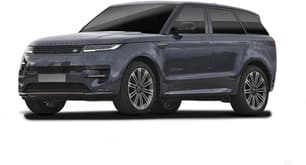
Breadth of capability. That’s the key phrase the engineers, public relations managers and even the support crew keep using when discussing the all-new Range Rover Sport SV. And with good reason.
There aren’t too many SUVs on the market that can match it for its bandwidth. Within the space of a few hours at the recent launch in Portugal, we hit 233km/h down the front straight at the Portimao race track, carved through country back roads and then drove down a muddy track, across a small creek and then conquered an off-road obstacle course.
Most of its rivals can do some of those things, but none can do all of them.
Range Rovers have always had a Swiss Army knife element to their appeal, but the Sport SV adds a new dimension with its sheer dynamic ability.
The company confidently calls it its most dynamic model yet, which isn’t saying much for a brand that’s history is focused on off-road performance rather than worrying too much about paved roads.
But not only is it clearly the most dynamic Range Rover ever, it’s also now a clear front-runner in the highly-competitive performance SUV market, capable of holding its own against the likes of the Porsche Cayenne Turbo GT, Lamborghini Urus and Aston Martin DBX.
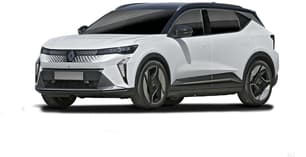
What’s 15 years between friends? Well, in this instance quite a lot because this is the all-new, pure-electric Renault Scenic E-Tech small-medium SUV.
The Renault Scenic we knew here until the late noughties was a petrol-powered, five-seat family car or an upright, seven-seat people mover.
But this is an altogether sleeker proposition, priced and specified to compete with other electric SUVs like the BYD Sealion 7, Hyundai Elexio, Kia EV5, Skoda Elroq and Zeekr 7X.
So, could this fresh Euro contender have what it takes to steer you away from such an impressive set of pure-electric competitors?
We attended its local launch to find out.
Range Rover proudly calls it its “most dynamic” model ever, and based on our first experience that’s most definitely true. Its ability to be genuinely exciting to drive on a race track is nothing short of remarkable for a brand whose history is all about off-road prowess.
On the road it shines just as brightly, with its potent engine and state-of-the-art suspension system working in unison to make for a stunningly dynamic large and luxurious SUV. And then, if you need to cut across a field or scramble up a slippery hill, it will do that too.
Range Rover’s claims of ‘breadth of capability’ is apt but arguably an understatement. I’d stop short of calling the Sport SV the obvious class-leader in the high-end, high-performance SUV market because it’s up against some seriously impressive rivals, but the Range Rover offers a broader range of ability than any of its competitors.
Note: CarsGuide attended this event as a guest of the manufacturer, with travel, accommodation and meals provided.
The Renault Scenic E-Tech is lining up against some heavy-hitting competitors, but Renault Australia admits it has one top of mind - the Kia EV5. The Kia’s a quality package and if you’re in the market for a mid-size electric SUV, you’ll no doubt have it on your shopping list. And you should have a look at this slightly smaller car, as well. It has the refinement, practicality and safety to stand up confidently in a rapidly expanding segment.
Note: CarsGuide attended this event as a guest of the manufacturer, with travel, accommodation and meals provided.
Range Rover is a brand synonymous with big, imposing and off-road capable SUVs, not dynamic and sporty vehicles. But in recent years the Evoque and Velar have added a new layer of style and a sleekness to the brand’s reputation.
The latest generation Sport is still a big and imposing two-tonne SUV, but it’s also definitely sportier to look at and the SV changes only add to that.
It only takes a moment looking at it and it’s clear this is an SUV that means business. The 23-inch wheels fill out the guards, the air-suspension can lower the body to the ground and the aerodynamic package, including the front splitter, make for a purposeful look.
The carbon-fibre bonnet can be finished with the centre section exposed, showing off the weave of the fibres, which is a nice touch, although fake vents on the bonnet and front fenders are a bit disappointing.
There are some design tips of the hat to Scenics past in this latest electric version, including blacked-out door pillars and a recognisably angular C-pillar treatment.
But despite the fact it debuted at the Munich IAA Motor Show in late 2023, from its slimline headlights and jagged grille to its sculpted flanks and saw tooth rear end, this fifth-generation Scenic looks contemporary from every angle.
A highlight is the large Renault diamond logo sitting at the centre of a faux upper grille, surrounded by a multitude of the same elongated hexagon shape as a cool recurring graphic, the pattern merging neatly into the headlights.
Speaking of which, the LED beams can be set to produce an elaborate welcome sequence as you approach the car.
The interior feels slick and screen-rich but not at the expense of user-friendly physical controls for audio, ventilation and other commonly used functions.
Recycled fabric on the dashboard and headliner looks and feels good while doing its bit to suppress cabin noise.
Speaking of which, the Scenic is Renault’s poster child for the use of recycled materials in its construction and end of life recyclability.
Everything from ferrous components consisting of 37 per cent recycled materials to a bonnet and doors made of up to 80 per cent recycled aluminium.
The dashboard cowling is made from kenaf, a plant fibre similar to jute; the steering wheel cover is 51 per cent bio-sourced; the cockpit uses 26 per cent recycled plastic; the storage bins in the door panels are 45 per cent recycled fibre, the floor mats are 54 per cent recycled plastic bottles and the seat upholstery is 100 per cent recycled fabric. The list goes on and on, but you get the idea.
There are two stand-out features in the cabin, beyond the standard high-level of luxury you expect from a Range Rover Sport.
The first is the SV-specific steering wheel with illuminated paddles, which feels solid in your hands. But the second is by far the most interesting, the so-called Body and Soul Seats (BASS), which Range Rover has developed in conjunction with Coventry University.
Available with either genuine leather or ‘ultra fabric’ and a 3D-print knit trim, the seats look great on the outside but it’s what’s inside them that’s special.
There are four audio transducers integrated into the seat back which can vibrate to the beat of whatever audio track you’re listening to. The system uses AI to detect the lower frequencies and then work out which beats to transmit.
This is technology used by musicians, Coldplay’s Chris Martin reportedly wears transducers integrated into a vest when he performs, but Range Rover is confident it will add to the ownership experience.
It’s certainly an interesting technology and a demonstration across different music genres highlights the way the system adapts to individual songs, but it’s hard not to feel like this is more of a gimmick than something an owner will use every day.
If you don’t like listening to music with it, the Body and Soul Seats also work with a ‘Wellness’ setting that features six audio pieces (designed by Coventry University musicians) - calm, soothe, serene, cool, tonic and invigorate.
It’s probably what you need to help settle your heart rate after you unleash the full performance potential of the Sport SV.
In the back seat there’s none of this technology but they do feature heating and ventilation as well as power recline functions. There’s also four-zone climate control, so every occupant can be comfortable.
In terms of how it all works in practice, at just under 4.5m long, close to 1.9m wide and less than 1.6m tall with a 2785mm wheelbase, the Scenic is more compact than the larger BYD Sealion 7 or Zeekr 7X, for example.
But there’s plenty of breathing room up front, with the centre screen angled towards the driver enhancing the cockpit feel for the one doing the steering.
There are large carpeted bins in the doors with room for bottles and a lidded storage box between the seats doubles as a centre armrest. That lid slides forward by 70mm to cover a small storage cubby under the front of it, which is a handy trick.
Locating the gear selector on the right-hand side of the steering column liberates extra space for a centre cupholder and large console storage bin. There’s a generous glove box and a wireless smartphone charger under the centre screen includes a rubberised base and two lugs to stop devices sliding around. Power and connectivity runs to two USB-C ports and a 12-volt socket.
Moving to the second row, sitting behind my 183cm driving position, while toe room is a little tight (with the driver’s seat set low down), there’s heaps of leg and headroom as well as enough shoulder room (and foot room thanks to a flat floor) for three adults on short to mid-length trips. A pair of adjustable centre air vents is also a welcome inclusion.
Storage includes door bins (again with room for bottles), large and device-sized pockets on the front seat backs and the pièce de résistance is the evocatively named ‘Ingenious armrest’, which includes a storage area and two cupholders at the base of articulated horizontal arms that allow passengers to mount a phone or tablet at various angles in rubberised slots for joint or solo viewing.
It is, indeed, ingenious and four USB-C plugs (two in the armrest, two near the air vents) mean back-seaters won’t be short of power options.
Boot volume with the rear seats upright is useful at close to 545 litres (VDA), expanding to around 1670L with the 40/20/40 split-fold second row lowered. A power tailgate is standard across the range.
There are bag hooks, tie-down anchors, lighting and a 12-volt socket back there, although for V2L (vehicle to load) functionality you’ll need an accessory adapter to plug into the charge port.
Maximum braked trailer towing capacity is a handy 1100kg, but there’s no spare tyre, only a repair/inflator kit, which isn’t good enough.
To be blunt, the Range Rover Sport SV is one of those vehicles that if you have to ask, you can’t afford. Particularly in this case, as the model has launched in a single specification level, the Sport SV Edition One, which is priced from $360,800, plus on-road costs.
That puts it into the same financial category as the likes of the Aston Martin DBX ($356,512), Porsche Cayenne Turbo GT Coupe ($364,700) and Lamborghini Urus ($409,744) - especially when we discuss some of the pricier options.
For that price the Sport SV Edition One comes with exclusive branding on the front splitter, centre console, treadplates and puddle lamps as well as a raft of standard features likely to carry-over to the 2025 model year version.
These include carbon-fibre badges, forged 23-inch alloy wheels, digital LED headlights, a carbon-fibre bonnet, 16-way electronically adjustable front seats, Meridian 'Signature' sound system, 13.1-inch multimedia touchscreen, Apple CarPlay and Android Auto and newly developed ‘Body and Soul Seats’ (more on those later).
But if you’re feeling really sporty, you can upgrade your Sport SV with lightweight carbon fibre wheels and carbon ceramic brakes.
These will cost you a staggering $16,130 and $13,500, respectively, but the wheels measure 23-inches and are the largest fitted to a production car (and are also Australian-made by Carbon Revolution in Geelong).
Unfortunately, for now at least, this is all a moot point because Range Rover Australia has already invited and sold all examples of the Sport SV Edition One, so you'll need to be patient and wait until at least 2025 to have the option to buy one.
The Scenic E-Tech starts from $55,990, before on-road costs, for the entry-grade Techno. Then there’s the Techno Long Range for $59,990, BOC, while the flagship Esprit Alpine comes in at $65,990.
That’s sharp relative to competitors and follows the brand getting a reality check with the Megane E-Tech after it launched here in late 2024, Renault shaving $10,000 off its price only a few months later.
Equipment highlights across the line-up include a 12-inch multimedia touchscreen, a 12.3-inch driver display, sat-nav, adaptive cruise control, a 360-degree surround-camera view, all LED exterior lights, wireless Android Auto and Apple CarPlay and six-speaker Arkamys audio.
There’s also dual-zone climate control, an electric tailgate, auto-folding side mirrors, cloth upholstery, heated front seats and steering wheel, 48-colour ambient interior lighting, keyless entry and start and 19-inch alloys (on the Techno models).
Then you can fold in over-the-air updates, access to remote services via the ‘MyRenault’ app and Google In-Built that enables voice-control for up to 70 car functions.
The Esprit Alpine ups the ante with 20-inch rims, nine-speaker Harman Kardon audio, synthetic leather and cloth seat trim, six-way power adjustment (with memory settings) for driver and front passenger seats, a massaging driver’s seat, brushed metal pedal covers and facial recognition for seat and mirror settings.
In short, the Scenic is well-equipped relative to its competitive set and cost of entry, with Renault confirming there are mainly demonstrator cars in dealers at the moment, with the majority of stock landing in late May or early June this year.
There are three optional paint choices - metallic ($800), two-tone ($1000) and matt ($1200), the latter exclusive to the Esprit Alpine.
Sadly the wonderfully evocative supercharged V8 engine from the previous generation Range Rover Sport SVR is gone.
But, thankfully, in its place is a more powerful engine that’s exclusive to the Sport SV in the Jaguar Land Rover family.
It’s a 4.4-litre twin-turbo V8 petrol engine with mild-hybrid assistance, which is actually built by BMW and based on the same powertrain as you’ll find in the M5, albeit with some specific Range Rover elements for more off-road capability.
It’s also more powerful than the old supercharged V8, making an impressive 467kW of power and 750Nm of torque, which is a 44kW and 50Nm improvement over the old engine.
It’s paired to an eight-speed automatic transmission, again with a specific SV calibration for improved performance.
And, of course, being a Land Rover, it’s also got a four-wheel drive system with full off-road systems as well as an active locking differential.
Like its Megane E-Tech sibling, the Scenic E-Tech uses an excited synchronous motor which Renault says is more efficient than the more commonly used permanent magnet type, with the bonus that it uses no rare earth materials.
The entry-level Scenic E-Tech Techno's fitted with a 60kWh NMC battery. Its electric motor transfers 125kW and 280Nm to the front wheels and Renault claims a 0-100km/h time of 8.6 seconds.
The Techno Long Range and top-spec Esprit Alpine pack an 87kWh battery and a more powerful motor, raising outputs to 160kW/300Nm and lowering the 0-100kmh sprint time to 7.9 seconds.
Despite all the extra power, thanks to the mild-hybrid system it’s more fuel efficient and produces less emissions than the old 5.0-litre V8.
Still, it’s all relative, and as you’d expect from a twin-turbo V8 SUV it’s still thirsty and uses 11.7-12.5-litres per 100km, based on European specifications.
The mild hybrid system uses a crank-integrated starter generator instead of a conventional alternator, providing a boost of up to 20kW and 175Nm of electrical power when needed, with the energy captured during braking and stored in a 48-volt lithium-ion battery.
Official energy consumption numbers for the combined (urban/extra-urban) cycle are close between the two powertrains at 16.3kWh/100km for the Techno and 16.8kWh/100km for the Techno Long Range and Esprit Alpine, which are bang on average for the class.
Range for the standard Techno is 430km, which is at the lower end of expectations for a medium electric SUV but adding the bigger battery pushes that number out to 625km, which is much healthier and useful day-to-day.
On the launch drive program, which took in some urban but mostly rural B-road running, we saw an average consumption figure of 17.1kWh/100km in the Esprit Alpine, which is pretty good in those conditions.
The car’s 400V electrical architecture allows for DC charging at up to 130kW for the entry model and 150kW for the bigger-battery variants.
At that speed, claimed 15-80 per cent charge times are 32 and 37 minutes, respectively. Not the best, not the worst. AC charge capability is 11kW on all models and a Mode 3 charging cable is included.
Before driving the Sport SV you need to understand its highly complex suspension system that allows it to be so dynamically capable. Range Rover calls it a '6D Dynamic' system, because it can control the car left and right, up and down and corner to corner.
To achieve this the system uses a combination of hydraulic interlinked dampers, height-adjustable air springs and pitch control, which makes it a semi-active suspension set-up similar to the set-up Formula 1 race cars used to boast.
This allows the Sport SV to sit between 10-25mm lower than the other Sport models and with its clever suspension can actually sit flatter in the corner with less pitch and roll - which is the traditional enemy of high-riding SUVs when it comes to handling.
But the suspension is only part of the story, with the intelligent all-wheel drive, rear-wheel steering, torque vectoring and the active locking rear diff all combining to produce an SUV with incredibly impressive dynamic capability.
Put simply, there’s never been a Range Rover that deserved to be driven on a racetrack. The Sport SV changes that, and thankfully the company let us loose on the challenging Portimao circuit in Portugal to put the SV through its paces.
Range Rover management was quick to stress it doesn’t expect the Sport SV to be a race track regular for its owners, but driving it on track did highlight the extreme potential it offers.
With such a powerful engine it should come as no surprise that the Sport SV hauled down the straight, hitting 233km/h at the end of the long front straight, but with speed still rising which suggests its 290km/h claimed top speed is accurate.
Even from those speeds and with 2560kg of SUV to slow down, with the carbon ceramic brakes it was no trouble whatsoever. Instead the braking was strong and consistent across multiple laps.
The steering is the particular highlight, with the rear-wheel steering helping to turn the Sport SV sharper and more quickly than a big SUV like this should.
But while it impressed on the circuit, we also experienced it on some great winding rural roads across Portugal and this is where it shone even more brightly.
This is an SUV that you’ll genuinely enjoy driving with its ability to carve through corners and blast down anything resembling straight road.
But to ensure it lives up to the Land Rover badge on the front, we also drove it off-road. Nothing too serious at first, just muddy ruts, across some water and over some rocks.
But then we were guided through a course that showed off its articulation potential, which is far greater than the average owner will ever need.
However, to achieve this Range Rover removed the carbon-fibre front splitter, so it’s not the most off-road friendly model the brand offers.
Renault says the entry-grade Scenic Techno will accelerate from 0-100km/h in 8.6 seconds with the more powerful Techno Long Range and Esprit Alpine lowering that number to 7.9sec. So, it’s quick without being scary fast.
It’s certainly nippy in traffic and at the risk of stating the bleeding obvious, quiet. Even in the context of premium EVs the Scenic is quiet and refined.
Suspension is strut front, multi-link rear and the car feels super planted. The launch drive took in some reasonably rapid twisting corners and there’s no hint of lateral movement in the car. Body roll is minimal, too.
Tyres are energy-efficient Michelin e.Primacy (Techno - 205/55x19 / Esprit Alpine - 235/45x20) and the steering is quick with a relatively low number of turns lock-to-lock. It’s never jerky or too sharp. Rather, it means the car starts to turn into a corner the instant you apply steering lock.
That said, the feel between your hands on the wheel and the front tyres on the road is less than intimate.
There are four drive modes - ‘Comfort, ‘Eco’, ‘Sport’ and ‘Custom’. None of them adjust the suspension tune, it’s more about accelerator response and we found Comfort delivers the best blend of right-foot urgency and overall composure.
Most of the braking you’re going to do will be courtesy of the regenerative system and there are five levels, adjustable via steering wheel paddles, including the most aggressive single-pedal mode.
The one-pedal setting pulls the car up nice and progressively and if you do need to use the physical brakes, they’re ventilated discs all around. Some bite on initial application, but even on downhill corner sections, leaning on them quite hard, they perform well without drama.
Under the heading of miscellaneous observations, you can sense the ADAS (Advanced Driver Assistance Systems) including functions like lane-keeping assist doing their thing occasionally, but it’s all quite subtle, which is a good thing.
The Esprit Alpine’s sports front seats remained grippy and comfortable after a couple of hours behind the wheel. And it’s worth noting the Scenic’s relatively compact 10.9-metre turning circle helps in slow-speed manoeuvring.
Speaking of which, some of the modes in the audio system and external warning sounds for pedestrian safety have been designed by French composer and performer Jean-Michel Jarre, noted for his electronic, ambient-style music. Hats off to Renault for commissioning him.
The Sport SV comes generously equipped with safety gear, as you’d expect at this price point. There’s all the usual passive safety, including airbag coverage for all occupants, and plenty of active safety including adaptive cruise control with steering assist, remote park assist and 3D surround cameras - which are used for off-roading as well as parking.
As with the rest of the Range Rover Sport range, it has been awarded a maximum five-star rating from safety agency, ANCAP.
The Scenic E-Tech has a maximum five-star ANCAP rating from assessment in 2022 with active crash-avoidance tech including AEB (with pedestrian and cyclist detection and junction assist), adaptive cruise control, lane departure warning and lane-keep assist, blind-spot detection, traffic sign recognition, a 360-degree camera view, rear cross-traffic alert, driver fatigue monitoring and tyre pressure monitoring as well as front, side and rear parking sensors.
If a crash is unavoidable, there are seven airbags onboard including a front centre bag and for child seats there three top-tether points across the second row with ISOFIX anchor in the outer positions.
If you’re worrying about servicing costs, you’re probably shopping at the wrong end of the market, but as with the range-topping Range Rover model the price of the car is expected to include servicing for the first five years and roadside assistance for the same period.
It’s also covered by a five-year, unlimited kilometre warranty.
As with all Range Rovers the car will tell you when it needs a service depending on driving conditions. For example, if you hit the track or go off-roading it will likely need a visit quicker than if you're just commuting to and from work.
Warranty is five years/100,000km, which is well off the market pace with many competitors at seven, eight and up to 10 years conditional. The battery warranty at eight-year/160,000km matches the market.
Roadside assistance is included for five years, service is recommended every 12 months/30,000km and fixed price servicing is available at a reasonably sharp average of $325 per workshop visit for the first five years.
Renault has 52 dealers across the country covering major cities and key rural areas.