What's the difference?
Lamborghini's Aventador S is the last living link to supercars of old. Wild-looking bedroom-poster material, gigantic anti-socially loud V12 that actually spits flame and the kind of performance that will rustle the jimmies of even a seasoned supercar driver.
It harks back to a time when supercars actually sucked, but it didn't matter because they were proof you had both the money and patience to nurse it into life and then wring its neck, because that was the only way it made any sense. While the Huracan is a thoroughly modern supercar, the Aventador is an unashamed, unabashed, hairy-chested, head-banging, rock ape.
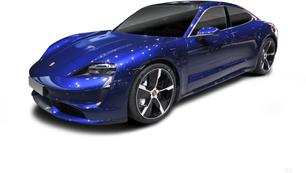
Can you believe Porsche’s Taycan has been on sale in Australia for three and a half years?
Well, it has, which means the mid-life refresh clock has struck 12 for this ground-breaking pure-electric performance sedan and wagon.
Porsche says it’s faster in a straight line… and to charge, with more power and an extended range. It’s also been refreshed cosmetically, the dynamics have been tweaked and the standard features list has been lengthened as prices have gone up.
We’re ready to share our first impressions review, so stay with us to see if the new Taycan keeps the Porsche flame burning in an increasingly electrified automotive world.
The Aventador isn't the best car you can buy for the money and truth be told, it isn't the best Lamborghini, which is a bit tough when you remember the only other car they make at the moment is the V10 Huracan. But it's all about the theatre as much as being a very capable supercar.
I'm not a Lamborghini fanboy, but I completely get the Aventador. It's a because-we-can car, just like the Murcielago, Diablo and Countach before it. But unlike those cars, it's thoroughly modern and with the upgrades introduced to the S, it's faster, harder and enormously entertaining.
As the last of a dying breed it delivers on everything a Lamborghini should - amazing looks, nutty price tag and an engine that excites not just driver and passenger but anyone with a heartbeat. It's by far the most charismatic car you can buy, no matter how many zeroes are on the cheque.
Porsche says its Taycan models have always been performance-focused and this updated version is even faster than the car it replaces, in a straight line and point-to-point. It’s better equipped, more efficient, and yes, more expensive but every millimetre a Porsche in the way this EV sedan and wagon package has been executed.
It’s an impressive car likely to appeal to Porsche newcomers rather than traditionalists, although you may already have other Porsches in the garage. But with the Macan EV landing any minute and the pure-electric 718 Boxster and Cayman just around the corner it's a key part of the changing face of this iconic German brand.
Note: CarsGuide attended this event as a guest of the manufacturer, with travel, accommodation and meals provided.
Asking if there's anything interesting about a Lamborghini design is kind of like asking if the sun is warm.
While there are some geese out there in the corners of the internet who think Audi has ruined Lamborghini styling, there is absolutely nothing shy about the Aventador. It's an incredible looking machine and, if I may say so, shouldn't be had in black because you miss a lot of the madder details.
This car is all about the experience.
It might look close to the deck in the photos, but however low you think it is, it's lower. The roofline barely makes it to the bottom of a Mazda CX-5's windows - you need your wits about you in this car because people just don't see you.
It is absolutely spectacular - people stop and point, one chap sprinted an easy 200 metres to take a photo of it in the Sydney CBD. Hello, if you're reading.
Inside is pretty tight indeed. It's amazing to think that a car 4.8 metres long (a Hyundai Santa Fe is 4.7 metres) struggles to contain two people over six feet tall. My six foot two photographer's head left an impression in the headlining. It's a tiny cabin. It's not a bad one though, it even has a cupholder on the rear bulkhead behind the seats.
The centre console is covered in Audi-based switchgear and is all the better for it, even if it is starting to look a bit old (those bits are from a pre-facelift B8 A4). The alloy gearshift paddles are fixed to the column and are brilliant to look at and touch, while the digital dashboard - which changes with the driving mode - is fantastic even if the reversing camera is awful.
Porsche has freshened up the Taycan’s front and rear end, the nose losing the vents dropping down from the headlights as previewed by the original Mission E Concept in 2015.
Matrix LED headlights are standard with high-resolution HD available. But there are no major sheet metal changes to the bulk of the car. And why would you fiddle with it? The drag coefficient is an ultra-slippery 0.22.
Around the back the Porsche logo in the rear light strip has been given a cool three-dimensional treatment al la the 911, Panamera and other current Porsches. And if you have eyes for the Turbo or Turbo S the brand’s glamorous ‘Turbonite’ metallic silver colour is now available.
Inside is a screen-rich environment with a three-dial digital version of the brand’s five-dial instrument cluster customisable through roughly 5000 configurations and there’s a new multimedia software interface for the central screens with additional functions. A passenger display is a $2860 option.
Yes, well. There's not a lot of space because a V12 is not just big all on its own, all the ancillaries to support it rob a lot of the remaining space. Having said that, there's room in the front for soft bags with a 180-litre front boot, space for two people inside, a cupholder and a glove box.
And the doors open up into the sky rather than out like a normal car's. Who cares if it's impractical, it's hardly something that's going to stop someone buying one.
At nearly 5.0m long and 2.0m wide but less than 1.4m tall the Taycan is a low-slung large sedan.
In the front of the Taycan I’ve got plenty of breathing space, lots of headroom and enough shoulder room and you don’t feel cramped relative to the co-pilot.
In terms of storage, there are pockets in the doors with room for bottles, a couple of cup and bottle holders in the centre console as well as a tray under the flying buttress type upper console section.
A lidded box between the seats housing a couple of USB-C outlets and a 12-volt socket is handy and there’s a decent-size glove box on the passenger side.
Interestingly, an in-car video function enables video streaming on the central display (while the vehicle is stationary) and the passenger display at any time with the vision hidden from the driver by a lenticular-style screen.
In the back, sitting behind the driver’s seat, set for my 183cm position, I have ample legroom and space for my feet. Problem is my head hits the roof solidly, even with the extra room afforded by the panoramic glass insert, which is a no-cost option from the Taycan 4S up.
Standard configuration is two rear seat positions, although a ‘4+1’ set up which adds an occasional centre rear position is optionally available. Trust me, that’s tight.
On the upside you have adjustable ventilation for the rear seat passengers (climate control zones on the Turbo grades) with a small oddments shelf below them, slots in the doors for bottles and two more cup or bottle holders in the fold-down centre armrest.
No map pockets on the front seat backs, so while there’s some room for storage it’s not exactly over supplied in that department, or for breathing space in general.
Boot space is relatively modest at 366 litres in the sedan but the 60/40 split-folding rear seat liberates more space if required. The Cross Turismo wagon offers 405 litres and a much larger load aperture for greater flexibility. An 84L frunk sits in the nose of all Taycans.
Interesting to note Taycans in other markets boast an extra 41L of boot space. It doesn’t feature here because Porsche Australia has made the high-end Bose sound system standard and its sub-woofer eats into available capacity.
A power boot lid or tailgate and auto self-levelling to maintain the car’s ride height under load is standard but there’s no spare tyre of any description. A repair/inflator kit is your only option, which is less than ideal.
As with any Italian supercar, the price-to-feature ratio is rather higher than your average humdrum hatchback. A 'naked' Aventador S starts at a horse-spooking $789,425 and basically has no direct competition. Ferrari's F12 is front-mid engined and any other V12 is either a decidedly different Rolls Royce-type machine or super-expensive niche manufacturer (yes, niche compared to Lamborghini) like Pagani. They're a rare very breed, Lambo knows it, and here we are a sneeze-on-the-spec sheet away from $800,000.
So you have to keep two things in mind when rating a car's value for money at this level. The first is that there isn't any real rival in a pure sense, and if there was, it would be the same price and have the same spec. That's not excusing it, by the way, it's an explanation.
Anyway.
For your eight hundy you get 20-inch front wheels and 21-inch rears, climate control, cruise control, 7.0-inch screen (backed by an older version of Audi's MMI), four-speaker stereo with Bluetooth and USB, car cover, bi-xenon headlights, carbon ceramic brakes, electric seats, windows and mirrors, leather trim, sat nav, keyless entry and start, four-wheel steering, leather trim, digital dashboard, power folding and heated mirrors, active rear wing and active suspension.
The number of out-of-the-box options is staggering and if you're keen to really get on it, you can commission your own options when it comes to trim and paint and wheels. Let's just say that as far as the interior went, our car had almost $29,000 of Alcantara, steering wheel and yellow. The telemetry system, heated seats, some extra branding and front and reversing camera (uh-huh) added up to $24,000, the cameras almost half that total.
With all the bits and bobs, the test car we had was a sobering $910,825 before on-roads.
Cost-of-entry to the Taycan club stretches from close to $174,500, before on-road costs, for the entry-grade, single-motor RWD model to just under $373,600 for the flagship dual-motor AWD Turbo S. That’s an increase of between 2.7 and 6.6 per cent, varying by model.
MSRP - correct at time of publication
The heavy-hitting Taycan Turbo GT is scheduled to arrive in the third quarter of this year at $416K, and we’ll no doubt see a sporty GTS variant within the next 12-to-18 months.
That price spread for the new Taycan pitches the Porsche against the likes of Audi’s closely related e-tron GT and RS GT, BMW’s three-tier i5 line-up and the Mercedes-Benz EQE sedan.
Highlight spec additions include ambient lighting, soft-close doors and an ‘Intelligent Range Manager’ which uses the nav and onboard systems to optimise energy use.
The ventilation system now features a heat pump which compresses outside air to heat the cabin and wireless charging is included across the board.
Then tip in adaptive cruise control, a head-up display, lane change assist, surround camera view (with ‘Active Parking Support’), rear side airbags and digital radio.
The base model picks up adaptive air suspension, alloy door sill protectors and a bigger, lighter battery.
That’s on top of a laundry list of non-safety or performance related inclusions like auto matrix LED headlights, dual-zone climate control, 14-way electrically adjustable heated front seats (with memory), partial leather trim, privacy glass, 10.9-inch central multimedia display, configurable digital instrument panel, 14-speaker/710W Bose audio (with digital radio), Apple/Android connectivity, an auto tailgate and more.
While, depending on model, higher grades collect extra standard gear ranging from bigger rims and full leather interior to a panoramic glass roof and ventilated seats.
Not bad, even in this elevated part of the market.
The Aventador S is powered by Automobili Lamborghini's 6.5-litre V12. You know it's a V12 because there's a plate on top of the engine (which you can see through the optional glass cover) that says so, and handily, tells you the cylinder firing order. That's a neat touch.
Buried deep in the middle of the car, this monster engine develops an astonishing 544kW (30kW up on the standard Aventador) and 690Nm. Its dry sump means the engine sits lower in the car. The gearbox is slung across the back between the rear wheels - the rear pushrod suspension actually sits on top of and across the gearbox - and is apparently brand new.
The transmission is known as an ISR (Independent Shift Rod) and has seven forward speeds and still just the one clutch. Power goes through all four wheels to the road, but it's clear the rears get the lion's share.
The 0-100km/h time is the same as the standard car, which kind of tells you that 2.9 seconds is about as quick as you can go on road tyres when you don't have four electric motors with torque from zero rpm.
The entry-level single-motor RWD Taycan features a new electric motor that’s 10kg lighter and seven per cent more powerful but more notably produces 22 per cent more torque than the unit it replaces.
Both it and the additional motor fitted to the front axle of AWD models are permanent magnet synchronous units with outputs up across the range, the Turbo S producing a stonking 700kW and more than 1100Nm.
That 700kW peak number for the Turbo S comes courtesy of an ‘overboost’ function with Launch Control. And Taycan models equipped with the Sport Chrono package and the Performance Battery Plus have up to an extra 70kW courtesy of a 10sec push-to-pass button.
There’s a two-speed transmission on the rear axle and a single-speed on the front of AWD variants.
Hilariously, the official figure is 16.9L/100km. I doubled it without trying. Simple as that. If you're buying this car thinking it will be easy on the juice, you're insane.
Cheeringly, Lambo has at least tried, the V12 going silent when you sit at the lights, the best thing being the way it bursts back into life when you lift off the brake.
If you have the time available, it takes 90 litres of premium unleaded to fill the tank.
The Taycan runs 800-volt electric architecture which means it can charge at up to 320kW on a DC fast-charger which is 50kW more than its predecessor. In fact, charging at more than 300kW for up to five minutes is possible.
You’re looking at a 10-80 per cent charge in 18min on a fast charger which is down from 37min. It’s 46min on a more typical 120kW charger.
An 89kWh lithium-ion battery is standard on the entry-grade Taycan. It boasts a nickel, cobalt, manganese cell chemistry which Porsche says delivers high energy content, lower internal resistance and higher charge and discharge currents. And it’s 9.0kg lighter.
All models above it feature the 105kWh ‘Performance Battery Plus’, a roughly $12K option on the base car.
Maximum AC charging capacity is 11kW and you’re staring down the barrel of nine hours for a 0-100 per cent fill of the smaller battery and 11 hours for the performance battery pack.
Official energy consumption on a combined urban, extra-urban cycle varies from 17.1kWh/100km for the single motor Taycan to 17.8kWh for dual-motor variants.
On the launch drive program, covering mainly rural B-roads on Tasmania’s east coast, we cycled through all models on offer and recorded a best figure of 21.5kWh/100km for the single-motor Taycan up to 22.0kWh for the Turbo S. Not bad.
Claimed range is 566km for the entry-grade Taycan, up to 626km for dual-motor models.
Interestingly, on 4WD models the - front electric motor can electronically decouple more frequently to improve efficiency.
In Strada or Street mode, awful. Everything is slow and doughy, particularly the gearshift which goes looking for a gear like dog looking for a stick you didn't throw, but instead hid behind your back. The low-speed ride is nothing less than terrible, fidgeting over every single lump and bump and is only slightly more appealing than being dragged along behind.
The gearbox is really the worst bit about it. Automotive history is littered with cars that laboured along with a single clutch semi-auto: Alfa Romeo 156, BMW's E60 M5 and today the Citroen Cactus is stuck with just such a dud transmission.
Like that old M5, however, there's a trick to making the gearbox work for you - show absolutely no mercy.
Switch the selector up to Sport, get off the highway or major arterial road and head for the hills. Or better still, a clear race track. Then the Aventador goes from a pain in the rear to a glorious, roaring, completely unhinged and unhinging battle cruiser. This car is all about the experience, from the second you lay eyes on it to the moment you put it to bed.
This isn't an everyday supercar and it's absurd to think Lamborghini thinks it is.
First up, there's the obvious entry point with those wacky doors. While it's tricky to get in, if you're under six feet and reasonably mobile, stick your backside in, keep your head down and you're in. If you've been clever, you've specified the glass engine cover so you can see out the back but the huge wing mirrors are surprisingly effective.
Has someone thoughtlessly parked the car in a tight spot? No trouble, the four wheel steer makes the car absurdly manoeuvrable given its extravagant length and width.
As we've already established, it's not much fun at low speeds, waiting until about 70km/h before things start to make a bit more sense. This isn't an everyday supercar and it's absurd to think Lamborghini thinks it is. It just isn't.
The old Aventador was not the most capable of machines but made up for it with its overall belligerence. The new S takes that aggro and dials it up. When you move the drive mode to Sport you are basically unleashing hell. You can pretend to be super-masculine and switch to Corsa (race) mode, but it's all about getting the car straight and getting you around the track in the most efficient way possible. Sport is where it's at if you want to have fun.
The Aventador is about being seen, but not before you've been heard - from two postcodes away. It really is utterly glorious when you have a stretch of road to yourself. The V12 revs furiously to its 8400rpm redline and the wallop of the upshift is accompanied with a fantastic bark and a burst of blue flame. And these aren't the best bits.
Approach a corner, stomp on the colossal carbon ceramic brakes and the exhaust erupts in a combination of bangs and pops and growls that puts a smile on even the most hardened car-hater's face. The fact it steers into corners with just a demure roll of the wrist, aided and abetted by that funky four-wheel steering system. It's just brilliant, addictive and truth be told, it gets under your skin.
Full disclosure. My preference when it comes to Porsche propulsion is pistons in cylinders; ideally six of them, horizontally opposed.
But if the Taycan is on your shortlist you’re ready to move past internal combustion and there is no doubt this car is properly quick.
The entry-level RWD model accelerates from 0-100km/h in 4.8sec (0.6 faster than the outgoing model) with the Taycan Turbo S at 2.4sec which is hypercar fast.
Porsche admits to having played around with some dual-clutch transmission-type mimicry along the lines of the Hyundai Ioniq 5 N. But the boffins in Zuffenhausen left that to one side due to concerns over compromise to the car’s point-to-point ability. Porsche seemingly can’t entertain anything that makes a car slower.
It did, however, install a push-to-pass function on dual-motor versions which gives you a 10-second burst of extra performance which is fun.
Suspension is by forged alloy double-wishbone front and rear with some extra links at the back.
Adaptive air suspension is standard across the range, and ‘Active Ride’ is fitted to the upper variants which takes things one step further.
And it does ride very nicely. The launch drive covered second-class, coarse-chip B-road type surfaces and the Taycan smooths the road out beautifully.
Standard wheel diameter is 19-inch for the entry-grade, 20s for the 4S and Turbo, then 21s on the Turbo S. The cars on the launch program all featured 21-inch rims shod with Goodyear Eagle F1 or Michelin Pilot Sport 4 rubber and even on those big wheels the car still rides well.
In terms of the steering… hey, it’s a Porsche. It’s fantastic. Accurate and direct without being too jerky or snappy. It does exactly what you want the car to do. The connection with the front tyres feels like it’s almost direct.
This car may be lighter than its predecessor but all models are over 2.0 tonnes so you’d expect it to be heavy and slow. It’s not. Point and accelerate through corners with supreme confidence. It’s beautifully balanced. What you’d expect from a Porsche performance car.
Physical braking is by big ventilated discs all around with six-piston aluminium monobloc fixed-calipers at the front and four-piston units at the rear. Suffice it to say they wash off speed effectively.
Believe it or not the Turbo S’s front brake calipers contain no less than 10 pistons, clamping ceramic composite rotors. We gave all Taycan variants a solid workout on the Baskerville Raceway just north of Hobart and stopping power felt as strong and effective at the end of the session as it did at the start.
There’s also improved recuperation capacity for the regenerative braking system, up 30 per cent from 290 to 400kW.
In terms of miscellaneous observations, beware the 11.7m turning circle. What might appear to be a three-point turn situation often turns into a five-pointer.
And entry to cars fitted with Active Ride is made easier (when activated). As soon as a door is opened, the body raises by 55mm. May seem OTT but it makes life with the Taycan that bit better.
The Aventador doesn't have an ANCAP safety rating but the carbon chassis also comes with four airbags, ABS, stability and traction controls.
Although Porsche and ANCAP do not intersect at this stage the Taycan ticks just about every active (crash avoidance) safety box in the book.
The highlights are AEB (including pedestrian detection), 'Intersection Assist', 'Lane Keeping Assist' and adaptive cruise control (with ‘Swerve & Turn Assist’). There’s also a high-def reversing camera, a surround view set-up, lane-change assist and a head-up display.
If a crash is unavoidable there are 10 airbags onboard (dual front and front side, driver and front passenger knee, rear side and full-length curtains) as well as an active bonnet to minimise injuries in a pedestrian impact and multi-collision brake minimises the chances of subsequent collisions following an initial crash.
There are two top tethers and two ISOFIX anchors for baby capsules and/or child seats across the second row.
In an unexpected twist, you'll get a three-year/100,000km warranty and the option to increase to four years ($11,600!) or five years ($22,200!)(!). Having recovered from typing that, given the cost of something going wrong, that's probably money well-spent.
Porsche covers the Taycan with a three-year, unlimited km warranty which is off the pace for the premium segment where five years, unlimited km is the norm. The high-voltage drive battery is covered by an eight-year, 160,000km warranty. The paint is covered for three years and a 12-year (unlimited km) anti-corrosion warranty is included.
Porsche Roadside Assist provides 24/7/365 coverage for the life of the warranty, and after the warranty runs out is renewed for 12 months every time the vehicle is serviced at an authorised Porsche dealer.
Thanks to fewer moving parts, servicing intervals for the Taycan are relatively lengthy at two years or 30,000km, whichever comes first.
With Porsche, final costs are determined at the dealer level (in line with variable service labour rates by state/territory).