What's the difference?
It is hard to oversell just how important this new Seltos is to Kia in Australia.
Our new-car slug fest has never been more competitive – and that's saying something, considering how many brands were duking it out here before China rode into town on its mob of shockingly affordable horses.
A handful of years ago, you might list things like the Toyota Corolla Cross, Nissan Qashqai, Honda HR-V or Hyundai Kona as key Seltos rivals. These days you can throw in the GWM Haval Jolion, Chery Tiggo 4, Jaecoo J5, MG ZS, Mazda CX-30, GAC Emzoom, and probably a couple more that I’ve forgotten about, all competing for your hard-earned dollar.
In short, competition is fierce. And Kia needs this to work. In fact, it wants the new and all-hybrid Seltos to be its second best-selling model in Australia.
But has the brand done enough to stake a claim on the small SUV segment?
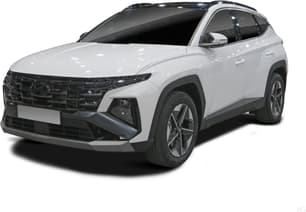
For the first time in Australia, the mid-sized Hyundai Tucson is being offered with a hybrid powertrain – which combines its spritely turbo-powered engine with a fuel efficiency-improving electric motor. And it might be enough to swing you to becoming a hybrid fan.
The new powertrain makes the Tucson a proper competitor against Australia’s darling, the Toyota RAV4 but the Nissan X-Trail e-Power and Kia Sportage remain strong rivals.
This week I’m family-testing the mid-spec Elite Hybrid with the N Line option pack to see how the newly updated Tucson handles family life.
Sure, it can feel expensive compared to some of its Chinese rivals, but there is a lot to like about this all-new Kia Seltos. It is a small SUV that really doesn't feel that small. Plus, it is a hoot to drive on the right twisting road, and that is not something you can say about all vehicles in this category.
Is that enough to win back shoppers who are buying only with their wallets? Only time will tell.
Note: CarsGuide attended this event as a guest of the manufacturer with accommodation and meals provided.
Note: The author, Andrew Chesterton, is a co-owner of Smart As Media, a content agency and media distribution service with a number of automotive brands among its clients. When producing content for CarsGuide, he does so in accordance with the CarsGuide Editorial Guidelines and Code of Ethics, and the views and opinions expressed in this article are solely those of the author.
The updated Hyundai Tucson Elite Hybrid N Line offers families space, features and easy-enough handling for everyday stuff and the occasional weekend adventure pursuits.
The price point is higher than the previous non-hybrid model but you get a lot of bang for your buck and my family was comfortable this week.
Kia has been on something of a tear with its designs lately, and I reckon the Seltos continues that form. While our roads are filled to bursting with amorphous, anonymous blobs, the Seltos taps into the brand’s broader EV design language to deliver a small SUV with detail, shape and sharpness in its look.
Is it too busy in places? Probably. But it’s also not boring, which is a step in the right direction.
The top-spec GT-Line looks the best of the bunch, with its unique front-end treatment and 3D-effect grille. But honestly they all look pretty sharp, helped by the decision to integrate the lights into the front grille, giving a sense of width and presence to what is still a small SUV. At the back, that impression of width continues, with a thin LED line that frames the boot.
I’m not as sold on the cabin experience, though. The decision to fit the same twin-screen multimedia display to all models was the right one – otherwise it would look miles off the pace compared to the everything-and-the-kitchen-sink Chinese brands – but it still doesn’t feel overly special in places, and especially in the cheaper grades.
I do love the two-tone interior treatment, and I praise the button Gods that Kia continues to include physical buttons in its cabins, rather than have everything controlled through the screen.
The Hyundai Tucson has seen a minor facelift on the exterior but most of the changes are in the cabin.
The N Line pack means that you get 19-inch alloy wheels over the standard 18-inch version as well as extended body panelling instead of black plastic trims. There is N Line badging across the car too, but N Line option pack does limit you to just four exterior colour choices.
The front features new stacked LED DRLs which tie in with the fang-like design of the rear LEDs. The origami-styled panelling looks more severe than the previous model which helps it stand out in a class that’s heavy on rivals.
The cabin features a completely reconfigured dashboard and now sports a large curved display panel that houses those upgraded tech screens and a new 6.6-inch climate control panel.
The centre console has been redesigned to look like it’s floating and now adds an extra-large storage cubby underneath it.
The upgraded interior makes the Tucson a leader for the mid-sized SUV segment and is very pleasant to spend time in.
This new Kia Seltos has grown in every meaningful dimension, with length now 4430mm (was 4385mm) and width now 1830mm (was 1800mm), although height is now 1600mm (was 1630mm). And that means more room for people and stuff, with Kia’s small SUV pushing closer towards mid-size SUV territory.
The brand reports increases in head, leg and shoulder room as a result, and it’s true that the backseat definitely feels spacious for an SUV in this category. I'm 175 centimetres and I had plenty of room to stretch out.
There are also twin cup holders in the pull-down seat divider, and USB-C connection points in the rear of the front seats. The back seat also reclines slightly so you can get a bit more comfy.
Boot space has also improved, now 483 litres VDA with the rear seats in place, and growing to 1441L with them folded. The boot also has an adjustable floor so you can store taller items if you need to.
Most models in the Seltos line-up get a space-saver spare wheel, but not the GT-Line, which is stuck with a repair kit.
The cabin up front is spacious with plenty of head- and legroom on offer. You also won’t jostle for elbow room either when you have a passenger.
The seats are comfortable with their heat function but you might still get fatigue on longer trips as you only get adjustable lumbar on the drivers side and it's simple at best.
The back seat has really good space for the class and no matter the passenger, they were comfortable back there. The seats in the rear are well-padded and access to this row is good for sliding in a child seat as the door aperture is wide.
Other amenities are average with directional air-vents, a single reading light, and a fold-down armrest. My seven-year-old son found the window sills to be quite high, so he didn’t get the view he wanted.
The individual storage is excellent for the class with the redesign as you get a dedicated storage shelf in front of the front passenger and a massive cubby that easily fits a handbag underneath the mid-sized centre console.
There are two cupholders and two drink bottle holders per row but the rear storage bins are skinny. The rear row also gets map pockets but again, these are shallow.
The upgraded technology is a must have and the new multimedia system is easy to use once you spend time with it and looks great with its graphics. The system has built-in satellite navigation, over-the-air updates and wireless connectivity for Apple CarPlay and Android Auto.
Connecting the CarPlay is simple and maintains a strong connection.
Charging options are great with two USB-C ports per row and the front also gets a wireless charging pad and a 12-volt socket to choose from. The centrally located position of the charging pad is handy and the liner grippy - so no phone movement.
Rounding out the practicality is the boot, which has a wide aperture and a loading space level with 582L of capacity available with all seats in use, which is good for the class.
The back row has a 60/40 split but don’t fold flat – they sort of spring up a bit, which might annoy when you do a big Bunnings run.
There is a 12-volt socket, a space-saver spare tyre underneath the floor and you get a powered tailgate in this model – which I always like.
Despite all this new competition in Australia, the new Seltos’ price tag has gone up, not down. The new four-grade range kicks off with the Seltos S, which is now $37,990 before on-road costs, and a fair climb from the old model’s $31,250 starting point.
In Kia’s defence, the old range began with a petrol-only engine, while this new model introduces hybrid power range-wide. And there are drive-away deals across the range at the moment.
In the world of legacy makers, the pricing looks sharp enough – it is cheaper than a Toyota Corolla Cross ($39,990 drive-away versus $41,652 drive-away), for example – but in a brave new world of Chinese brands, you can definitely get more for less.
The new Seltos range then climbs to $40,150 before on roads for the S Plus Safety Pack, which adds some active safety stuff missing from the entry-level car, before stepping to $41,910 for the Sport, $44,970 for the Sport+ and $49,870 for the GT-Line with front-wheel drive, and $52,870 for the GT-Line with a second electric motor and all-wheel drive.
Standard equipment in the S includes:
There’s no wireless charge pad, however, which kind of defeats the purpose of the latter.
Step up to the Sport and you’ll find 18-inch alloys and a gloss black treatment on the grille and mirrors, and a boost in standard safety.
The Sport+ feels like a bit of a sweet spot as it adds:
Finally, the GT-Line flagship is available in two- or all-wheel drive, and it gets a pretty stacked equipment list:
It’s also the only trim that gets wireless charging and a powered boot.
The fact that a wireless charging pad only appears in the $50k-plus model is wild, as is the fact that every model below the GT-Line has at least part cloth seats.
But the GT-Line is also the only one to make do with tyre repair kit, rather than the temporary spare all other grades feature. And trust me, temp spares are way better than a repair kit should you get a flat.
There are now six variants for the Hyundai Tucson with the release of the hybrid powertrain and all six have the choice of being either a front-wheel-drive or all-wheel drive with either the petrol engine or hybrid powertrain. And every grade gets the option of adding the N Line style pack. So, there is no excuse for not getting the combo you actually want now.
The model on test is the mid-spec Elite Hybrid with the N Line option pack and its priced from $55,100 before on-road costs. That positions it towards the top end of the market but you get an SUV that's more feature-heavy than most of its rivals.
The standard equipment for the upgraded Elite Hybrid N Line now includes dual 12.3-inch technology screens, wireless Apple CarPlay and Android Auto, as well as a 6.6-inch climate control touchpad.
Other equipment includes a powered driver’s seat, heated front seats, suede/leather upholstery, dual-zone climate control, wireless charging pad, digital radio, four USB-C ports, keyless entry, push-button start, space-saver spare wheel and a powered tailgate.
The Kia Sportage SX hybrid is more affordable at $45,950 MSRP but unlike the Elite Hybrid it misses out on wireless connectivity for phone charging and phone integration apps.
The Toyota RAV4 XSE AWD is priced from $52,585 MSRP but misses out on the newer and bigger technology screens that the upgraded Elite Hybrid has.
The Nissan X-Trail Ti 4WD e-Power is the closest rival in terms of price ($55,090 MSRP) and available features.
The Seltos' hybrid powertrain pairs a 1.6-litre petrol engine and six-speed dual-clutch transmission with one (S, Sport, Sport+ GT-Line FWD) or two (GT-Line AWD) electric motors.
Most model grades are front-wheel drive with a front-mounted electric motor, making a total of 112KW and 265Nm. Only the GT-Line all-wheel drive adds a rear electric motor, upping the grunt to 126kW, but keeping the torque the same at 265Nm.
Kia doesn’t quote a zero-to-100km/h time, but it’s not fast.
In an interesting touch behind the wheel, though, the flappy paddles that would normally control the gearbox actually control the level of regenerative braking on offer, just like you might find in an EV. However, if you activate Sport mode, they go back to changing the gears.
The Elite Hybrid N Line model features a hybrid powertrain that combines an electric motor with a 1.6-litre four-cylinder turbo-petrol engine. They combine to produce 172kW of power and 367Nm of torque. Which is more than enough to make the mid-sized Tucson feel spirited.
This particular variant is AWD and uses a six-speed automatic transmission, which can over rev at times but is mostly smooth with its gear changes.
The new Seltos drinks the cheapest 91 Ron or even E10 fuel, which is good news when prices at the pump are through the roof.
In terms of efficiency, the brand reckons between 5.1 and 5.4 litres per 100 kilometres in most of the models on the WLTP cycle. The all-wheel-drive GT-Line ups that to 5.8L.
We were averaging between 6.5 and 6.9 litres in the AWD trim, but we were also definitely not trying to drive efficiently.
There’s a 38-litre fuel tank, which – using the brand’s best claim – should deliver a total driving range of around 750km.
The official combined cycle fuel consumption figure is a low 5.3L/100km, and my real-world usage came out at 6.0L after doing a lot of open-road driving where hybrids tend to be at their least efficient, so that is an excellent result.
The Tucson hybrid is the second best for fuel usage after the Toyota RAV4 hybrid, which sits at 4.8L/100km for combined usage. Overall, the new hybrid powertrain has proven itself to be pretty frugal.
Based on the official combined fuel cycle and 53L fuel tank, expect a theoretical driving range of up to 981km, which is great for a family road tripper.
I feel a bit like a broken record here, but there is a stark difference between something that feels tuned and tested for our tastes and conditions, and something that doesn't, and few are doing it better than Kia and Hyundai at the moment, despite the two sister brands taking very different approaches.
For Kia, it means testing on the ground in Australia in the pursuit of a balance between comfort and composure, with a sprinkling of driving fun thrown in for good measure.
And so it is in the new Seltos, which, on paper, has absolutely no right to be as fun as it is on the right twisting road. It has the power outputs of an electric leaf blower, its run to 100km/h feels more like a walk, and its 'Sport' mode drive setting changes very little.
And yet, get the Seltos flowing through the right twisting section, and it is a genuine good time. The ride and steering feel natural and connected, and the body control encourages you to carry more and more speed through corners, too.
The trade-off is a slightly firmer ride over some of our bumpier streets, and really sharp road imperfections can send the occasional crash through the cabin. But for the most part, the Seltos glides along comfortably and smoothly.
Ok, so it's less fun on overtaking manoeuvres, where flat-footed acceleration starts perky before fading as you climb further up the speedo. But such is life.
It is also clever feeling in the way it delivers its power, too. Most Seltos owners will be in and around the city, and the little Kia does its best acceleration work between zero and 40km/h, where the electric motor boost removes any lag, giving you near-instant, EV-like shove off the line.
There are a couple of downsides to the driving experience, though.
The first is road noise. On certain surfaces, particularly coarse-chip bitumen, there's a fair bit of tyre roar that makes its way into the cabin. It's not a deal-breaker, but it's certainly noticeable.
The second is the powertrain itself. While the electric assistance makes it feel responsive around town, it's still a relatively small petrol engine with modest outputs, and you do notice that when asking for urgent acceleration. Thankfully, the Seltos benefits from a conventional dual-clutch automatic rather than a continuously variable transmission (CVT), which would drone endlessly if fitted here.
The new hybrid powertrain offers respectable power delivery that makes the Tucson feel zippy in the city and a relaxed cruiser on the open road.
There can be some over-revving when you’re trying to get up to speed and the accelerator and brake feel touchy at first until you get used to them.
On the hybrid side of things the Elite Hybrid has regenerative braking and there are moments of pure EV mode but it kicks in seemingly when it feels like it. When it is on, there’s practically no engine noise but when it's off, the cabin still remains fairly quiet.
My family went off the paved stuff this week and hit muddy and gravel roads on our quest to find a cool picnic spot, and the Elite Hybrid impressed with how it handled the different terrains. It’s not an off-roader but you can still do mini adventures.
The Tucson is mid-sized and has a very clear reversing camera with front and rear parking sensors, so it’s not too hard to manoeuvre or park.
The real negative feedback is that on three separate occasions, our test car randomly shifted into neutral while driving and to clarify, this did not occur while trying to shift into or out of 'drive' but while on the road, already in drive.
The first time it happened, I thought I had somehow bumped the column shifter but on the other two occasions, I happened to be watching my husband drive and he didn’t touch the shifter.
This is probably just a fault on out test car and not indicative of the model in general but it wasn't fun.
Interestingly, Kia is aiming for a two-stage ANCAP rating here, with the entry-level S likely to get four stars, and the rest shooting for the full five.
The brand didn’t go into much detail, but it didn't take a detective to figure out it was trying to get the starting price of the Seltos as low as possible, and so stripping out some active safety tech allowed them to do it.
Now normally I’m not a fan of tiered safety equipment – cashed-up buyers shouldn't be safer than those shopping at the entry level – but I’m beginning to get on board, and I wish more brands would do it across more trims.
Remember, we’re not talking about airbags or crash cells. We’re talking the chimes and bongs that most people turn off as soon as they start the car. So you’re effectively paying for something you either don’t use, or get annoyed by when you do. And your car is no more or less safe in a crash.
Where Kia has gone wrong, in my opinion, is that while the entry-level S still gets all the airbags, including a centre bag, along with a reverse camera, front and rear parking sensors and autonomous emergency braking with pedestrian and cyclist detection, it also gets the bing-and-bong repeat offenders, like lane keeping assist, a driver-facing camera and the overspeed warning.
Adding the Safety Pack gives you a surround-view camera, blind-spot monitoring, autonomous braking reverse when parking, and side parking sensors, which largely mirrors the safety offering across the rest of the range.
FINALLY! Hyundai has listened to the people.
They have found a workaround for the annoyingly intrusive beeping alerts associated with the traffic sign recognition and speed alert tech. Yes, they still alert unless you turn them off and yes, you still have to turn the damn thing off every time you get in the car, but you not longer have to access five to six menu pages to do so. Hurrah.
The Hyundai Tucson Elite Hybrid N Line has a robust safety features list and includes equipment like blind spot monitoring, driver attention monitoring, safe exit warning, rear occupant alert, forward collision warning, LED daytime running lights, rear cross-traffic alert, lane keeping aid, traffic sign recognition, intelligent seatbelt warning, adaptive cruise control, a reversing camera, and front/rear parking sensors.
Our test model misses out on lane departure alert and the lane keeping aid is too intrusive for every day driving. It gets to the point where you wonder who is driving, you or the car.
The Hyundai Tucson has a maximum five-star ANCAP safety rating from testing done in 2021 and the hybrid variants are covered by this as well. It has seven airbags, including, the newer front centre airbag.
The Tucson has two ISOFIX child seat mounts and three top-tethers.
Auto emergency braking (AEB) is standard and features car, pedestrian, cyclist and junction assist detection which is operational from 5.0 – 80km/h (85km/h for car) but it's usual to see a higher top speed for the car detection (usually 180km/h).
Kia’s seven-year/unlimited kilometre warranty is on board here, as is capped-price servicing. The brand says intervals have been increased to 12 months and 15,000km for the new Seltos, but there are a couple of whopping services in the program, like a $900 hit at 60,000km, or an $850 whack at 90,000km. All up, five years of ownership should cost you around $2600, while the full seven is more like $3800.
Hyundai offers the Tucson with a five-year/unlimited km warranty and the battery is covered by an eight-year/160,000km warranty which is pretty standard for the class now.
You can pre-purchase servicing for up to five years and the breakdowns are as follows.
Three years or up to 30,000km for $1240 (average $413 per service).
Four years or up to 40,000km for $1700 (average $425 per service).
Five years or up to 50,000km for $2040 (average $408 per service).
The five-year pricing is comparable to its rivals and not outrageous for the class.
Servicing intervals could get annoying if you put a lot of kilometres on your car as they sit at every 12 months or 10,000km, whichever occurs first.