What's the difference?
Make no mistake, you are looking at the biggest challenge the all-conquering Tesla Model Y has ever faced in Australia.
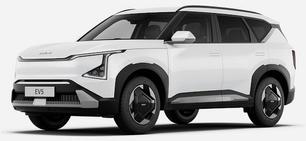
It’s the Kia EV5, a mid-size, all-electric SUV the Korean brand thinks will be its best-selling EV by some margin.
Oh, and it’s cheaper than the Tesla, by more than a little bit.
So, is this the electric SUV that might finally put an end to Tesla’s winning run in Australia?
Recently CarsGuide had a presence at several major electric vehicle shows in Australia and I can tell you, this car was generating a lot of buzz with prospective buyers.
It’s the just-released Zeekr 7X, a pure-electric, five-door, five-seat SUV priced and specified to challenge established EV players in the premium, mid-size SUV segment.
In this test, we’re behind the wheel of the 7X Performance, the dual-motor AWD flagship topping a three-model line-up including single-motor standard- and long-range RWD variants.
So stay with us as we assess everything from price, features, design and practicality to efficiency, driving dynamics, safety and cost of ownership. Let’s go!
The size is right, the price is right and the drive is right – three things that make the Kia EV5 a pretty formidable foe, and the kind of vehicle that might finally be able to break through the wall of the temple of Tesla in Australia.
Note: CarsGuide attended this event as a guest of the manufacturer, with accommodation and meals provided.
The first thing that comes to mind in summing up the Zeekr 7X Performance is value. So much standard equipment for the money, stunning acceleration, top-shelf safety and a solid ownership package. It’s also practical, comfortable and the design inside and out is sleek. This electric SUV has thrown down a hefty gauntlet in challenging its existing opposition and there’s no doubt if you’re in this part of the market you should take a close look.
If you’re familiar with any of Kia’s EV designs, and specifically the EV9, you’ll already know the Kia EV5, which looks a lot like a shrunken version of the company’s biggest electric 4WD.
But this one looks a bit smaller, a bit more familiar looking, and maybe a bit more accessible than the hyper-modern EV9.
Honestly, it looks like a contemporary, mid-size SUV that could be powered by anything.
There are a couple of EV5 design elements I really like. The first is the combination of hard edges and subtle curves, which combine really well. I also love the lighting treatment up front, which gives the EV5 a bold and unique light signature, especially at night.
Inside, it’s another story of familiarity, with a clean, high-tech cabin and Kia’s common twin-screen set-up. Actually, it’s more a triple screen, with two 12.3-inch screens, and a 5.0-inch climate monitor between them.
The materials are all nice, and they look great, but they don’t exactly melt under the touch, and that gives the EV5’s cabin a hard edge I don’t love.
I do, however, love the inclusion of some physical buttons, so you’re not pawing through the screen to access every in-car function.
And one final design quirk. I know it looks like it has an old-school bench front seat, but you can’t use it as a third seat in front. Kia says it’s just a design flourish. But it is also somewhere safe to pop your phone or other small valuables to stop them sliding about when you're on the road.
The 7X was developed at the Zeekr Design and Technology centre in Gothenburg, Sweden and arguably its most distinctive design element is the full-width band across the nose with standard LED headlights and DRL strip below.
They’d be matrix units if we were in China and the black band would house Zeekr’s ‘Stargate’ panel capable of displaying words and digital animations. But ANCAP crash-test requirements put the kybosh on that for Australia and it’s been replaced by the black cover. But there’s still room to play with animations on the lights that remain, including musical accompaniment through internal and external speakers.
Other than that, the car’s overall shape and proportions have a touch of Porsche Macan about them with a bulging mid-section and racy 21-inch rims filling the wheel arches.
There’s a slim, tail-light bar across the rear, a concealed wiper and an integrated spoiler on the top of the tailgate contributing to a smooth, clean look. No surprise, drag co-efficient is a slippery 0.25.
Inside, the fuss-free theme continues with a multi-layered dash design dominated by the 16-inch central media screen, compact digital instrument display and split-level centre console. And we’ll get to interacting with it all shortly.
Admirable restraint has been exercised in the simple surfacing and choice of trim materials with enough decoration to add visual interest.
At 4615mm in length, 1875mm in width, 1715mm in height, and with a wheelbase of 2750mm, the Kia EV5 is roughly the same size as a Tesla Model Y, so if you’re ever sat in the back of the Tesla, you’ll have a fair idea of what to expect here.
Sitting behind my own 175cm driving position, I found I had a heap of knee room, more than enough headroom, and I reckon you could fit three adults across the back seat pretty easily, too.
There are a couple of design flourishes I really like, too. The pull-down divider that separates the backseat is home to two cupholders, which isn’t unusual, but what is new to me is the unique positioning of the USB charge ports, which are in the middle-back of the front seats, right above the storage pocket, so you have somewhere to pop your phone and cable when you're charging.
There is also a deep storage draw between the two front seats. It’s just for extra storage in the Air and Earth, but in the GT-Line it’s heated and cooled, which means hot pies or cold drinks when you’re on the move.
The EV5 might be an all-electric vehicle, but it’s still a mid-size SUV, which means there are certain standards it has to hit to be taken seriously, and one of those is boot space.
Up front there’s 67 litres of space in the fruit, or frunk, while the boot holds 513L with the rear seats in place – that number obviously growing as you begin folding them flat.
It is also a hugely customisable space. There’s heaps of under-floor storage below the removable panels. There’s also vehicle-to-load capability, which takes the form of a standard power point in the boot that can use the vehicle’s battery to power pretty much whatever you want.
Finally, there are adjustable luggage hooks, so you can carry bigger or smaller bags as you wish.
So, before even getting in the car it’s worth talking about this Performance grade’s auto-opening doors.
The physical door handles are still present but inoperative (except in an emergency), so it’s a press of a button on the B-pillar, or a swipe card if you prefer, and open sesame.
There’s ‘pinch protection’ for the windows on all side doors and impact avoidance which means it will stop short of denting your neighbour at the car park.
After a week of press-button experience I could easily live without this functionality but my significant other loved it. So, personal preference reigns supreme.
At close to 4.8 metres long, a touch over 1.9m wide and around 1.7m tall (with a 2900mm wheelbase) the 7X is a ‘large’ medium SUV and the interior reflects its generous external dimensions.
There’s plenty of breathing space and a bright open feel thanks in part to the standard panoramic glass roof with power-sliding shade.
In the front, in terms of practicality, there’s a large, deep bin between the seats with a lid that opens from the left and right, another section with two swing-out cupholders and a roll-top lid, plus a big area in the lower console plus generous door bins. And there are handy flip-top boxes in the door armrests.
Worth noting on our test example, opening and closing the sliding cover over the cupholder section generated a groaning noise like oversize nails scraping down a blackboard, which didn’t exactly fit the premium vibe.
The glove box is opened with a button on the dash, which feels overly complicated. But then, in terms of power and connectivity there are twin 50W device charging bays and two USB-C sockets in the lower console.
In a big win for parents loading small kids into car seats, the rear doors open to 90 degrees. Then for storage, you’ve got map pockets on the front seat backs, decent door bins, two cup or bottle holders and a lidded box in the pull-down centre armrest, a small oddments tray at the back of the centre console and a pair of drawers under the seat.
And in the back, in terms of space, sitting behind the driver’s seat set for my 183cm position, I’ve got ample headroom, legroom and more than enough foot room.
There are power window shades, individual ventilation outlets in the B-pillars to manage the climate control for the rear section as well as one USB-A and a USB-C socket in the armrest box.
And then, there’s the Occupant Monitoring System, a camera view of the rear seat which instantly does away with the awkward 180-degree parental head turn from the front seats. A small camera in the B-pillar is activated by a dash-mounted button for a wide-angle, picture-in-picture video image on the main media screen.
And don’t worry, if you’re in the back and don’t appreciate the attention, a simple sliding cover over the lens can block the shot.
With the 60/40 split-folding rear seat upright the 7X boasts 539 litres (VDA) of boot space, which is pretty handy, and that number expands to a hefty 1978L with the back seat down.
There’s a load-through hatch, tie-down anchors, multiple bag hooks, specific lighting, a 12-volt socket and two storage compartments under the floor. The height of the power tailgate is adjustable but there’s no hands-free function.
Braked trailer towing capacity is 2.0 tonnes (750kg unbraked) and it’s worth noting vehicle-to-load functionality (using a specific discharge cable in the main charge port) is onboard.
But there’s no spare tyre of any description, with a repair/inflator kit your only option, which in this market isn’t good enough.
The cheapest EV5, the Air, arrives in two guises, Standard Range or Long Range, and the former is something of a bargain.
It’s the only EV5 to get included on-road costs, and Kia is asking $56,770, on the road. That puts it well below the Tesla Model Y. As of right now, the single-motor Tesla is $60,868, on the road, in NSW.
Next is the Air Long Range, which lists at $61,170, before on-road costs. The EV5 Earth occupies the middle rung, at $64,770, before on-roads, while the yet-to-arrive flagship, the GT-Line, is a considerable $71,770, before on-road costs.
Air models get 18-inch alloys, LED lighting all around, roof racks and power mirrors, while inside there are cloth and synthetic leather seats, with a massage function for the driver, along with a synthetic leather steering wheel and LED interior lighting.
Tech is covered by twin 12.3-inch screens, with a smaller 5.0-inch climate screen sandwiched between them, and there’s in-built nav, a six-speaker stereo and Apple CarPlay and Android Auto.
The Earth then adds 19-inch alloys, gloss black exterior design flourishes and privacy glass, while inside, the seats are now entirely synthetic leather. You also get a second V2L connection, as well as a powered tailgate.
Finally, the GT-Line gets pretty much everything Kia could throw at it, including 20-inch alloys, auto-flush door handles, a panoramic sunroof, two-tone seats which are now billed as offering "premium relaxation", wireless phone charging, fingerprint recognition, a heated steering wheel and an augmented-reality head-up display.
The Zeekr 7X starts at $57,900, before on-road costs, for the Single motor RWD version, rising to $63,900 for the Long range RWD and $72,900 for this Performance model.
At that money the 7X Performance lines up against a diverse group of primo EV SUVs like the Cupra Tavascan, Hyundai Ioniq 5, Kia EV5, MG IM6, Skoda Enyaq, Subaru Solterra, Tesla Model Y, Toyota bZ4X and VW ID.5. Not to mention its corporate Geely twin under the skin, the Polestar 4.
But cost-of-entry is one thing. The number of included features for the price is another and this car is properly loaded.
Aside from the performance and safety tech we’ll get to shortly the highlights are Nappa leather trim, 14-way power-adjustable front seats (with memory, heating, ventilation and massage functions), a leather-trimmed, heated and power-adjustable steering wheel, heated power-reclining (to 10 degrees) rear seats, a rear seat ‘Occupant Monitoring System’ (more on this later), a 16-inch multimedia display, 36-inch head-up display and digital instrument screen.
There’s also 2160-watt, 21-speaker audio, three-zone climate control, Android Auto and Apple CarPlay connectivity, multi-colour ‘Ripple Effect’ interior ambient lighting, all LED exterior lighting, auto door opening, a panoramic glass roof (with power sunshade), a power tailgate, heated and power-folding exterior mirrors, rear privacy glass (plus power sunshades) and 21-inch forged alloy rims.
That’s heaps and there’s even more. Enough to put serious pressure on the competitors mentioned above.
The entry-level EV5 Air is available in Standard Range or Long Range guises, both powered by a single front-mounted electric motor, producing 160kW and 310Nm.
The Standard Range will clip 0-100km/h in 8.5 seconds, while the extra weight of the bigger battery slows down the sprint in the Long Range, taking around 8.9 seconds.
The Earth is a twin-motor AWD offering, with a motor at each axle, lifting outputs to 230kW and 480Nm, dropping the sprint to a brisk-feeling 6.1 seconds. The incoming GT-Line gets the same powertrain.
The Zeekr 7X Performance is powered by dual electric motors, asynchronous magnet on the front axle and permanent magnet at the rear. Combined power is 475kW with peak torque at a grunty 710Nm.
That amount of muscle is up there at the top of the category with the likes of the MG IM6 Performance (572kW/802Nm), Tesla Model Y Performance (461kW/741Nm) and even the track-ready Hyundai Ioniq 5 N (448kW/740Nm).
The Air Standard Range gets a 64.2 kWh lithium iron phosphate battery, weighing in at a hefty 428kg, which delivers a claimed driving range of 400km. The Air Long Range, the Earth and the incoming GT-Line all share the same 88.1kWh battery, upping the range to 555km, 500km and 470km, respectively.
So, if driving range is at the very top of your must-have list, the Air Long Range is the car for you.
All cars can take 7.0kW home AC charging, while the dual-motor versions are set up for 11kW AC charging. Fast charging. When it comes to fast charging, all models can plug into a 350kW charger, taking them from 10 percent to 80 per cent in less than 40minutes.
The 7X boasts an 800V electrical architecture which means it has 420kW charging capability and even though the max public charging output currently available here is 350kW, at that level you can expect the 100kW NMC battery to charge from 10 to 80 per cent in around 13 minutes. AC charging is a handy 22kW for 10-100 per cent charging in four hours.
Claimed (WLTP) range is 543km and on test we saw average energy use of 18.8kWh/100km, which is in the middle of Zeekr’s claim of 17.7-19.9kWh/100km for the combined (urban/extra-urban) cycle and more than acceptable for an EV of this size and weight.
First things first – I spend most of my time behind the wheel of the EV5 Earth, which though it shares its dual-motor powertrain with the GT-Line, is actually the fastest of the lot owing to the extra weight of Kia's flagship.
That means zero to 100km/h in just over six seconds, and trust me when I say this, that is more than fast enough. I know you read about EVs knocking off the sprint to 100km/h in supercar-besting times, but you don't need that sort of crazy acceleration in a family-focused mid-size SUV.
Actually, forget needing, you don't want it. The EV5 feels more than punchy enough, without shaving years off your life every time you plant your foot.
Fit for purpose, then, which is exactly how I'd describe the rest of the EV5's very good drive experience. Kia's Australian ride and handling wizards have once again had their way with the EV5, and the result is an EV that handles most everything Australian road surfaces can throw it at it with ease.
Surprisingly, it's maybe not quite as dynamically sharp as the bigger EV9, but it's always comfortable, without feeling floaty or disconnected, and it will happily grip its way around tighter corners without tipping from side to side, either.
There are a couple of small quirks, though. The first is the steering, which is definitely responsive and confidence inspiring, but it also has a kind of artificial weight or heaviness at times that feels a bit disconnected from what's happening beneath the tyres. And the cabin can be a little noisy through wind, too.
But these are small beans, really. The EV5 is comfortable and capable, and without the harsh ride or too-sharp steering that can be found in some of its rivals.
We drove it for hours across all sorts of road surfaces, and in all sorts of conditions, and found very, very little to complain about.
So, even at around 2.5 tonnes, with all that power and torque under your right foot, the 7X Performance can rocket from 0-100km/h in a supercar-like 3.8 seconds. It is properly quick.
Suspension is by double wishbones at the front and a five-link set-up at the rear and the hefty body is well-controlled in the main, although you can feel modest lateral movement on quick changes of direction.
The ‘Continuous Control’ air suspension has three settings - Comfort / Standard / Sport - with a distinct difference between them.
In Comfort, small bumps and ruts still make their presence felt, but overall ride compliance is impressive. Hot tip is to avoid the Sport mode unless you’re determined to press on through your favourite set of corners, or (implausibly) line up for a track day.
The 7X rides on Zeekr’s ‘SEA’ (Sustainable Experience Architecture) platform which features an integrated alloy diecast rear section which seemingly makes a ‘solid’ contribution to overall refinement and noise reduction.
Speaking of which, wind noise is close to imperceptible even at freeway speeds, helped in no small part by the car’s slippery drag coefficient.
The accurate speed-sensitive steering delivers good road feel, which isn’t always the case with larger EVs, and the big 21-inch (265/40) Continental EcoContact 7 tyres are pleasingly quiet while gripping with reassuring determination.
Braking is by ventilated discs all around with chunky four-piston calipers up front. There are two levels of regenerative braking and a ‘single-pedal’ setting, although the latter is best treated as a third regen level because it seems reluctant to bring the car to a full stop quickly enough, even in slow-moving traffic.
Important to mention crash-avoidance safety aids like lane-keeping assist and driver fatigue monitoring don’t intrude unduly. There are subtle occasional vibrations through the steering wheel and only when necessary.
You’ve also got a 360-degree overhead view and a good quality reversing camera, both of which are super-handy when manoeuvring. Or if you want some real assistance ‘Automatic Park Assist’ will help you slot the car into the space you’re aiming for, as well.
Ergonomically speaking, while there’s a physical control for audio volume something like exterior mirror adjustment for example is via the combination of a screen slider and a steering wheel control which is fussy. That said, progression through screens and functions for media and car settings is logical and quick thanks in part to a grunty Qualcomm Snapdragon chip platform.
Under the heading of miscellaneous observations, an 11.6m turning circle is useful for a car of this size, the mega audio system cranks (with the driver’s headrest speaker a highlight) and the adaptive cruise works well, picking up acceleration rapidly when pulling out to overtake a slower-moving car in front.
Every EV5 gets a comprehensive safety offering, including 'Advanced AEB' that includes junction crossing, lane oncoming and lane changing alerts. There’s rear-cross-traffic alert, semi-autonomous highway cruising and a whole heap more.
If you want a blind-spot view monitor, surround-view monitor or remote park assist, you’ll need to spring for the GT-Line.
The EV5 hasn’t been crash-tested yet, but Kia will be shooting for the maximum five-star ANCAP rating.
While the 7X hasn’t been assessed by ANCAP yet it’s fair to assume a maximum five-star result sooner rather than later, in line with its Euro NCAP score.
And crash-avoidance safety tech is through the roof. Fifteen key ADAS functions including adaptive cruise, auto emergency braking (AEB), blind-spot monitoring, front and rear cross-traffic alert, lane keeping assist, a parking assist system and more. There are 12 hi-def cameras, 12 ultrasonic radars and a millimeter-wave radar on the job.
The airbag count runs to seven, including a front centre bag, and there are three top tethers for child seats across the second row, with ISOFIX anchors on the two outer positions. And a big tick for ‘Post-Impact Braking’ designed to minimise the chances of subsequent collisions after an initial crash.
Suffice it to say the 7X Performance sits on the top safety shelf.
The EV5 is covered by Kia’s seven-year, unlimited-kilometre warranty, and you can prepay your servicing costs, too.
Three years will set you back $980, five years is $1535 and the full seven years will set you back $2431 ($347 per workshop visit), which is category competitive.
The 7X Performance is covered by Zeekr’s five-year/unlimited km warranty, with eight-year/160,000km cover for the drive battery, neither of which are exceptional for the category. But there’s also five-year corrosion and paintwork warranty cover, with roadside assist included for the same period.
Recommended maintenance interval is two years/40,000km with optional health checks in between. Stick to the basic schedule and you’re looking at $1755 over the first five years.
Go for the complimentary first year service plus two other optional health checks and the figure is $2385, or an average of $477 per workshop visit over the same five years. Far from over the top for an EV in this part of the market.
The Zeekr dealer footprint currently takes in multiple sites in Brisbane, Melbourne and Sydney with additional locations in Canberra and Perth as well as The Sunshine Coast and Geelong, for a total of 14.
Some are currently ‘pop-ups’ with the intention to transition them to permanent status, with all dealers able to facilitate servicing (on site or at a separate location).