What's the difference?
Giant carmakers seem like pretty sober sorts of places. Everything goes through endless committees, every decision has to be signed off, sent in, sent back, subjected to endless scrutiny to make sure it will make money.
Sometimes, a brand will do something odd like BMW's i3 which is like sending up a flare to get people talking.
Hyundai, for many years, seemed to be trying to emulate Toyota. After a brief flourish in the '90s when it did for curves on cars what Kim Kardashian did for curves on grubby internet sites, the company lost its bottle and tried to go full mainstream. Never go full mainstream, that's for the old folks.
Then, out of the blue, came the Veloster. It's probably one of the most wilfully weird cars in decades (apart from various Citroens, but that's a special case).
One long door on the driver's side, two shorter doors on the passenger side. When BMW did something similar with the Mini Clubman, right-hand drive markets didn't get their own version of the kerb-side door, but Hyundai isn't like that.
Making the Veloster properly in right-hand drive is a wonderful gesture from a company that worked out being itself was a better idea than being Toyota.
Make no mistake, you are looking at the biggest challenge the all-conquering Tesla Model Y has ever faced in Australia.
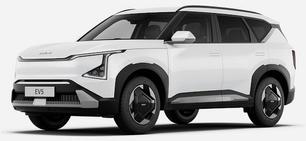
It’s the Kia EV5, a mid-size, all-electric SUV the Korean brand thinks will be its best-selling EV by some margin.
Oh, and it’s cheaper than the Tesla, by more than a little bit.
So, is this the electric SUV that might finally put an end to Tesla’s winning run in Australia?
Another good bit of Berry wisdom was the idea that the Turbo is the sweet spot of the range. While the Premium is indeed packed with goodies, they're not must-haves - the Turbo has everything you need while the Premium adds the wants.
So, at its core, this Turbo Premium is good warm hatch fun in a wacky, head-turning body, wrapped around a good cabin that could be a little less plasticky. Best of all, the fun design matches the fun-to-drive personality. It's a thoroughly modern Hyundai and I want (even more) to drive the full-fat bonkers N version we look like we're not going to get.
The size is right, the price is right and the drive is right – three things that make the Kia EV5 a pretty formidable foe, and the kind of vehicle that might finally be able to break through the wall of the temple of Tesla in Australia.
Note: CarsGuide attended this event as a guest of the manufacturer, with accommodation and meals provided.
You do not have to find the Veloster pretty to think it's cool. You can see echoes of the i30 donor car that lurks under the more interesting metal, with a big grille, sharper headlights and plenty of black bits to up the aggro for the Turbo model.
The rear bumper sports a pair of drainpipe-sized exhausts that aren't afraid to bellow a bit.
It's different from right to left in profile, with the rear door almost disappearing into the rear haunches on the passenger side. The high rear glass may not be great for seeing out of but it helps keep the Veloster identifiable and influential - there are more than a few cars getting about sporting a similar high rump with big lights.
The cabin is, like its predecessor, fairly restrained and very i30-like. It's all put together very well and is only let down by the centre console's plastics being a bit hard, scratchy and insubstantial.
If you’re familiar with any of Kia’s EV designs, and specifically the EV9, you’ll already know the Kia EV5, which looks a lot like a shrunken version of the company’s biggest electric 4WD.
But this one looks a bit smaller, a bit more familiar looking, and maybe a bit more accessible than the hyper-modern EV9.
Honestly, it looks like a contemporary, mid-size SUV that could be powered by anything.
There are a couple of EV5 design elements I really like. The first is the combination of hard edges and subtle curves, which combine really well. I also love the lighting treatment up front, which gives the EV5 a bold and unique light signature, especially at night.
Inside, it’s another story of familiarity, with a clean, high-tech cabin and Kia’s common twin-screen set-up. Actually, it’s more a triple screen, with two 12.3-inch screens, and a 5.0-inch climate monitor between them.
The materials are all nice, and they look great, but they don’t exactly melt under the touch, and that gives the EV5’s cabin a hard edge I don’t love.
I do, however, love the inclusion of some physical buttons, so you’re not pawing through the screen to access every in-car function.
And one final design quirk. I know it looks like it has an old-school bench front seat, but you can’t use it as a third seat in front. Kia says it’s just a design flourish. But it is also somewhere safe to pop your phone or other small valuables to stop them sliding about when you're on the road.
I think the Veloster is very clever. M'colleague Richard Berry thinks the third door is a bit silly - say, like a third armpit. I'm of the opinion it's an exceptionally clever solution to a problem: how do I have a funky car without throwing the baby out with the bathwater?
Something like a three door hatch (yes, I know they're out of vogue) makes moving people about difficult even if you only do it occasionally. The Veloster's third door provides relatively easy access to the two back seats for people under about 150cm, and you can get okay access to a baby seat. Try that in an 86.
The new door aperture is quite a bit bigger than the old car and there is a bit more rear headroom which I'd still call marginal for my 179cm frame. Leg and knee room are okay, sitting behind my own driving position.
The boot is a useful if not staggering 303 litres. You have four cupholders across the two rows and door pockets in the front doors. Ahead of the gear selector you'll find a tray with the Qi charging pad and two USB connections, but only one will work with the stereo and is marked as such.
At 4615mm in length, 1875mm in width, 1715mm in height, and with a wheelbase of 2750mm, the Kia EV5 is roughly the same size as a Tesla Model Y, so if you’re ever sat in the back of the Tesla, you’ll have a fair idea of what to expect here.
Sitting behind my own 175cm driving position, I found I had a heap of knee room, more than enough headroom, and I reckon you could fit three adults across the back seat pretty easily, too.
There are a couple of design flourishes I really like, too. The pull-down divider that separates the backseat is home to two cupholders, which isn’t unusual, but what is new to me is the unique positioning of the USB charge ports, which are in the middle-back of the front seats, right above the storage pocket, so you have somewhere to pop your phone and cable when you're charging.
There is also a deep storage draw between the two front seats. It’s just for extra storage in the Air and Earth, but in the GT-Line it’s heated and cooled, which means hot pies or cold drinks when you’re on the move.
The EV5 might be an all-electric vehicle, but it’s still a mid-size SUV, which means there are certain standards it has to hit to be taken seriously, and one of those is boot space.
Up front there’s 67 litres of space in the fruit, or frunk, while the boot holds 513L with the rear seats in place – that number obviously growing as you begin folding them flat.
It is also a hugely customisable space. There’s heaps of under-floor storage below the removable panels. There’s also vehicle-to-load capability, which takes the form of a standard power point in the boot that can use the vehicle’s battery to power pretty much whatever you want.
Finally, there are adjustable luggage hooks, so you can carry bigger or smaller bags as you wish.
Remarkably, Hyundai has just dropped the second-generation Veloster in Australia. I was convinced it would be a one-hit wonder, but here we are with the replacement for the SR Turbo of the first-generation, the $41,990 Veloster Turbo Premium with a seven-speed dual-clutch auto transmission.
It also has 18-inch alloys with sticky Michelin Pilot Sport 4 tyres, an eight-speaker stereo, sat nav, electric windows and mirrors, keyless entry and start, climate control, reversing camera, rear parking sensors, auto LED headlights, auto high beam, auto wipers, heated and ventilated electric front seats, sunroof, Qi wireless charging pad, head-up display, leather trim and a space-saver spare.
A 7.0-inch screen on the dash runs the media system, with a sat nav, Apple CarPlay and Android Auto. It all works very nicely and the generally ho-hum Infinity speakers do a solid if unspectacular job of filling the cabin with noise.
The cheapest EV5, the Air, arrives in two guises, Standard Range or Long Range, and the former is something of a bargain.
It’s the only EV5 to get included on-road costs, and Kia is asking $56,770, on the road. That puts it well below the Tesla Model Y. As of right now, the single-motor Tesla is $60,868, on the road, in NSW.
Next is the Air Long Range, which lists at $61,170, before on-road costs. The EV5 Earth occupies the middle rung, at $64,770, before on-roads, while the yet-to-arrive flagship, the GT-Line, is a considerable $71,770, before on-road costs.
Air models get 18-inch alloys, LED lighting all around, roof racks and power mirrors, while inside there are cloth and synthetic leather seats, with a massage function for the driver, along with a synthetic leather steering wheel and LED interior lighting.
Tech is covered by twin 12.3-inch screens, with a smaller 5.0-inch climate screen sandwiched between them, and there’s in-built nav, a six-speaker stereo and Apple CarPlay and Android Auto.
The Earth then adds 19-inch alloys, gloss black exterior design flourishes and privacy glass, while inside, the seats are now entirely synthetic leather. You also get a second V2L connection, as well as a powered tailgate.
Finally, the GT-Line gets pretty much everything Kia could throw at it, including 20-inch alloys, auto-flush door handles, a panoramic sunroof, two-tone seats which are now billed as offering "premium relaxation", wireless phone charging, fingerprint recognition, a heated steering wheel and an augmented-reality head-up display.
The 1.6-litre turbo-petrol four-cylinder is a familiar sight in Hyundais, in this case offering up 150kW at 6000rpm and 265Nm between 1500 and 4500rpm, which is a nice wide torque curve. Power goes to the front wheels via a seven-speed dual-clutch automatic transmission.
Performance is swift rather than startling, with the Veloster's 1350kg cracking the ton in the 7.1 seconds, 0.6 seconds quicker than the manual.
The entry-level EV5 Air is available in Standard Range or Long Range guises, both powered by a single front-mounted electric motor, producing 160kW and 310Nm.
The Standard Range will clip 0-100km/h in 8.5 seconds, while the extra weight of the bigger battery slows down the sprint in the Long Range, taking around 8.9 seconds.
The Earth is a twin-motor AWD offering, with a motor at each axle, lifting outputs to 230kW and 480Nm, dropping the sprint to a brisk-feeling 6.1 seconds. The incoming GT-Line gets the same powertrain.
Hyundai claims you'll get 6.9L/100km on the combined cycle. As ever, Hyundai is unusually close to real world figures, with my indicated average landing at a very respectable 8.2L/100km in a fairly urban kind of week.
The Air Standard Range gets a 64.2 kWh lithium iron phosphate battery, weighing in at a hefty 428kg, which delivers a claimed driving range of 400km. The Air Long Range, the Earth and the incoming GT-Line all share the same 88.1kWh battery, upping the range to 555km, 500km and 470km, respectively.
So, if driving range is at the very top of your must-have list, the Air Long Range is the car for you.
All cars can take 7.0kW home AC charging, while the dual-motor versions are set up for 11kW AC charging. Fast charging. When it comes to fast charging, all models can plug into a 350kW charger, taking them from 10 percent to 80 per cent in less than 40minutes.
I was fortunate enough to have some time on my hands, so I volunteered to take the base spec Veloster to Hyundai to swap into the Turbo. And look, it's fine, but in the same way the second-to-last-Celica was fine - nothing to write home about, more show than go. Comfortable, quiet, hatchy.
And the Turbo is many of those things. Except, as in the i30, when you step up to the turbo engine it wakes up a chassis that is truly terrific.
While it rides really, really well, it also piles through corners with even more enthusiasm than a similarly powered i30 N-Line, which is no slouch.
The Veloster is lower and slightly lighter, adding to the fun. And it doesn't spend half the time hitting the bump stops like the old car.
There are almost no duds in the Hyundai range when it comes to ride and handling, but the steering is in another league compared to the outgoing model's.
It's quick and points the car where you want, the front end digging in and tracking clean and true. It's terrific fun.
But, like just about every other Hyundai, its compliance and daily drivability is super-impressive. Only bad roads upset the rear suspension but the front is largely unflappable.
Flappable is the dual-clutch transmission. It occasionally hunts around looking for a gear and I spent a lot of time pulling the paddles to get it to do the right thing.
It was particularly recalcitrant downshifting without manual intervention, no matter what drive mode I chose. It can also clunk a bit when it's confused. I reckon I'd take Richard's advice and stick with a manual.
First things first – I spend most of my time behind the wheel of the EV5 Earth, which though it shares its dual-motor powertrain with the GT-Line, is actually the fastest of the lot owing to the extra weight of Kia's flagship.
That means zero to 100km/h in just over six seconds, and trust me when I say this, that is more than fast enough. I know you read about EVs knocking off the sprint to 100km/h in supercar-besting times, but you don't need that sort of crazy acceleration in a family-focused mid-size SUV.
Actually, forget needing, you don't want it. The EV5 feels more than punchy enough, without shaving years off your life every time you plant your foot.
Fit for purpose, then, which is exactly how I'd describe the rest of the EV5's very good drive experience. Kia's Australian ride and handling wizards have once again had their way with the EV5, and the result is an EV that handles most everything Australian road surfaces can throw it at it with ease.
Surprisingly, it's maybe not quite as dynamically sharp as the bigger EV9, but it's always comfortable, without feeling floaty or disconnected, and it will happily grip its way around tighter corners without tipping from side to side, either.
There are a couple of small quirks, though. The first is the steering, which is definitely responsive and confidence inspiring, but it also has a kind of artificial weight or heaviness at times that feels a bit disconnected from what's happening beneath the tyres. And the cabin can be a little noisy through wind, too.
But these are small beans, really. The EV5 is comfortable and capable, and without the harsh ride or too-sharp steering that can be found in some of its rivals.
We drove it for hours across all sorts of road surfaces, and in all sorts of conditions, and found very, very little to complain about.
This Veloster arrives with six airbags, ABS, stability and traction controls, lane keep assist, blind spot warning, rear cross traffic alert, forward collision warning and forward AEB with pedestrian detection.
Although not rated by ANCAP at the time of writing, the Turbo and Turbo Premium are likely to score a maximum five stars.
The lower grade - as with other newer Hyundais with the lower spec AEB - is probably going to drop a star.
Both rear seats score an ISOFIX and top tether anchor point.
Every EV5 gets a comprehensive safety offering, including 'Advanced AEB' that includes junction crossing, lane oncoming and lane changing alerts. There’s rear-cross-traffic alert, semi-autonomous highway cruising and a whole heap more.
If you want a blind-spot view monitor, surround-view monitor or remote park assist, you’ll need to spring for the GT-Line.
The EV5 hasn’t been crash-tested yet, but Kia will be shooting for the maximum five-star ANCAP rating.
As always, Hyundai's solid five year/unlimited kilometre warranty is along for the ride. Slightly annoyingly, you'll need to return to your dealer every 12 months or 10,000km for scheduled service and prices are capped.
Four of the five services cost $299 with the fourth year at $375. Over the first five services, you'll average $314.
The EV5 is covered by Kia’s seven-year, unlimited-kilometre warranty, and you can prepay your servicing costs, too.
Three years will set you back $980, five years is $1535 and the full seven years will set you back $2431 ($347 per workshop visit), which is category competitive.