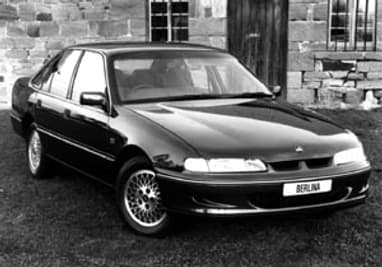
Are you having problems with your 1994 Holden Commodore? Let our team of motoring experts keep you up to date with all of the latest 1994 Holden Commodore issues & faults. We have gathered all of the most frequently asked questions and problems relating to the 1994 Holden Commodore in one spot to help you decide if it's a smart buy.
YOUR mechanic has covered the most common causes of a miss. The next things to check are vacuum leaks and fuel pressure. Start with the vacuum leaks, and look for leaking vacuum hoses or a leaking intake manifold. Next check the fuel pressure, which might show up a faulty fuel pressure regulator.
FIRST check the drive belt to make sure it's in good condition and tensioned correctly. Then check the compressor. The refrigerant gas carries a lubricant which is used to lubricate the compressor. If the system runs low on gas you can damage the compressor, so make sure the system is correctly charged with gas. If it is low, there is probably a leak in the system that will need checking by an airconditioning expert. Your car is 12 years old, so it's possible the noise is being caused by worn bearings in the compressor.
There’s no reason to think the Hybrid will not last as long as a regular petrol vehicle.
Toyota has been making hybrids for many, many years and they have never shown any sign of being less durable or reliable then the company’s petrol models. The batteries are said to last the lifetime of the vehicle, so there’s reason to be concerned about that either. The thing with the hybrid is the higher purchase price. That’s offset by the lower fuel consumption, so the longer you keep the vehicles the greater the chance to recoup the extra initial cost.
The other thing to consider is that hybrids work at their best in stop-start city traffic, they are not so good out on country roads where the petrol engine comes into play more of the time.
WE RECEIVED several responses form readers who had experienced similar problems with the VR Commodore. They suggested a number of possibilities: ignition coils, coil mountings and crank angle sensor on the damper. The crank angle sensor is a known problem with those early Commodores.
It’s impossible to say, but I would err towards the GPS. It’s most unusual for a speedo to read higher than the real speed, it’s usually the other way around. I would crosscheck the GPS on another car.
IT'S UNLIKELY to be coming in through the tail lights. First check the condition of the boot lid seal, the most likely cause. If that's OK look around the boot for any sign the car has been in a crash. It could be that the boot lid is out of alignment and not seating properly on the seal. If all that appears OK, lift the boot mat, remove the spare, and thoroughly check the whole boot area for telltale water stains.
YOU'RE not alone with this problem. It is quite common in Commodores. Have the drive shaft checked, particularly the drive joints, but it is more likely to be coming from the rear suspension. Have it checked by a suspension specialist and make sure the alignment is correct.
IT'S caused by a fault with either the electrics or the fuel, and neither should be ruled out. It could be dirty injectors. Even though you've tried a cleaner, it doesn't necessarily clear a blockage. It's better used to keep the injectors clean. Consider having the injectors cleaned. On the electrical front I'd have the ignition coil packs checked.
I REFERRED your problem to Mark Lynch of Carcool Airconditioning for his opinion, which is that the vapour can only be water vapour. It could be either a blocked drain tube not releasing condensation to the outside, so as the heater core sitting at the bottom ``steams'' the water, or a leaking heater core itself. Mark would normally discount airconditioning gas as it is odourless, colourless and tasteless, and besides it would have to have a huge leak to be visible and could only last for a maximum of about 30 minutes until the system was empty. VRs commonly block drain tubes and they need to be probed from underneath the car (they are on top of the transmission, roughly halfway) and should only be probed with a plastic cable tie. Mark says he has seen mechanics stick wire probes straight through the heater core.
Show more
Disclaimer: You acknowledge and agree that all answers are provided as a general guide only and should not be
relied upon as bespoke advice. Carsguide is not liable for the accuracy of any information provided in the
answers.