What's the difference?
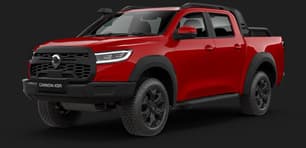
The Cannon XSR is GWM’s new top-shelf ute variant.
This dual-cab 4WD ute is intended as an off-road-focussed vehicle and has visual and mechanical upgrades over the rest of the Cannon stable, including part-time 4WD (not the full-time 4WD on GWM’s lower-spec Cannons), a front differential lock (in addition to the existing rear diff lock), raised air intake (aka a snorkel) and Cooper Discoverer AT3 all-terrain tyres.
It’s priced from $52,990 drive-away, so costs about $7500 more than you’d pay for the standard Cannon X on which this special edition ute is based. But it still undercuts similarly-equipped top-spec Ford Ranger and Toyota HiLux utes by about $20,000.
So, with twin lockers, a snorkel, underbody protection and all-terrain tyres, is the GWM XSR worth the extra cash?
Read on.
Foton Mars.
It’s what the new rival to the GWM Cannon, Isuzu D-Max, Kia Tasman and army of other entry-level mid-sized utes is called in its native China.
And, much like Saturn, that name has a pretty cool ring to it.
But, in Australia, the Mars is launching as the Tunland, a name some might remember from the early 2010s.
Which would be OK if this was, once-again, just another cheap and tired old rehash… when in reality, it is actually just one of those things.
Looking for a value dual-cab ute? Read this before you buy.
In a very competitive ute market, the GWM Cannon XSR represents plenty of bang for your buck, but it’s just not as refined as you’d hope.
It should be better at this price-point, especially when it’ll be unfavourably cross-shopped with lower-spec variants in the Ford Ranger, Isuzu D-Max and Toyota HiLux line-ups.
It’s a nice enough vehicle on-road, and the XSR is an effective 4WD on the dirt without ever being truly exceptional – but that’s fine for those who want to save big bucks and still drive away in a well-equipped twin-locked off-road vehicle.
Okay, we admit our expectations weren't high.
But in some ways, the 2026 Foton Tunland is so much more than we could have hoped for, with great looks, big space, a well-presented cabin, tight steering and subdued engine noise. In fact, it even shows the established players a thing or two about equipment levels and value for money.
But the ride is too firm, the diesel powertrain needs more muscle and the rattly interior in the V7-C are all areas requiring attention.
Still, this is not a bad effort, and a name change from Tunland to Mars might have better reflected the sheer progress that Foton has made.
Note: CarsGuide attended this event as a guest of the manufacturer, with accommodation and meals provided.
The XSR is 5439mm long (with a 3230mm wheelbase), 1958mm wide, and 1918mm high. It has a listed kerb weight of 1965kg.
It looks like the mongrel child of a HiLux, Ranger and D-Max – in a good way.
The wider-than-standard wheel track, as well as the snorkel, sports bar, substantial bash plates, tyres and even red brake calipers add to this ute’s presence.
There are two ways of dealing with the elephant in the room here.
Buyers can ignore the problematic ethics of what looks like copying and taking the subsequent controversial front-end styling on face value.
Doing so reveals that the Ford F-150-esque V7 and Ram-like V9 do truly stand out. Beyond just the front-end, both are handsome and well-proportioned. Some may even prefer the Tunland to the originals. There is barely a jarring line to be found.
Good design sells and all this gives the Foton a real leg-up in the market. Plus, with one bold stroke of a pencil, any perceived visual associations with F-150 and Ram is shorthand that the Tunland is much larger than rival mid-sized utes.
This is all strategically brilliant, but is it fair? You decide.
The Foton’s extra size is no illusion. The V7 is 5617mm long (L), 2000mm wide (W), 1910mm high (H) and sits on a 3355mm wheelbase (WB). The V9’s wheel-arch cladding adds 90mm to its girth while the Supreme’s roof rails up height by 45mm.
In comparison, the Ford Ranger XLT’s corresponding L/W/H/WB dimensions are 5370mm/1918mm/1886mm/3270mm, while the regular F-150’s L/W/H/WB are 5884mm/2030mm/1995mm/3694mm respectively.
Crunching these numbers, the Tunland sits nearly midway between Ranger and F-150 in most major dimensions except wheelbase, where it’s about a quarter of the way longer.
This is a similar size strategy employed by the recently released LDV Terron 9 and MG U9 Chinese ute twins.
The extra interior space that endows, along with the clean, uncluttered and largely-intuitive dashboard layout that Foton has created, can only be good news for ute buyers seeking big on a budget. Especially as there’s not much that’s bargain-basement inside the cabin.
The XSR’s five-seat interior is a neat and roomy space but, in line with most utes at this price-point, if you scrutinise it in a critical way you soon discover that some parts feel a bit cheap and flimsy, such as some buttons, dials and switches.
Up front there are two USB ports, a wireless charging pad, a 12V plug and a capacious centre console.
A pair of cupholders can be concealed under a sliding cover and the storage bin is on the right side of big.
The driver gets a six-way power-adjustable seat; the front-seat passenger gets four-way power adjustment. Both seats are comfortable without being too plush.
Second-row passengers get a firm but comfortable seat and amenities include a USB port, a 220V plug, and a fold-down centre armrest.
The second-row seat base can be folded up and out of the way to make room for more gear if only two people are travelling.
Build quality is generally okay, part from the aforementioned flimsy-feeling buttons.
The XSR’s business end, the tub, has a durable-looking tub liner, tie-down points and a handy pop-out step hidden in the top of the tailgate.
But it's worth noting this ute’s tailgate can’t be locked.
Large and spacious, one of the other most impressive things about Foton’s new ute is how mature and sophisticated the interior’s very car-like design and layout are.
Yes, it looks like every other Chinese cabin that has come out recently – there is nothing unique to be found here – but it largely works really well. High points include quite accommodating front seats, an excellent driving position, heaps of storage, ample ventilation and, thankfully, physical buttons to access most of the main functions, including basic climate control, multimedia and vehicle settings.
Negative points include the need to prod the screen to get some of those features to actually operate, including the driving modes, and that led to distracted situations. Not good.
And the Mercedes instrumentation design is an outrageous rip-off. We’re talking near-facsimile here.
Plus, every V7-C we drove suffered from persistent squeaks from the door trim and/or rubbers, leading us to conclude that it has to do with this grade’s leaf spring suspension, as opposed to the quieter V9’s coil suspension. And as there was also some shaking of the passenger seat when empty, we suspect there is too much body flexing occurring here. Clearly more work needs to be carried out, especially as Foton says it's already done thousands of kilometres of Australian road tuning over the past year.
Moving to the roomy back seat, the backrest seems to be at an adequate angle, the cushion feels sufficiently padded, and most of the main amenities are present – cupholders, a centre armrest and air vent access.
There's a little bit of storage underneath the back seat, but there's nothing behind the folding backrest other than access to a jack, which is a little bit of a shame given the size of the cabin.
Still, frustrating touchscreen and wobbly noises apart, all in all, it's is a very well made, nicely presented and fairly high-quality effort from the Tunland.
Further back, we’ve crunched even more numbers.
The V7’s tub is 1577mm long, 1650mm wide and 530mm high, with 1240mm between the wheel arches, compared to the Ranger XLT’s 1464mm, 1520mm, 525mm and 1217mm – as well as the F-150’s 2005mm/1656mm/543mm/1285mm – respectively.
While the Tunland subsequently sits nearly midway between medium and full-sized utes generally, its tub’s dimensions are closer to the former. Still, the Foton is still usefully larger for bigger loads, and is also strong for payload (995kg to 1115kg) and GVM (3305kg to 3335kg) ratings, as well as off-road clearances.
Accessories specialists Ironman will supply items like canopies, towbars and bullbar options.
However, do note that the (assisted) tailgate in the V7-C is not lockable at this stage. A fix is coming soon, apparently.
Lastly, only the dual-cab body is likely for the foreseeable future, though other styles including cab-chassis are offered elsewhere.
The XSR has a manufacturer suggested retail price of $52,990 drive-away.
Standard features include a 9.0-inch multimedia touchscreen system (with Apple CarPlay and Android Auto), a 7.0-inch digital driver info display, quilted leather seat trim, quilted leather door trim, 18-inch black alloy wheels, a sports bar, an assisted tailgate (with a pop-out step) and roof rails.
It also has LED headlights with LED DRLs, side steps, powered mirrors, keyless entry, push-button start, power-adjustable and heated front seats, a leather steering wheel, single-zone climate control air conditioning, an auto-dimming rear view mirror, tinted rear glass, and a six-speaker audio system.
As well, the XSR gets a part-time 4WD system (with 2WD high-range, 4WD high-range and 4WD low-range), rather than full-time 4WD, which is on lower-spec GWM utes; a front differential lock (in addition to the existing rear diff lock) and Cooper Discoverer AT3 all-terrain tyres.
It also gets red brake calipers, an underbody bash plate, wheel arch flares, and a sunroof.
Elsewhere, it gets steel front and rear bumpers and a new black grille.
So, how cheap is the box-fresh and (very) mild-hybrid Tunland range, then? Spanning a $10,000 range and sharing the same 2.0-litre diesel powertrain, the action kicks off from $39,990 (all prices are before on-road costs) for the V7-C 4x2.
Now, the C in V7-C stands for Core, but it’s hardly been stripped-down to one.
Available in 4x2 or 4x4 guise from $42,990 before ORC, the V7-C includes a 14.6-inch touchscreen, wireless Apple CarPlay, a 360-degree camera with transparent-road-down-below views, a dash cam, front/rear parking sensors and a decent stack of advanced driver-assist systems – which will be covered in more detail in the safety section.
Four-wheel drive adds a rear differential lock, 2H/4Auto/4H/4L high-and-low ratio gearing, various off-road driving modes and all-terrain tyres.
Plus, as with all Tunlands, braked towing capacity is 3.5 tonnes, but as the workhorse choice aimed mostly at fleet buyers, only the V7-C’s payload tops one tonne (at up to 1115kg compared to the V9’s 995kg), due to its heavy-duty leaf-spring rear suspension.
Do note, though, that there’s no lockable tailgate for now, or digital radio.
Stepping up to the V9-L (for Luxury) 4x4 from $45,990 switches from a Ford F150-style face to a Ram 1500-esque one, and also gains wheel-arch cladding, side steps, a sports bar, vehicle-to-load power socket, heated and powered front seats, dual-zone climate control, heated/folding mirrors, extra USB ports, extra speakers, a wireless charger and coil-sprung rear suspension instead of the V7-C’s leaf-spring set-up.
Lastly, the flagship V9-S (for Supreme) 4x4 from $49,990 scores a front diff lock, roof rails, panoramic sunroof, vented front seats, heated outboard rear seats, rear privacy glass and more.
The Foton’s value seems rock-solid, with ultra-sharp pricing for a bottom-end ute. Especially for its circa-30 per-cent up-size compared to what is palpably smaller competition.
Bargain-hunting size queens, your ride is ready.
The Cannon XSR has a listed fuel consumption of 9.4L/100km on a combined cycle.
Actual fuel consumption on this test, from pump to pump, was 11.2L/100km but, as is the nature of my testing, I did a lot of low-range four-wheel driving.
The Cannon XSR has an 78-litre tank so, going by that fuel figure above, you could reasonably expect a driving range of about 696km from a full tank.
Note: Drop 30km to 50km from any vehicle’s total calculated fuel-range figure for a better idea of that vehicle’s safe touring range – so, following that advice, the above driving range figure (696km) would become 666km after a 30km safe-distance buffer has been subtracted.
Also, remember that numerous other factors affect your fuel consumption and so impact your driving range, including how much extra weight you have onboard (passengers, camping gear, etc), whether your vehicle is fitted with any aftermarket equipment (bullbar, spare-wheel carrier, etc), whether you are towing (a camper-trailer, caravan, or boat, etc), your vehicle's tyre pressures, and the conditions.
The Tunland’s official combined fuel-consumption average is 8.0 litres per 100km, for a carbon-dioxide emissions rating of 211 grams per kilometre.
Lending a hand here is auto start/stop and battery regenerative energy recovery tech.
So much for the theory. The expected best-selling V7-C 4x4 we drove averaged 10.3L/100km during our drive day. And that's not bad, considering that it had four people and plenty of luggage on board for part of its journey.
If you’re not expecting a dynamic, sporty driving experience from the Cannon XSR, then you won’t be disappointed.
I’m enjoying the fact that off-road vehicles from China and India are improving all the time but there are significant trade-offs when opting for a much cheaper version of the ute you actually want.
The XSR is not an insubstantial ute, but that doesn’t excuse its less-than-ideal steering (which feels too loose) or its stiff ride on upgraded suspension which, even though it increases wheel travel (for 4WDing – more about that later), seemingly hasn’t been tuned to suit the XSR’s bigger tyres, wider wheel track and greater bulk than its lower-spec stablemates.
Also, this ute has an unwieldy turning circle of 13.7m, which makes it an interesting vehicle to manoeuvre along busy urban streets or through a bustling car park.
This is a well priced ute if compared to similarly equipped, much more expensive utes, but that doesn’t excuse its touchy throttle and thrashy transmission.
However, its engine, which can feel underdone when challenged, has a relaxed feel about it when open-road cruising and if you aren’t putting too much pressure on it you likely won’t think it’s much of a let-down.
Overall, the XSR does okay on sealed surfaces, without ever getting anywhere near great – it’s simply not as refined or compliant as it could – or should – be.
On the dirt track leading to our 4WD test track, the XSR was very skippy over corrugations and tended to thump through potholes.
This ute does go well off-road though when it comes time for low-range 4WDing but, equipped with front and rear diff locks, that’s to be expected.
Off-road traction control and other systems including hill descent control, are adequate without being as seamlessly smooth as the equivalent systems in more expensive vehicles.
It also has 'Crawl Mode' (allows for no-pedal, low-speed driving) and 'Turn Assist' (which brakes the XSR’s inside rear wheel to reduce the ute’s turning circle on traction-compromised surfaces).
The over-sensitive throttle is far from ideal during low-speed low-range 4WDing when you need absolute control for safe driving, but I did become used to it – or at least I put up with it.
As mentioned earlier, the upgraded suspension has boosted wheel travel, which means you’re more than likely able in the XSR to stretch a tyre to the dirt for better traction and controlled forward progress.
The XSR’s Cooper Discoverer AT3 all-terrain tyres help, especially when the dirt becomes sticky mud that would gum up a lesser tyre, and we had no strife getting up and over one of our more severe set-piece hill climbs on that rubber.
All in all, the XSR is a capable twin-locked 4WD without ever being exceptional – and that’s fine.
The Cannon XSR has towing capacities of 750kg (unbraked) and 3000kg (braked).
Besides the divisive styling, the main difference between the V7 and the V9 is the suspension, and this informs the driving experience somewhat, as both share the same powertrain.
Now, the 2.0-litre four-pot turbo-diesel is exceptionally smooth and well- insulated from inside, while the eight-speed ZF transmission is really slick and responsive.
But this is not a particularly powerful unit. There’s adequate performance, as it does pick up speed fairly quickly, and it does maintain sufficient acceleration for overtaking as long as the stretch of road is long enough, but joining fast traffic or going up hills can be a struggle if you’re in a rush. It's not the worst in class, but not best in class by a long shot.
Probably the biggest surprise, though, is the Tunland’s steering, as it's really well-weighted and progressive, allowing the keen driver to really take advantage of the well-sorted chassis tune’s handling and grip.
Yet the steering is light enough around town, aided by a light driving mode, for easy parking.
The flip side, though, is that the ride can be choppy.
The V7 is the worse of the two, because its leaf sprung rear suspension set-up makes it feel a little bit too firm and bouncy over certain roads, while the V9’s coil-sprung alternative does a noticeably better job of it.
That said, the Tunland is still better than some Chinese utes. But for ride comfort and refinement, the class leaders like Ranger can rest easy.
Finally, the ADAS safety tech has been worked over for Australia, and it's nowhere near as intrusive as it is in a lot of other vehicles. So that's another plus point for the Foton.
That's the on-road driving impressions.
Unsurprisingly, the V7’s ride comfort deteriorated even more off the beaten track, with a jittery patter and some minor body flex causing the door rubbers to squeak. That wasn’t detected in the V9, which clearly handled the rough stuff better.
Overall, though, the Tunland did a good job over a not-too-demanding 4x4 course, aided by decent clearances and the lockable rear (plus V9’s front) differentials, as well as the settled and measured steering.
The Cannon range has the maximum five-star ANCAP rating from testing in 2021, however the Cannon XSR is not covered by this rating.
Standard safety gear on the XSR includes seven airbags, AEB (sans pedestrian detection) forward collision warning, lane-departure warning, lane-keep assistance, adaptive cruise control, traffic sign recognition, rear parking sensors, a 360-degree camera and tyre-pressure monitoring.
It does not get front parking sensors, lane-change assist or a door-open warning.
Neither ANCAP nor Euro NCAP results are available for the Foton Tunland.
But both the V7 and V9 models tick many, if not all, of the required boxes with Australian-tuned advanced driver assistance systems (ADAS) like autonomous emergency braking (AEB) with pedestrian and cyclist detection, lane departure warning, lane keep assist, lane centring control, traffic sign recognition, blind spot monitoring, door open warning, rear cross-traffic alert, trailer stability assist and adaptive cruise control.
No data is available pertaining to the operating speeds of the AEB systems.
There are also eight airbags fitted, including a front-centre airbag, as well as child seat anchor points for the rear seat, including two ISOFIX-compliant restraints.
The XSR is covered by a seven year/unlimited km warranty.
The first service is scheduled at the six-month/5000km mark (and costs $260), then every 12 months or 10,000km, with each service costing $360 a pop.
Though not quite the 10 years offered by Mitsubishi, Nissan and MG, Foton is swinging big with a seven-year unlimited-kilometre warranty including with roadside assistance and seven years of capped-priced servicing.
Intervals are every 12 months or 15,000km, while you can expect to pay around $650 annually (averaged out over seven years) or nearly $4500 over that period of time.
There are currently 22 dealers around Australia, although that will grow over the next couple of months with independent and broader dealer coverage from the Inchcape group that imports Foton vehicles.
Vehicles are serviced in-house at these dealerships.