What's the difference?
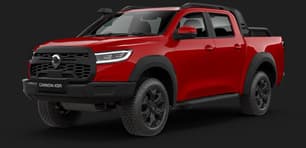
The Cannon XSR is GWM’s new top-shelf ute variant.
This dual-cab 4WD ute is intended as an off-road-focussed vehicle and has visual and mechanical upgrades over the rest of the Cannon stable, including part-time 4WD (not the full-time 4WD on GWM’s lower-spec Cannons), a front differential lock (in addition to the existing rear diff lock), raised air intake (aka a snorkel) and Cooper Discoverer AT3 all-terrain tyres.
It’s priced from $52,990 drive-away, so costs about $7500 more than you’d pay for the standard Cannon X on which this special edition ute is based. But it still undercuts similarly-equipped top-spec Ford Ranger and Toyota HiLux utes by about $20,000.
So, with twin lockers, a snorkel, underbody protection and all-terrain tyres, is the GWM XSR worth the extra cash?
Read on.
It’s been a long time coming, but this new ute is a big deal for Nissan Australia.
The latest (D27) generation 2026 Nissan Navara is finally here, and Nissan reckons the extra time it’s taken to get here after its badge-engineering twin, the Triton from alliance partner brand Mitsubishi, has been worth the extra work by Aussie engineering firm Premcar.
It comes at a vital time because, here in Australia, Nissan is changing, with a couple of models on the way out and a need for the company to find stability.
The new Navara is part of the plan, but will it win the hearts and wallets of Australians and help keep this storied brand’s head above water?
We’ve spent a couple of days with the new Nissan ute in our nation’s capital to find out for ourselves if a re-engineered Mitsubishi Triton holds the key to Nissan’s U-turn.
In a very competitive ute market, the GWM Cannon XSR represents plenty of bang for your buck, but it’s just not as refined as you’d hope.
It should be better at this price-point, especially when it’ll be unfavourably cross-shopped with lower-spec variants in the Ford Ranger, Isuzu D-Max and Toyota HiLux line-ups.
It’s a nice enough vehicle on-road, and the XSR is an effective 4WD on the dirt without ever being truly exceptional – but that’s fine for those who want to save big bucks and still drive away in a well-equipped twin-locked off-road vehicle.
While it won’t appeal on the value front as much as its Mitsubishi Triton engineering twin, the Navara’s tweaks from Premcar make it a more comfortable and livable thing.
The extra cost is worth it for how much better it is on the road, plus you get more features, regardless.
Whether the changes to the Navara are sexy enough to get people in the dealership door is another question, but anyone who takes this over a Triton won’t be disappointed.
If it's for work, the SL or ST will do. If it's doubling as a family car, the Pro-4X is worth the outlay.
Note: CarsGuide attended this event as a guest of the manufacturer, with travel, accommodation and meals provided.
The XSR is 5439mm long (with a 3230mm wheelbase), 1958mm wide, and 1918mm high. It has a listed kerb weight of 1965kg.
It looks like the mongrel child of a HiLux, Ranger and D-Max – in a good way.
The wider-than-standard wheel track, as well as the snorkel, sports bar, substantial bash plates, tyres and even red brake calipers add to this ute’s presence.
Nissan has done well to inject its own design flavour into the ute, because even though there’s inevitable similarity in the silhouette, it doesn’t just look like a Triton.
Impressive given a lot of the car is the same, and Nissan couldn’t change any of the hard points the Triton comes with. In fact, the Navara’s dimensions are largely the same as the Triton, coming in at 5320mm long, 1930mm wide and 1815mm tall.
The biggest Nissan-specific design element is a nod to the Navara’s heritage, the three little vent lines above the grille hark back to the original D21 generation ute which had these holes in the bonnet.
It’s subjective to some extent, but I reckon the Navara has the Triton beat on the design front.
Depending on the variant, you get some other indicators that this is no Triton, including a sports bar on the rear of the cabin with ‘Navara’ cut into it, or Pro-4X decals if that’s the variant you go for.
Given the lifestyle and off-road focus of the Pro-4X, it also has a bit more trim inside and out to feel more rugged and premium.
The Navara’s new interior is a big step up over the previous generation, even if it is genuinely all-Triton in there. The biggest change is the Nissan badge on the steering wheel.
It’s a ute, so there’s still a lot of plastic, cheap materials and even the nicer looking surfaces are in a few spots made of gloss black plastic (sometimes called piano black) which gets smudged easily and after a short while.
The XSR’s five-seat interior is a neat and roomy space but, in line with most utes at this price-point, if you scrutinise it in a critical way you soon discover that some parts feel a bit cheap and flimsy, such as some buttons, dials and switches.
Up front there are two USB ports, a wireless charging pad, a 12V plug and a capacious centre console.
A pair of cupholders can be concealed under a sliding cover and the storage bin is on the right side of big.
The driver gets a six-way power-adjustable seat; the front-seat passenger gets four-way power adjustment. Both seats are comfortable without being too plush.
Second-row passengers get a firm but comfortable seat and amenities include a USB port, a 220V plug, and a fold-down centre armrest.
The second-row seat base can be folded up and out of the way to make room for more gear if only two people are travelling.
Build quality is generally okay, part from the aforementioned flimsy-feeling buttons.
The XSR’s business end, the tub, has a durable-looking tub liner, tie-down points and a handy pop-out step hidden in the top of the tailgate.
But it's worth noting this ute’s tailgate can’t be locked.
It’s a bit of a shame the Navara doesn’t benefit from the changes Nissan has been making to its interior design and layout recently, because it leaves older Nissans in the dust, in terms of design and ergonomics.
But, the Mitsubishi Triton’s interior isn’t a bad one for the Navara to have inherited, because it just works. It’s uncomplicated and sensible, if a little boring.
There are physical buttons for shortcuts, and the tech is relatively straightforward, even if it does also carry the downside of Android Auto being wired-only. It adds to the somewhat dated feeling the Navara’s interior carries, but the physical space itself is rather sensible.
The Navara’s seats are comfortable, and as the driver it’s easy to find your own preferred position, with the electric adjustment in higher variants being an extra help there.
The driving ergonomics and visibility are also good, which lines up well with the Navara’s driving dynamics and makes it feel less like you’re pedalling a big dual-cab around.
Behind the driver, there’s not heaps in the way of amenity, but the addition of USB ports once you’re past the base SL is welcome for second-row passengers, and the space isn’t cramped by any means.
The Navara has a tub capable of easily fitting a Euro pallet, according to Nissan’s specs, but with its distance of 1135mm between wheel arches, it won’t fit an Aussie pallet. The tub is almost square, at 1555mm long and 1545mm wide, and 525mm tall.
Plus there’s the 3500kg towing capacity and its payload ranging between 964kg for the Pro-4X or up to 1064kg in the base SL.
The XSR has a manufacturer suggested retail price of $52,990 drive-away.
Standard features include a 9.0-inch multimedia touchscreen system (with Apple CarPlay and Android Auto), a 7.0-inch digital driver info display, quilted leather seat trim, quilted leather door trim, 18-inch black alloy wheels, a sports bar, an assisted tailgate (with a pop-out step) and roof rails.
It also has LED headlights with LED DRLs, side steps, powered mirrors, keyless entry, push-button start, power-adjustable and heated front seats, a leather steering wheel, single-zone climate control air conditioning, an auto-dimming rear view mirror, tinted rear glass, and a six-speaker audio system.
As well, the XSR gets a part-time 4WD system (with 2WD high-range, 4WD high-range and 4WD low-range), rather than full-time 4WD, which is on lower-spec GWM utes; a front differential lock (in addition to the existing rear diff lock) and Cooper Discoverer AT3 all-terrain tyres.
It also gets red brake calipers, an underbody bash plate, wheel arch flares, and a sunroof.
Elsewhere, it gets steel front and rear bumpers and a new black grille.
The new D27 generation Navara starts from $53,348, before on-road costs, so it’s already more expensive than the Triton it’s based on, but we’ll get into the main, somewhat oily reasons for that in a bit.
The Navara’s available in four variants at launch, SL, ST, ST-X and Pro-4X. They’re all 4X4 dual-cabs, so it’s mainly the features for each trim level that make the difference when it comes to pricing.
The SL starts off with a lot of the basics covered. There are LED headlights and tail-lights, climate control, the same 8.0-inch multimedia touchscreen as the rest of the range and digital radio as well as Android Auto and Apple CarPlay.
Its aforementioned touchscreen is also a little larger than the one in the Triton it’s based on. Then there’s the 7.0-inch driver display screen which lives between the two physical dials.
At this point in the range the steering wheel is polyurethane and the floors aren’t carpeted, just covered with vinyl. It’s a work ute and it feels like one.
Things pick up slightly with the ST, which starts from $56,765, and gains alloy wheels, auto-folding mirrors, a leather-accented steering wheel and floor carpet, plus now side-steps and a sports bar. It also adds USB ports in the second row for charging, so it’s probably the minimum grade you’d want if you’re ever going to have kids in the back. Essentially, it gains a few things that make it feel a little more livable without getting too fancy.
The ST-X is a fair step up in price, it’s $63,177, but gets better suspension, 18-inch alloys, leather-accented and heated front seats and a power adjustable driver's seat, dual-zone climate and a wireless phone charger.
It also gains a centre limited-slip differential, drive modes more compatible with off-roading, different styling elements and push-button start, so you don’t need to use the physical key.
The top-of-the-range (until the Warrior arrives) is the $68,418 Pro-4X with more design changes, all-terrain tyres, a black sports bar and roof rails, contrast stitching and specific seats with Pro-4X styling. It’s the variant Nissan Australia expects to be the most popular, too. It also has the same diff and better suspension the ST-X gains.
The XSR has the Cannon’s 2.0-litre four-cylinder turbo-diesel engine that produces 120kW at 3600rpm and 400Nm from 1500rpm to 2500rpm.
It has an eight-speed automatic transmission.
As mentioned, the XSR has part-time 4WD – with 2WD high-range, 4WD high-range and 4WD low-range – rather than the full-time 4WD set-up that’s in standard Cannons.
A 150kW/470Nm four-cylinder turbo-diesel engine lies under the bonnet, which falls a little short of some rivals, but isn’t glaringly weak.
Its power lines up with, for example, the Toyota HiLux, but torque falls short of its rival’s 500Nm. It’s the same story for the Ranger, though that ute slips a nose ahead with 4.0kW more than HiLux and Navara in its four-cylinder guise.
The Navara’s six-speed automatic transmission also sends that power and torque to all four wheels, though how exactly it gets there depends on the spec and whether you have a centre differential or not.
The Cannon XSR has a listed fuel consumption of 9.4L/100km on a combined cycle.
Actual fuel consumption on this test, from pump to pump, was 11.2L/100km but, as is the nature of my testing, I did a lot of low-range four-wheel driving.
The Cannon XSR has an 78-litre tank so, going by that fuel figure above, you could reasonably expect a driving range of about 696km from a full tank.
Note: Drop 30km to 50km from any vehicle’s total calculated fuel-range figure for a better idea of that vehicle’s safe touring range – so, following that advice, the above driving range figure (696km) would become 666km after a 30km safe-distance buffer has been subtracted.
Also, remember that numerous other factors affect your fuel consumption and so impact your driving range, including how much extra weight you have onboard (passengers, camping gear, etc), whether your vehicle is fitted with any aftermarket equipment (bullbar, spare-wheel carrier, etc), whether you are towing (a camper-trailer, caravan, or boat, etc), your vehicle's tyre pressures, and the conditions.
From the Navara’s 75L tank, a claimed 7.7L/100km is used on the combined (urban/extra-urban) cycle, though on the launch drive we saw the trip computer hovering around 9.0L/100km.
With a few hundred kilos in the tray, that jumped up to the low 11s.
Hypothetically, if you manage to get close to Nissan’s claimed consumption, you should be able to get more than 900km out of a single tank of diesel. Nissan’s claim isn’t too outrageous, either, considering the type of driving a car launch generally consists of isn’t normally conducive to favourable fuel consumption figures.
If you’re not expecting a dynamic, sporty driving experience from the Cannon XSR, then you won’t be disappointed.
I’m enjoying the fact that off-road vehicles from China and India are improving all the time but there are significant trade-offs when opting for a much cheaper version of the ute you actually want.
The XSR is not an insubstantial ute, but that doesn’t excuse its less-than-ideal steering (which feels too loose) or its stiff ride on upgraded suspension which, even though it increases wheel travel (for 4WDing – more about that later), seemingly hasn’t been tuned to suit the XSR’s bigger tyres, wider wheel track and greater bulk than its lower-spec stablemates.
Also, this ute has an unwieldy turning circle of 13.7m, which makes it an interesting vehicle to manoeuvre along busy urban streets or through a bustling car park.
This is a well priced ute if compared to similarly equipped, much more expensive utes, but that doesn’t excuse its touchy throttle and thrashy transmission.
However, its engine, which can feel underdone when challenged, has a relaxed feel about it when open-road cruising and if you aren’t putting too much pressure on it you likely won’t think it’s much of a let-down.
Overall, the XSR does okay on sealed surfaces, without ever getting anywhere near great – it’s simply not as refined or compliant as it could – or should – be.
On the dirt track leading to our 4WD test track, the XSR was very skippy over corrugations and tended to thump through potholes.
This ute does go well off-road though when it comes time for low-range 4WDing but, equipped with front and rear diff locks, that’s to be expected.
Off-road traction control and other systems including hill descent control, are adequate without being as seamlessly smooth as the equivalent systems in more expensive vehicles.
It also has 'Crawl Mode' (allows for no-pedal, low-speed driving) and 'Turn Assist' (which brakes the XSR’s inside rear wheel to reduce the ute’s turning circle on traction-compromised surfaces).
The over-sensitive throttle is far from ideal during low-speed low-range 4WDing when you need absolute control for safe driving, but I did become used to it – or at least I put up with it.
As mentioned earlier, the upgraded suspension has boosted wheel travel, which means you’re more than likely able in the XSR to stretch a tyre to the dirt for better traction and controlled forward progress.
The XSR’s Cooper Discoverer AT3 all-terrain tyres help, especially when the dirt becomes sticky mud that would gum up a lesser tyre, and we had no strife getting up and over one of our more severe set-piece hill climbs on that rubber.
All in all, the XSR is a capable twin-locked 4WD without ever being exceptional – and that’s fine.
The Cannon XSR has towing capacities of 750kg (unbraked) and 3000kg (braked).
Now we get to the biggest reason you’d consider a Navara over the Triton it’s based on.
While the Navara benefits from having a relatively new platform underneath it - thanks Mitsubishi - it’s still a ladder-frame dual-cab ute so expectations weren’t exactly on the floor, but they also weren’t sky-high.
And sure, a lot of the details about the new Navara aren’t groundbreaking, nor is much of the way it drives - but the changes Premcar has made to the suspension in this ute are well worth the extra outlay.
What Premcar has done with the Navara, on what we would guess is a relatively constrained budget, is find the most cost-effective way to make the ute better to drive.
They went with upgraded dampers which have been tuned to balance control and comfort with the ute’s off-road ability.
The result? A very controlled front-end, more communicative steering and confidence on the road to drive over even rough surfaces without fear of being flung off the road. Ladder-frame utes don't normally feel so controlled over rough surfaces at high speeds.
It’s worth noting that while the SL and ST still benefit from the suspension upgrades, the ST-X and Pro-4X in particular are much better to drive than you’d expect from a dual-cab ute.
Some of the roads around Canberra are particularly rough, even close to town where the speeds are lower, but the Navara handled myriad surfaces and conditions on- and off-road, in the soaking wet and when it was bone-dry.
Aside from one particular section of the launch that may have just been a little unkind to the ‘stiffer’ sidewalls on the ST-X compared to the Pro-4X, the Navara’s behaviour was not only confidence-building, but allowed for a degree of fun not normally present in the class.
The steering feel left no guesswork necessary, and there’s not a huge on-centre dead-spot as is often the case in a dual-cab. Nice and direct without being too heavy.
The Navara’s weak point, which still gets a pass mark, is probably that its drivetrain now feels older than the ute in which it lives. The outputs are passable, and the transmission finds the correct place well enough, but in a world of 10-speed autos in Rangers or petrol plug-in hybrids, a bog-standard turbo-diesel with six gears has to be bang-on perfect to keep up.
The Navara’s is adequate, but once you’re used to it, the drive experience is a step above most in the ute segment in terms of control, something that’s hard to come by in this segment.
It translates well to off-roading, where the ute’s front-end settles very quickly over ridges and undulating surfaces without the harshness of a too-stiff set of dampers.
Unsealed roads feel easily dispatched even at relatively high speeds, and with the right tyres (a la Pro-4X) the Navara is a seriously capable thing.
If you find yourself the owner of a D27 Navara and never leave the bitumen, you’re missing out.
The Cannon range has the maximum five-star ANCAP rating from testing in 2021, however the Cannon XSR is not covered by this rating.
Standard safety gear on the XSR includes seven airbags, AEB (sans pedestrian detection) forward collision warning, lane-departure warning, lane-keep assistance, adaptive cruise control, traffic sign recognition, rear parking sensors, a 360-degree camera and tyre-pressure monitoring.
It does not get front parking sensors, lane-change assist or a door-open warning.
The new Navara inherits the Triton’s maximum five-star ANCAP rating from testing in 2024. It scored notably well in Child Occupant protection, though its score for Safety Assist isn’t as high as some rivals.
Eight airbags mean the Navara’s got occupants cushioned in case of the worst, while the whole range has the same suite of safety tech, including a surround-view camera, forward collision warning and AEB, front- and rear-cross traffic alert, driver monitoring and traffic sign recognition, front and rear parking sensors and trailer sway control.
The Navara’s driver monitoring, however, suffers the same overzealousness as the Triton. Nissan didn’t reprogram any of the ADAS systems which means the car will regularly accuse you of being distracted if you’re not looking directly at the road ahead. Checking mirrors or a map in the centre screen will trigger this.
The XSR is covered by a seven year/unlimited km warranty.
The first service is scheduled at the six-month/5000km mark (and costs $260), then every 12 months or 10,000km, with each service costing $360 a pop.
Nissan’s 10-year/300,000km warranty is fantastic but applies only if you service with Nissan. It’s five years with no kilometre limit otherwise.
There’s five years' of flat-price servicing at $499 per visit, every 12-months or 15,000km, whichever comes first.
Roadside assist is also free for a decade if you service with Nissan, or a year otherwise.
Given there are around 180 Nissan dealers nationwide, finding one shouldn’t be a challenge.